




Every year, crustacean processing generates 6–8 million tonnes of shell waste worldwide. Most of it goes to landfills. Inside those discarded shells is chitin, the raw material for chitosan. It’s a natural biopolymer used in agriculture, cosmetics, water treatment, and healthcare, and one of the most in-demand alternatives to petrochemical ingredients in the market.
The global chitosan market sat at $2.8 billion in 2024 and is projected to nearly triple to $6.9 billion by 2033. So demand is not a problem. The bottleneck is production.
Conventional chitosan extraction relies on concentrated hydrochloric acid and sodium hydroxide. This process is energy-intensive, generates its own chemical waste, and makes it difficult for brands to verify the origins of their ingredients. The raw material exists in abundance. What’s missing is a clean way to extract it at scale.
CHITELIX addresses these challenges through a circular production model that transforms invasive blue crab waste into high-value chitosan and other bio-based products. By using a green chemistry approach and recovering value from multiple waste streams, the company creates ingredients with less environmental impact.
To better understand how they are doing it, we spoke to co-founders Anis Ben Ghalia (CEO) and Kais Aouaieb (COO) of CHITELIX. This article contains notable highlights from our entire conversation.
Other startups working on sustainable ingredients

This interview is part of our exclusive Scouted By GreyB series. Here, we speak with the founders of innovative startups to understand how their solutions address critical industry challenges and help ensure compliance with industry and government regulations.
(Know more about startups scouted by GreyB!)
“Nature is full of bio-ingredients, bio-molecules that can completely change the idea of many industries and how they work.”
— Anis Ben Ghalia
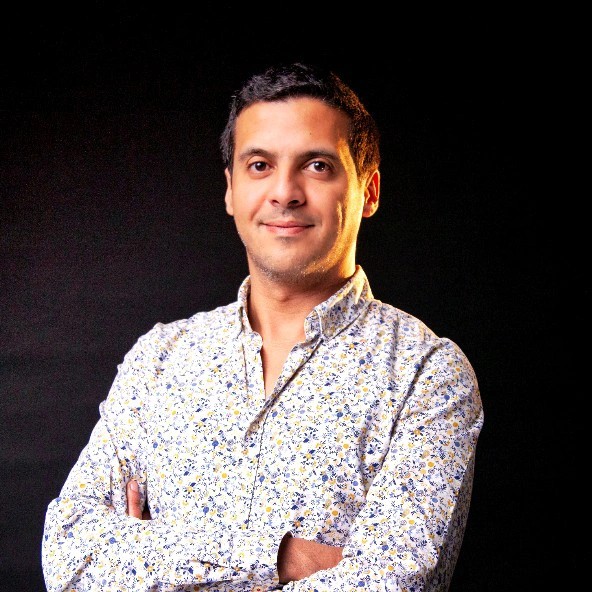
Anis Ben Ghalia holds an MSc in Microbiology from the Faculty of Sciences of Tunis and a certificate in International Trade from UCLA. He co-founded the company in April 2024, building it around a problem he understood from both angles: the ecological burden of marine waste and the industrial gap in clean biopolymer supply.
As CEO, he has driven CHITELIX’s scientific credibility, establishing research partnerships with the Institut Pasteur de Tunis and the Center de Biotechnologie de Borj Cedria.
He also secured validation from two of the most demanding international sustainability programs: UpLink and WeMed–SCP/RAC. His early research background in antimicrobial and antioxidant properties of natural compounds maps directly onto CHITELIX’s product line in biostimulants and biofungicides.
“The whole goal of the company is to become a solution for an environmental problem here in Tunisia and respond to a bigger environmental issue, which is the excessive use of petrochemicals in almost all industries.”
— Kais Aouaieb

Kais Aouaieb holds a Master’s degree in Business Administration and Management from the Ecole Supérieure de Commerce de Mannouba. He built his professional foundation through roles at Al Baraka Bank Tunisia, an Islamic finance institution operating on the principles of risk-sharing and ethical investment.
As COO, Aouaieb oversees the operational architecture, including supply chain coordination, partner management, and the commercial infrastructure that helps CHITELIX’s reach across MENA, Africa, and Europe.
Shell to shelf: A circular chitosan industry from seafood and crab waste
In Tunisia alone, seafood processing generates more than 5,200 tonnes of crab waste per year. And currently, CHITELIX is the only startup that upcycles this waste into high-value, traceable, zero-waste ingredients for agriculture, cosmetics, and healthcare.
The startup biorefinery is installed at the Bizerte agri-food technopole and has pre-treatment, extraction, purification, and drying units. It runs on a patented modular biorefinery process that has been validated through successive pilot runs using real waste streams.
CHITELIX’s current product line spans chitosan, marine calcium, biostimulants, biofungicides, natural feed supplements, and chitosan-based water treatment agents.
The startup is featured in a case study by the UN Global Compact, placing CHITELIX among a small group of early-stage ventures recognized globally for demonstrated circular-economy impact.
What problem is CHITELIX solving, and why did you decide to focus on it?
Kais: We entered the blue swimming crab industry because the species had become invasive in Tunisia and was creating serious challenges for biodiversity and local fisheries. A new seafood export industry quickly emerged around the species, which helped fishermen generate income and reduced ecological pressure. However, after several years, we noticed another problem growing alongside this success: enormous amounts of waste.
The processing industry generated thousands of tons of crab shells and by-products every year, with very limited infrastructure available to handle them responsibly. We realized that instead of viewing this biomass as waste, it could become a valuable resource. That realization became the starting point for CHITELIX.
How did CHITELIX evolve from waste management into a biotechnology company?
Anis: Initially, we looked at the biomass as a potential source of proteins and minerals for animal feed. While researching the composition of crab shells, we discovered chitin, which can be converted into chitosan. Once we understood its value and the wide range of industries using it, we realized there was a much bigger opportunity than simply producing feed ingredients.
We quickly developed a laboratory-scale process using local research infrastructure and started validating the market. When we saw companies raising hundreds of millions of dollars around similar technologies and identified strong demand across agriculture, cosmetics, and other industries, we decided to fully commit to building CHITELIX.
How does your chitosan production process differ from conventional methods?
Anis: One of the biggest differences is that we do not use hydrochloric acid during the demineralization stage. Instead, we use a food-grade organic acid that allows us to recover valuable calcium compounds while avoiding chlorine-based residues. This makes the process cleaner and gives us more opportunities to reuse by-products.
We also focus heavily on water reuse and resource recovery. Rather than treating process streams as waste, we continuously look for ways to extract value from them. Our philosophy is not just circular economy but what we call a multi-circular economy, because we keep finding additional uses for materials generated throughout the production chain.
Can you explain how CHITELIX creates value from multiple waste streams?
Anis: The crab shell contains three major components: minerals, proteins, and chitin. Our objective is not only to recover chitin for chitosan production but also to maximize the value of the other components. We already market agricultural products derived from recovered minerals and continue developing solutions for protein valorization.
Even the process water contains useful compounds. We are working on standardized approaches to recover and utilize these materials rather than discarding them. This continuous recovery strategy helps improve sustainability while creating additional revenue streams.
What products have you developed beyond raw chitosan?
Anis: We created two business divisions. The first is CHITELIX Agri, which develops agricultural solutions such as biofungicides, biostimulants, fertilizers, and soil amendments. These products have already been tested by farmers, distributors, and research institutions and have shown promising results.
The second division is CHITELIX Blue Active, which focuses on cosmetic ingredients. We produce highly controlled grades of chitosan designed for cosmetic applications. These ingredients help manufacturers replace petrochemical polymers with bio-based alternatives while maintaining product performance.
What makes your cosmetic ingredients attractive to manufacturers?
Anis: Many cosmetic companies are currently reformulating products because regulations are becoming stricter regarding petrochemical ingredients. Chitosan offers a natural alternative, but manufacturers need materials with consistent and controlled specifications.
Our team can tailor chitosan properties to meet specific formulation needs. Beyond supplying ingredients, we also support cosmetic producers during product development, helping them integrate sustainable materials into their formulations more effectively.
What certifications and regulatory milestones have been important for CHITELIX?
Anis: Environmental compliance was one of our first major milestones. We worked closely with national authorities to ensure full control over wastewater, process safety, and environmental performance. Achieving these requirements took considerable effort.
We are also pursuing food-grade manufacturing standards, organic certifications, and various product registrations for international markets. These certifications are essential, especially for Europe, where customers expect strict quality and traceability standards.
What are your expansion plans for the future?
Anis: Europe is currently our most important target market because demand for sustainable bio-based materials is already well established. We are preparing to establish a presence in France that will serve as an R&D and business development hub for the European market.
Our goal is not only to sell products but also to build strong partnerships with companies looking to replace petrochemical ingredients with sustainable alternatives. We believe the timing is right, especially as regulations continue driving demand for bio-based solutions across agriculture and cosmetics.
Meet our Interviewer – Shabaz Khan, Marketing Manager at GreyB

Shabaz Khan, Marketing Manager
Want to find other scalable startups working on sustainable ingredients for food, pharma, cosmetics, and other FMCG industries? Please fill out the form below to contact our experts.