



UNEP’s 2024 Food Waste Index estimates that 1.05 billion tonnes of food were wasted in 2022, equal to 19% of food available to consumers. Food loss and waste also contribute an estimated 8–10% of global greenhouse gas emissions. On the other hand, organic waste remains a major source of methane when it decomposes in landfills.
At the same time, animal feed producers are looking for alternatives to fishmeal and soy that can lower pressure on marine and agricultural resources.
But what if these problems could be solved with a single solution?
Flybox is solving these challenges by treating insect farming less like a protein startup and more like a waste management technology. Its modular systems use insects to bioconvert organic waste into larval protein and fertilizer, giving waste managers a route to recover value from rejected organics.
To better understand how they are doing it, we spoke to Larry Kotch, CEO and Co-Founder of Flybox. This article contains notable highlights from our entire conversation.
Also Read:

This interview is part of our exclusive Scouted By GreyB series. Here, we speak with the founders of innovative startups to understand how their solutions address critical industry challenges and help ensure compliance with industry and government regulations. (Know more about startups scouted by GreyB!)
“I predict every single insect farm in Europe that’s built today, above 10 tons a day will fail within the next five years.”
– Larry Kotch
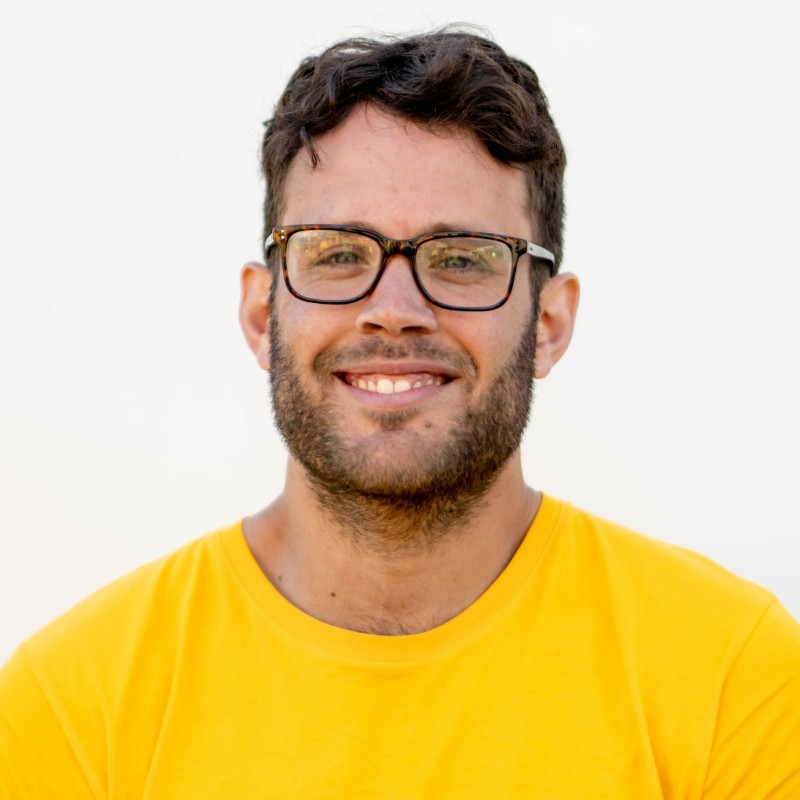
Larry Kotch is the CEO and Co-founder of Flybox. His route into the sector began with an academic interest in environmental governance and waste policy in South Africa, where a dissertation on early insect operations led him toward the potential of insects in organic waste treatment. Before returning to this field, he built a software agency and a seven-figure B2B technology agency business across the UK and Europe, giving him a strong foundation in scaling technical businesses.
At Flybox, Kotch has helped move the company beyond conventional “insect farming” toward Insect Waste Management, focusing on practical systems built around waste contracts, logistics, feedstock supply, juvenile larvae, and end-product market access. Under his leadership, Flybox secured grants and private funding and built operations across markets, including the UK, Kenya, and the UAE.
Flybox is making insect waste management modular
Flybox is an insect waste management technology company that helps waste managers and large food waste producers treat organic waste using black soldier flies. Its approach fits a growing black soldier fly market driven by demand for sustainable protein, organic waste management, and biofertilizers.
The company specializes in the engineering side of insect farming. It has helped build insect waste management projects for customers ranging from large waste management companies to farmers in rural Kenya.
According to Larry, Flybox currently has seven operational farms and has been involved in around 20 projects in one form or another.
What is Flybox, and what are you building?
Flybox is an insect waste management technology company. We help the waste management industry and large food waste producers find a different way to treat rejected organics. We call it insect waste management.
The idea is simple: organic waste goes in, and insects bioconvert it into protein and fertilizer in the shortest possible time, with low energy and labor costs. We focus on the engineering side, so when someone wants to start an insect waste management project, we help design and build the farm.
We have worked with large waste management companies, but also with smaller projects, including farmers in rural Kenya. At the moment, we have seven operational farms and have been involved in about 20 projects related to insect waste management.
A lot of insect companies talk about alternative protein. Why does Flybox focus first on waste management?
That is an important distinction. In a waste management process, whether it is anaerobic digestion, composting, or insects, the business starts with waste coming in. Ideally, you charge a gate fee for taking that waste. Then you try to get the highest value possible from the outputs.
With anaerobic digestion, the output is usually energy and fertilizer. With insects, it is protein and fertilizer. The difference is that insect farming keeps food within the food system. The waste becomes feed for animals that eventually enter the food chain again.
That is why I think insect waste management has a natural logic. It accelerates composting and creates a higher-value protein product. The challenge is not whether the biology works. The challenge is making the economics work.
Why do you think the current insect farming model is struggling in Europe?
A lot of insect farming in Europe has been built around large, vertically integrated factories. These companies try to do breeding, waste management, ingredient production, sales, and marketing all under one roof. That is too much risk for one company, especially when the business is funded like a venture-backed agri-tech startup.
The model should have been split from the beginning. Specialist breeders should produce young larvae. Waste managers should use their existing waste contracts and infrastructure to grow them. Then, specialist ingredient companies should handle processing, blending, and sales.
That is closer to how the industry has developed in China. There, the supply chain is more distributed, and China now produces a major share of global insect protein. In Europe, the problem is high production costs, regulatory bottlenecks, and too much capital tied into factories that cannot easily be changed once they are built.
Who is Flybox’s main customer today?
Our most important customer is the waste management industry. I think the venture capital period in this sector is mostly over. The next wave of infrastructure will come from private sector players who already handle waste and want better tools.
Waste managers already have waste contracts, logistics, and incentives to offer better ESG services. What they need is a system that is simple enough to operate and economical enough to justify. That is where Flybox fits.
We still sell containerized systems for pilots and small-scale farms. But the bigger opportunity is helping waste managers enter the industry carefully, validate the model, and then move into larger second-generation systems.
How does Flybox’s modular technology work?
Our system starts with shipping-container-based units. These are useful because a company can set up a one-, two-, or three-tonne-per-day pilot plant without immediately committing to a large factory.
The container system helps customers test their waste stream, understand the biology, validate products, and learn the operating model. Later, that same container can become the nursery or hatching plant for a larger facility. It does not get thrown away. It can be moved to a larger site and integrated into the next stage.
We are also working on larger second-generation systems. These are much simpler than the robot-heavy European factories. The goal is to reduce both capex and opex per tonne of waste so the unit economics start to make sense.
How does Flybox handle feedstock variability?
There is no shortcut around biology. If you feed insects different waste, the protein and fertilizer outputs will also change. The NPK of the fertilizer can change, and the protein specification can change.
So the best approach is to work with stable waste streams and long-term contracts. In practice, you can also design recipes. For example, 50% of the diet may come from a stable base stream, while the other 50% can vary seasonally. That helps absorb variation.
Our newer systems also help operationally. If the waste has different moisture content or if conversion is slower, the system can recirculate metabolic heat from older larvae to help dry the material before separation. That matters because if larvae and fertilizer come out too wet, the production line can stop.
What are your expansion plans?
Larry: We are seeing a lot of activity in Asia and the Middle East. The Gulf is especially active, and we already have a confirmed project in the UAE. There are also waste managers in Europe who are interested, especially where local waste disposal costs make the economics more attractive.
We are also excited about insect composting in Africa. This approach focuses less on larvae as protein and more on decomposing the larvae back into enriched fertilizer. It is very low-tech, uses almost no energy, and can create high impact in the Global South.
So I see two promising directions. One is second-generation insect waste management systems in regions with strong unit economics. The other is insect composting for maximum impact in lower-infrastructure environments.
Meet our Interviewer – Shabaz Khan, Marketing Manager at GreyB

Shabaz Khan, Marketing Manager
Want to find other scalable startups working on healthcare technologies? Please fill out the form below to contact our experts.