The supply chain team at a leading Fortune 500 FMCG company sought to reduce dead space in its global shipments. Their primary product was a fragile, irregularly shaped dry material that occupied significant volume in transit but was highly prone to breakage and dust formation under traditional high-pressure compaction.
Standard industrial baling methods were not feasible because they compromised the material’s structural integrity and its ability to re-expand during end-consumer use. The client needed to identify new compaction technologies that could balance high-density packaging with extreme material care – ensuring that shipping cost savings didn’t come at the expense of product quality.
The team faced several complexities:
- No clear view of which compaction technologies were mature enough for industrial adoption
- Uncertainty around how cross-industry solutions performed on fragile, fibrous dry materials specifically
- The need to preserve re-expansion behavior post-opening – a non-negotiable consumer experience requirement
- Ensuring any identified solution could be integrated without a complete overhaul of existing packaging lines
Moving Beyond Conventional Pressing: A Cross-Industry Scouting Approach
Rather than limiting the search to the client’s own industry, GreyB expanded the scouting to industries that routinely handle fragile, low-density dry materials, including herbal tea, medicinal plants, and specialty food packaging. This cross-industry lens was critical because the compaction challenge the client faced had already been addressed, in varying forms, in adjacent sectors.
Uncovering Regional Innovation Through Regional Search Engines like Baidu and Naver
A significant share of compaction and packaging innovation – particularly in machinery and automation – originates in East and Southeast Asia and does not surface through global search engines. To ensure the landscape was complete, GreyB extended the search to region-specific platforms: Baidu and Naver to identify Chinese and Korean packaging technology developers and industrial automation companies active in this space.
This step proved essential. Several suppliers and system configurations identified through these regional searches were not present in any English-language database or publication – expanding the client’s options beyond what a conventional global search would have produced.

Key Findings from the Analysis
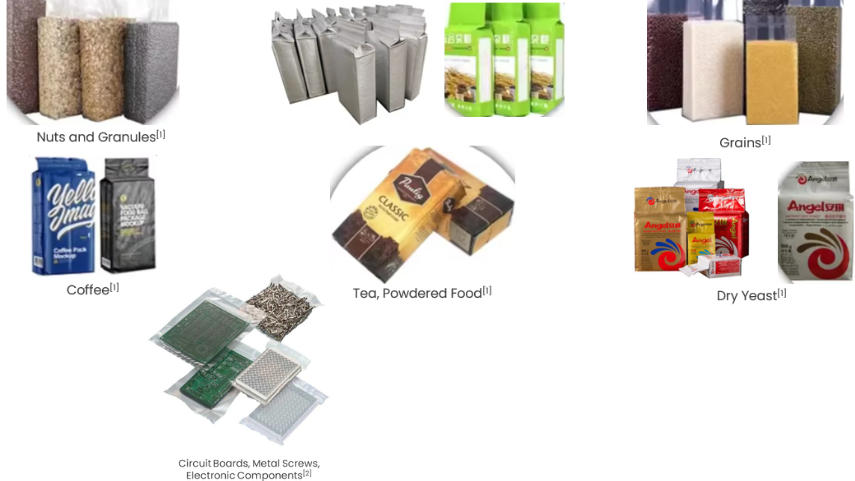
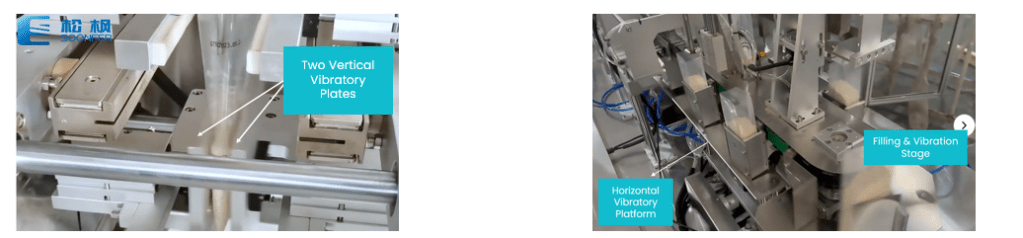
- Vibratory Settling & Vacuum Hybrids: Systems that use controlled vibration to settle materials into their most stable, dense state before using low-bar vacuum sealing to “lock” the density without crushing the fibers.
- Modified Atmosphere Compaction (MAC): A sophisticated approach that replaces internal air with inert gases to create a stabilizing internal “cushion,” protecting the product from external impact during transit.
- Sensor-Driven Mechanical Compression: Next-generation machinery that uses real-time feedback loops to apply precise, variable pressure, preventing the over-compaction that leads to material breakage.
TRL & Supplier Customization Assessment
Hundreds of potential solutions were evaluated based on their Technology Readiness Level (TRL). The team filtered for “late-stage” technologies-those already proven in other industrial environments-to ensure the client could move toward implementation with minimal R&D risk.
The team engaged with global suppliers to verify if their standard systems could be customized. We specifically looked for the ability to adjust the “intensity and duration” settings, ensuring the machinery could be fine-tuned to the client’s material fragility.
What the Client Gained
The client moved from a logistics problem with no clear technology path to a structured, evidence-backed landscape of compaction solutions validated across multiple industries and geographies. Specifically, the study delivered:
- A cross-industry technology landscape covering compaction approaches applicable to fragile dry materials, with each solution assessed against product integrity and consumer experience criteria
- Confirmation that meaningful pack density improvements are achievable — directly translating to fewer shipping containers per dispatch cycle and a measurable reduction in global carbon footprint
- Visibility into regional innovation ecosystems in China and South Korea that would not have surfaced through conventional global searches
- A tiered set of recommendations ranked by readiness for adoption, giving the team clarity on what could be integrated into existing packaging lines immediately and what represented a longer-term competitive opportunity — without the R&D risk of unproven technology
Dead Space Is Costing Your Supply Chain More Than You Think
For global consumer goods companies shipping fragile, low-density dry products, the real inefficiency is rarely the logistics network itself – it is the volume of air being shipped alongside the product. Identifying the right compaction approach requires looking well beyond your own industry and evaluating solutions against the specific constraints of your material, not just generic density benchmarks.
GreyB’s Technology Scouting service helps supply chain and packaging teams build a cross-industry view of what is technically feasible, commercially available, and practically implementable – so decisions are backed by global intelligence rather than vendor familiarity. If your team is facing a similar challenge, schedule a consultation with our experts today.