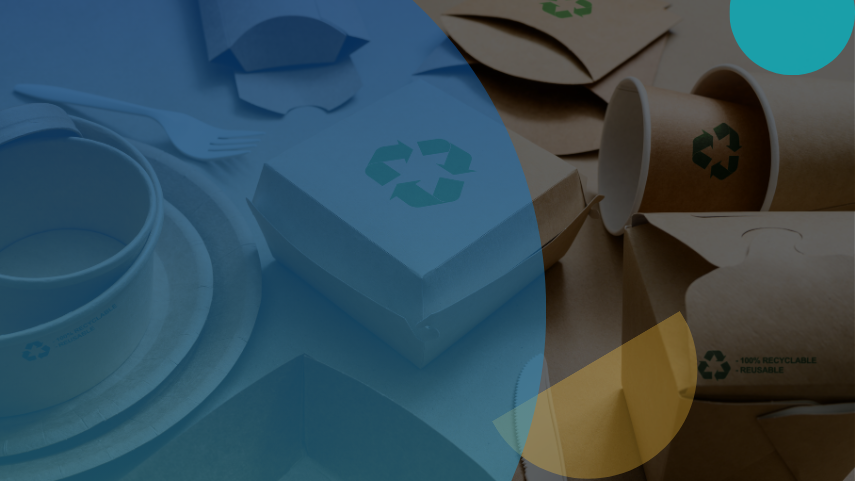
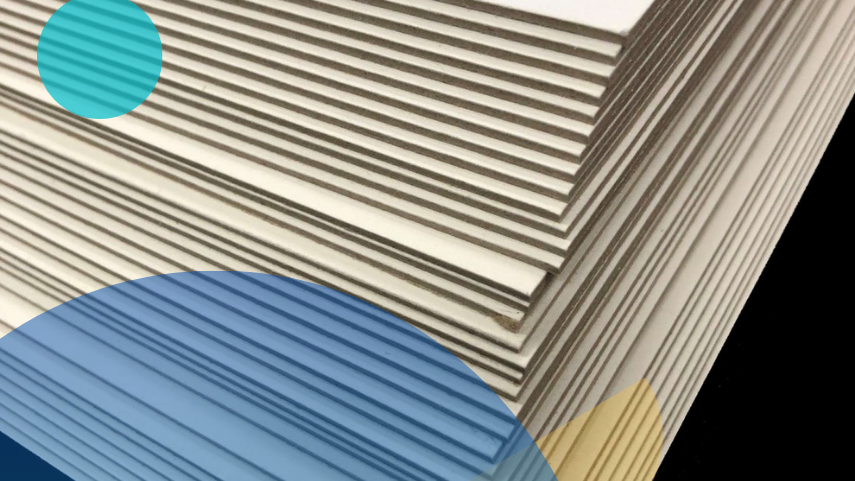
Recycled White Lined Chipboard (WLC) and Virgin Folding Box Board (FBB) are typically compared through a carbon footprint lens, where FBB often appears more favorable. However, this carbon-centric view overlooks other important environmental dimensions such as water consumption, energy intensity, and land use pressures.Ignoring these factors can lead to incomplete and potentially misleading procurement decisions.
Therefore, GreyB took more holistic approach to evaluate these materials for the client. The objective was to deliver an unbiased comparison of WLC and FBB by incorporating all key environmental indicators and addressing limitations present in existing studies.
The Three-Phase Methodology
Reviewing 20+ lifecycle assessments to identify biases
Team conducted an extensive review of over 20 life cycle assessments (LCAs) and sustainability reports, extracting existing claims and identifying the biases commonly present in these studies, such as oversimplified carbon-neutral assumptions and the exclusion of downstream processes in cradle-to-gate assessments.
Validating claims using consistent scientific parameters
In this phase, GreyB applied consistent, scientifically backed parameters to validate the claims extracted in the previous phase. We neutralized biases surrounding closed-loop recycling systems, biogenic carbon assumptions, and regional data discrepancies, ensuring a balanced and accurate comparison of WLC and FBB’s environmental impacts.
Creating a myth-busting Q&A to simplify findings
GreyB created a final Q&A-style document that broke down the study’s findings in a clear and digestible format. This document debunked common myths surrounding FBB’s environmental benefits, using data-backed explanations to demonstrate WLC’s superior performance across various environmental metrics.
Key Insights
WLC Outperforms FBB Across Key Environmental Metrics
WLC has a lower environmental footprint in areas like water consumption, land use, and energy demand. It avoids the environmental costs of deforestation and reduces the pressure on forestry land, unlike FBB, which contributes to deforestation and biodiversity loss.

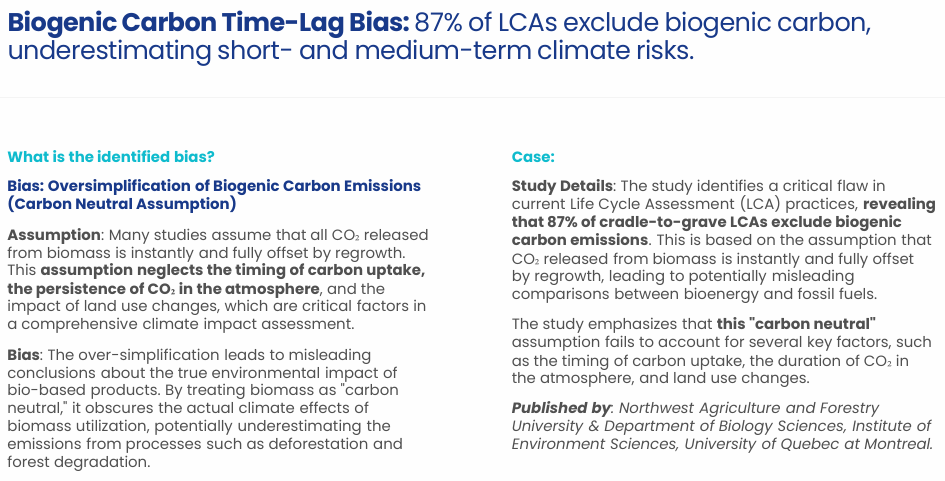
LCA studies often ignore hidden factors like biogenic carbon and forestry impacts
Many LCAs fail to account for hidden environmental costs, such as water consumption during the growth of virgin pulp trees or the full impact of biogenic carbon emissions from FBB production. These biases mislead conclusions about the sustainability of FBB.
WLC aligns better with the EU Deforestation Regulation
With growing regulations like the EU Deforestation Regulation (EUDR), WLC, which uses recycled fibers, is better aligned with future sustainability goals and poses fewer regulatory risks.
Accelerate your sustainability assessment with GreyB
The study helped stakeholders move past the narrative pushed by some FBB manufacturers that portrayed WLC as less sustainable and higher in emissions. This perception had made it difficult for clients to fully trust WLC as a viable option. By presenting a clear, data-backed Q&A, GreyB laid out the actual environmental impact of WLC and directly challenged these claims.
With this clarity, stakeholders were able to make more confident, well-informed decisions around material selection. The insights not only addressed biases in existing claims but also positioned WLC as a more sustainable and future-ready choice, backed by transparent, credible evidence.
If you’re ready to overcome such challenges and drive sustainable growth, fill out the form below to schedule a consultation with our experts today.