



As per the Environmental Services Association, in the UK alone, 22,000 tonnes of batteries are discarded each year, and only 45% are properly recycled. This results in over 1,200 fires breaking out in UK bin lorries and waste sites in a single year. Nearly 50% of these recycling and waste fires are started by lithium-ion batteries.
Charged batteries, degraded packs, and fire-damaged units routinely bypass recycling entirely because most processes weren’t designed for them.
Recyclus Group tackles this problem by recycling lithium-ion batteries at industrial scale in the UK using a dry shredding process under nitrogen.
To better understand how they are doing it, we spoke to Robin Brundle, Chairman & Co-founder, Recyclus Group. This article contains notable highlights from our entire conversation.
Related Read:
This interview is part of our exclusive Scouted By GreyB series. Here, we speak with the founders of innovative startups to understand how their solutions address critical industry challenges and help ensure compliance with industry and government regulations.
(Know more about startups scouted by GreyB!)
“The alternative for these batteries has been landfill, which is dangerous to humans, dangerous to the environment, and a dreadful waste of highly desirable materials.”
— Robin Brundle
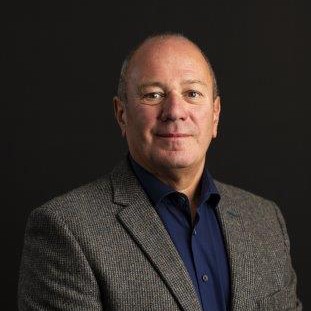
Robin Brundle is Executive Chairman and Co-Founder of Recyclus Group. His career spans automotive, motorsport, and green energy, including leading a $1 billion Asian investment into the UK automotive industry for an EV joint venture.
At Recyclus, he has driven the build-out of industrial recycling infrastructure like LiBatt, LiBox, and the Universal Battery Recycling System. He has a key role in securing major funding wins, including an £8.1 million grant for Project COMET with JLR and WMG, and helped land the company’s largest-ever commercial contract in 2025.
Under his leadership, Recyclus won Sustainability Innovator of the Year at the 2025 Innovation Awards, cementing its status as a leading circular-economy battery recycler.
A Circular supply chain for lithium-ion batteries
Recyclus Group is a UK-based lithium-ion battery recycler working across the end-of-life battery value chain. The company collects, safely stores, mechanically processes, and recovers valuable materials from spent lithium-ion batteries.
Its core process uses dry shredding under nitrogen to manage the risks associated with charged batteries and volatile electrolyte. Instead of using water or relying on high-temperature treatment, Recyclus removes the electrolyte early, maintains an inert environment, and processes the remaining material through standard recycling steps. This helps the company reduce fire risk, avoid water use, and recover more valuable material.

With this method, the startup recovers black mass containing lithium, cobalt, nickel, manganese, copper, aluminum, and other valuable materials from damaged, fire-damaged, and fully charged batteries.
The company’s Wolverhampton facility is licensed to process up to 22,000 tonnes of lithium-ion batteries per year, equivalent to more than 48,000 EV batteries.
Today, its black mass is handled with an international partner. But the company is developing programs to bring mineral separation closer to battery manufacturers, gigafactories, and automotive companies. Its broader goal is to reduce UK dependence on virgin material shipped around the world.
Where does Recyclus fit in the lithium-ion battery recycling value chain?
Robin: We sit across a very important part of the value chain because we can take end-of-life lithium-ion batteries and process them here in the UK at industrial scale. We have been doing this since July 2023, and for us, it has been a seven-year project because there were no clear guidelines or proven routes to follow when we started. We had to pioneer much of the process ourselves.
At a top level, we support the UK’s minerals resilience program by creating a circular route for lithium-ion batteries. Right now, we produce black mass and work with Glencore for separation into the key salts. But our ambition is to bring that black mass separation capability into the UK so those minerals can stay here, reach the right purity, and remain cost-competitive with virgin materials coming from China.
What is the hardest technical variable to handle?
Robin: It is complex because batteries arrive in many different forms. We designed and manufactured our own plant in the Midlands to handle not only automotive and transport batteries but also what we call urban mining. That includes vape batteries, e-bike batteries, mobile phone batteries, and battery energy storage systems.
Our process can take batteries in any state of charge, including damaged or fire-damaged batteries. Even if a battery is fully burnt out, we can process it and still recover valuable minerals. The more difficult category is lithium thionyl chloride batteries, which are high-powered single-use batteries used in applications like offshore drilling. Those need a slower, bespoke, low-volume process because the emissions can be harmful if they are not handled carefully.
You use dry shredding under nitrogen instead of wet or thermal processes. What advantage does that give Recyclus?
Robin: The advantage is that we can get to the electrolyte immediately. The electrolyte is the liquid inside the battery, and it is highly volatile and highly calorific. When we shred the battery, it goes straight into a drying process under nitrogen, which vaporizes the electrolyte and helps eliminate the risk of fire and explosion.
By taking that liquid out early, we create a much drier and safer product for the back-end recycling process. It also means we use zero water and end up with zero landfill. That matters for customers who are looking closely at ESG responsibilities and carbon footprint. Some wet processes can also wash lithium away at the front end, which reduces recoverable value. With our dry route, we avoid that loss.
Black mass production is one part of recycling, but refining it into usable minerals is another. How are you approaching that next step?
Robin: You are right. Producing black mass is one stage, and separating it into useful materials is another. Today, we use Glencore, and because they are an international commodity business, they decide where that black mass goes next. That is not the long-term answer we want for the UK.
Over the last two and a half years, we have studied different black mass separation routes. We have selected a twin-track strategy because we believe these routes have fewer touch points and less chemical interaction, which helps take cost out. One route involves Jaguar Land Rover and a New Zealand mining technology company using an alkali solution. The other involves a closed-loop water system and an AI program. We believe at least one, and possibly both, can be running within about 18 months.
When a supplier or refiner looks at black mass, what quality benchmarks matter most?
Robin: The first thing they look at is moisture content. When people talk about moisture in black mass, they are often really asking how much electrolyte is still retained in the material. Because our process removes electrolyte at the front end, our moisture levels are well under 1%.
The other important factor is avoiding contamination, especially cadmium contamination from the wrong battery chemistries. Sorting and picking are therefore critical for us. Every battery that comes through our gate is inspected so that lead, alkaline, or other non-lithium battery chemistries do not go into the plant. We never reject a lithium-ion battery, but if a different chemistry arrives by accident, we separate it and send it to the correct recycling route.
What are the biggest feedstock challenges you face in battery recycling?
Robin: The biggest challenge is visibility. Because this industry is still being pioneered, it is hard to find robust data on where the material is and how much of it exists. We have onboarded companies that believed they had a certain amount of material, only to discover that their stored volumes were far larger once we started working together.
Another challenge is the under-4 kg category, which includes things like e-bike and vape batteries. There are compliance schemes that aggregate this material, but some are holding onto it until 2028 because the government payables may be better then. That creates a fire risk in the community and delays safe processing. We would like to see intervention that brings that material forward so it can be recycled safely.
What helped Recyclus succeed with dry shredding when other recycling approaches have struggled?
Robin: We built the plant and process ourselves. The edge came from combining practical recycling engineering, science, and a deep understanding of how to control the energy inside dangerous materials. That meant designing a process that could handle the bang, flash, and heat risk of lithium-ion batteries instead of pretending those risks do not exist.
It was not easy. Building a green technology business in the UK means crossing what many people call the “valley of death,” where the technology has promise but still needs to become commercial. We have had to work through prototypes, permits, safety systems, and real operating data. Now that we are processing thousands of tonnes of material, we can keep improving the process from live experience rather than theory.
You mentioned AI in black mass analysis. How can that change the recycling process?
Robin: Battery manufacturers usually will not tell you the exact chemistry they use because it is highly confidential. That makes it difficult for recyclers to produce material that matches the precise specifications a manufacturer wants. AI can help us close that gap much faster.
Once a customer tells us the grade of lithium, cobalt, or nickel they need, AI can help us reverse engineer the process. It can even guide us on what micron size we need to shred in order to produce the right black mass. Without AI, that kind of work could take months in a laboratory. With AI, we believe it could be done in about 24 hours, which would make recycling far more responsive to battery manufacturers’ needs.
Meet our Interviewer – Raveena Singh, Senior Research Analyst at GreyB

Raveena Singh, Senior Research Anlayst
Want to find other scalable startups working on battery recycling and waste management processes? Please fill out the form below to contact our experts.