


Most water monitoring facilities still rely on weekly or biweekly lab sampling. This method cannot detect a harmful algal bloom until it has already reached intake points. The US EPA identifies algal toxin removal as one of the most cost-escalating operational challenges for drinking water treatment. Studies of affected utilities document measurable spikes in labor, chemical spending, and cartridge-filtration costs during bloom events.
Aquaculture faces a similar problem to that of water treatment facilities: long testing timelines and delayed results. Disease outbreaks can spread faster than lab testing can be completed. Globally, disease-related aquaculture losses have been estimated to exceed $6 billion annually, with parasite-related losses alone estimated between about $1.05 billion and $9.58 billion.
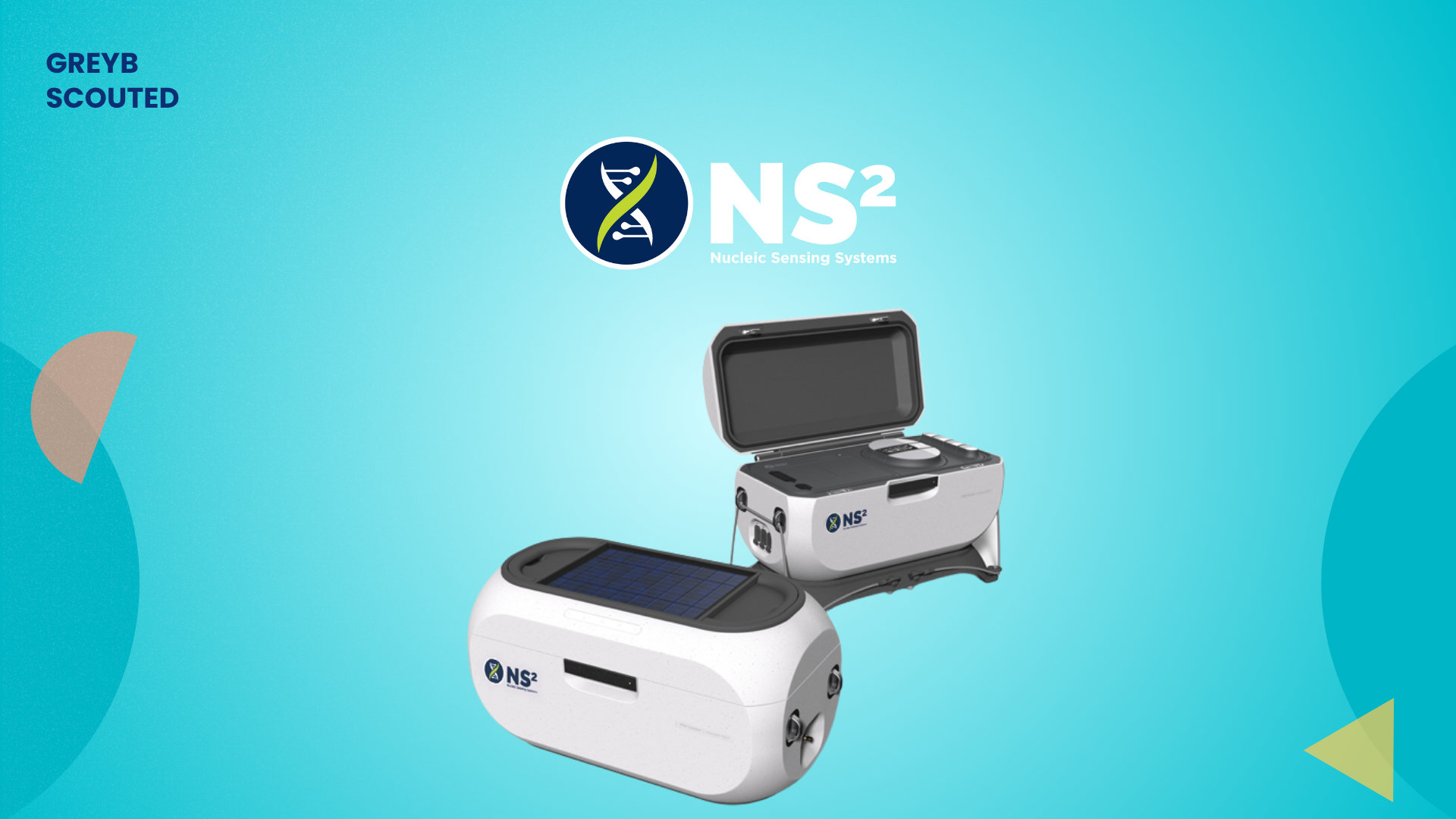
NS2 or Nucleic Sensing Systems solves this by bringing droplet digital PCR-style testing out of the lab and into the field. Instead of taking a water sample, shipping it to a lab, and waiting days or weeks, NS2 delivers quantitative results within about an hour.
To better understand how they are doing it, we spoke to Ed Rudberg, CEO of Nucleic Sensing Systems. This article contains notable highlights from our entire conversation.
This interview is part of our exclusive Scouted By GreyB series. Here, we speak with the founders of innovative startups to understand how their solutions address critical industry challenges and help ensure compliance with industry and government regulations. (Know more about startups scouted by GreyB!)
Also Read:
“There is nothing better than having good, smart people around you.”
– Ed Rudberg
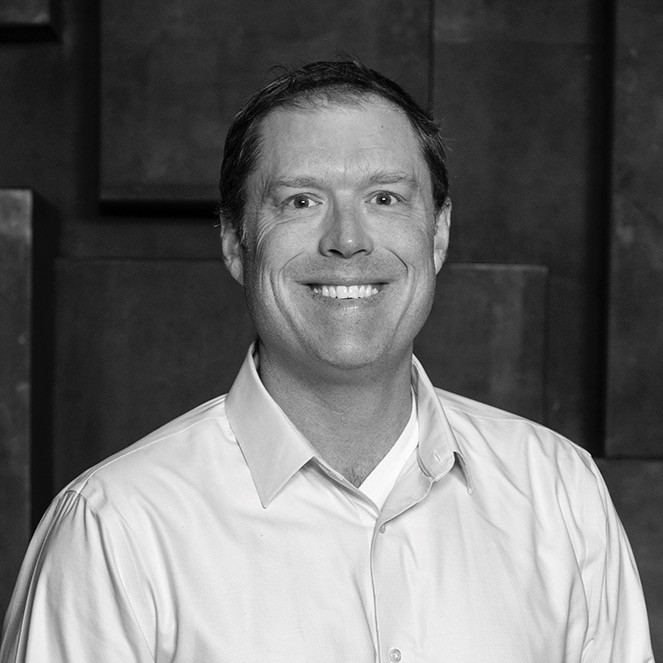
Dr. Edgar (Ed) Rudberg has brought multiple companies from product ideation to profitability. He holds a Ph.D. in Natural Resources Science and Management and a Master’s in Marine Affairs and Policy. He also serves as CEO of CD³, a General Benefit Corporation and NS²’s parent company, which manufactures decontamination infrastructure for boat ramps. This role organically led him toward the biological sensing challenge NS² was built to solve.
Under his leadership, NS² earned the Midwest regional win at the Cleantech Open and reached the national finals. Rudberg has been instrumental in securing SBIR grant funding for NS² and making the university’s research technology a market-ready platform.
NS2 turns water into real-time biological data
NS2, or Nucleic Sensing Systems, helps drinking water utilities and aquaculture farms detect and quantify organisms in water without waiting for a traditional lab workflow. Instead of treating water testing as a slow, periodic process, the company wants to make it continuous, automated, and fast enough to support operational decisions.
The system takes inspiration from droplet digital PCR, a gold-standard human diagnostic technology. NS2 has adapted that capability into a box that can be deployed outside the lab, removing the need for a trained human operator at every step. Its flagship product, the Tracker, has achieved field deployments in federal hatcheries and secured government sales.
What technology is NS2 working on, and what are you trying to bring to market?
At NS2, we’re building a real-time biological transmission system that turns water into continuously monitored data streams. In many traditional systems, whether it is aquaculture or drinking water, customers take a water sample, send it to a lab, and wait for analysis. That process can create a delay of days, weeks, or sometimes even months.
What we are doing is giving customers sample-to-answer data on the biology in their water within about an hour. That means they can act before a problem becomes expensive or dangerous. Instead of reacting after a disease outbreak, biofouling event, or public health concern has already developed, they can make proactive decisions.
Which industries are you targeting first?
We cannot partner with every industry at once, so we are starting with drinking water utilities and aquaculture. In drinking water, algae can create sludge and other operational problems that can cost even a mid-sized utility more than a million dollars a year to manage. Early detection gives utilities a better chance to respond before the issue gets out of control.
Aquaculture is another strong early market because disease losses are a major industry-wide problem. Fish farms can lose large amounts of money when disease moves through a system quickly. We see a real opportunity to help these operators detect changes earlier and reduce losses.
How does your system bring testing time down from days to hours?
Think about the PCR tests many of us used during COVID. A sample was taken, sent out, and analyzed to detect whether a specific virus was present. We are using a similar idea, but instead of swabbing a person’s nose, we are essentially swabbing the environment.
The technology we use is based on droplet digital PCR. It breaks a sample into tens of thousands of tiny sub-samples. Each one gives us a signal, almost like a one or a zero. By doing this, we digitize biology and can quantify how much of a target organism is present over time.
That matters because many organisms are not simply present or absent. In aquaculture, for example, a disease organism may always exist in the system at some low level. The important question is whether its concentration is rising. Our system helps customers see that change early and then track whether their mitigation efforts are working.
Can the system detect anything in the water automatically, or does the customer need to know what they are looking for?
The customer does need to know what they want to look for. We program the machine for the organisms or biological targets that matter to that customer. It is not a system that flags every unknown organism automatically.
That said, our system can look for different organisms at different times. We run in a linear fashion, almost like planes lining up on a runway. At one point, we might look for five organisms, and 15 minutes later, we can look for five different ones. So while the system must be programmed, it still gives customers the flexibility to monitor multiple targets over time.
How did you design the system for reliability and long-term maintenance?
We built the system like LEGOs. It is made up of a series of subsystems that work together and talk to each other to create a functioning machine. That design choice was important because PCR machines can last for years, but field systems need to handle real-world wear and tear.
If something fails, we do not want the customer to replace the entire machine. We want them to replace a subsystem. That makes maintenance easier and more practical.
It also made development more manageable for us. Instead of trying to perfect one giant system all at once, we could focus on each subsystem and make it stronger. That approach helps us build a more robust product for customers.
How are you proving accuracy compared with traditional lab-based testing?
We have been working closely with the US federal government, which has been very forward-looking in environmental DNA detection. Every organism sheds DNA into its environment, whether it is a dolphin, a fish, bacteria, or something else. We are using that idea to monitor biological signals in water.
One important point is that what we detect in the field is not always exactly the same as what traditional lab methods detect. Many standard methods collect cellular environmental DNA by filtering water and sending the filter to a lab. But cells and free DNA behave differently in the environment. DNA does not stay there forever; it degrades.
That is why comparison work is so important. Our partners have taken water samples, flash-frozen them, brought them back to the lab, and analyzed them so we can compare their results with ours. That kind of side-by-side validation helps show the efficacy of our technology.
How do you address cost compared with traditional monitoring?
We constantly look at our bill of materials and ask what the most expensive components are and how we can reduce those costs. Optics are a good example. At one point, we were looking at very expensive laser systems. As LEDs and lasers changed in price and performance, we kept re-evaluating what could work best.
Traditional lab testing might cost around $115 to $175 per sample, depending on what is being tested. But the bigger problem is the time lag. If an aquaculture disease can wipe out a system before lab results come back, then the old process does not meet the customer’s real needs.
Our value is in giving a sample-to-answer result within about an hour. Over time, this can support automated systems, machine learning, reduced chemical use, lower energy costs, fewer antibiotics, and better operations. One customer looked at our technology and believed it could create a 46% return for a drinking water utility when considering the full monitoring workflow and human labor involved.
Are there regulatory barriers for drinking water or aquaculture adoption?
We are intentionally avoiding heavy regulation at this stage by focusing first on operational use cases if we needed federal approval before customers could adopt the technology, that would create a long and costly delay between launch and market adoption.
In aquaculture, the data is mainly used by operators to reduce disease losses. It is not being used to certify that the food is safe for humans. In drinking water, we are initially focused on things like harmful algae from an operational standpoint, not as a formal toxicity compliance test.
That means we can help with issues such as biofouling, taste, odor, and treatment operations. People expect the water coming out of the tap to taste and smell acceptable. Our technology can help utilities manage those quality and operational issues earlier.
Meet our Interviewer – Shabaz Khan, Marketing Manager at GreyB

Shabaz Khan, Marketing Manager
Want to find other scalable startups working on sustainable water treatment solutions? Please fill out the form below to contact our experts.