
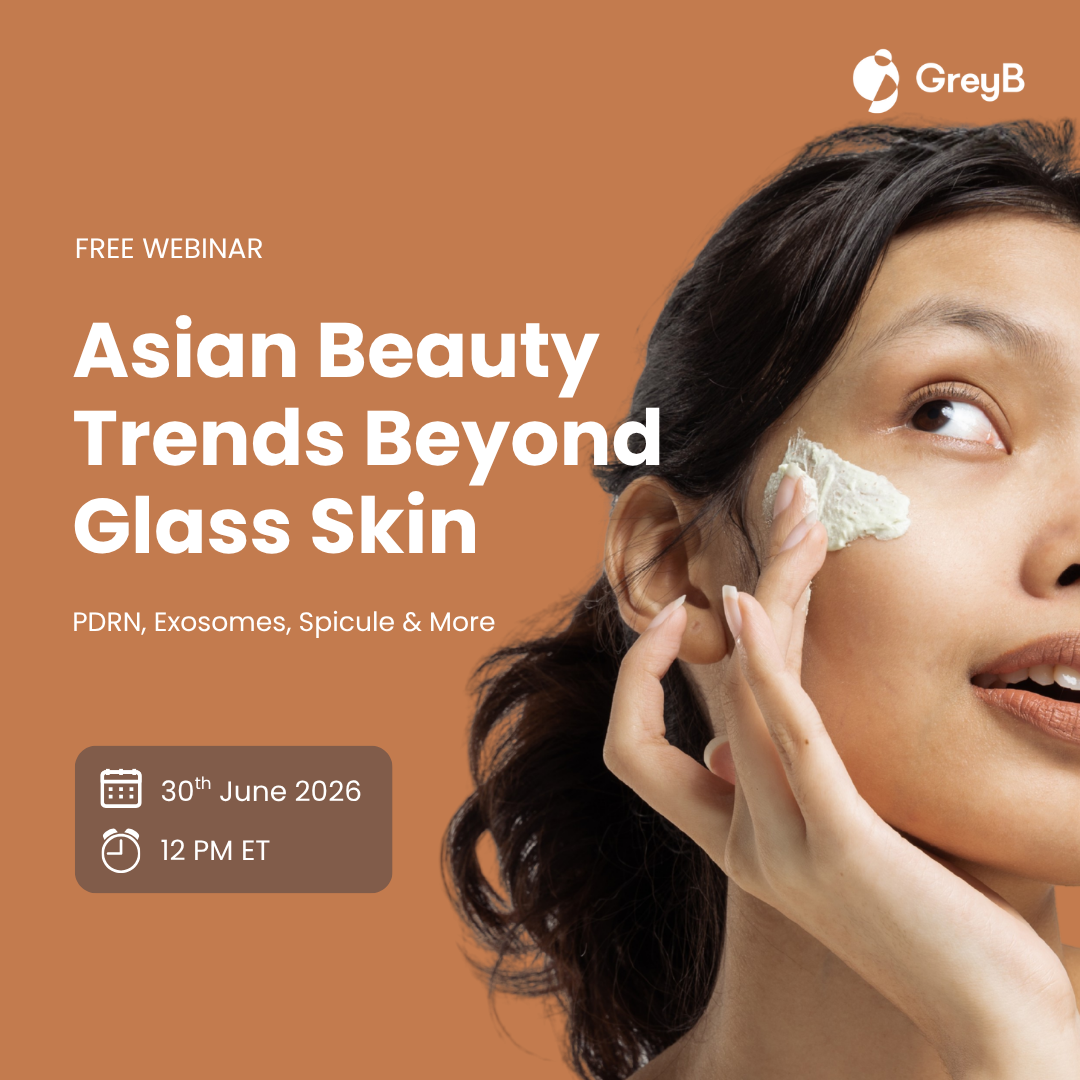
Asia Pacific drives over 30% of global beauty and personal care value. Beauty cycles across Korea, Japan, and China are becoming harder to read. The challenge is separating short-lived social media signals from ingredients with real technical depth, while also tracking domestic Chinese innovation that often receives less attention than Korea and Japan.
The webinar is built for teams already close to the science, but looking for a sharper view of which beauty trends have technical depth, competitive momentum, and room for product differentiation
30%
of global beauty and personal care value comes from the Asia Pacific
14.3%
regional growth led by China and South Korea
6.8%
projected growth for Thailand’s beauty market from 2025 to 2032
You’ll get answers to
- How to separate durable Asian beauty ingredient platforms from short-lived TikTok-led signals, especially across K-beauty, J-beauty, and C-beauty cycles.
- Which emerging Asian beauty ingredients, including PDRN, exosomes, spicule serums, and actives used in neurocosmetics, have clinical backing versus marketing momentum.
- What C-beauty brands such as Proya, Florasis, and Winona are building in formulation, format, and efficacy claims that many Western innovation teams have not yet closely mapped.
- How to predict which Korean and Japanese beauty trends have structural global potential versus those likely to remain regional or campaign-led.
- How to identify credible co-development partners across Chinese, Korean, and Japanese IP, ingredient, and regulatory environments.
- How Thailand’s OEM/ODM strength and natural ingredient base can support ASEAN expansion strategies.
Join the webinar to avoid treating every fast-moving Asian beauty trend as an opportunity. We’ll show which ingredients, formats, partners, and regional signals have enough evidence, scalability, and differentiation potential to shape your next product launch.