Key areas of discussion, from the negotiating table to the courtroom
2
Organizations represented on the panel: patent litigation and AI-native patent analysis
1
Open discussion on if AI is actually earning trust in SEP disputes.
100+ in-house counsel across telecoms, tech, and automotive have already registered.
Four Questions, One Conversation.
From the negotiating table to the courtroom. Each discussion builds on the last, starting with how portfolio-wide AI analysis is changing what valuation looks like in practice, and ending with where this is realistically headed for licensing strategy and FRAND methodology.
1
From comparables to evidence: what AI is changing
How portfolio-wide analysis is making evidence-based top-down and hybrid valuation a realistic alternative to comparable licenses and selected samples, and what that shift means for both sides.
2
More evidence on both sides: do deals get easier?
When both parties generate competing portfolio analyses at scale, disagreement shifts from selected patents to assumptions, methodology, and the reliability of the evidence itself.
3
Why portfolio-wide evidence must withstand scrutiny
Analyses increasingly inform licensing and litigation preparation. Their evidence, assumptions, and human review must be transparent enough to hold up in negotiations and before courts.
4
Where SEP valuation goes from here
A closing view on whether evidence-led hybrid valuation becomes the standard, what the industry needs to get there, and what the next real advantage in SEP licensing will be built on.
The Next Era of SEP Valuation: From Comparable Licenses to Portfolio-Wide Evidence
Comprehensive portfolio valuation has historically been constrained by the cost and scale of assessing essentiality, validity, and technical relevance across a full portfolio. AI changes that practical constraint.
Once both sides can examine much larger parts of a portfolio, negotiations no longer need to rely primarily on a small proof list, limited sampling, or comparable licenses whose underlying portfolio strength is difficult to test.
The question this raises is not whether AI helps; it is whether portfolio-wide evidence shifts SEP valuation from a comparables-led model towards evidence-based top-down and hybrid approaches.
our Hosts
Practitioners who work on both sides of this problem: The patents and the AI.
Patent Litigation & AI-Assisted SEP Analysis
Christoph Hewel
European & German Patent Attorney, UPC Representative
Co-founder of ClaimsEvidence, his litigation practice focuses on patent disputes before the UPC and German courts, with a particular emphasis on standard-essential patents in telecoms, ICT and software-related technologies.
Konstantinos Poulinakis
AI Systems & Patent Analytics
Co-founder and CEO of ClaimsEvidence, he spent years designing AI systems for highly regulated and high-stakes environments in the legal and financial sectors, first as an AI engineer at Deutsche Bank and later at Aleph Alpha, the German frontier AI lab.
SEP Strategy & Licensing: GreyB Analytics
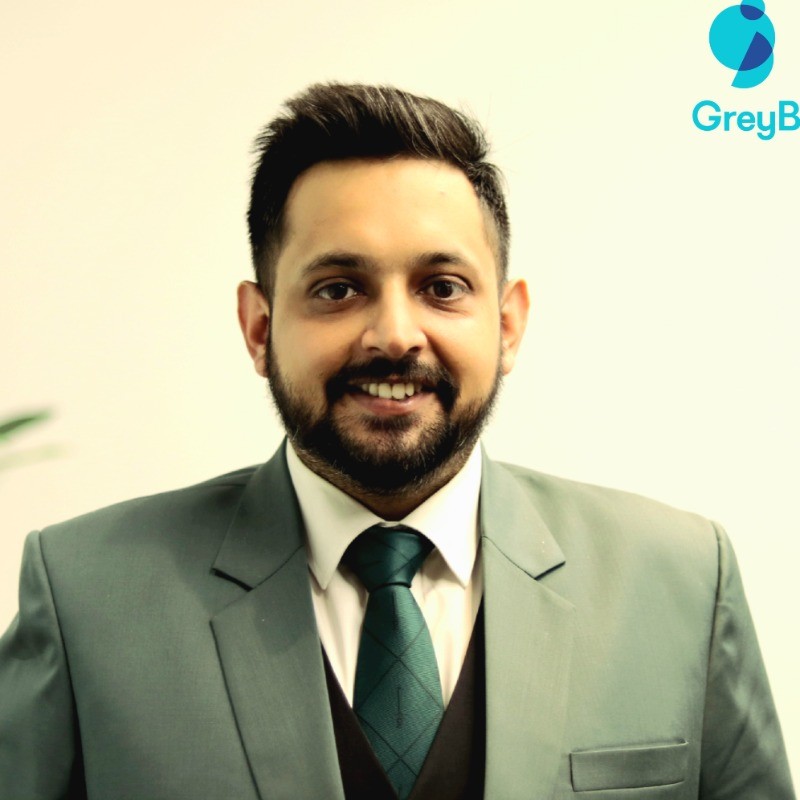
Aman Kumar
Manager, SEP Licensing, GreyB
An IP strategist focused on high-tech domains, working closely with licensing teams on SEP portfolio strategy and negotiation positioning. Brings a practitioner’s view of how licensing decisions actually get made once the analysis leaves the research desk.
Dhruva Sood
Patent Strategy Consultant, GreyB
Works across the full patent lifecycle, helping companies turn ideas into assets and patents into strategic leverage. Has partnered with patent attorneys, in-house IP teams, R&D leaders, and innovation champions across industries, translating complex IP questions into clear strategy.
Further Reading on SEP Licensing
If you’re coming to this conversation from the licensing or litigation side, these reports offer useful grounding on where SEP portfolios stand today, who holds what, where the essential IP actually sits, and how early market signals are shaping the next wave of licensing activity.
Report
5G SEP Ownership: What the Data Actually Shows
Declared does not mean essential. A stratified review of 574 families across ~88,000 declared 5G patent families reveals significant differences between what is claimed and what is core, differences that directly affect how licensing leverage is calculated and how FRAND rates are argued.
Read the report →
Report
Wi-Fi 7 SEP Landscape: Where the Essential IP Actually Sits
Of 4,216 patent families relevant to Wi-Fi 7, only 1,697 are active, granted, and enforceable. The gap between declared and truly essential is where licensing negotiations are decided and where portfolio-wide evidence changes the conversation.
Read the report →
Article
Wi-Fi 7 Licensing: What Early Market Signals Are Telling Us
With over 260 products certified in 2025 and Apple’s iPhone 17 explicitly referencing Multi-Link Operation, Wi-Fi 7 has moved from standardization into real-world implementation. Licensing activity is following. An early read on what that means for portfolio holders and implementers.
Read the analysis →
Missed the Webinar?
100+ IP counsels across telecoms, tech, and automotive joined us live. Get the recording of the webinar today!