




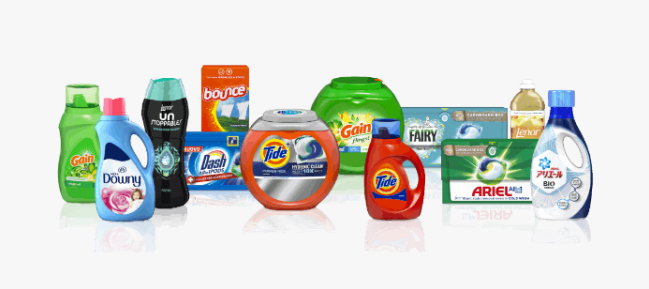
P&G, Unilever, and Henkel are still reformulating their liquid detergents. But their newest platforms are not liquids at all. P&G is investing in Tide Evo, a fiber-based tile. Unilever is filing on multi-chamber capsules that keep ingredients apart until the wash (EP4663738A1). And Henkel’s Smartwash moves dosing into the machine.
The reason is simple. Innovation trends are moving in the same direction: cold-water washing, concentrated formats, short wash cycles, multi-enzyme blends, and microencapsulated fragrance. Each one works on its own. Put all five in one liquid, and they start to cancel each other out.
That changes the question for R&D teams. The question is no longer which trend to back. It is whether your product format can hold all five at once. A brand that keeps adding to a shared liquid pays more with every new ingredient.
A brand that separates ingredients needs new tooling, appliance partners, and a secure supply of new materials. Both paths take years to build. The first hard deadline, the EU ban on synthetic polymer microparticles in detergents, arrives on 17 October 2028.
Washing machines are also starting to control more of the wash. Appliance makers are patenting how detergent dissolves, how water enters the drum, and how to detect an undissolved pod.
The article covers five trends, what is driving each, who is ahead, and what it means for your roadmap.

Trend 1: Cold-water performance is now bought, not formulated
Cold-water detergents promise hot-wash results at 15°C to 30°C. The hard part is enzyme activity. Enzymes react more slowly at 20°C, and standard detergent chemistry cannot fully compensate.
The fix comes from engineered protease variants, and a small group of enzyme suppliers holds the patents.
Novonesis (US11952558B2), Danisco US (IFF) (US20240191220A1), and BASF (US20240240114A1) all have recent filings on variants that improve wash performance and storage stability in liquid detergents.
P&G (US12031112B2), Henkel (WO2025113889A1), and Unilever (WO2024194190A1) are filing on how to use these variants in finished products.
That split matters. The suppliers own the enzyme. The brands own how they use it. A brand that wants to claim 20°C cleaning on pack depends on access to a short list of suppliers.
A second route runs through the surfactant. Dow has patented a liquid detergent that keeps at least 95% of its 30°C grease-removal performance at temperatures as low as 10°C. Innospec has developed a low-temperature formula that replaces petrochemical surfactants and keeps proteases and amylases active in cold washes. On the evidence so far, these surfactant systems work alongside cold-active enzymes. They do not replace them.
What it means: Secure licensed cold-active enzyme supply before you print a 20°C claim on pack. Treat the choice of enzyme supplier as a long-term decision, not a purchasing one.
Trend 2: Concentration has become a packaging strategy
Concentrated formats now include ultra-concentrated liquids, pods, dissolvable sheets, refills, and concentrates that consumers dilute at home. The hard part is not removing water. The hard part is keeping a smaller format stable and ensuring it dissolves well under real washing conditions.
The competition has moved from chemistry to structure. P&G is filing on water-soluble fibrous structures (CN110214173B) and multi-compartment films (JP2025172707A).
Henkel is building a position in soluble sheets and fiber-based unit doses (US12305147B2). LG is working on sheet and capsule formats with controlled release (US11643622B2).
Unilever is filing on unit doses with separate chambers that keep incompatible ingredients apart until use (EP4663738A1). Suzano is taking a plant-based route with cellulose-based solid detergents (BR112023018207A2).
Regulation is making this more valuable. Neither the EU Packaging and Packaging Waste Regulation (PPWR) nor California SB 54 sets a concentration target. Both, however, reward formats that cut packaging weight and volume. SB 54 names concentration as an explicit compliance pathway toward its 25% plastic source reduction.
There is a catch for the leaders. Several leading formats rely on multi-layer or multi-compartment films. Formats that avoid multi-layer flexible films will have an easier path through recyclability checks. So a format that wins on concentration could still struggle on recyclability.
What it means: Back formats whose weight and volume savings can be audited per wash. Check every new format against recyclability rules before you scale it.
Trend 3: In short cycles, the machine makers are moving alone
Express cycles of 15 to 30 minutes are now a standard expectation. In 2024, Unilever forecast that the short-cycle wash category would grow 21% a year and reach €2 billion by 2026.
A twenty-minute cycle removes the contact time that enzymes and concentrated formats need. Detergent makers are responding with faster-acting chemistry. BASF has filed on mannanase enzymes that work in 15- to 25-minute cycles at 20°C, and markets a mannanase built for low temperatures and short cycles.
A collaboration between Newcastle University and P&G targets short, low-temperature washes with a dedicated enzyme blend.
The bigger shift is on the appliance side. Samsung, LG, Haier and Miele (CN115667615A) are all filing patents that treat detergent dissolution as a machine-design problem.
Their approaches include slower drum speeds during the dissolution stage (WO2025079903A1), staged water filling that keeps detergent concentrated at the start (AU2022203579B2), continuous motor flow (WO2025107962A1), and sensors that detect undissolved pods (JP2024016745A).
GreyB found no major joint patent filings between detergent brands and appliance makers in the 2023–2025 patent set. Each side is protecting its own half of the problem.
The machine now decides how long detergent works, how concentrated it starts, and whether a pod dissolves. A detergent designed without that data is designed without knowing how it will be used.
What it means: Formulation alone cannot recover the time a short cycle removes. Start data-sharing talks with appliance makers now. Offer data on how your formats dissolve in exchange for their drum-speed and water-fill settings.
Trend 4: Multi-enzyme blends are moving from stabilizing to separating
Multi-enzyme detergents can handle proteins, starches, fats, and cellulose in one product. The catch is that enzymes can damage one another.
Once a liquid contains more than three enzymes, proteases tend to break down nearby lipases and amylases. Cold-active variants or chemical buffers can prevent this, but they’re expensive. That cost keeps true multi-enzyme systems in premium product tiers.
Recent filings show a shift from chemical protection to keeping enzymes physically apart. The approaches include surfactant-encapsulated granules, shell-core capsules that release under shear during the wash, enzymes immobilized on porous nanomaterials, hot-melt granules, and self-suspended gel matrices.
Henkel has also filed a dispersin-based formula that breaks down the biofilms that hold stubborn stains. It combines dispersin with up to six complementary enzymes, for use in pods and pouches.
Most of these isolation technologies aren’t used in mainstream laundry detergents yet. That is the opening. Trend 2’s pods, chambers, and sheets give them a natural home.
What it means: Past three enzymes, test physical separation through granules, degradable shells, or multi-chamber doses before adding more buffer to a shared liquid. Compare the full cost of both routes for your own portfolio before you commit.
Trend 5: Microplastic rules are rewriting fragrance delivery
Consumers now expect freshness that lasts well beyond the wash. Fragrance microcapsules deliver this by attaching to fibers and releasing scent under friction or heat. The fragrance microencapsulation market was valued at USD 2.29 billion in 2023 and is projected to reach USD 4.5 billion by 2032.
The problem is the capsule shell. EU Regulation 2023/2055 bans synthetic polymer microparticles in detergents from 17 October 2028. The transition period for microplastics used to encapsulate fragrance ends on 17 October 2029. The industry has to replace melamine-formaldehyde shells with biodegradable ones on a fixed timeline.
The major fragrance houses are already filing. Symrise has developed vegan capsules made from plant proteins such as pea and sunflower (DE202023002916U1). Firmenich has filed on plant- and fungi-protein shells built to survive harsh surfactants.
IFF has developed chitosan-based capsules whose natural charge helps them stick to fabric (US12269002B2). Supply is still scaling, including through the €130 million IFF–Kemira joint venture.
Two gaps remain. Biodegradable capsule capacity may lag demand as the deadlines approach. The new capsules also lack published independent testing against the synthetic systems they replace.
What it means: Lock in biopolymer capsule supply before the 2027–2028 pre-deadline crunch. Ask fragrance houses for wash-bench performance data, not only biodegradation certificates.
Where the five trends collide
Each trend makes sense alone. The problems appear when they meet in the same product. These are the clashes R&D teams run into most.
| When you combine | What goes wrong |
|---|---|
| Cold water + short cycles | Enzymes work more slowly at 20°C. A twenty-minute cycle gives those slower enzymes even less time to work. |
| Multiple enzymes + months of storage | Proteases digest lipases and amylases in the bottle during warehouse storage, before the product reaches a machine. |
| Concentration + fragrance capsules | More surfactant in less water puts more alkaline stress on capsule shells, and the capsules can rupture before the wash. |
| Concentration + short cycles | Dense formats dissolve more slowly. A short cycle may end before a pod or sheet has fully released its actives. |
| Concentration + any active | With too little water to hold them, concentrated actives fall out of solution. |
| Biodegradable shells + harsh liquids | Shells designed to break down in the environment must also survive surfactants in the bottle. Independent test data is still missing. |
The deadlines that set the pace
Three regulations set the deadlines for these choices. Product development cycles mean the work starts well before each date.
| Date | Rule | What it affects |
|---|---|---|
| 12 Feb 2027 | EU PPWR: harmonized packaging minimization standards expected | Pack weight and volume, which favors concentrated and solid formats |
| 17 Oct 2028 | EU Regulation 2023/2055: synthetic polymer microparticles banned in detergents | Detergent ingredients that count as microplastics |
| 17 Oct 2029 | EU Regulation 2023/2055: transition ends for microplastics used to encapsulate fragrance | Melamine-formaldehyde fragrance capsules |
| 1 Jan 2030 | EU PPWR: first recycled-content floors apply | Plastic packaging content |
| 1 Jan 2032 | California SB 54: 25% plastic source reduction | Concentration is named as an explicit compliance pathway |
Where is the industry heading?
Each trend adds its own demands on the formula. Together, they make a single liquid detergent harder and more expensive to get right. Brands have two routes for 2028–2030.
Route 1: Keep stabilizing the liquid. Stronger enzyme variants, stabilizers, pH control, and solvents keep incompatible ingredients together. This route keeps existing production lines and supply chains. But every added enzyme or fragrance system raises cost and limits future changes.
Route 2: Separate the ingredients. Multi-chamber pods, layered sheets, fiber tiles and machine cartridges keep ingredients apart until the wash. This route needs new tooling, appliance partnerships and consumer education. In return, it gives far more room to combine concentrated surfactants, multiple enzymes and fragrance capsules.
The largest players are preparing for Route 2. P&G is investing in its fiber-based Tide Evo platform. Unilever is expanding multi-chamber capsule formats (EP4663738A1). Henkel is developing appliance-linked systems such as Smartwash. Their ongoing liquid reformulations appear to protect existing product lines, while the newer formats address the deeper compatibility problem.
If you are not P&G, Unilever, or Henkel
Route 2 needs tooling and partners most mid-size brands and private-label makers don’t have. That is not a reason to wait. Three steps reduce the gap:
- License before you build. A small number of patent holders control enzyme variants, capsule shells, and unit-dose structures. Licensing is faster than developing your own.
- Use manufacturers who already run new formats. Contract manufacturers with pod or sheet lines can carry the tooling cost for you.
- Solve the most urgent conflict first. For most portfolios, that is fragrance capsules, because the deadline is fixed.
Three risks to watch over the next two years
- Capsule supply falls short. If biodegradable capsule capacity lags demand near the 2028–2029 deadlines, smaller buyers are likely to be served last.
- Appliance partnerships split formats by region. If appliance makers pair with different detergent brands, formats may stop working across machines and markets.
- New washing hardware cuts detergent per wash. Machines that control dosing and dissolution could reduce how much product each wash needs. That hits volume directly.
Read the full report
GreyB’s State of Innovation: Laundry Care report goes deeper on each trend. It includes the patent tables behind each finding, a regulation-by-regulation breakdown of EU PPWR and California SB 54, the full set of company innovations, and the recommendation on where R&D teams should invest first.