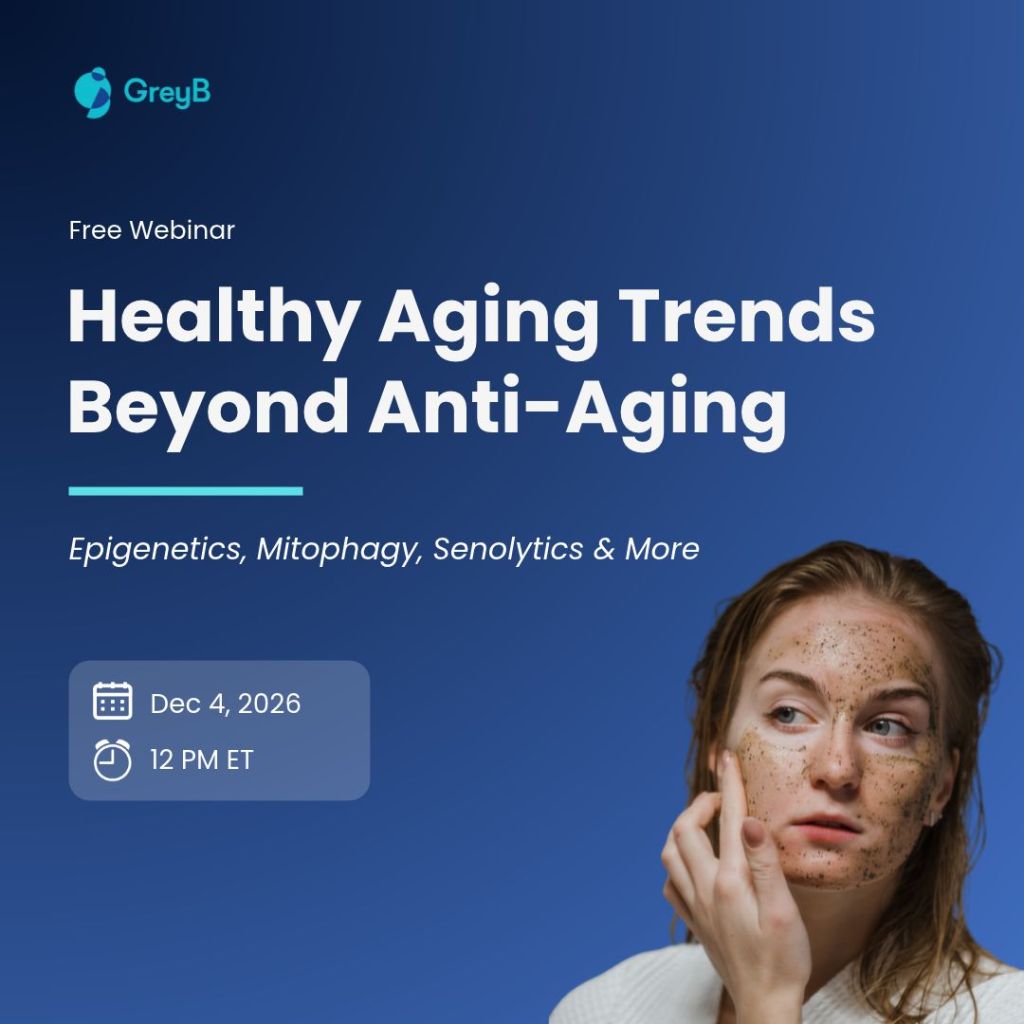
For decades, anti-aging skincare has worked on what people can see: wrinkles, firmness and dark spots. That focus is changing. R&D teams are now looking at the biology underneath. This includes how genes switch off with age, how skin cells lose energy, and how aging cells drive inflammation.
The big players are already moving. Beiersdorf has taken its Epicelline epigenetic active from Eucerin into NIVEA. L’Oréal has filed patents on azelaic acid for mitochondrial renewal and on a Ginkgo-derived active that targets aging cells. Shiseido, Amorepacific, Estée Lauder and P&G are each working on their own routes.
This webinar is for skincare R&D teams who need to know which of the routes is ready to build on.
65%
of US consumers take a preventive approach to beauty
75%
of US consumers want stronger scientific proof for beauty claims
$4.8B
projected market for skincare that targets aging cells by 2033, up from $1.2B in 2024
You’ll get answers to
- Why is skincare moving from visible correction to cellular health, and why is it happening now?
- Which actives can shift age-linked DNA patterns in skin, and how far does the evidence behind “biological skin age” claims really go?
- How are L’Oréal, Amorepacific and P&G trying to restore mitochondrial function, and what do their patents actually show?
- What is the difference between calming aging cells, removing them, and helping the immune system clear them? Which approach has human data?
- Which of these technologies are already in products, and which are still in patents and lab studies?
- Which tests and biomarkers are brands using to back skin-longevity claims, and which ones will hold up?
If your team is planning a longevity or healthy-aging launch, this session will show you which biology has the evidence behind it and which is still early. Register today!