



Inflammatory bowel disease (IBD) is difficult to diagnose because its symptoms often overlap with other gastrointestinal conditions. Abdominal pain, diarrhea, and changes in bowel habits can have several causes, making it difficult to identify patients who need specialist care. Existing tests, such as fecal calprotectin, can detect intestinal inflammation but cannot always distinguish IBD from infections or other causes. Patients may consequently undergo multiple investigations before receiving a diagnosis.
Salient Bio is developing a different approach. Its IBD SIGNAL test uses gut microbiome data and machine learning to identify microbial patterns associated with Crohn’s disease and ulcerative colitis. We spoke with Dr Marta Ciechonska, Co Founder and Chief Executive Officer at Salient Bio, about how the technology works, why data quality matters, and what it takes to make microbiome testing reliable enough for clinical use.
This interview is part of our Scouted By GreyB series, where we speak with startups about the problems they are solving and the practical steps needed to bring their technologies into use.
Also Read:

“We consistently see a specific signature of microbes that’s associated with IBD, irrespective of diet and geography.”
— Marta, Salient Bio
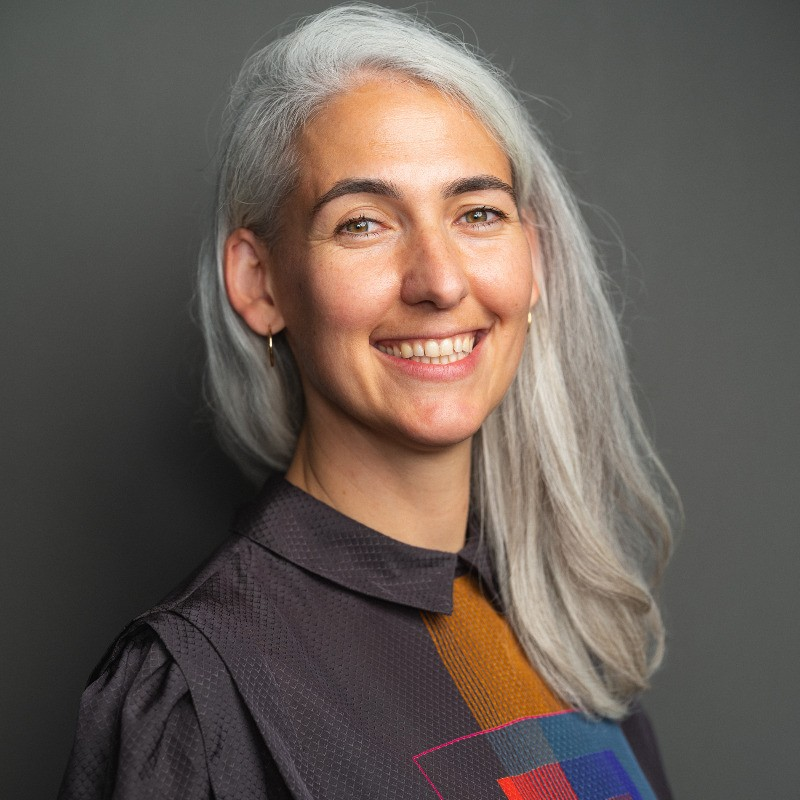
Marta studied at Dalhousie University and Imperial College London, where she developed an unusual mix of expertise in molecular microbiology and large-scale automation-the exact technical foundation that drives how Salient Bio builds and scales its platforms today. She co-founded the company to push the boundaries of automation in diagnostics and bridge the gap between lab research and everyday clinical use, turning microbiome science into practical wellness and diagnostic tools that can make a real difference for patients.
Today, she leads Salient’s strategy, partnerships, and commercial efforts. Her work is fueled by a simple belief: making preventative healthcare and non-invasive, at-home testing more accessible can dramatically improve patient outcomes.
Turning Gut Microbiome Data Into Clinical Diagnostics: Salient Bio’s IBD SIGNAL
Salient Bio develops diagnostic tests that identify disease-associated patterns in the human microbiome. Its technology combines DNA sequencing, laboratory sample processing, bioinformatics, and machine learning to analyze microbial communities and identify signatures linked to particular health conditions.
The company’s first major clinical application is IBD SIGNAL, a test designed to help identify inflammatory bowel disease. Rather than measuring a single inflammatory marker, the test examines a complex signature involving the presence, absence, and relationships of different microbes in the gut.
Salient Bio uses shotgun sequencing to collect detailed microbial DNA data. It then applies machine learning to identify patterns associated with IBD. The company has optimized its laboratory processes using diagnostic controls and standards to improve data quality and reproducibility.
Its clinical validation included patients with different forms of IBD, varying symptoms, and different medication exposures. The test was also developed using samples collected from multiple geographical regions. According to Marta, the company identified microbial signatures associated with IBD that remained consistent across differences in diet and geography.
The intended application is early in the diagnostic pathway, when patients have unresolved gastrointestinal symptoms but have not yet been referred for specialist investigation. IBD SIGNAL could help clinicians identify those more likely to have IBD and prioritize further assessment.
Salient Bio is now preparing to work with clinical partners to evaluate how the test fits into routine care.
Beyond IBD, the company is exploring disease-associated patterns in oral, gut, and vaginal microbiomes. It is particularly interested in saliva-based diagnostics because samples are easy to collect and may contain useful biological signals beyond microbial DNA.
Microbiome sequencing has been available for years. Why has it taken so long to become useful for clinical diagnosis?
Marta: One of the biggest differences between microbiome research and clinical diagnostics is the importance of reproducibility. In academic research, you’re often trying to discover something new or obtain the most detailed information possible. In diagnostics, you need a result that can be reproduced consistently.
We approached microbiome testing from a diagnostic laboratory perspective. We already had experience in microbiology, molecular biology, automation, and bioinformatics. But we had been watching the microbiome field for some time before deciding that the technology was ready.
What changed was the improvement in sequencing, laboratory infrastructure, and computational analysis. Machine learning has also become much more capable. Together, these developments now allow us to examine the microbiome in a way that wasn’t practical or reliable enough before.
Other companies also use sequencing and machine learning. What is Salient Bio doing differently?
Marta: Machine learning is only as good as the data you give it. You can develop an excellent algorithm, but if the sequencing data is poor or inconsistent, the results will not be reliable.
One important change has been the move from amplicon sequencing to shotgun sequencing. Amplicon sequencing examines selected regions of microbial DNA, whereas shotgun sequencing provides a much broader dataset. That additional information gives machine learning models more useful features for identifying disease-associated patterns.
We’ve also spent considerable time optimizing how we process samples. We use diagnostic controls and standards throughout the laboratory workflow to make sure we’re generating accurate, consistent data. That combination of laboratory optimization and computational analysis is central to what we’re building.
Fecal calprotectin is already inexpensive and widely used for detecting intestinal inflammation. Why would a clinician need IBD SIGNAL?
Marta: Calprotectin is a very useful test, but it measures inflammation in the gut rather than identifying the condition responsible for it. There are many reasons someone might have intestinal inflammation, including infections and conditions unrelated to IBD.
With IBD SIGNAL, we’re looking for something more specific. Instead of relying on a general inflammation marker, we examine a complex microbial signature associated with inflammatory bowel disease. In our validation work, that approach has allowed us to identify IBD-associated patterns with greater specificity.
Where I think our test could be particularly useful is at the beginning of the clinical pathway. Someone might have unresolved gut symptoms and not know what’s causing them. If their microbiome strongly matches a signature associated with IBD, that information could help direct them toward specialist care sooner, rather than going through multiple investigations before reaching that point.
Your validation studies showed strong diagnostic performance. How do you account for differences in diet, geography, medication, and disease stage?
Marta: We were conscious of those differences when building and validating the test. Our clinical validation included a diverse patient population, with symptomatic and asymptomatic individuals, people taking different IBD medications, and patients with different forms of Crohn’s disease and colitis.
We also developed the test using a large dataset that included samples collected from multiple geographical regions. One of the interesting findings was that we consistently observed particular microbial patterns associated with IBD, regardless of diet or geography.
We’ve seen good performance across the populations included in our validation. The next step is understanding how the test performs within an actual clinical pathway. We’re beginning that work with clinical partners, and it will help us learn more about how doctors can use the results in practice.
Conventional biomarkers usually measure one or two indicators. What exactly does IBD SIGNAL detect in the microbiome?
Marta: We’re moving away from the idea that a diagnostic test must depend on one or two individual markers. With larger biological datasets and better analytical tools, we can now identify much more complex patterns associated with a disease.
Our IBD signature includes multiple microbial features. We look at which microbes are present, which are absent, and how different organisms relate to one another. There are also additional characteristics of the dataset that contribute to the overall signature.
It’s not something a person could interpret reliably by looking at a list of numbers. You need software to analyze those relationships together. That’s where machine learning becomes essential, and it’s also what makes our approach different from a conventional biomarker such as calprotectin.
Your collaboration on periodontitis identified a 13-species microbial signature from hundreds of features. Can you use the same approach for other diseases?
Marta: That’s something we’re very interested in. We’re increasingly seeing research showing associations between microbial patterns and different diseases, not just in the gut but across other microbiomes in the body.
One important distinction is that an association doesn’t necessarily mean the microbiome is causing the disease. The disease might change the microbiome, or the relationship might work in another way. But for a diagnostic test, understanding the cause isn’t always essential. If a particular microbial pattern consistently appears alongside a condition, that relationship may still be useful for identifying the disease.
Our platform allows us to investigate those associations using the same general process: carefully controlled sample preparation, high-quality sequencing, computational analysis, and machine learning. IBD is our first major diagnostic application, but we believe the process can be applied to a much wider range of conditions.
Many diseases still require invasive investigations. Which diagnostic applications are you planning to pursue after IBD?
Marta: We have some specific applications in mind, but we’re keeping those details confidential for now because the work isn’t ready to be announced.
What I can say is that we currently work with three different microbiome sample types: oral, gut, and vaginal. We’ve developed wellness testing products around these microbiomes and have identified interesting patterns in all three.
We’re particularly excited about saliva as a diagnostic sample. It’s easy to collect and doesn’t require an invasive procedure. There’s also a lot of unexplored potential in saliva beyond the microbiome itself, including RNA, proteins, and inflammatory markers. We think it could become an important source of diagnostic information.
Salient Bio operates its own laboratory. Will that help you scale, or could it become a limitation as demand increases?
Marta: At the moment, our laboratory is almost like a prototyping facility. It’s where we develop and continuously improve the processes used to prepare samples and generate sequencing data.
The quality of that data is fundamental to everything we do. We’ve invested a lot of effort in optimizing the laboratory steps because even small differences in how samples are processed can affect the information available for analysis.
But I don’t think scaling means we necessarily need to build more laboratories ourselves. We’d like to work with other diagnostic laboratories and license the complete workflow, from sample processing through to software analysis. That would allow partners to use our technology while following the same procedures we’ve developed for generating reliable data.
Large diagnostic companies already have sequencing equipment and bigger datasets. What would stop them from reproducing Salient Bio’s approach?
Marta: Having sequencing equipment and access to large amounts of data is not the same as knowing how to extract meaningful information from the microbiome.
There is a lot of specialist microbiology knowledge involved. At every stage, from processing the sample to interpreting the data, someone needs to ask whether the result actually makes biological sense. Machine learning doesn’t remove the need for that judgment.
We’ve spent a long time developing our laboratory methods, bioinformatics tools, and analytical processes. One result of that work is that the quality of our data allows us to identify patterns using smaller datasets than we might otherwise need.
I think another company could eventually reproduce some of what we’re doing, but it would take time to develop the same level of optimization. A large genomics laboratory may have excellent sequencing capabilities without necessarily having the specialist microbiology expertise needed to build this kind of diagnostic quickly.
You’re also investigating the vaginal microbiome. Could microbial signatures help diagnose fertility-related conditions or other women’s health problems?
Marta: There are already some well-established relationships between the vaginal microbiome and conditions such as bacterial vaginosis and aerobic vaginitis. The connections with fertility are being explored more actively now, but there’s still a lot we need to understand.
The vaginal microbiome is also quite different from the gut or oral microbiome. In the gut, greater microbial diversity is often considered beneficial. In the vaginal microbiome, lower diversity is frequently associated with a healthier state, although that relationship depends on the individual and their background.
What interests us about women’s health goes beyond reproductive conditions. There are many diseases that affect everyone but present differently in women. Women are often diagnosed later or remain undiagnosed because their symptoms don’t match the patterns traditionally associated with those conditions.
That’s where we see a particularly interesting opportunity for our technology. If we can identify reliable biological signatures in patients whose conditions are difficult to recognize using existing methods, microbiome diagnostics could help address some of those diagnostic gaps.
Meet our Interviewer – Dr Namrata Wadhwa, Healthcare Industry Expert at GreyB

Dr. Namrata Wadhwa, Healthcare Industry Expert
Looking for scalable startups developing next-generation diagnostic solutions? Fill out the form below to connect with our experts.