



Globally, women live on average five years longer than men, but spend more years in poor health. Closing this health gap represents a $1 trillion annual opportunity for the global economy by 2040.
Healthcare investors have already committed $2.6 billion to venture-backed women’s health startups and companies, with The Gates Foundation adding $2.5 billion through 2030.
While healthtech has received most of this funding, investors are now moving into drug development. Some investors remain cautious and are waiting for clearer evidence of commercial returns. That caution also suggests the market is still relatively open, creating room for research teams to expand into diagnostics, therapeutics, and new models of care delivery.
This article explores the most overlooked gaps in women’s health, the research and technologies beginning to address them, and the white spaces that remain across PMOS, maternal health, and cardiovascular care.
Male-default research continues to shape women’s care
We all know that when women are healthy, everyone is healthy. That’s why it’s important to include people in clinical trials who look like the people who will be using your product when it’s approved
Dr. Beth Garner, Chief Scientific Officer at Ferring Pharmaceuticals US
For decades, medical researchers treated male biology as the default. They excluded women from many early-stage studies or failed to analyze results by sex. As a result, researchers overlooked important differences in how diseases appear in women, how women experience symptoms, and how treatments affect them.
Current diagnostics, trial protocols, and treatment pathways are often built around incomplete evidence. Thus, delaying diagnosis weakens treatment response and increases safety risks for women.
Research teams need trials that reflect real-world patient populations. They should report outcomes separately for men and women and use female-specific health benchmarks where biological differences could affect the results.
The Three Areas Worth Prioritizing Now
Women’s health can no longer be viewed solely through the lens of pregnancy and fertility. PCOS, maternal health complications, and cardiovascular disease reveal how hormonal, metabolic, inflammatory, and mental health factors can shape long-term outcomes. Together, these areas offer clear opportunities for earlier diagnosis, better risk assessment, and more targeted treatment.
PMOS is bigger than a reproductive diagnosis
In May 2026, PCOS was officially renamed to PMOS (Polyendocrine Metabolic Ovarian Syndrome) following a 14-year global consensus process. The new name highlights that it is a complex, multi-system disorder involving endocrine, metabolic, reproductive, skin, and mental health, moving away from a condition previously viewed as a purely gynecological issue.
According to the World Health Organization, PMOS is the most common endocrine disorder affecting women of reproductive age, impacting 10% to 13% of women globally. Despite its commonality, WHO estimates that up to 70% of women with PMOS worldwide do not know they have the condition. Diagnosis is especially tricky because the condition looks different in everyone; symptoms vary widely from person to person, with no single universal test for all patients.
Where PMOS Research Is Creating New R&D Opportunities
Research is now shifting how we view the condition by using advanced computer programs and data analysis to study how individual genetics, gut bacteria, and internal inflammation contribute to PMOS.
- Researchers are using targeted genetic testing and computational tools to pinpoint key gene mutations, such as those in CYP11A1, as well as core target genes like AKT1 and MAPK1.
- At the same time, 16S rRNA gene sequencing is helping understand the role of gut bacteria and internal inflammation, showing that higher levels of Bacteroidaceae link directly to insulin resistance and inflammation, whereas a drop in anti-inflammatory Prevotellaceae makes inflammation worse.
- To track and spot these issues earlier, scientists are leveraging artificial intelligence, machine learning, and big data analytics to build predictive models, alongside digital health tools like wearable devices and mobile apps for real-time patient monitoring.
From a research and development standpoint, this presents a significant opportunity to develop treatments for a largely underserved group of patients. Current treatments only mask symptoms rather than addressing the root cause, opening up a huge market for any company that can deliver precise therapies. In the future, this could lead to highly personalized care, such as:
- Targeted gene therapies
- Customized probiotic blends
- Safer, plant-based medicines
The main hurdle moving forward will be overcoming manufacturing and cost challenges so these therapies can be produced affordably and at a large scale for the patients who need them.
R&D Is looking beyond hormones and prescriptions
A Wearable Headband Offers a Drug-Free Approach to Period Pain
Samphire Neuroscience created a wearable headband called Nettle to help manage period pain and PMS mood swings without using medication.

The device works by sending very gentle electrical currents through the scalp to calm the specific parts of the brain responsible for processing pain and regulating emotions.
It has been officially certified as a safe medical device in Europe, with clinical tests showing that after just one month, 72% of users felt significant pain relief and 67% noticed a better mood.
The treatment is easy to fit into a normal routine, requiring only five 20-minute sessions in the days leading up to a period. It runs on a rechargeable battery and is controlled with a simple smartphone app.
The company is now testing whether the same neurostimulation platform can address more complex conditions. An NHS pilot in London is evaluating the device for endometriosis-related chronic pelvic pain, while other studies are continuing with UCLH and international research partners.
A separate study with Queen Mary University of London, concluded in May 2026, examined its use for premenstrual dysphoric disorder. According to the company, 82.4% of participants experienced a statistically significant reduction in luteal-phase anxiety. The findings are being prepared for peer review and are under regulatory review.
To expand this work, the company secured $5 million in funding in June 2025, building on an earlier $2.3 million pre-seed round announced in February 2024.
A Digital Care Platform Is Filling the Gaps Left by PCOS Prescriptions
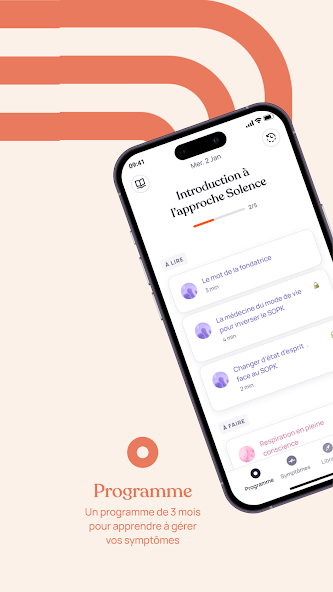
Solence, a Paris based women’s health company started in 2022 by Clara Stephenson and Mael Mertad, has raised €1.6 million to grow its smartphone app, which helps women manage Polycystic Ovary Syndrome (PCOS).
The app uses daily lessons and tracking tools to build custom lifestyle plans covering diet, exercise, sleep, and emotional health, giving women a way to handle their symptoms without relying solely on standard medications.
This support is crucial because PCOS affects hundreds of millions of women worldwide, making it the most common hormonal disorder for women before menopause.

Better PCOS Treatments May Start With Patient DNA
While the exact cause of the condition is still largely a mystery, scientists are finding strong genetic links for PCOS.
For instance, Dr. Piraye Yurttas Beim, the head of the biotechnology company Celmatix, shared that her team used a massive database of patient medical records and DNA samples to uncover entirely new genetic mutations linked to PCOS.
By studying the real-world symptoms of these patients, major pharmaceutical companies have now verified these genetic findings, proving that examining individual DNA and patient data is key to developing better, more precise treatments for women’s health.
Maternal health care still overlooks the most critical risk period
Despite global progress, hundreds of thousands of women still die from preventable childbirth complications each year,with the vast majority of these fatalities occurring right around labor and delivery.
Most of these deaths stem directly from obstetric emergencies like severe bleeding, high blood pressure, and infections, all of which are manageable with proper care.
The immediate postpartum period remains a critical care window, especially for postpartum hemorrhage, which WHO, FIGO, and ICM addressed by releasing a single, unifying set of guidelines in 2025 that establishes a realistic path for prevention, earlier objective diagnosis, and rapid treatment bundles designed to work even in low-resource settings
“Midwives know first-hand how quickly postpartum haemorrhage can escalate and cost lives. These guidelines are a game-changer. But to end preventable deaths from PPH, we need more than evidence and protocols. We call on governments, health systems, donors, and partners to step up, adopt these recommendations, adopt them quickly, and invest in midwives and maternal care so that postpartum haemorrhage becomes a tragedy of the past.” – Professor Jacqueline Dunkley-Bent OBE, ICM Chief Midwife
Maternal Health’s Biggest Opportunity Is Detecting Risk Earlier
Despite this progress, major gaps remain.
Around 260,000 women still die from pregnancy and childbirth complications, even though many of these deaths can be prevented. Most of these deaths happen in poor countries where women cannot easily access specialized medical care or quick health check-ups.
Several problems continue to weaken maternal care:
- Routine blood pressure and blood sugar checks usually happen only during in-person visits.
- Sudden high blood pressure or pregnancy-related diabetes can be missed until the mother becomes very sick.
- Preeclampsia education remains limited.
- Standard methods for measuring blood loss during hemorrhage are slow and outdated.
- Life-saving treatments are underused in poorer countries.
- Infections can appear weeks later when mothers have little or no medical contact.
- Serious mental health care is often blocked by high cost and weak insurance coverage.
Companies are now trying to close some of these gaps by using everyday wearable tools such as smartwatches, wristbands, phone apps, and health sensors to track blood pressure, heart-rate changes, oxygen levels, and other daily health signals. By combining this continuous health data with advanced programs, doctors may be able to spot risks earlier, rather than waiting for an emergency.
However, important white spaces remain:
- Current health trackers still struggle to detect dangerous trends before they happen.
- Many tools do not share data with doctors in a way that supports treatment decisions.
- Older tracking methods rely too heavily on medical histories or hospital records that are updated only periodically.
- These records do not show what is happening in the patient’s body at the present moment.
- Advanced programs are strong at finding patterns in continuous body signals, but more research is still needed to understand how they can protect pregnant women and detect complications early.
This is where upcoming start-ups are starting to make a difference. Some are building care models that support women across pregnancy and postpartum, while others are working on monitoring, diagnostics, mental health support, and better access to care.
The Innovations Closing Gaps in Maternal Care
Wearables and AI Are Making Maternity Care More Proactive
Maven Clinic is a virtual healthcare platform that supports families through every stage of life, from trying to conceive and pregnancy to parenting and menopause. It serves over 2,000 corporate clients across 175 countries, including major global companies like Amazon, Microsoft, and L’Oreal.
The company raised $125M in 2024 at a $1.7 billion valuation, bringing total funding to over $425 million.

Maven Clinic is upgrading its digital maternity program to provide personalized, proactive care instead of a standard “one-size-fits-all” model. It is achieving this by:
- Using Wearable Tech & Devices: Integrating real-time data from wearables, like glucose monitors, blood pressure cuffs, Oura rings and Apple Health. This helps them to catch high-risk conditions like preeclampsia or gestational diabetes earlier.
- Easier Access to Medical Records: Maven is working with a new partner to access patients’ electronic health records nationwide (with patient consent). This means they can see a member’s full medical history without needing formal deals with every individual hospital or clinic.
- AI Assistants Coming Soon: Maven plans to introduce smarter AI tools to help answer patient questions and guide care.
Bringing Midwife-Led Care Into Hospital Systems
Diana Health, founded in 2020, operates a distinct model from Maven. Rather than independent virtual clinics, Diana partners with hospitals. It co-designs and operates women’s health programs within existing labor and delivery units and outpatient clinics.
Diana raised $55 million in Series C funding in September 2025. HealthQuest Capital led the round. Existing investors Norwest Venture Partners, 406 Ventures, LRVHealth, and AlleyCorp also joined.
The company operates nine locations across Tennessee, Florida, and Texas. It serves over 80,000 women annually. Its services span sexual health, pregnancy care, and gynecological conditions, including PCOS and endometriosis. The company also provides menopause support.
Diana’s model pairs Certified Nurse-Midwives with OB-GYNs and mental health professionals, implementing the midwifery model of care at hospital scale.
Government Funding Is Opening New Maternal Health R&D Opportunities
The National Institutes of Health announced in October 2024 that eight companies won the Rapid Acceleration of Diagnostics Technology (RADx Tech) for Maternal Health Challenge, an $8 million prize competition to develop postpartum maternal health diagnostics for regions with limited access to maternity care.
This government funding provides extra support alongside private investments, showing that maternal health is becoming a top priority.
Cardiovascular models continue to underestimate women’s risk
The American Heart Association’s 2026 Heart Disease and Stroke Statistics notes that nearly 45% of women older than 20 are living with some form of cardiovascular disease. Yet women experiencing heart attacks are more likely to be misdiagnosed than men and are also more likely to face delays in care during cardiac events.
One reason is that women may experience symptoms that do not always match the typical heart attack model. This includes nausea, sweating, dizziness, and fatigue.
These symptoms may appear instead of the crushing chest pain commonly associated with men. Since they do not always fit the typical medical model, physicians can miss them, leading to underdiagnosis or missed diagnosis of a heart attack.
The challenge goes beyond emergency care. Standard medical assessments often fail to predict when a woman is at risk for a heart attack or stroke because the guidelines were historically built around how these conditions appear in men. Women have distinct health factors that traditional models can overlook, including:
- Hormonal shifts
- Pregnancy history
- Inflammatory and autoimmune conditions
- Anatomical differences
This creates a gap in how risk is measured, how symptoms are read, and how quickly women receive the right care.
Researchers Are Rebuilding Cardiovascular Risk Models for Women
Newer research is trying to close this gap. A study published in April 2026 points toward more personalized risk scores designed specifically for women. Instead of looking at test results in isolation, this approach integrates a woman’s medical charts, daily lifestyle patterns, family genetics, reproductive history, and hospital scans to provide a fuller picture of risk.
Researchers are also working to address historical gaps by creating realistic medical profiles for underrepresented groups of female patients.
The research also focuses on making care more affordable and easier to use through:
- Mobile access, where software can run on everyday devices such as smartphones, tablets, or smartwatches, so doctors and patients do not need a major hospital connection or internet setup.
- Low-cost testing, where tools use cheaper, less invasive options, such as measuring the thickness of the carotid artery in the neck with a basic ultrasound, to detect early blood vessel damage.
However, white spaces remain. Many of these tools are still in the early testing phase. They are not ready for daily medical use. Most tracking methods have only been tested internally. Researchers used the same patient data to build and test them. Therefore, researchers have not yet proven them across diverse groups of women. These groups include women from different countries, backgrounds, and ethnicities. There is also a risk with tools built on too small a patient group. They may simply learn that group’s traits. They may not work well for new patients in real clinics.
Before these tools can be used safely, scientists still need to:
- Run large, long-term clinical trials.
- Prove that the models work fairly for everyone.
- Secure formal medical approvals.
In 2025, a joint effort between the business and technology branches of the American Heart Association selected eight companies for a special health accelerator program.
The Association aims to support ideas that can help patients, reduce medical costs, and make care easier to access. The final companies were chosen by medical experts because their ideas show promise for improving women’s heart and brain health.
New AI Tools Are Finding the Heart Failure Women Are More Likely to Miss
Ultromics Is Targeting One of Women’s Most Missed Heart Conditions
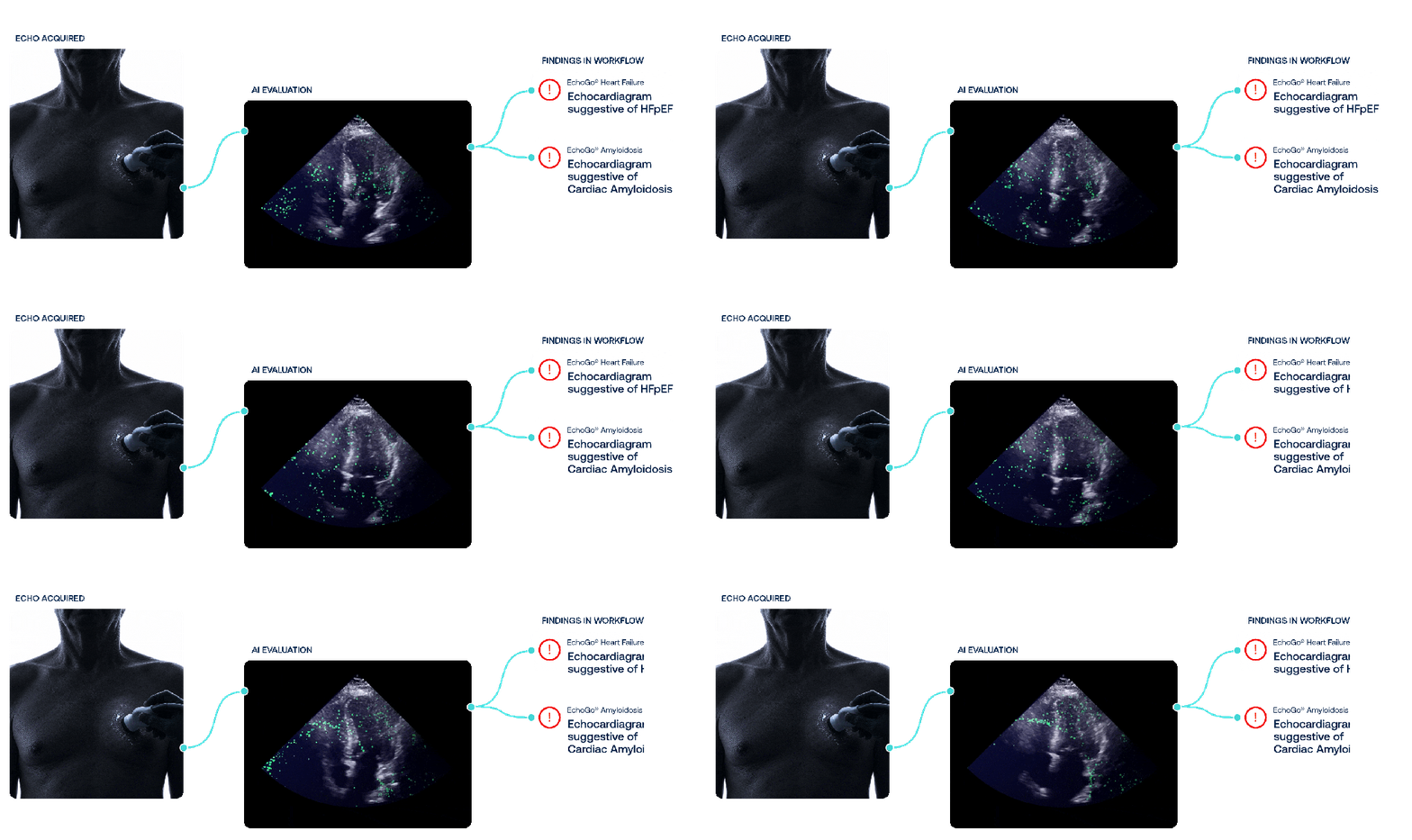
Ultromics raised €48 million in a Series C round in July 2025. The American Heart Association’s Go Red For Women Fund joined this round. It did so to support EchoGo Heart Failure, the company’s tool for detecting HFpEF from echocardiograms. HFpEF means heart failure with preserved ejection fraction.
HFpEF affects women more than men and is often missed. Standard risk scores don’t give a clear result in 60% of cases. Ultromics has tested its algorithm on more than 430,000 echocardiograms. In cases where standard scores fall short, EchoGo gives a diagnostic decision 93% of the time. Up to 64% of HFpEF cases currently go undiagnosed.
An FDA-Cleared AI Tool for Postpartum Heart Failure Screening
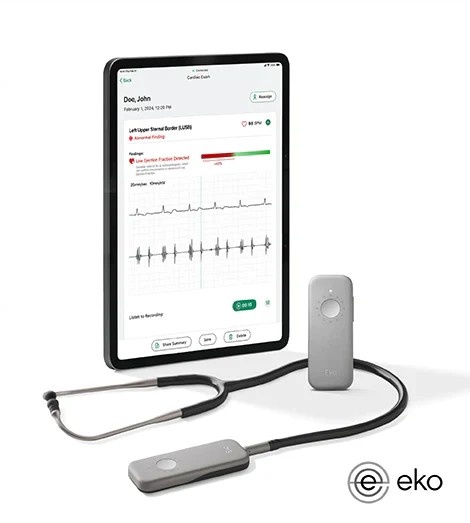
Eko’s ECG-AI Low Ejection Fraction algorithm is one of the few cardiac AI tools that names women directly in its FDA clearance. The device’s approved use includes postpartum women as a group who should be screened. It also includes patients with cardiomyopathy, prior heart attacks, aortic stenosis, and chronic AFib.
A Mayo Clinic study tested the tool on about 1,200 pregnant women in Nigeria. It found that the tool caught pregnancy-related cardiomyopathy with 100% sensitivity and 79.4% specificity. The study reported an AUROC of 0.98. Eko points to this as evidence that the tool works well for this specific group.
About 6.2 million Americans have heart failure. Eko is aiming this device at primary care offices and emergency rooms. In these places, a full echocardiogram often isn’t readily available.
Spot Emerging Opportunities in the Women’s Health Market Before It Gets Crowded
The economic case remains strong. McKinsey Health Institute and the World Economic Forum estimate that closing the women’s health gap could increase economic participation. It could raise the average per capita GDP generated by women by 1.7%. Every dollar invested in women’s health could return about three dollars in economic growth.
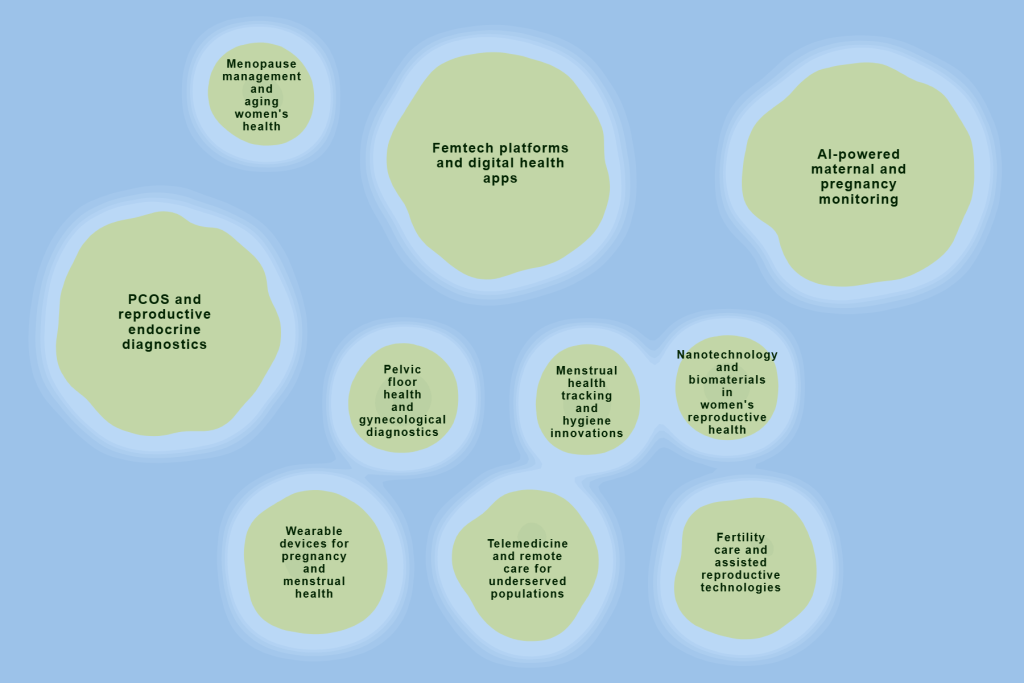
The opportunity is significant, but the market is complex. Companies need to know which technologies are advancing, where investment is increasing, and which white spaces remain open. Slate brings together patents, research papers, and clinical studies to show where the category is heading before it becomes crowded.
Ask Slate: “What are the emerging opportunities in the women’s healthcare market?”