



According to the Global Burden of Disease Study, cases of Urinary tract infections increased by more than 66% between 1990 and 2021. The problem is not just scale. Standard urine culture, still considered the gold standard for UTI diagnosis, often requires 24–48 hours for results. Antibiotic susceptibility information can take even longer. That delay forces clinicians to start UTI treatment before knowing the exact pathogen or resistance profile. This increases the risk of ineffective treatment and unnecessary antibiotic use.
GeneSys Bio is solving this gap with an AI-powered, portable genetic testing platform that detects UTI-causing pathogens and antibiotic resistance markers in 15–45 minutes.
To better understand how they are doing it, we spoke to Andrea Faviere and Enrico Di Oto, CEOs of GeneSys Bio. This article contains notable highlights from our entire conversation.
Also Read:
This interview is part of our exclusive Scouted By GreyB series. Here, we speak with the founders of innovative startups to understand how their solutions address critical industry challenges and help ensure compliance with industry and government regulations. (Know more about startups scouted by GreyB!)
“We wanted to have a solution that was from sample to results, not just chemicals, not just advice, but we want to be able to just own all the process.”
– Andrea Faviere
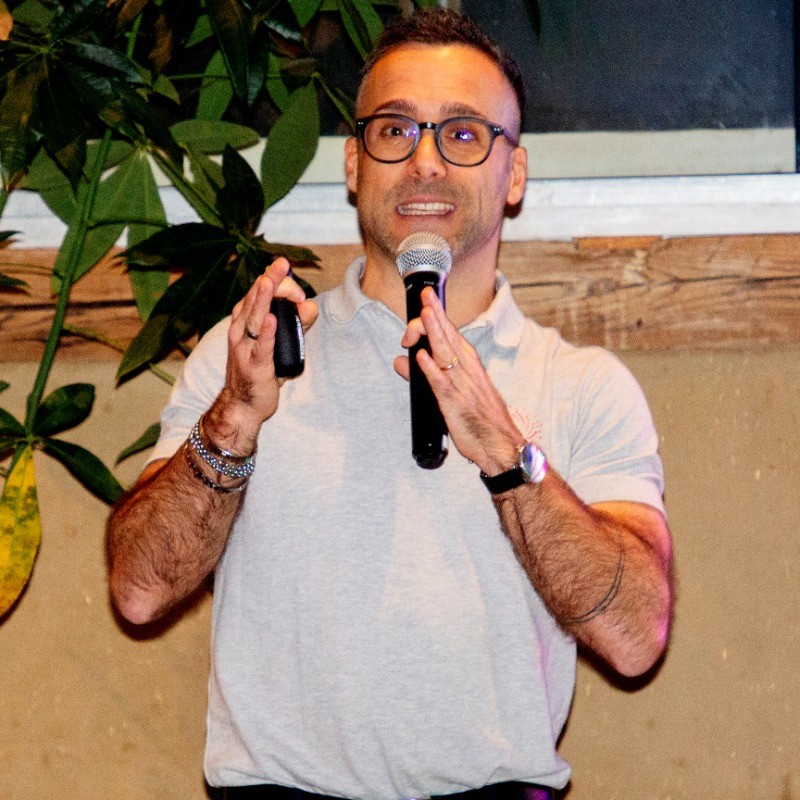
Andrea Faviere is the Co-Founder and CEO of GeneSys Bio. With an MBA/EMBA background in company management and a decade of experience in business development, marketing, and sales, Andrea leads the company’s commercialization strategy and market positioning.
Under his leadership, GeneSys Bio has advanced its rapid diagnostic platform from concept toward validation and regulatory readiness, while attracting support from institutions such as Cassa Depositi e Prestiti, OaCP IE Ltd, and AC75 Startup Accelerator.
His role is to bridge the company’s molecular diagnostics innovation with real clinical adoption, making advanced testing faster, easier to use, and more accessible at the point of care.
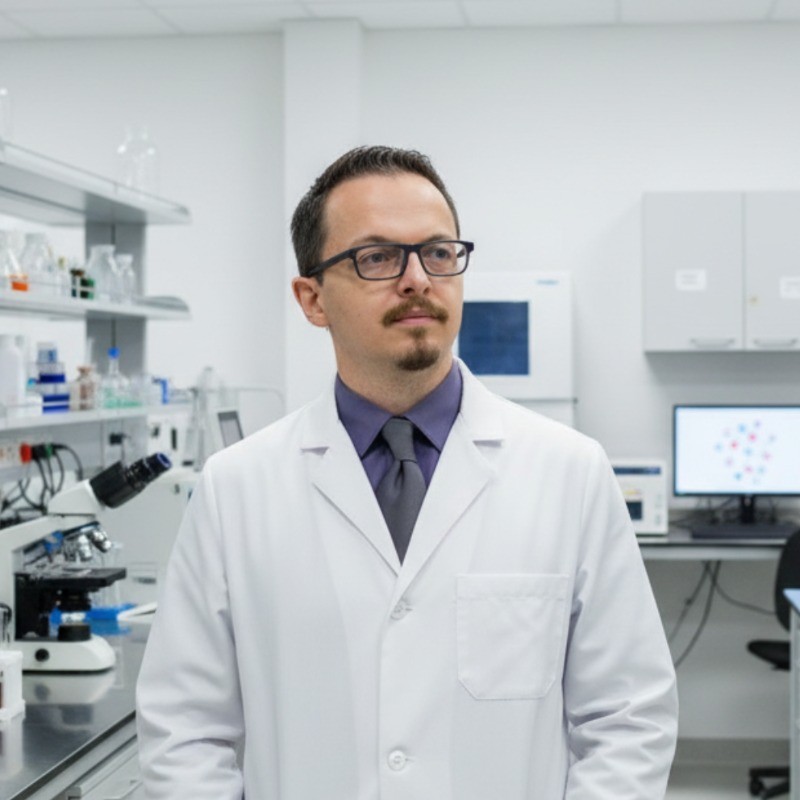
Dr. Enrico Di Oto is the Co-Founder and COO / Investor Relations lead at GeneSys Bio. With a background spanning biology, clinical pathology, oncology, and experimental pathology, Enrico brings 18 years of experience in hospital diagnostics to the company.
Before GeneSys Bio, he co-founded OaCP, Oncology and Cytogenetic Products, where he helped commercialize DNA diagnostic technologies across multiple countries.
At GeneSys Bio, Enrico plays a key role in shaping the company’s scientific and operational strategy, helping turn complex molecular biology into a faster, portable, and clinically reliable testing platform.
GeneSys Bio Tackles Antibiotic Resistance at the Point of Care
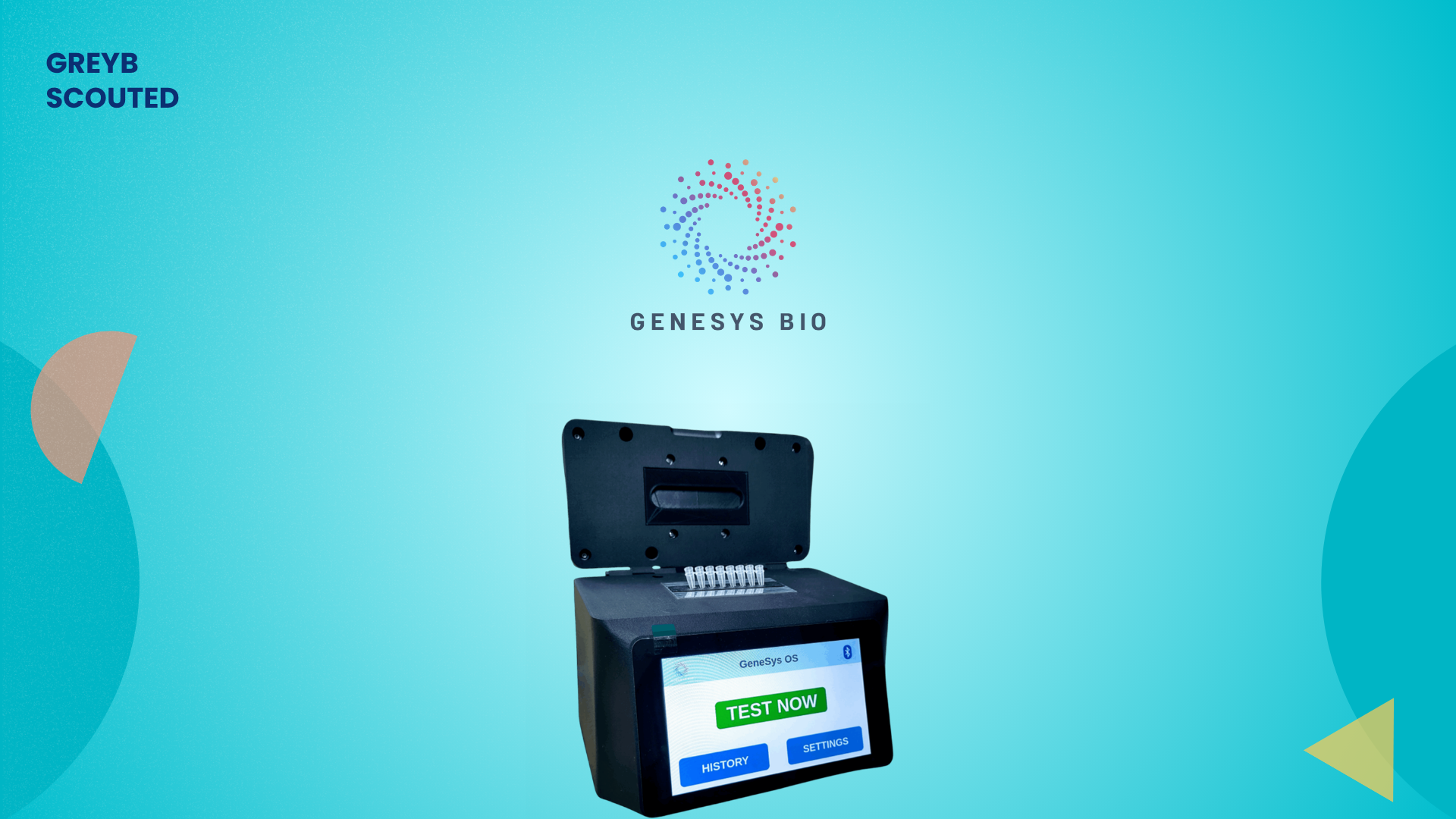
GeneSys Bio is developing an AI-powered portable genetic testing platform for detecting infectious diseases and antibiotic resistance. The company is starting with urinary tract infections because they are widespread, frequently tested, and closely linked to antibiotic misuse. Its first solution combines a disposable kit and a compact device, roughly the size of a toaster, to detect the five most relevant UTI pathogens and two antibiotic resistance families.
The company aims to give clinics, pharmacies, and hospitals a faster way to choose the right treatment without waiting days for central lab results. This matters even more as the WHO’s 2025 antibiotic resistance surveillance report analyzed more than 23 million confirmed cases of bloodstream infections, UTIs, gastrointestinal infections, and urogenital gonorrhea, highlighting the growing need for improved testing capacity.
What is GeneSys Bio doing, and what problem are you trying to solve?
GeneSys Bio is developing an AI-powered portable genetic testing platform for detecting pathogens and antibiotic resistance. We started with urinary tract infections because they are one of the most common infections worldwide, and the current diagnostic workflow is still too slow for many real-world clinical decisions.
With our device and kit together, we can detect the five most relevant UTI pathogens and two families of antibiotic resistance in 15–45 minutes. This means doctors, clinics, pharmacies, and other care settings can identify the infection and understand resistance risk much faster than with traditional testing.
Our goal is to help clinicians define a proper treatment without the fear of false results or antibiotic resistance. We are not only trying to diagnose the infection; we are trying to support better antibiotic decisions from the start.
How does your technology reduce a test that usually takes much longer to just 15–45 minutes?
The simple explanation is that we empower the DNA testing reaction through our proprietary chemistry and device design. Our kits carry the biomarkers needed for detection, and our device is built to run the reaction in a very compressed timeframe.
The device also includes an in-house algorithm that helps interpret the result and check reliability. So the speed comes from the combination of chemistry, hardware, and software, not from one single feature.
I usually call it the magic of science, but behind that magic, there is a lot of design work. We are taking a molecular biology approach and making it faster, smaller, and easier to use.
Why did you start with UTIs, and where else could the platform be used?
We started with urinary tract infections because the need is very clear. There are hundreds of millions of cases every year, and many countries need faster and more reliable testing to reduce unnecessary antibiotic use.
But our platform is not limited to UTIs. We designed it with a broader One Health vision, meaning it can eventually move across human health, animal health, and environmental testing. In human health, we could address sexually transmitted infections, prosthetic joint infections, malaria, tuberculosis, and other infectious diseases.
The same approach could be applied to infectious diseases in veterinary settings. In environmental testing, we see strong potential for waterborne pathogens, which are a major issue not only in developing countries but also in developed markets.
What makes GeneSys Bio different from other rapid diagnostic solutions?
We built everything around the user experience. Our aim is that almost anyone can run the test. You take the sample, drop it into a vial, place the vial into the device, press start, and read the result.
The AI and algorithmic part is important because it helps check the process and make sure the result is reliable. We do not want users to worry about interpreting uncertain results or managing complex lab steps.
Another important difference is that we combine pathogen detection with antibiotic resistance detection. Many solutions focus only on identifying the organism, but for UTIs and many other infections, knowing resistance is critical for choosing the right treatment.
Where does your strongest innovation sit: software, hardware, or chemistry?
We worked on every part of the solution. We came into this space with previous experience in cancer DNA diagnostics, and during COVID, our team developed a PCR kit that could detect COVID and three major variants in one 45-minute test.
From there, we looked at the market and understood that innovation was needed across the whole workflow. We shrank PCR into a portable device, developed proprietary chemistry for the kit, and built an algorithm behind the device.
We expect to protect the hardware with patents. We have a patent around the UTI kit, and the algorithm will be protected through copyright. The real strength is that we own the process from sample to result, instead of offering only one isolated component.
How accurate is the GeneSys Bio platform?
Right now, we have tested both the device and the kit in our own lab, and we have reached 99% sensitivity. Since we are working with PCR and molecular biology standards, we expect a high level of accuracy.
The next important step is third-party validation. We are preparing validation tests so that external data can confirm the performance in an independent way.
For us, this is essential. Speed is useful only if the result is reliable. We want clinicians and users to trust that a fast result is still a safe result.
What regulatory path are you pursuing?
Since we are based in Europe, our first regulatory path is IVDR certification. We are targeting a Class C self-test pathway, which is one of the higher levels of certification.
We know this is a long road, especially for a medical diagnostic device. The validation work we are doing is part of that regulatory strategy.
At the same time, we are exploring ways to reach the market earlier with different configurations or customized versions of the solution. But for clinical use, we know certification is necessary, and we are already working toward it.
How do you balance speed with patient safety?
Our approach is strictly clinical. Even if there are ways to accelerate market entry, we want to comply with the highest safety expectations because the answer we provide can influence treatment.
Today, clinicians often face a tradeoff. They can have rapid data with lower accuracy, or accurate data with a longer waiting time. We want to combine both speed and reliability.
That means we need deep validation and strong clinical studies. The patient should receive the right answer to a critical question, and we need to be sure first for ourselves that the data is reliable.
How does GeneSys Bio fit into existing clinical workflows?
It depends on the workflow of each hospital, clinic, or facility. Some clinics outsource testing to central labs. Others have internal labs. Each setting has different logistics, timing, and responsibilities.
Because our solution is portable and easy to use, it can be adapted to many workflows. It could support emergency use, screening, internal lab testing, or other cases, depending on the customer’s needs.
Our business model also supports adoption. We plan to use a razor-and-blade model, where the device can be provided with a minimum recurring order of kits. That helps reduce upfront cost and makes adoption easier for clinics and hospitals.
What are your expansion plans beyond the first UTI kit?
UTIs are our starting point, but the platform is much broader. We want to address other infections in human health, including STIs, tuberculosis, malaria, and prosthetic joint infections.
We also want to expand into animal health and environmental testing. Waterborne pathogens are especially interesting because they are a serious problem in many parts of the world.
The long-term vision is a portable genetic testing platform that can move across different One Health applications. We are starting where the clinical need is urgent, and the market is ready, then expanding from there.
Meet our Interviewer – Shabaz Khan, Marketing Manager at GreyB

Shabaz Khan, Marketing Manager
Want to find other scalable startups working on healthcare technologies? Please fill out the form below to contact our experts.