

Value Delivered
GreyB identified strong primary prior art and combined it with a secondary reference. This helped invalidate a tough composition claim in a materials science patent and supported the defense of prominent display manufacturers in a lawsuit.
The work went beyond locating references. GreyB used a structured approach to convert mass% disclosures into mol% across nearly 500 closely relevant documents. The team built a custom Excel calculator for this conversion.
This gave the attorneys a defensible, like-for-like mapping of constituents against the claimed ranges. It helped them argue that the claimed glass composition was not inventive. The strategically chosen SrO concentration was shown to be a routine combination, supported by well-known functional teachings in the art.
Problem Solved
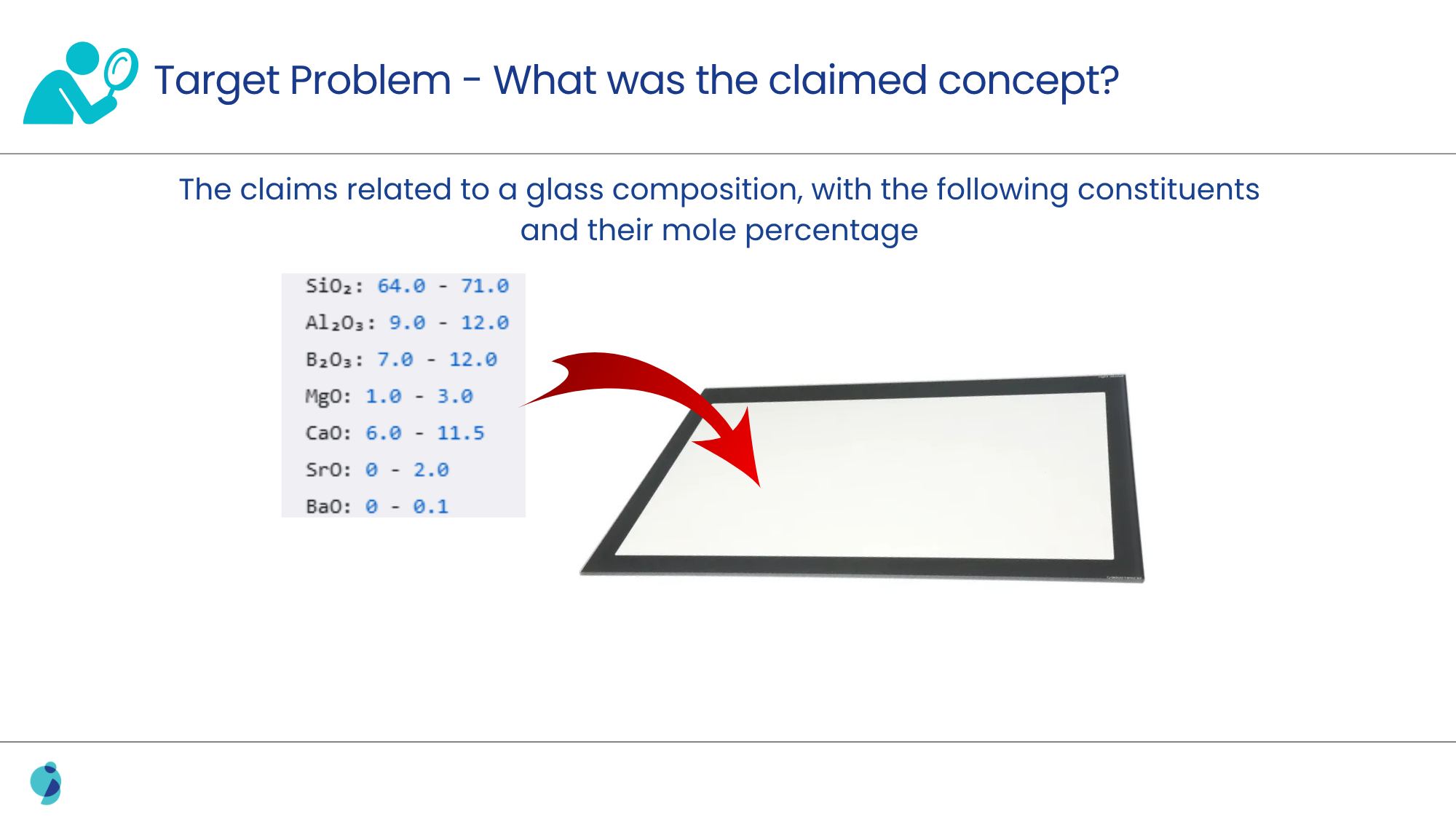
The client faced a patent dispute involving an alkali-free glass composition claim. The claim was restricted by mole-percent ranges of nearly ten constituents, including SiO₂, Al₂O₃, B₂O₃, MgO, CaO, SrO, BaO, and others.
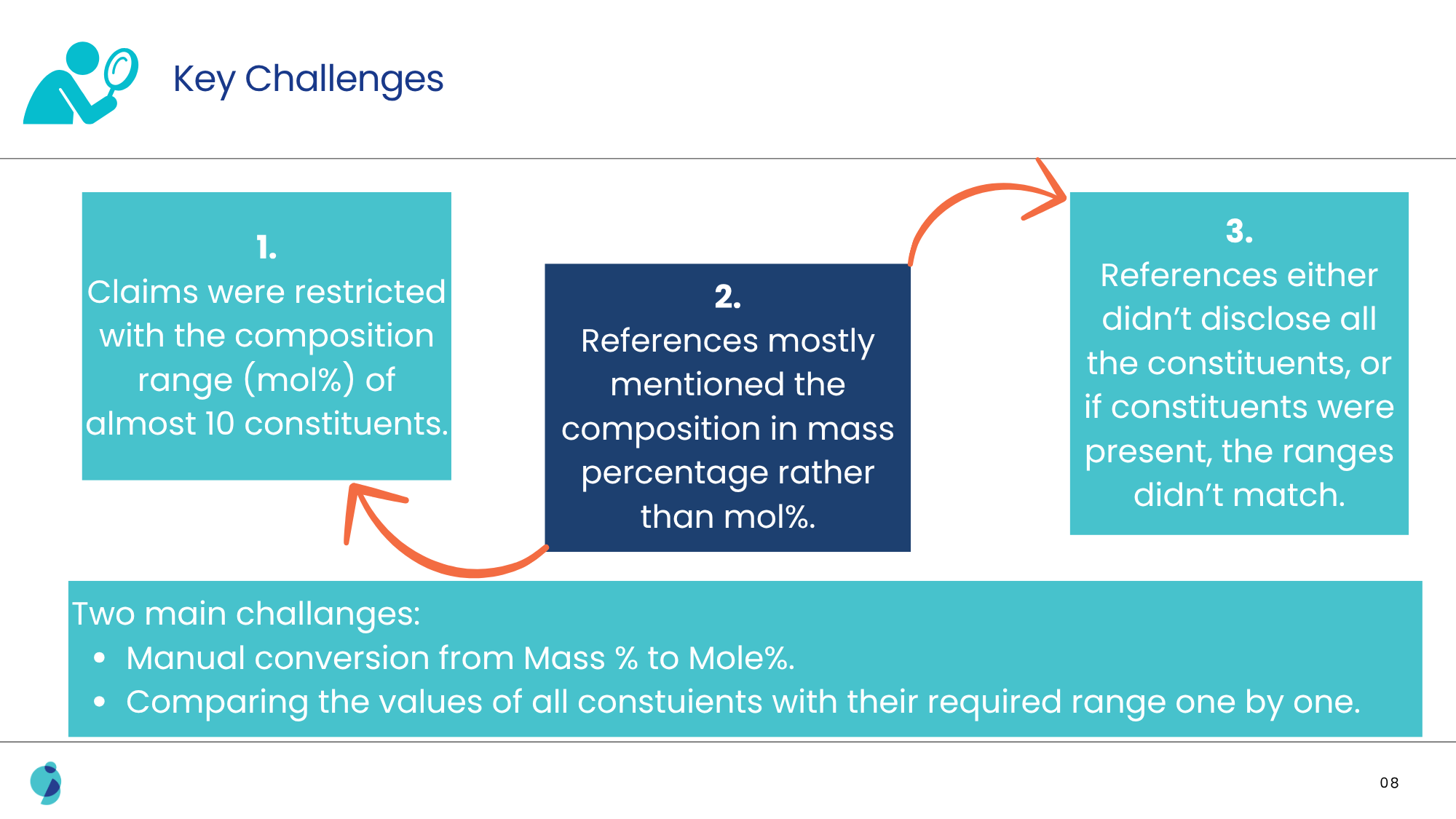
The research goal was to identify prior art that disclosed this exact compositional fingerprint before the cut-off date. The challenge had two parts.
First, most patented and non-patented literature reported compositions in mass percentage instead of mol%. This made direct comparison impossible without conversion.
Second, even when the constituents were disclosed, the ranges rarely aligned across all ten elements at the same time. A comprehensive review yielded close candidates. However, none matched every constituent. The claimed SrO range remained a key gap.
Solutions Offered
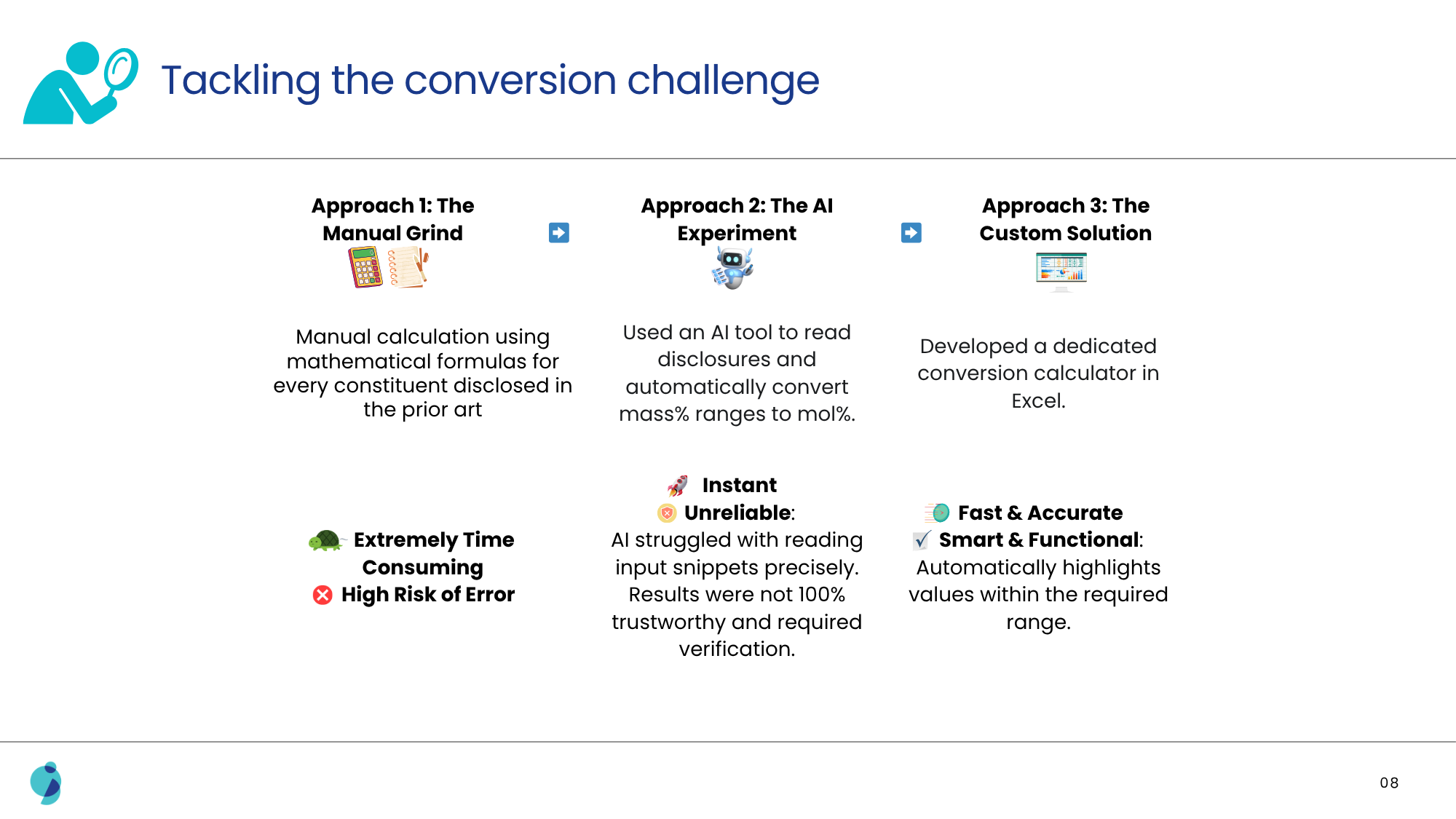
The turning point came when the team stopped relying on manual conversions and AI tools. Manual conversions were slow and error-prone. AI tools were faster but unreliable for snippet-level inputs.
Instead, GreyB built a dedicated mass%-to-mol% conversion calculator in Excel. The calculator automatically flagged values that fell within the claimed ranges.
Using this calculator, the team streamlined the review of nearly 500 closely relevant documents. This revealed a near-perfect primary prior art match for most of the composition.
To bridge the remaining SrO gap, the team shifted from range-matching to functionality-matching. They examined why the patent restricted SrO to ≤ 2.0 mol%. The reason was to control density, modulus, and strain point.
The team then located a secondary reference that disclosed the same SrO concentration. This reference tied the concentration to the same desirable properties for high-quality alkali-free glass.
Together, the two references established a clear motivation for a person skilled in the art to combine them. This completed the invalidity argument and helped the client defend the lawsuit.
Get the full case study to discover how GreyB invalidated composition claims in a high-stakes materials science lawsuit.