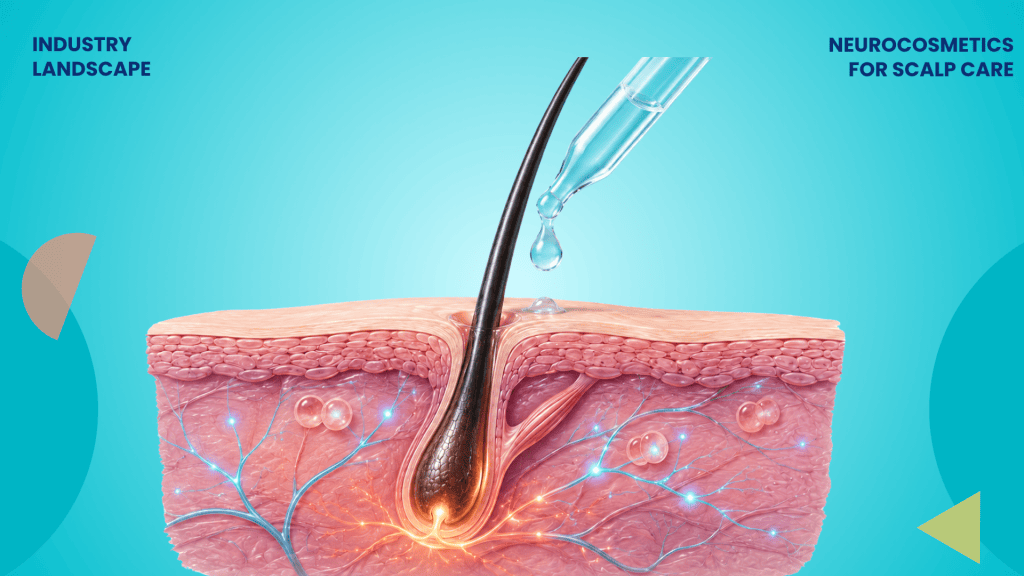




South Korea has collapsed the distance between the clinic and the consumer. Active ingredients such as PDRN, exosomes, and polynucleotides, that once required a dermatologist’s needle, are now on Olive Young’s shelves. These products are available at a tenth of the clinical price and are selling out within days of launch.
That compression is not a retail phenomenon. It is a structural shift in how skincare innovation moves through the world. And it is accelerating.
South Korea is the world’s No. 2 cosmetics exporter as of Q1 2025, with $3.61 billion in shipments, trailing only the United States ($3.75B). US imports of Korean cosmetics reached $1.7 billion in 2024, a 54% year-over-year surge, while Japan’s K-beauty imports jumped 120.8% that year, surpassing French imports.
This makes K-beauty the global gold standard for skincare innovation.
Korean beauty trends are notoriously known for their fast lifecycle, which makes many R&D leaders outside Korea hesitate about which ones to pick for the next R&D cycle.
This report identifies five transformative trends that are reshaping the Korean beauty landscape in 2027.
Trend 1: MediCosmetic: PDRN
Medicosmetic describes the rapid migration of active ingredients once exclusive to clinical aesthetic medicine into over-the-counter, daily-use Korean skincare products sold at accessible price points on Olive Young and Coupang. These ingredients include PDRN (polydeoxyribonucleotide), EGF (epidermal growth factor), tranexamic acid, dexpanthenol, and exosome-infused topicals.
PDRN, originally developed for wound healing and first used in Korean aesthetic clinics via Rejuran injectable boosters around 2014, made its mainstream retail debut in 2017 with Rejuran’s skincare line.
However, the true acceleration came in 2023, when Jennifer Aniston referenced the “salmon sperm facial” in a Wall Street Journal interview. And later, Kim Kardashian showcased getting a PDRN facial on The Kardashians, catalyzing global consumer curiosity.
On Olive Young, PDRN appears in 33 of the Top 50 skin longevity products, behind only Hyaluronic Acid (35) between October 2025 and March 2026.
Three structural forces make this trend durable:
- Consumer shift toward clinically proven efficacy over aspirational “glow” marketing, particularly among post-pandemic consumers who became comfortable with at-home clinical tools.
- TikTok’s K-Pharmacy pipeline: OTC K-pharmacy brands (Rejuran, IOPE, VT Cosmetics) that were once Korea-only are now viral sellouts at Olive Young’s global e-store within days of going live.
- Price democratization: Where in-clinic PDRN facials in Seoul cost KRW 200,000–400,000 per session (~$150–300), OTC products like Medicube’s PDRN serum retail at $25–40, creating a 6–10x accessibility gap that fuels demand.
PharmaResearch Corp, a South Korean regenerative medicine and aesthetics company, has become a strong example of how PDRN and polynucleotide-based skin repair technologies are moving from clinical use into the cosmetic market.
The company works around patented DOT™ PDRN and DOT™ PN technologies, which are DNA-derived materials used for tissue regeneration. Its best-known brand, Rejuran, applies this platform to skin rejuvenation, especially through PN-based injectable skin boosters and PDRN-based cosmetic skincare products.
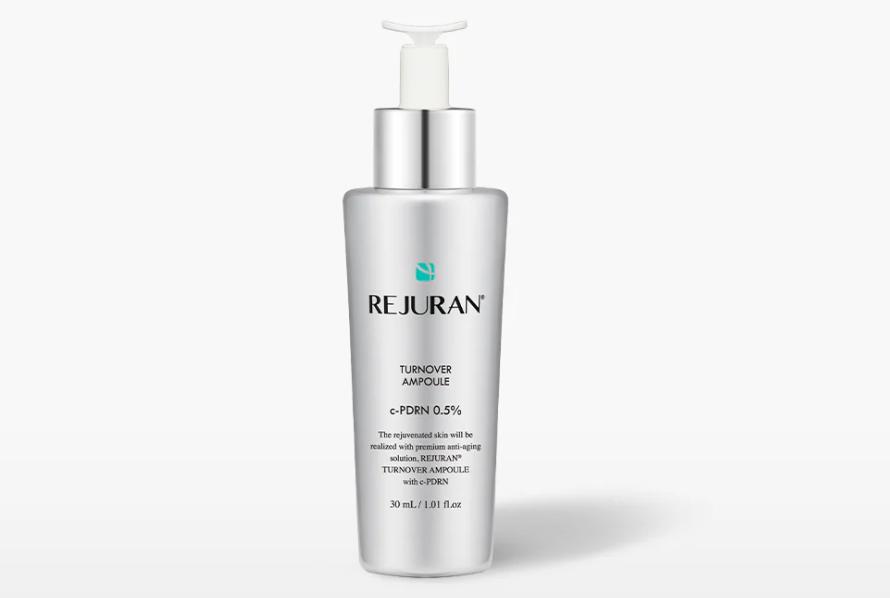
Rejuran uses purified DNA fragments, commonly sourced from salmon DNA, to support skin repair, hydration, elasticity, and anti-aging positioning. PharmaResearch’s Rejuran i product, for example, lists PN as its key ingredient and is intended for use on the face, eye area, neck, hands, and décolleté.
The company is bringing PDRN-linked solutions to market through two main routes: professional aesthetic treatments and consumer skincare.
On the clinical side, Rejuran is marketed as a wrinkle-reduction medical device based on DOT™ PN technology, with PharmaResearch stating that it has been used by more than 500,000 people annually since its 2014 launch. On the skincare side, Rejuran Cosmetics uses patented c-PDRN® and positions it as a daily derma-skincare solution inspired by regenerative science.
This makes PharmaResearch a useful case study for the cosmetic PDRN trend: it is not only researching DNA-based regenerative ingredients but also converting them into branded, scalable products across clinics and skincare retail.
Trend 2: Biotech Actives: Exosomes
Exosomes are nano-sized extracellular vesicles (30–150 nm) that carry growth factors, microRNAs, and proteins. It functions as a skin’s cellular communication network, signaling repair, regeneration, and collagen synthesis.
Unlike PDRN (which is a structural DNA fragment), exosomes deliver biological instructions directly to target cells.
Korean biotech labs began standardizing exosome protocols for clinical use in 2023. By 2026, the technology had moved from experimental to mainstream in Seoul dermatology clinics and was rapidly entering the retail market.
Key drivers of momentum:
- Cell-level intelligence: Exosomes do not simply hydrate — they deliver instructions, stimulating fibroblast activity, collagen synthesis, and skin repair without the inflammatory response that retinoids or acids trigger. This “smart skincare” positioning resonates with a skin-barrier-conscious generation.
- Synergistic pairing: Seoul dermatologists are now combining PDRN (repair) + exosome (communication) in protocols, with brands rapidly translating this dual-active approach into serum formats. Products at this intersection command premium pricing ($25–$70 for OTC formats).
- Patent acceleration: KIPO filings around exosome-based delivery systems jumped ~60% from 2023 to 2024, with applicants including Amorepacific Research Institute, Huons (pharma), CHA Biotech, and multiple university spinouts. Several of these remain in development, with no commercial product yet, representing white-space licensing opportunities.
Under APR Corp, Medicube has built an exosome device‑serum ecosystem around products such as the Zero/One Day Exosome Shot and the PDRN Pink Collagen Exosome Shot.
These serums use micro‑sized, needle‑shaped spicules coated with exosomes to physically enhance penetration, marketed as “microneedling in a bottle” and supported by claims of significantly higher absorption than with conventional application.
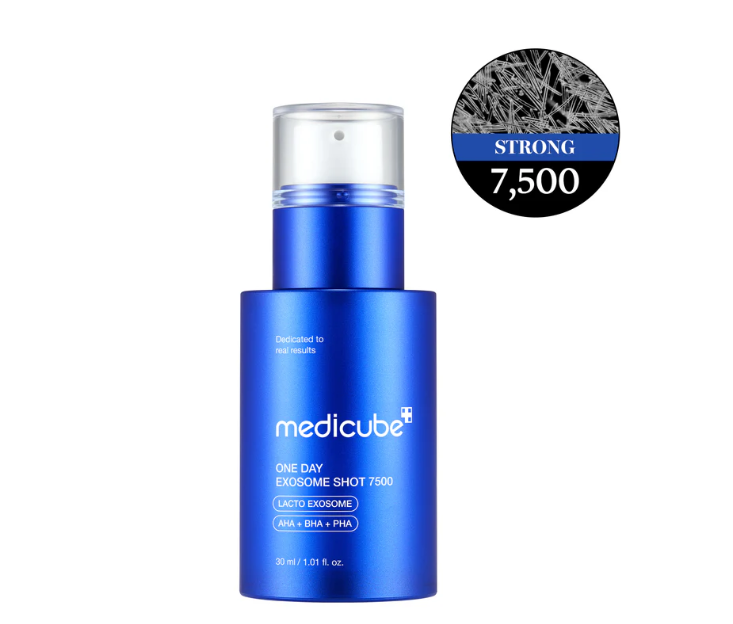
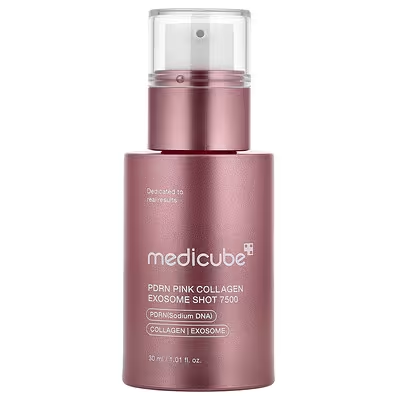
Independent reviews note that Medicube’s exosome shot leverages patented lactobacillus‑derived exosomes carrying peptides, amino acids, glutathione, and vitamins, aligning tightly with the “smart vesicle” narrative in your trend write‑up.
On the peptide side, the PDRN Pink Collagen Exosome Shot combines high‑purity salmon PDRN with collagen, hyaluronic acid, niacinamide, and peptide complexes, marketed for plumping, wrinkle‑smoothing, and texture refinement, with strong social and Amazon traction across both 2,000 and 7,500 “exosome” versions.
Strategically, APR is doubling down on biotech by bringing PDRN production in‑house and announcing plans for injectable skin‑regeneration therapies, blurring the line between clinic‑grade actives and cosmetic retail and reinforcing the medicosmetic–biotech continuum behind this trend.
Trend 3: Novel Korean Botanicals
While centella asiatica, snail mucin, and ferments have graduated to global commodity status, a new wave of distinctly Korean-origin botanicals is filling the innovation pipeline.
Heartleaf (Houttuynia cordata, known in Korea as eoseongcho, 어성초), a perennial herb native to the damp, shaded forests of Korea and East Asia, has been used in traditional Korean medicine for over 1,000 years to treat infections and inflammation.
Heartleaf’s commercial breakthrough came through Anua’s Heartleaf 77% Soothing Toner, which went viral on TikTok and became the #1 toner on Olive Young’s Glowpick rankings in 2024–2025, retailing at $18 for 250ml.
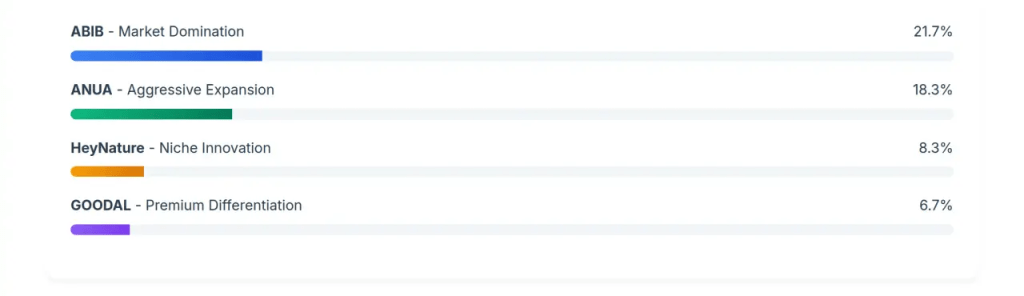
As of September 2025, over 600 products in the Korean market list heartleaf as a key INCI ingredient, a 2X growth in 18 months, which confirms its evolution from a trend to a market standard.
Abib dominates with 13 heartleaf-centric products, while Anua deploys 11 across the full category range.
Beyond heartleaf, other novel Korean botanicals gaining traction include:
- Korean mugwort (Artemisia princeps) — An adaptogenic herb with antioxidant and anti-inflammatory properties; featured by Mixsoon and Beauty of Joseon.
- Jeju Island botanicals (green tea, volcanic minerals, tangerine extract) — These are regionally sourced, premium ingredients that command 15–20% price uplift.
- Rice ferment filtrates (not standard bifida) — A new proprietary strain of rice-fermented actives from small Korean biotech labs claiming superior skin-brightening vs. niacinamide.
- Spicule actives (sea sponge microcrystalline structures) — It is used by VT Cosmetics’ Reedle Shot line for at-home microchanneling effects; a novel delivery mechanism rather than a botanical, but uniquely Korean-commercialized.
Anua’s flagship Heartleaf 77% Soothing Toner is built around a very high heartleaf extract load and is positioned for soothing, hydration, redness reduction, and acne‑prone skin support, which fits the “post‑centella” shift toward next‑generation Korean calming botanicals.
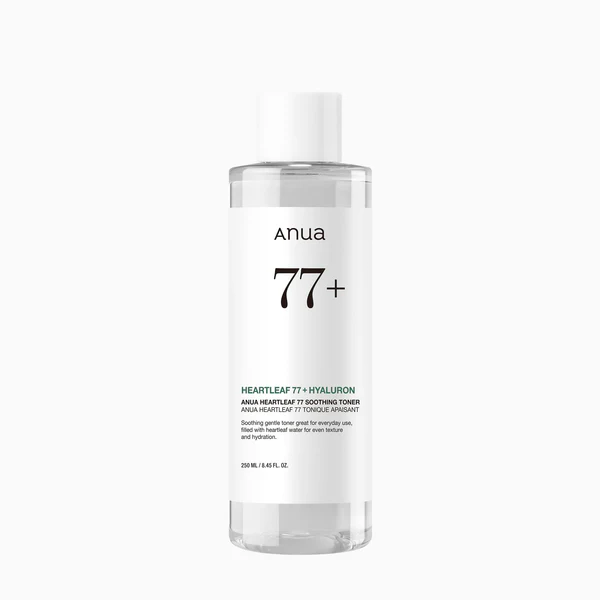
On Olive Young, the product is sold as a 2025 Awards item, carries a 4.8 rating from hundreds of reviews, and is described as clinically tested for 24‑hour hydration, non‑comedogenicity, and reductions in acne grading score and sebum after four weeks.
What makes Anua especially relevant is not just one hero SKU, but how it has expanded heartleaf into a broader ingredient franchise.
Olive Young’s Anua brand page explicitly defines the brand around naturally derived and derma ingredients “from Heartleaf for soothing the skin,” while listing multiple heartleaf products such as the Heartleaf Cleansing Oil, Heartleaf 77 Hyaluron Soothing Toner, Heartleaf Clear Pad, Heartleaf Quercetinol Pore Deep Cleansing Foam, and Heartleaf Silky Moisture Sun Cream.
This is exactly the commercialization pattern highlighted in your document, where heartleaf evolves from a single breakout botanical into a full routine architecture.
In strategic terms, Anua shows how Korean brands are converting local botanical heritage into globally legible problem‑solution skincare. Rather than selling “natural beauty” broadly, Anua frames heartleaf as a clinically supported calming active for sensitive, oily, and acne‑prone consumers.
Trend 4: Postbiotic & Microbiome Science
Korea’s fermentation tradition, which gave the world galactomyces ferment filtrate (SKII’s Pitera predecessor), bifida ferment lysate (Estée Lauder’s Advanced Night Repair backbone), and saccharomyces ferment, is now undergoing a second-generation revolution.
The new frontier is postbiotics — the specific bioactive metabolites, enzymes, lipoteichoic acids, and exopolysaccharides produced by proprietary fermentation strains — rather than the live organisms (probiotics) or their food (prebiotics).
The global microbiome cosmetics market was valued at $631 million in 2024 and is projected to reach $1.24 billion by 2032 (CAGR 8.8%), with Asia-Pacific commanding the largest volume share (38%).
Korea’s unique biodiversity, particularly microbial strains from the volcanic hot springs of Jeju Island and mountain forest soils, is yielding novel fermentation strains with skin-conditioning profiles that European or American competitors have not replicated.
Critically, Google searches for ‘skin microbiome’ rose 176.9% year-over-year between August 2024 and July 2025.
The MFDS (Korea’s FDA) has begun issuing guidance on postbiotic cosmetic claims, indicating that the category is transitioning from niche to regulated mainstream status.
- Postbiotic market trigger: Next-generation postbiotic complexes demonstrated up to 35% improvements in skin barrier integrity compared with standard moisturizers in controlled studies, providing the clinical narrative that drives formulators and dermatologists.
- Beyond bifida: Korean biotech startups are filing IP around novel Lactococcus, Leuconostoc, and Weissella strains fermented in rice bran, sake lees, and endemic Korean botanicals — generating unique metabolite profiles not available from existing ingredient suppliers.
- Microbiome diagnostics convergence: Korean labs (BIOTALIFE, Sequential Korea) are coupling DNA sequencing of individual skin microbiomes with personalized postbiotic recommendations, creating a data-driven prescription skincare market estimated to reach $2.14 billion globally by 2033.
Ma:nyo’s Bifida Biome Complex Ampoule is explicitly positioned around skin-barrier strengthening, moisture retention, and wrinkle minimization, which aligns closely with postbiotic microbiome science as a barrier-first, clinically legible skincare trend.
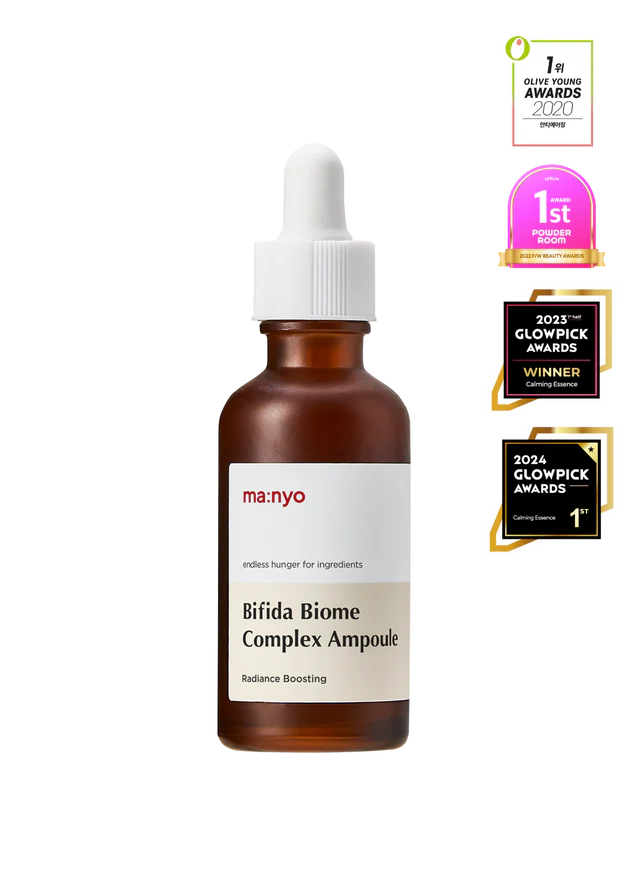
On its official US product page, Ma:nyo says the serum fortifies the skin barrier and includes “Bifida Biome,” five probiotics, and ten types of hyaluronic acid, while citing a three-week human study and consumer-reported calming benefits for skin damaged by external irritants.
Ma:nyo’s Bifida Biome line spans toner, ampoule, cream, pads, masks, and sets, demonstrating how a fermented/postbiotic ingredient system can be developed into a routine-based franchise rather than a one-off launch.
The brand’s own ingredient explainer defines Bifida Biome as a combination of bifida ferment lysate and microbiome-supportive components intended to strengthen, restore, and replenish the skin barrier, directly matching the report’s argument that Korean brands are moving beyond basic bifida into more systematized postbiotic complexes.
Strategically, Ma:nyo shows how K-beauty brands are commercializing microbiome science in a consumer-friendly way. Instead of emphasizing technical strain names alone, Ma:nyo turns fermentation science into a clear value proposition: better barrier resilience, less irritation, and long-term skin health for sensitive or over-treated skin.
Trend 5: AI-Powered Personalization & Daily BeautyTech
This trend integrates two parallel Korean innovations, i.e., AI-driven skin diagnostics and daily-use smart-home beauty devices. Together, they represent the shift from product-as-commodity to skincare-as-a-service.
On the AI diagnostics side, Amorepacific has led the charge by partnering with Microsoft Azure OpenAI in March 2025 to launch an AI Beauty Counselor (AIBC) on Amore Mall. It offers personalized skin analysis and product recommendations based on purchase history and chat data.
The company’s Skinsight technology, introduced at CES 2026, uses deep learning to measure skin tightness, hydration, and aging biomarkers from smartphone images. Amorepacific has filed four PCT patent applications around Skinsight and has secured registrations in both Korea and the US.
On the device side, Medicube’s AGE-R Booster Pro (RF + LED + microcurrent multi-modal device) accumulated over 100 million TikTok views after Kylie Jenner was photographed using it at a brand pop-up in Los Angeles.
APR Corp. (Medicube’s parent company) reached cumulative device sales of 1.5 million units by November 2023, with over 80% of revenue from international markets. The South Korean beauty devices market reached $1.32 billion in 2024 and is projected to grow at a 13.8% CAGR through 2034, reaching $4.81 billion.
What distinguishes the Korean approach:
- Speed-to-market: Korean brands launch hundreds of products monthly; AI-driven consumer feedback loops compress iteration cycles from 18 months to 8–12 weeks.
- Hardware-software integration: Devices are designed to pair with specific serum formulations (e.g., a Medicube device + PDRN serum protocol), creating an ecosystem lock-in similar to Apple’s hardware-software model applied to skincare.
- On-demand manufacturing: SmartSKN’s K-OWN platform and Amorepacific’s COSMECHIP technology enable formulation at the point of sale, reducing inventory obsolescence and enabling a 10,000-SKU-equivalent market with zero overstock.
Amorepacific’s AI Beauty Counselor, developed with Microsoft’s Azure AI stack for Amore Mall, is designed to recommend products based on prior purchases, brand expertise, and ongoing conversation history, making it a strong fit for your report’s “daily beauty tech” and hyper-personalization theme.
Microsoft’s profile for the launch says the system uses GPT-4o and 4o-mini via Azure OpenAI Service, and that the company plans to add an online skin-diagnosis tool, indicating that Amorepacific is combining conversational AI with diagnostic intelligence rather than offering static recommendations.
The company is also extending this trend into hardware and sensor-led diagnostics.
At CES 2026, Amorepacific introduced Skinsight, an “electronic skin” platform co-developed with an MIT research group. It analyzes real-time skin-aging signals and delivers personalized care recommendations, while its AI skin analysis technology in Samsung’s AI Beauty Mirror evaluates pores, redness, pigmentation, and wrinkles using a dataset of more than 450,000 cases.

The same CES announcement links those diagnostics to makeON devices, such as the ONFACE LED Mask and Skin Light Therapy 3S, showing how Amorepacific is building an integrated software-plus-device ecosystem around personalized skincare.
Commercially, Amorepacific is rolling out this model via AMORE CHAT on Amore Mall, where generative AI compares products, summarizes reviews, answers beauty questions, and refines recommendations as users continue interacting.
That makes Amorepacific a strong case study for Trend 5 because it demonstrates how Korean beauty companies are turning AI from a discovery tool into an end-to-end service layer spanning diagnosis, recommendation, and treatment guidance.
Strategic Implications
These trends in this report are not independent signals. They are a systematic convergence of clinical science, biotechnology, and digital intelligence into a redefined standard for skincare efficacy.
For R&D leaders outside Korea, the question is how to act quickly and in which sequence.
Three priorities to take center stage.
Build ingredient platforms, not product pipelines. The brands generating a durable competitive advantage in 2027 are not launching products. They are constructing ingredient-led ecosystems that span clinical channels, OTC retail, and consumer devices. Every R&D investment decision should be stress-tested against one question: Does this ingredient anchor a scalable franchise, or does it serve a single formulation cycle?
Compress the clinical-to-commercial translation window. Korea’s structural advantage is not discovery alone; it is velocity. Clinical-grade actives move from in-clinic protocols to mass-retail formats in under 24 months, at price points that democratize access by a factor of six to ten.
For R&D teams operating outside Korea, the immediate audit is internal. Find which regulatory, procurement, and formulation bottlenecks are extending your translation timeline, and which can be structurally eliminated.
Treat AI personalization as core infrastructure, not a marketing layer. Amorepacific’s diagnostic platform, Samsung’s AI Beauty Mirror, and SmartSKN’s point-of-sale formulation capability signal that the next durable competitive moat in beauty will be a proprietary data-and-device ecosystem.
Organizations that defer AI skin diagnostics as a future capability risk ceding the personalization layer entirely to platform incumbents.
The strategic window is compressing. The evidence is already in the market. The decision is whether to lead it or follow it.