
Value Delivered
The research uncovered multiple §102-type product references and a strong patent reference demonstrating the claimed edge-swipe interface before the relevant date. By combining product demonstrations with patent evidence, the client gained a more defensible invalidity position than conventional patent searching alone could have established.
The findings showed that the claimed interaction was already implemented across several early smartphones, while a patent associated with one of those products provided stronger technical documentation of the same functionality.
Problem Solved
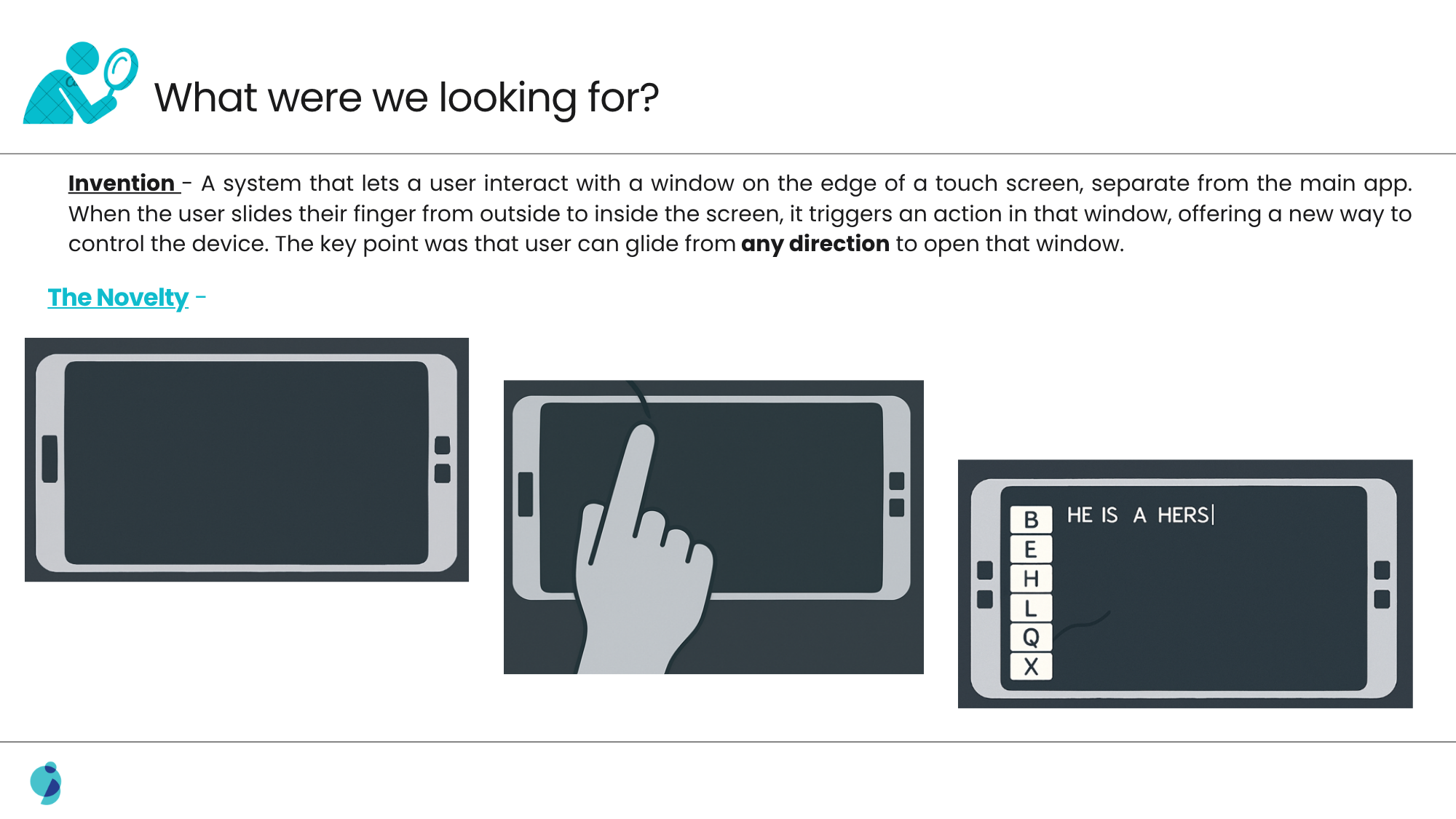
The target claim covered a separate window positioned along the edge of a touchscreen. When a user glided a finger from outside to inside the screen, from any direction, the gesture opened or triggered an action within that window, independently of the main application.
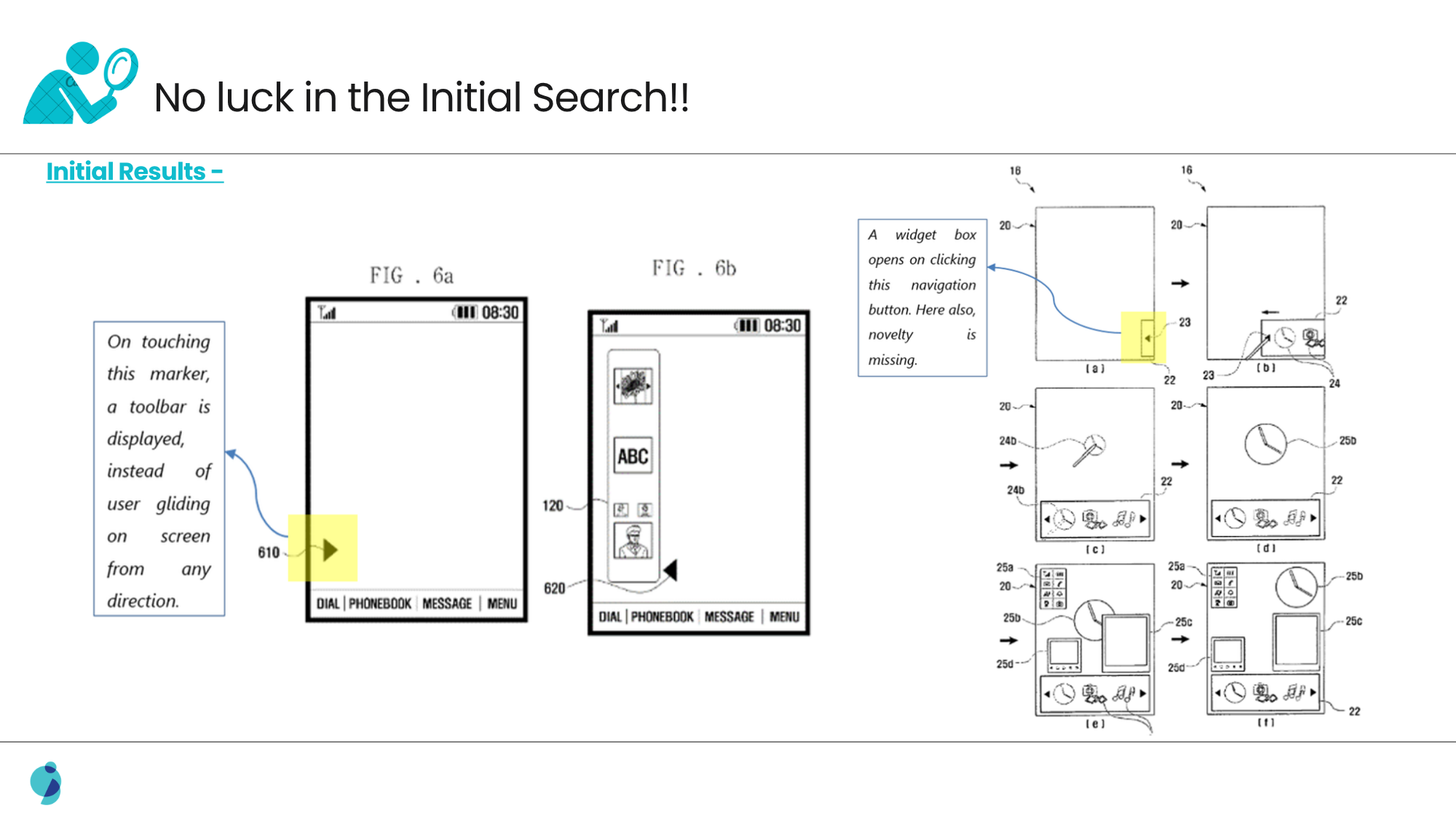
Initial patent searches identified interfaces in which a toolbar or widget window appeared after selecting a marker or navigation button. However, these references required a tap or click and did not disclose the claimed gliding gesture.
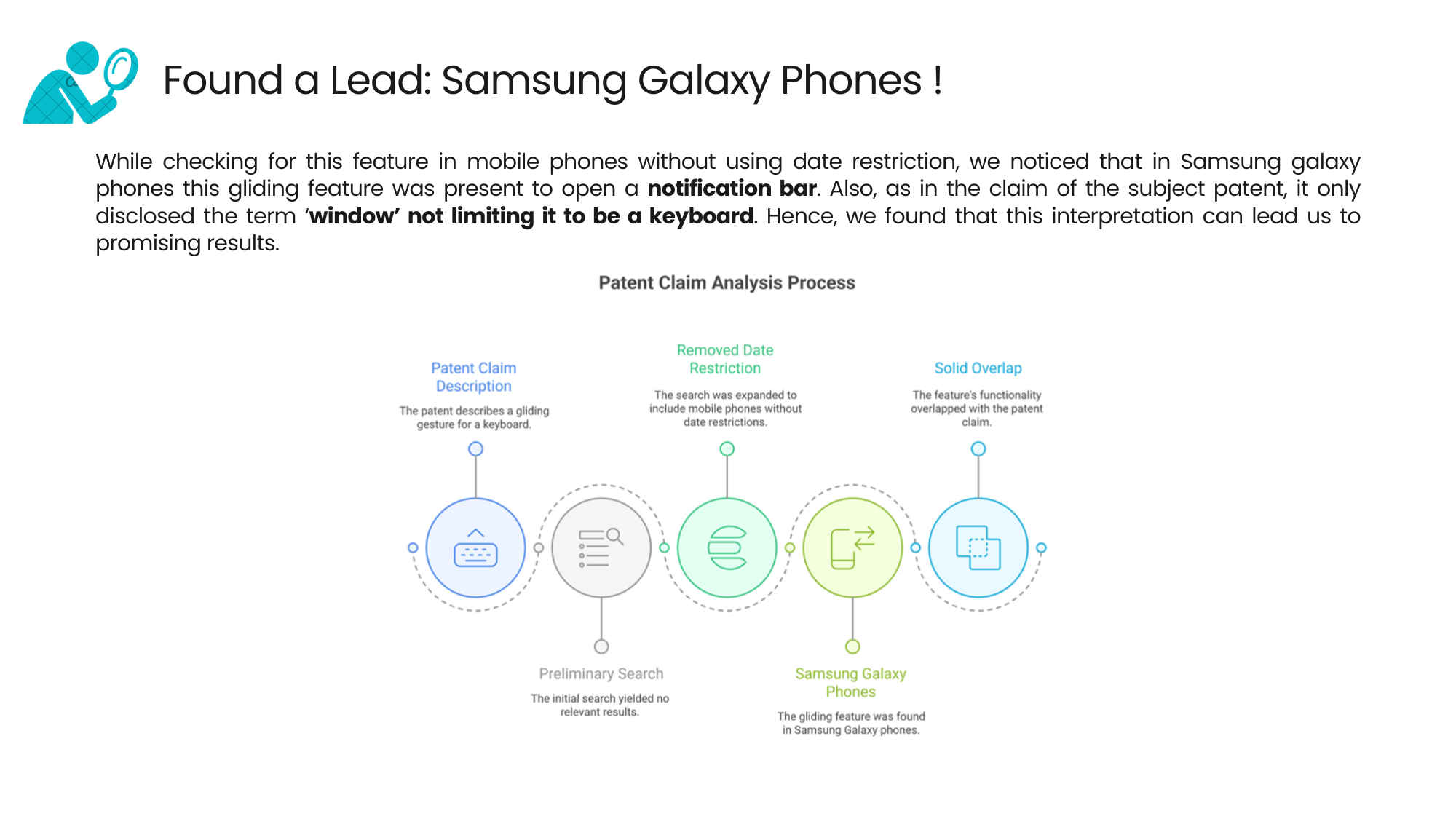
The search was initially constrained by treating the claimed “window” as a keyboard-specific interface. Because the claim itself did not limit the window to a keyboard, this narrow interpretation prevented other relevant implementations, such as notification panels and application windows, from being captured.
Solution Offered
The claim was reinterpreted more broadly by treating notification bars, status panels, and similar edge-based interfaces as the claimed “window.” This led to Samsung Galaxy phones, where users could open a notification panel through an edge-swipe gesture.
The search was then expanded through YouTube demonstrations and online product materials, uncovering similar functionality in several early mobile devices, including:
- HTC Dream/T-Mobile G1;
- LG GW620;
- Neonode N2;
- Motorola Droid; and
- Sony Ericsson Xperia X1.
These products demonstrated interfaces in which an edge-based window or panel opened through a sliding gesture while another application was running.
To strengthen the evidence, we also investigated patents associated with the identified manufacturers. This led to US20040109013A1, connected to the Neonode N2 technology, which provided documentary support for the relevant sliding-gesture interface. Together, the product demonstrations and patent disclosure gave the client multiple complementary grounds for arguing that the claimed interaction was already known
Get the full case study to discover how a shift in claim interpretation uncovered anticipatory prior art across both products and patents.