




The Asia-Pacific beauty market now accounts for almost half of global cosmetics sales. K-beauty became a global force by combining rapid product innovation, strong manufacturing capabilities, and fast consumer adoption across international markets. However, as beauty markets become more science-driven, speed alone is no longer enough. R&D teams now need to identify which emerging ingredients can deliver consistent performance, support stronger claims, and scale across global markets.
Regulatory expectations are also raising the bar. China has updated cosmetic safety assessment rules. Meanwhile, the US MoCRA has increasing expectations around safety documentation, facility registration, product listing, and adverse event reporting.
For R&D teams, this creates a more difficult question: which Asian beauty innovations can become repeatable product platforms rather than short-term market trends?
Recent developments show this shift clearly. A popular active may generate consumer interest, but commercial success depends on whether companies can solve challenges around sourcing, biological performance, and evidence generation. For example, PDRN has gained significant attention in topical skincare, but the challenge is not only finding alternative sources. Companies also need to demonstrate that topical products can deliver meaningful cosmetic benefits. Similarly, peptide and collagen research is moving beyond broad anti-aging claims toward ingredients designed for specific skin functions.
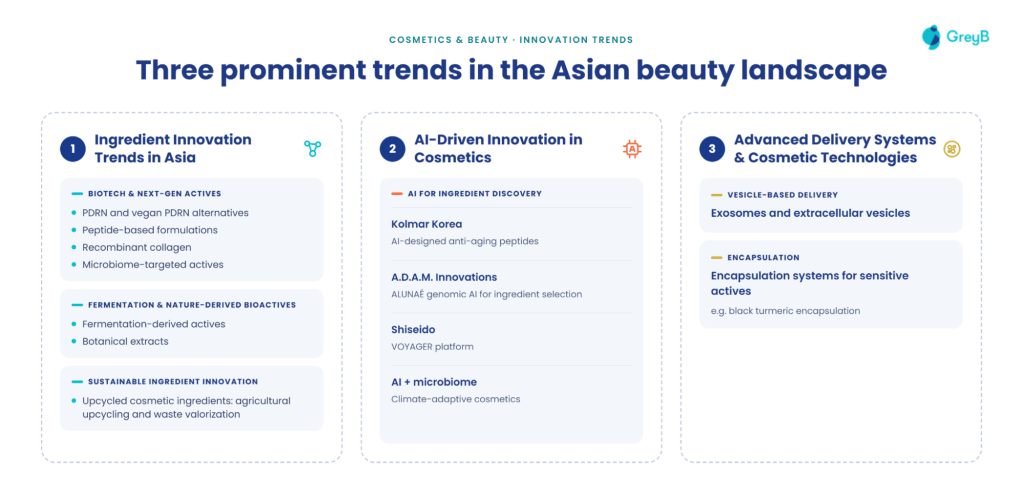
The following sections explore three ingredient categories shaping Asian beauty R&D: PDRN, peptides and recombinant collagen, and next-generation ingredient development through fermentation, microbiome research, and upcycled sources.
The remaining trends on delivery systems and AI are covered in our Asian Beauty Trends Report 2027.
PDRN’s Next Commercial Opportunity Depends on Solving the Topical Delivery Gap
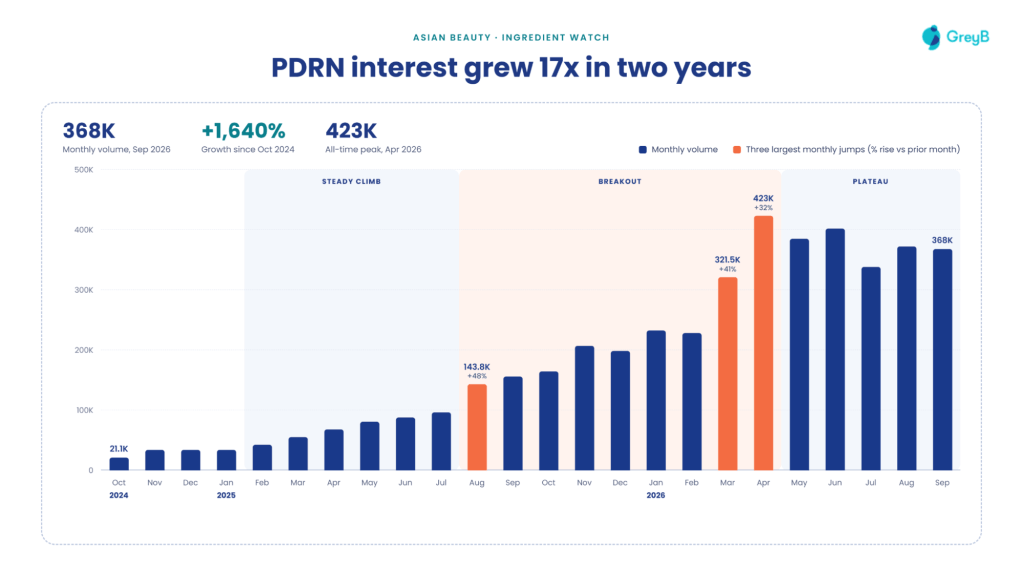
PDRN has moved from an injectable treatment associated with wound repair into a fast-growing topical skincare category. The PDRN beauty market is estimated to exceed KRW 2 trillion by 2030. Chinese e-commerce sales rose from RMB 1.5 million in 2022 to RMB 408 million in 2025, while online social interaction increased by +609.8% year on year.
The Search for Alternative PDRN Sources
Early innovation has focused heavily on finding scalable alternatives to salmon-derived PDRN. It is expensive to purify and carries both ethical and regulatory friction outside Asia, so companies have moved fast toward vegan alternatives: Amorepacific developed BluePDRN, a microalgae-derived alternative. Hyundai Bioland uses rice bran-derived Hayan PDRN, made using about 300,000 tons of rice by-products discarded every year in Korea. COSMAX developed a biosynthetic version with the University of Seoul and reported 99.9% sequence similarity to salmon-derived PDRN.
The new sources reduce dependence on salmon-derived material, improve the cruelty-free and sustainability position, and may make supply easier to scale. They also offer a cleaner story for markets where consumers may resist products described as salmon sperm DNA.
Why Topical Delivery Remains the Bottleneck
However, source replacement alone does not prove topical efficacy. In a topical product, the molecule has a high molecular weight and a negative charge, both of which limit its movement through the skin. This creates a gap between the reputation attached to the ingredient and the performance a cream or serum can support.
- Amorepacific’s microalgae-derived PDRN gives a useful view of the evidence standard. In reconstructed skin and cell models, the active increased keratinocyte and fibroblast proliferation to about 120% to 130% of control levels. Fibroblasts produced about 1.5 to 2 times more collagen, and wound closure reached about 29% compared with 17% in untreated human skin explants over nine days. The company used low-molecular PDRN in hyaluronic acid liposomes in its product HOLITUAL Blue PDRN Double Ampoule.
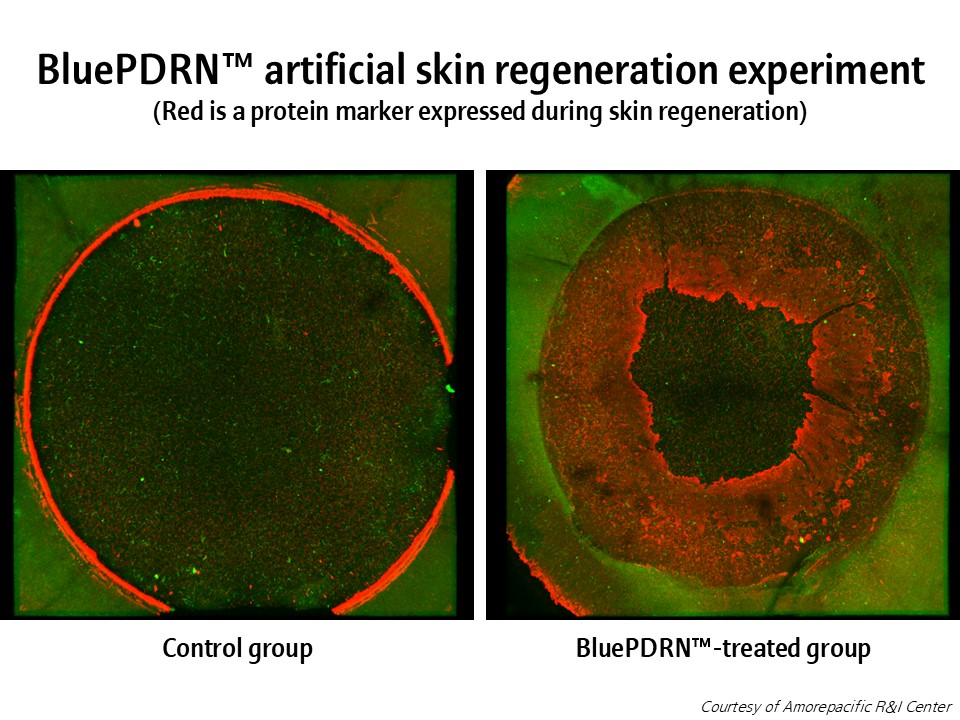
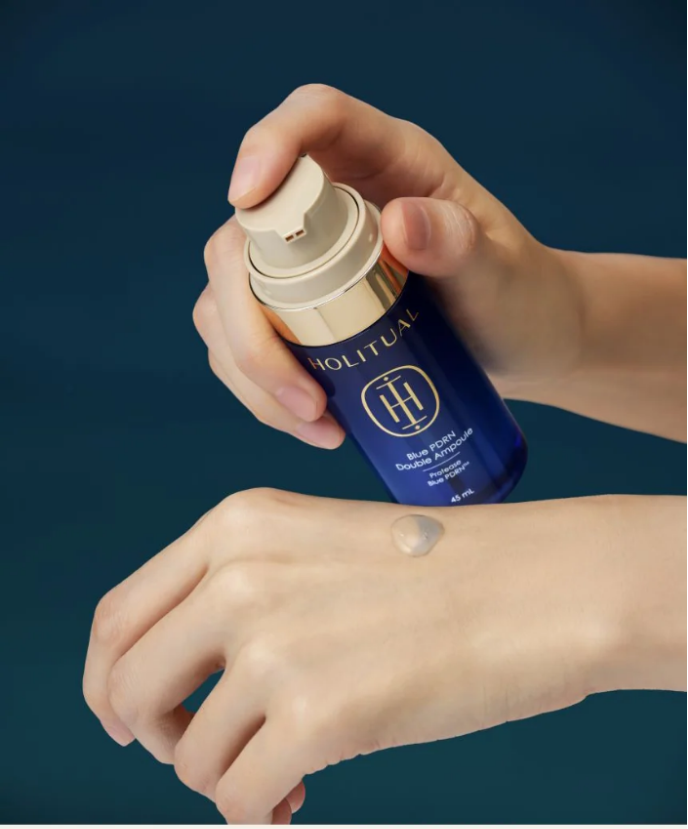
Fig 1: Increased levels of protein marker expression during BluePDRN™ induced skin regeneration compared to control
Fig 2: Product containing BluePDRN
- Hyundai Bioland reported 27.8% wound closure for rice bran-derived PDRN compared with 16.8% in the control.
- COSMAX has disclosed chitosan-shell nanospheres for recombinant PDRN.
- Patents from B&F Global and GENOM Library explore exosome-linked approaches.
These examples show that PDRN innovation is expanding beyond finding alternative sources. Companies are now combining source selection with delivery technologies and efficacy validation to create topical products with stronger performance claims.
Overall, PDRN should be evaluated as a technology platform rather than a single ingredient opportunity. The strongest commercial positions will likely combine four elements: a scalable non-animal source, a delivery approach suited to topical use, evidence generated in relevant skin models, and claims supported within cosmetic regulations.
Peptides and Recombinant Collagen Are Moving Beyond General Anti-Aging Claims
Peptides Are Designed to Influence Collagen-Related Biological Processes
Asia accounted for a reported 35% of global peptide cosmetics revenue in 2025. China has become a fast-moving development base, while Korea and Japan retain deep formulation and research capabilities. By January 2025, 22 of the 226 new cosmetic ingredients recorded in China were peptide-based.
The shift is not simply the growing number of peptide launches. Companies are moving from broad collagen-support claims toward peptides designed to influence specific biological pathways involved in skin structure, repair, and aging.
Proya Cyclopeptide-161 Targets Collagen Structure and Photoaging
This is the first cyclic peptide registered with China’s National Medical Products Administration. The peptide is designed to increase lysyl oxidase activity, which supports the cross-linking involved in dermal structure. Proya reports a 58.59% reduction in frown lines after four weeks and has placed the active in its Energy Cyclopeptide Anti-Wrinkle Firming Face Cream 3.0. The product has also garnered positive consumer feedback.
Recent peer-reviewed research also confirms its strong protective capabilities against sun-induced cellular damage.


Kolmar Korea Uses Peptide Design to Target Collagen Maturation Pathways
Its work on ICP-1235 and the optimized ICP-1236 targets Hsp47, a protein involved in collagen folding and maturation. ICP-1236 showed stronger collagen-related activity and restored UVB-induced damage in an ex vivo human skin model. The research used cheminformatics to narrow the peptide design space before biological testing.
Recombinant Collagen Targets Structural Components That Maintain Skin Integrity
Recombinant collagen extends the same logic from short peptides to engineered structural proteins. Recent Asian research in recombinant collagen is moving toward more defined collagen types, engineered fragments, and production methods that let researchers target specific skin functions. The focus is shifting from simply adding collagen as an ingredient toward developing collagen materials that can support specific skin functions, such as barrier integrity, cell attachment, and dermal-epidermal junction maintenance.
Bloomage Biotech Develops Recombinant Type IV Collagen for Skin Membrane Support
Type IV collagen is a key structural component of the basement membrane, which connects the epidermis and dermis and helps maintain skin integrity. The company’s patent describes a recombinant type IV collagen produced through microbial systems using repeated functional peptide units.
By mimicking natural skin, this engineered collagen helps skin cells attach and communicate. It boosts key structural markers (COL4A1, COL7A1, and COL17A1), showing strong potential to rebuild the skin barrier and support its core structure.
Proya Studies Recombinant Collagen XVII for Photoaging and Skin Repair
Proya is exploring recombinant collagen XVII fragments for applications linked to photoaging and the dermal-epidermal junction. The study evaluated whether recombinant collagen XVII fragments could help restore structural changes caused by UV exposure. Reported findings include reduced UV-induced damage, increased cellular activity markers, restoration of collagen-related proteins, and improved stability of proteins involved in dermal-epidermal attachment, such as laminin-332 and integrin beta-1.
The overall opportunity is not a choice between peptides and collagen. They address different parts of the skin aging process. Targeted peptides can influence biological pathways involved in collagen production, organization, or repair. Recombinant collagen materials aim to provide or support specific structural functions within the skin.
For R&D teams, evaluating these technologies requires looking at biological target, affected skin layer, delivery requirements, evidence maturity, and regulatory claim potential.
While some peptides already have consumer-facing products and efficacy studies, many recombinant collagen approaches remain preclinical and need further validation before broader cosmetic adoption.
Fermentation, Microbiome Science & Upcycling are Engineering Next-gen Ingredients
These three often fall into separate trend categories, but the underlying capability is similar. It involves finding a biological source, controlling its conversion, characterizing the output, and linking that output to a skin pathway.
Fermentation Improves the Performance of Familiar Ingredients
Fermentation is one route actively being explored in the cosmetics domain. The market share of fermented cosmetics in the Chinese skincare market had already reached 13% by 2025.
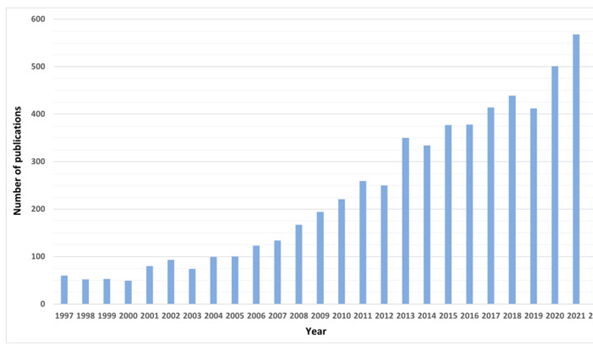
Companies are exploring fermentation because the process can change a raw material’s composition. It can increase certain beneficial compounds, create new metabolites, and produce more standardized ingredients than using plant extracts directly.
Proya Uses Fermented Oat to Enhance Barrier-Supporting Compounds
Proya’s fermented oat research shows how fermentation can modify a familiar ingredient. Using Saccharomyces cerevisiae, the company increased levels of compounds naturally present in oats, including beta-glucan by 14.78%, proteins by 39.13%, and flavonoids by 600%. The fermented material reduced inflammatory responses in cell models and increased proteins involved in maintaining the skin barrier.
Bloomage Develops Fermentation-Derived Beta-Glucan for Barrier Support
Bloomage’s Bioyouth-SPG takes a different approach by using fermentation to produce schizophyllan, a beta-glucan-based ingredient. The innovation is not the plant source itself but the structure of the fermented polymer. The company links this three-dimensional beta-glucan network to improved moisture retention, reduced oxidative stress from UV exposure, and improved skin barrier performance.
Botanical Research Is Targeting Defined Cellular Pathways
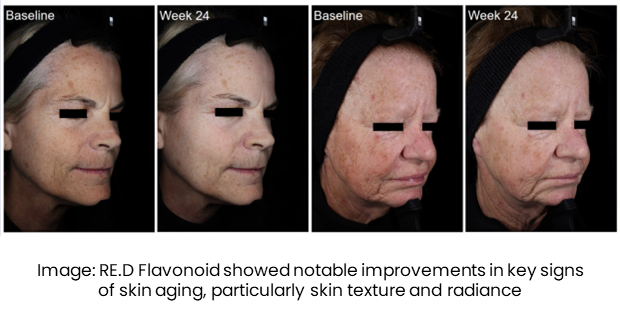
Amorepacific and Johns Hopkins have studied RE.D Flavonoid from camellia for signs of photoaging and Senomune from green tea for immune stress caused by particulate matter. The research was presented at the Society for Investigative Dermatology Annual Meeting in 2025.
Hyundai Bioland has assessed a magnolia bark liquid extract for mitochondrial protection, reactive oxygen species reduction, and skin-aging applications.
Microbiome Programs Are Building Larger Strain Libraries
Microbiome programs add another layer and have high consumer demand as well.

COSMAX plans to expand its Chinese microbial library from about 500 species to about 2,000 by 2030. One example is the CXCN-6 yeast strain isolated from lotus in Yunnan. Researchers found that this strain produces antioxidant compounds and fatty acids that reduced oxidative stress markers in UVA-exposed skin cells and lowered inflammatory signals.
Also Read:
Upcycling Is Moving From Waste Reduction to Skin Benefits
Upcycled cosmetic ingredients are also trending, with Asia-Pacific having the largest share of around 40%. New-age upcycled ingredients support anti-aging and advanced moisturization.

Kose studied citrus extract obtained from Japanese orange peel left after juice production.The research found changes in aging-related cellular markers and increased lysosomal activity, indicating that the extract may support the skin cells’ natural repair and recycling processes involved in maintaining cellular health.
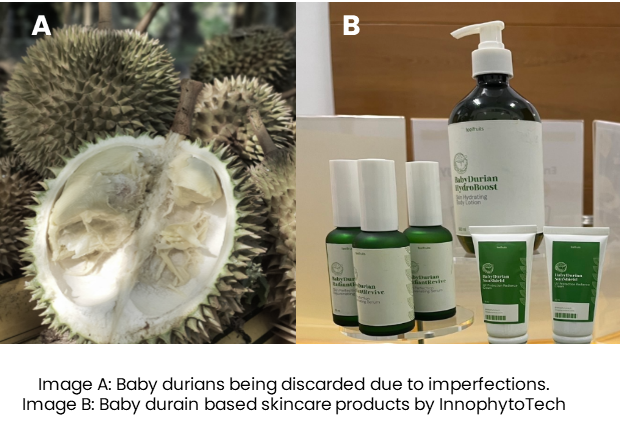
Chulalongkorn University converted discarded young durian fruit into a bioactive ingredient, with early work aimed at antioxidant and skin applications.
All the above approaches create new ingredient opportunities, but each has a different scaling challenge. Fermentation needs controlled processes because changing conditions can alter the final ingredient composition.Botanical ingredients require quality controls because plant chemistry can vary by geography, season, and cultivation conditions. Upcycled materials need traceability systems to ensure purity and consistent supply. Microbiome ingredients require careful strain selection because results depend on the specific microorganism and testing method.
For R&D teams, the important question is not whether an ingredient comes from a plant, fermentation process, or waste stream. The question is whether the company can repeatedly produce the same ingredient with a defined composition, demonstrated skin benefit, and reliable supply chain.
Where Should R&D Teams Invest Next?
The identified ingredient opportunities require different R&D strategies. The priority should not be tracking every emerging active, but to build capabilities around the areas where technical barriers are becoming clearer.
Build delivery and evidence capabilities around high-demand actives such as PDRN. PDRN demand is expanding globally, but long-term differentiation will depend on proving topical performance. R&D teams should evaluate alternative sources, delivery approaches, and efficacy data before scaling new product platforms.
Focus peptide and collagen research on specific skin functions. The next opportunity is moving beyond broad collagen-support claims toward peptides with defined biological targets and recombinant collagen designed for specific skin structures, supported by relevant efficacy evidence.
Prioritize ingredient platforms with scalable production. Fermentation, microbiome research, and upcycled ingredients can create new active platforms, but R&D teams should assess suppliers based on process control, ingredient consistency, characterization data, and reproducible skin benefits.
For R&D leaders, the next step is to audit existing ingredient pipelines against three questions:
- Can the ingredient be produced consistently at commercial scale?
- Is there a clear biological mechanism that supports the intended claim?
- Does the available evidence support expansion into global markets?
The brands that answer these questions early will be better positioned to convert Asian beauty trends into scalable product platforms.