



Stress hair-loss is gaining attention in hair care. According to a study, women with stressful lifestyles are 11 times more likely to experience hair loss. In fact in China, 58.9% of young adults identify sleep deprivation as their primary hair loss trigger, an indirect marker of chronic stress.

A market report identifying stress as a major cause of baldness in China
Scalp serums, oils and supplements use adaptogens and calming botanicals to support claims around stress, shedding and scalp wellbeing. Most of these products rely on broad soothing or wellness positioning. Few show that a specific ingredient acts on a defined stress pathway in the hair follicle and produces a measurable change in hair growth or density.
As a result, beauty R&D teams face a clear challenge. The commercial opportunity exists, but the evidence is uneven. A brand must separate a familiar botanical with a new story from an active that has a defined mechanism, suitable scalp delivery, and evidence in people.
Stress can push more hairs than usual into the resting phase of the hair cycle; the shedding is often described as telogen effluvium. The American Academy of Dermatology explains that this type of shedding can follow events such as severe stress, illness, surgery or childbirth. It often becomes visible several months after the trigger. The condition differs from hereditary pattern hair loss, which involves a different disease process and treatment pathway.
Shift of neurocosmetics from skin to scalp to address stress hair-care problems
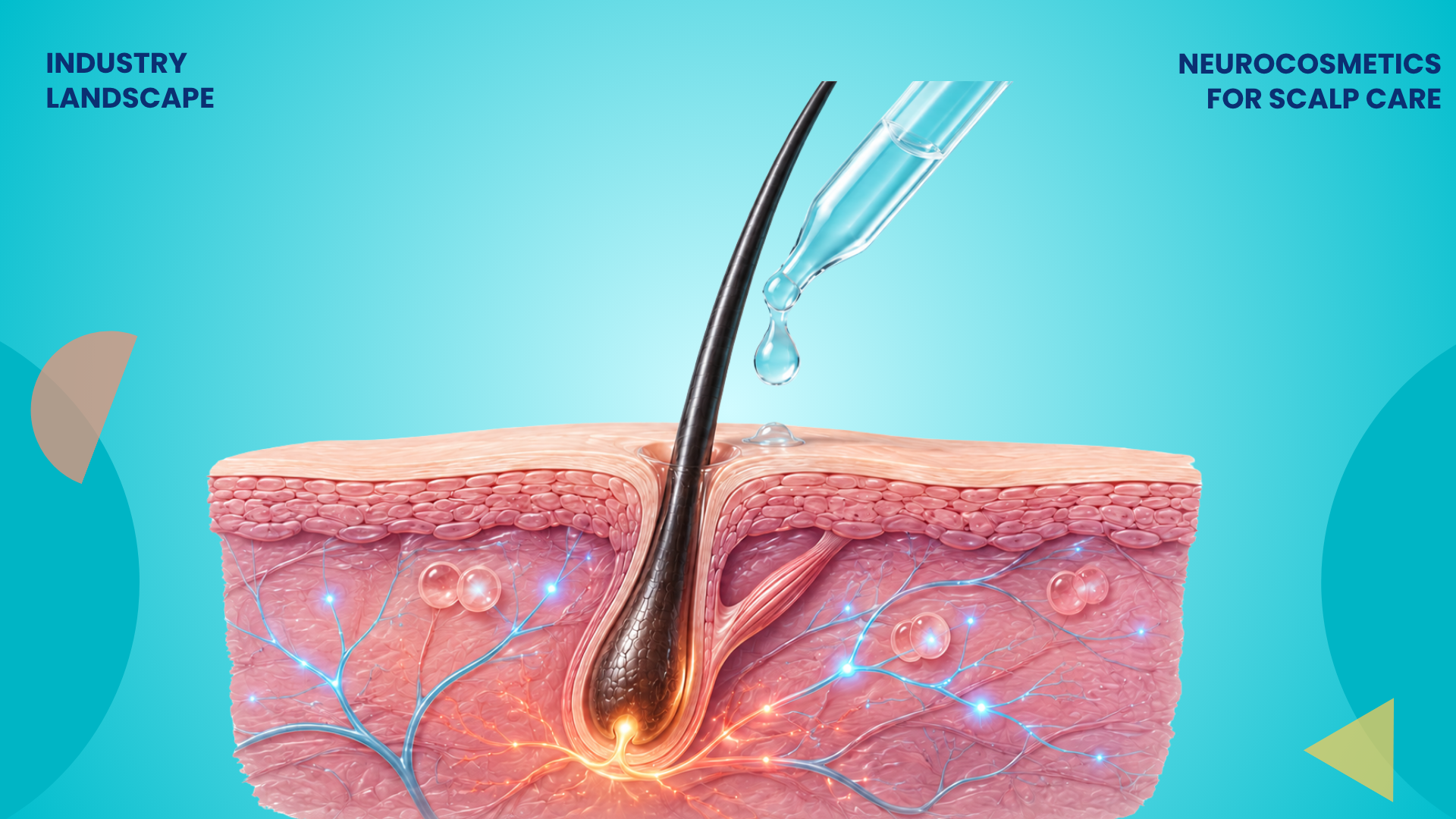
Neurocosmetic hair care is beginning to address this lack of ingredient-specific hair evidence. Neurocosmetics is now moving from skin care into scalp care because the two areas share biological features. A broader market need already exists. Between 2023-2024 and 2025-2026, botanical stress-relief neurocosmetic publications jumped 233%, from 6 to 20 annually (this included stress relief in general, though not specifically for hair care)
This trend may matter to Gen Z and Millennial consumers interested in self-care and mental health.
In this context, neurocosmetics refers to scalp products designed around links between the nervous, endocrine, immune and follicular systems. Recent patent activity shows a shift from broad ideas such as “calming the scalp” to defined targets linked to follicle dormancy, inflammation, reactive shedding, cortisol response, and circadian disruption.
Stress-based hair-loss products are a well-known category. These products commonly use peptides, vitamins, amino acids, caffeine, plant extracts and ingredients intended to support scalp condition or hair anchoring.
However, the evidence for their hair-specific effects remains broad. Many products claim to reduce stress-related shedding or support scalp health. Yet much of that evidence comes from cortisol studies in other fields. Few test the ingredient directly in hair-follicle models. For example, despite the wellness narrative around them, adaptogen ingredients showed up in only 0.02 percent of beauty and personal care launches tracked between 2015 and 2019. These claims often lack ingredient-specific clinical evidence.
Our review identified four examples that move from broad stress claims toward defined biological targets. They are not equal in maturity. Three remain at the patent and cell-testing stage. One has supplier-led human data and has entered commercial products.

#Route 1: Proya Tests Cardomom Seed Extract Against Two Different Causes of Stress Hair Loss
Cardamom seed ketone, also called 6-paradol, is known as a pungent flavor and fragrance compound. In cosmetics, studies have found it supports a variety of biological activities, including antioxidant, anti-inflammatory, and skin-soothing effects. Proya Cosmetics has now filed a Chinese patent application that proposes 6-paradol for hair-loss compositions.
The key point is that one small molecule was tested in two different hair-loss models. Pattern hair loss and stress-related shedding are normally treated as separate conditions because they involve different biological triggers.
How the proposed mechanism works
For pattern baldness, the compound suppresses DKK-1. This protein is associated with an earlier shift from follicle growth to regression when androgen signaling is high.
For stress-related shedding, it restores Gas6, a gene that stress hormones like corticosterone otherwise switch off in the cells that keep hair follicles active. Corticosterone reduced relative Gas6 expression from 1.000 to 0.736. Cardamom seed ketone alone produced a value of 1.640. The combined cardamom ketone and corticosterone treatment produced a value of 1.036
| Division | Concentration | Gas6 expression | VEGF expression | TGF-β expression |
| Control (solvent alone) | – | 1 | 1 | 1 |
| Stress-inducing hormone | 100 μM Corticosterone | 0.736 | 0.806 | 0.749 |
| Cardamom seed ketone | 0.002% | 1.640 | 1.343 | 1.338 |
| Cardamom seed ketone + Cort | 0.002% + Corticosterone | 1.036 | 1.146 | 0.947 |
Evidence Stage: The technology remains at the patent and cell-testing stage. Proposed uses span shampoos, conditioners, hair waxes, gels, sprays, and leave-on scalp essences.
Why this route matters to R&D teams
The innovation does not establish a new product category for pattern hair loss or stress-induced hair loss. Its distinction is the attempt to use one molecule across two separate mechanisms. If separate human studies support both uses, the same molecule could form the basis of a broader hair-loss platform.
The innovation does not establish that the molecule works in people. R&D teams would still need data on scalp penetration, effective dose, formulation stability, irritation, long-term safety, and compatibility with wash-off and leave-on formats. Human studies would also need to assess pattern hair loss and stress-related shedding separately.
Also Read:

#Route 2: Kolmar and Hyundai Bioland Turn A Traditional Root Extract Towards Stress-Driven Inflammation
Traditional medicine has used Sophora flavescens for digestive complaints and inflammatory conditions. It appears in existing scalp and hair products because of its soothing, antibacterial, and anti-inflammatory properties. Products such as Dr.FORHAIR Folligen Shampoo list Sophora flavescens extract as an ingredient.
Hyundai Bioland, a Korean ingredient manufacturer, and contract manufacturer Kolmar Korea have filed a joint patent application describing an enzyme treatment that increases trifolirhizin, an active compound naturally present in Sophora root. It also describes beta-cyclodextrin encapsulation to improve stability and solubility. The innovation’s main distinction is the processing and standardization step, since Sophora itself is already used in hair care.
How the proposed mechanism works
The technology focuses on inflammation associated with stress and environmental exposure. Substance P is a neuropeptide released during stress responses. In follicular models, it can increase inflammatory signals around the hair root. Particulate pollution can trigger a related inflammatory response.
The innovation reports that the enzyme-converted extract increased VEGF and IGF-1 expression, two markers connected with follicle support and growth.
The applicants used two separate cell models. Substance P represented stress-linked inflammation. Particulate matter represented pollution-linked inflammation. The extract reduced their markers including TGF-β2, TNF-α, IL-8, and COX-2 expression. The patent reports reductions of about 40 to 45% in IL-8 and around 45% in COX-2 relative to the particulate-matter-only group.
| Division | Concentration | Composition | VEGF mRNA Expression (average, %) | IGF-1 mRNA Expression (average, %) |
| Control | – | Untreated group | 100 | 100 |
| Adenosine | 0.75 mM | Positive control (VEGF) | 199.0 | – |
| Caffeine | 5 ppm | Positive control (IGF-1) | – | 135.5 |
| Trifolirhizin | 0.1 ppm | Direct use of active ingredient | 111.7 | 127.8 |
| Comparative Example 1 | 100 ppm | Non-enzymatic sophora extract + Beta-cyclodextrin (β-CD) encapsulation | 190.2 | 135.8 |
| Comparative Example 2 | 100 ppm | Enzyme converted sophora extract + Beta-cyclodextrin (β-CD) encapsulation | 253.2 | 144.9 |
Evidence Stage: This remains a patent-stage technology supported by cell experiments. No human clinical study was identified for the enzyme-converted Sophora extract.
Why this route matters to R&D teams
This route shows how processing can turn a familiar botanical into an extract with a measured active-compound level. The enzyme step increases a named compound, while encapsulation addresses stability and solubility. These features may give formulators more control over dose and product consistency than a general plant extract.
Kolmar presented related findings at the World Congress for Hair Research in 2024, indicating continued patent activity and industry visibility. The company described the work as its first patent in this area.
R&D teams still need to assess batch consistency, extraction yield, production cost, color and odor, stability in finished products, scalp delivery and permissible claims.
#Route 3: Pierre Fabre Adds a Multi-Pathway Botanical to the Reactive Stress Hair-Loss Category
Reactive hair-loss products target sudden or temporary shedding linked to stress, pregnancy, illness, fatigue or seasonal change. Pierre Fabre, the world’s second-largest dermo-cosmetics company, competes in this area through the brand Ducray. Its CREASTIM REACTIV lotion uses creatine, a peptide and vitamins in a product positioned for reactive shedding.
The company recently filed a patent application covering a standardized Verbena officinalis extract for reactive or emotional hair loss, particularly telogen effluvium.
The ingredient is an extract of Verbena officinalis (vervain), a plant with a long folk-medicine history as a nervous-system calmative, traditionally used to ease anxiety and promote relaxation. The innovation tests the extract against specific hair-loss mechanisms rather than relying only on its calming reputation.
How the proposed mechanism works
The patent tests the extract through three mechanisms for reactive alopecia:
- It increases VEGF release in dermal papilla cells, which may support blood-vessel formation around the follicle.
- It reduces apoptosis (a cell-death pathway) in outer-root-sheath cells exposed to a prostaglandin metabolite associated with hair regression.
- It dampens JAK/STAT signalling, a pathway that otherwise shortens the hair growth phase.
Researchers tested the extract on human outer-root-sheath keratinocytes and dermal papilla cells. The table shows the reported change in VEGF release –
| Division | Average VEGF Concentration (pg/mL) | % increase vs untreated |
| Control (Untreated) | 175.09 | 0 |
| Manganese salt PCA 500 (Reference) | 12.7 | 118 |
| Verbena Extract (10 μg/ml) | 17.21 | 23 |
| Verbena Extract (30 μg/ml) | 21.24 | 53 |
Evidence Stage: The Verbena extract remains at the patent and cell-testing stage only.
Why this route matters to R&D teams
Pierre Fabre is not entering reactive hair-loss care for the first time. The company already has commercial products for this condition. Against this background, the patent suggests an effort to add a more defined botanical active to an existing commercial category.
What distinguishes the patent, though, is that the three-pathway approach covers more biological mechanisms than a formula focused on vitamins, circulation, or one growth marker.
The evidence remains preclinical. R&D teams would need to test scalp delivery, dose, extract consistency, formulation stability and human hair outcomes. Claims involving alopecia, treatment, JAK/STAT activity or hair regrowth would also require careful regulatory review in each market.
#Route 4: Greenaltech Brings Stress-Responsive Microalgae Blend Into Commercial Hair Care
Greenaltech, a microalgae biotechnology company, launched Algaktiv Densidyl in late 2024 as a notable cosmetic active for addressing both hair loss and greying. The active uses a pharmaceutical-grade delivery system. It combines antioxidant properties of naturally occurring algae phycocyanin from Spirulina maxima and the stress-modulating effects of xanthophylls from Chlorella emersonii.
How the proposed mechanism works
The two compounds split the work. Phycocyanin activates the cell’s antioxidant defense system (NRF2). The xanthophylls lower cortisol activity at the glucocorticoid receptor and raise melatonin activity, addressing the circadian disruption that chronic stress causes.
This is the only route supported by human study data. In a five-month study of 50 people with stress-induced hair loss, 2% Algaktiv Densidyl produced a 25.9% increase in active-growth-phase hairs and an 11.43% increase in density (about 10,200 new hairs), along with a visible reduction in gray hair and better scalp hydration.

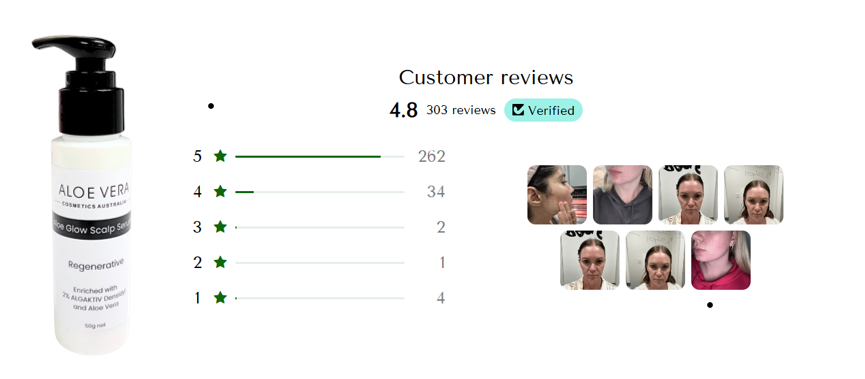
Densidyl has appeared in several publicly identifiable commercial products and formulations. One example is the AloeActive Regenerative Scalp Serum, which consumers have reviewed positively. The ingredient also received a Gold Award at the 2024 Cosmetics Ingredients International Expo and is COSMOS Approved.
Why this route matters to R&D teams
Densidyl is the most commercially mature of the four routes covered. It combines a purchasable ingredient, human testing, a recommended use level, and adoption in finished scalp products.
Its main distinction is the combined positioning around stress-related shedding, oxidative damage, and greying. Many ingredients address one of these concerns. Densidyl attempts to connect them through stress and circadian biology.
Before development, an R&D team would need the complete study report, INCI and composition details, supplier specifications, safety data, formulation limits and evidence supporting the intended claims in each target market.
Turning The Emerging Routes Into A Pipeline Decision for Stress Hair-Loss
The four routes differ more in evidence stage than in mechanism. Proya, Kolmar and Pierre Fabre offer a set of tested mechanisms, but the reviewed evidence remains preclinical. Densidyl has moved further into human testing and product use, although its evidence comes mainly from the supplier and needs independent review.
R&D teams should assess each route against four requirements: human evidence, scalp delivery, formula stability, and claims allowed in the target market. A complex mechanism has little value if the ingredient cannot meet these requirements.
Regulatory reviews will also remain important, especially for ingredient safety, composition, and cosmetic claims.
Choosing between these routes requires evidence from patents, research papers, products, companies, and regulatory sources. GreyB’s internal intelligence tool Slate can connect these sources around a specific R&D question
For example, you could ask Slate:
Which neurocosmetic ingredients and patents target stress-related telogen effluvium, and which of them have human evidence, commercial products and claims restrictions in the EU?

Which neurocosmetic ingredients and patents target stress-related telogen effluvium, and which of them have human evidence, commercial products and claims restrictions in the EU?