
The study identified apparatus-level patents that informed design changes and uncovered a separate method-of-use patent that could have been missed by a structure-only FTO search.
Value Delivered
The client received a more complete assessment of the patent risks associated with a catheter-based medical system before finalizing the product design for development.
The findings enabled the client to:
- Identify structural patent risks: Locate apparatus claims covering relevant aspects of the catheter’s physical architecture and mechanical components.
- Make timely design modifications: Use the identified structural risks to guide changes to the proposed device before committing further development resources.
- Uncover method-of-use exposure: Identify a patent directed to how the catheter was used during a medical procedure, even though it did not claim the same physical structure.
- Reduce an FTO blind spot: Avoid relying solely on searches directed to the device’s components and mechanical configuration.
- Support pre-launch decision-making: Give the R&D and legal teams an opportunity to evaluate design-around options, operating procedures, licensing requirements, or further legal analysis before commercialization.
Problem Solved
A medical-technology client required an FTO assessment for a catheter-based system before finalizing its design and proceeding with development.
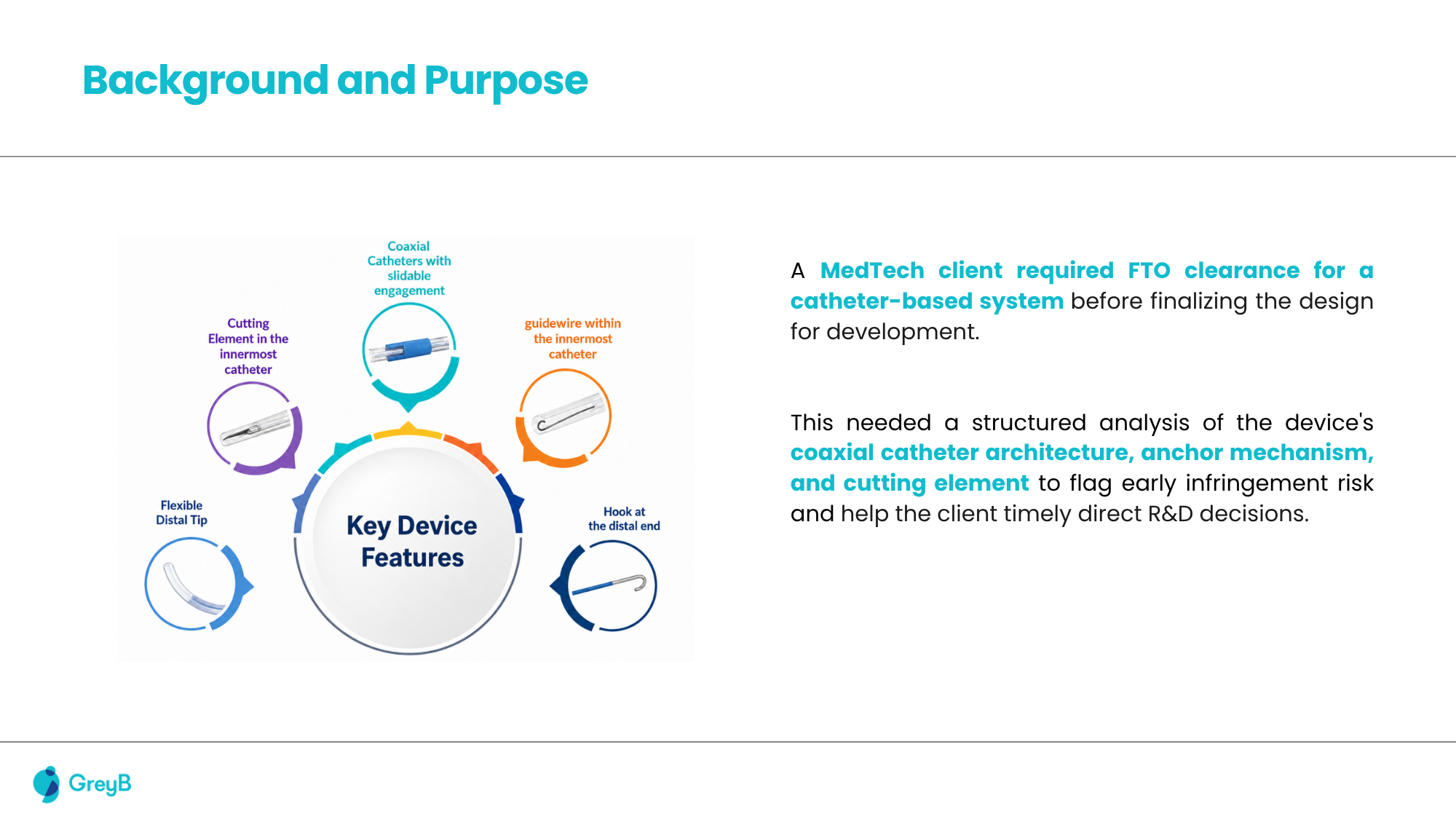
The proposed system incorporated several important mechanical features, including:
- A coaxial catheter arrangement;
- An anchoring mechanism; and
- A cutting element.
The initial concern was whether existing apparatus claims covered these structural features. However, focusing only on the physical device created an additional risk: catheter technologies may also be protected through claims directed to the surgical or delivery procedure performed using the device.
A method-of-use patent may not claim the same catheter arrangement, anchor design, or cutting element. Instead, it may protect the sequence of actions performed by the physician. Consequently, a product could avoid the structural language of an apparatus claim but still create infringement concerns when used for its intended commercial purpose.
This created two connected FTO challenges:
- Identifying patents covering the physical construction of the proposed catheter system; and
- Determining whether the intended use of the system was covered by method claims framed around the medical procedure rather than the device itself.
A structure-only search could therefore provide an incomplete view of the client’s potential infringement and litigation exposure.
Solution Offered
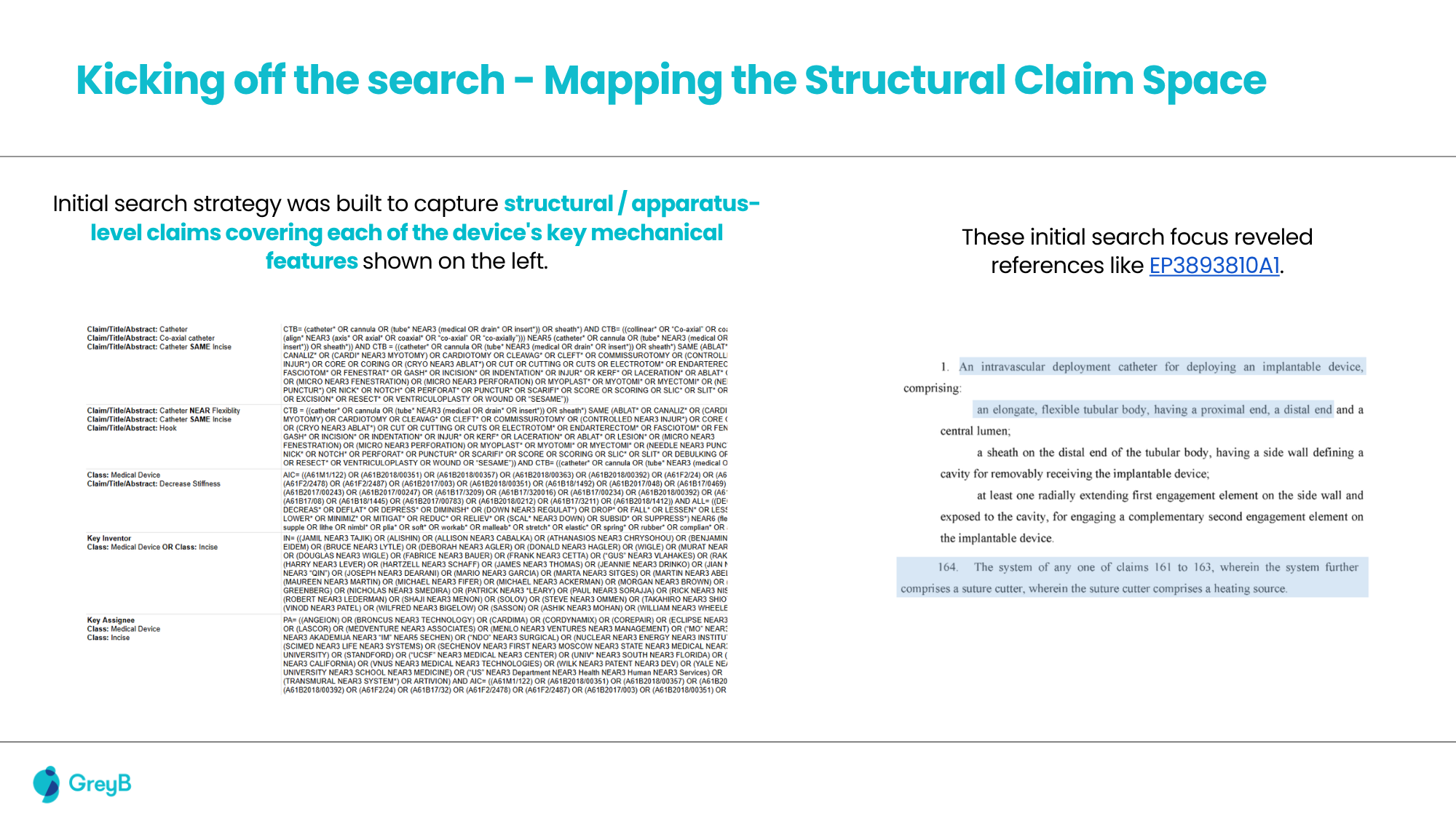
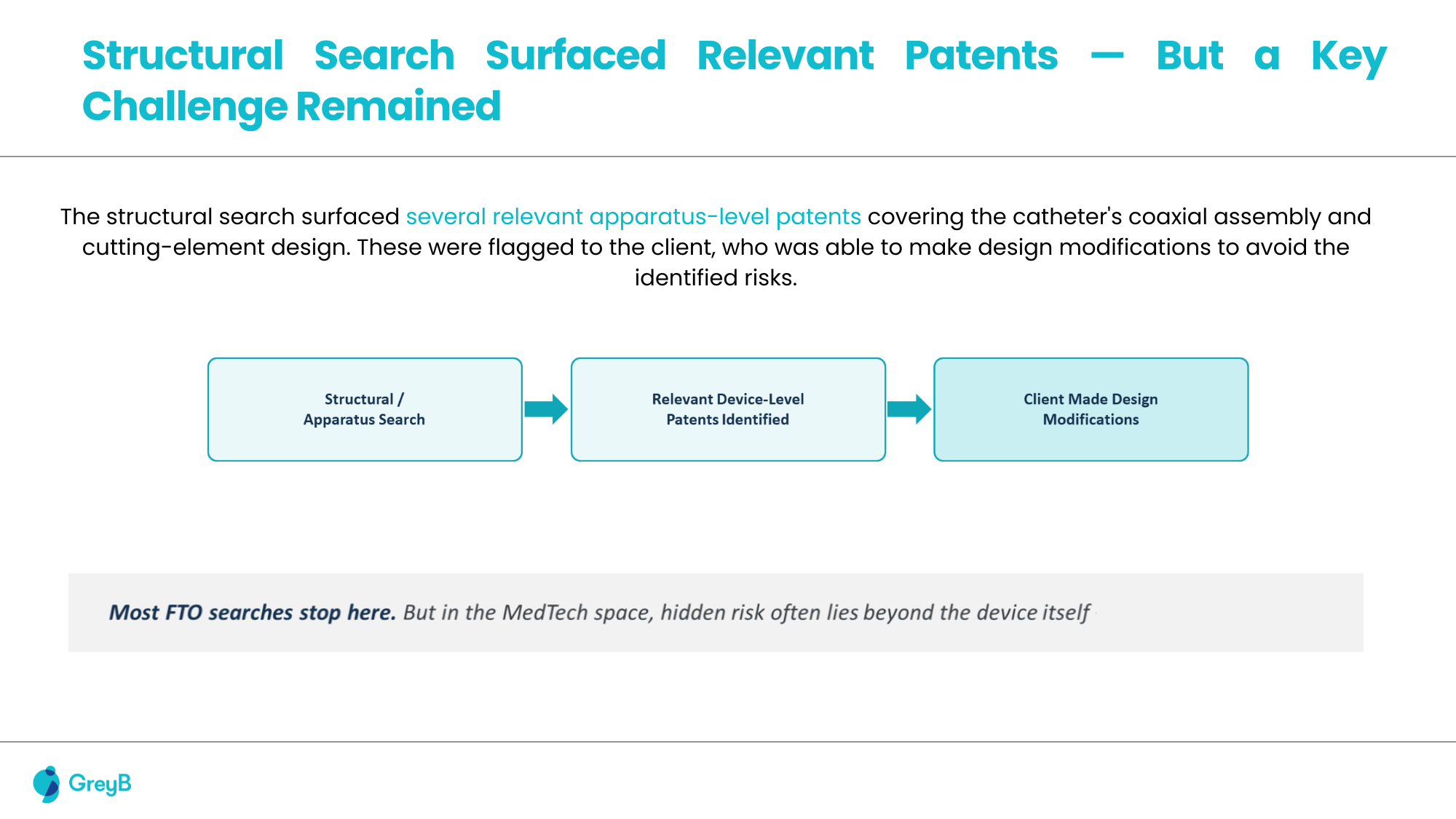
The FTO assessment first examined the structural claim landscape surrounding the catheter system. The analysis covered patents directed to the device’s coaxial assembly, anchoring arrangement, cutting mechanism, and related mechanical features.
This part of the assessment surfaced several relevant apparatus-level patents. The identified risks were communicated to the client, enabling the development team to consider and implement design modifications intended to reduce potential overlap.
The assessment was then extended to method-of-use claims. This additional review considered patents protecting the surgical or delivery steps performed with catheter-based systems, even where the claims did not recite the client’s precise mechanical configuration.
The expanded analysis identified a patent that did not claim the proposed catheter’s coaxial structure, anchor mechanism, or cutting element. Instead, it approached the same commercial use from a different direction by claiming what the physician performs with the catheter during the procedure.
Because the patent focused on procedural use rather than hardware construction, it had a significant likelihood of being overlooked in an FTO search limited to structural features.
The client ultimately received:
- A structural patent-risk assessment covering the catheter’s principal mechanical features;
- Early identification of apparatus-level concerns that supported design modifications;
- A method-of-use assessment covering the intended surgical or delivery procedure;
- Identification of a hidden procedural-use risk that was not apparent from the device architecture alone;
- A broader FTO risk picture combining apparatus and method claims; and
- A foundation for informed R&D decisions before product development and launch.
The result demonstrated that evaluating only what a medical device is may not be sufficient for FTO purposes. It can be equally important to evaluate what healthcare professionals are expected to do with it.
Get the full case study to discover how an expanded FTO assessment uncovered patent risks beyond the physical design of a catheter-based system.