


In haircare, innovation is no longer rewarded solely for novelty.
As cosmetic regulation tightens and claims face greater scrutiny, the categories best positioned for long-term growth are not necessarily the ones generating the most noise, but those that can hold up under safety review, claims substantiation, and repeated consumer use.
That shift is becoming harder to ignore.
MoCRA has expanded FDA authority over cosmetics through mandatory recall powers, adverse-event reporting, facility registration, product listing, and safety-substantiation requirements, while some high-risk segments, such as formaldehyde-releasing hair-smoothing products, have already drawn years of safety concerns and enforcement actions.
The result is a more important strategic question for brands and R&D teams: which trends can still create sustainable value once regulatory exposure, claims defensibility, and reformulation risk are taken into account.
GreyB analyzes 5 current haircare trends, leveraging evidence-based research to guide your strategic category selection.
1. The Bond-Builder Category Is Commoditizing Faster Than Its Revenue Projections Suggest
The bond-repair market looks like a growth story on paper. At USD 2.12 billion in 2025, it is projected to reach USD 4.68 billion by 2034 at an 8.2% CAGR. The reality underneath that number is more instructive.
Olaplex, the category’s defining brand, saw net sales fall from nearly USD 598 million in 2021 to approximately USD 458 million in 2023. Not because consumers abandoned bond-building, but because efficacy-parity claims from rivals eroded the premium. When the core mechanism becomes table stakes, margin compresses.
The structural issue is chemistry. Maleate and succinic acid-based bond-building operates at pH 4.5–6.5, is documented, widely understood, and replicable. Competitors can formulate around any patent on the specific application. The next defensible position sits one tier up: protein-folding restoration using biomimetic peptides.
Croda Beauty’s KeraBio K31 achieves full efficacy at 0.05% active, claims 100% stronger cyclic fatigue than leading bond-builders in internal testing, and is 99% naturally derived with no phenoxyethanol dependency—a meaningful differentiator as sulfate-free mandates tighten.
Amorepacific’s AI-designed Tripeptide-132 delivered a 44% increase in tensile strength and a 50% reduction in breakage after an 8,000-compound screen.
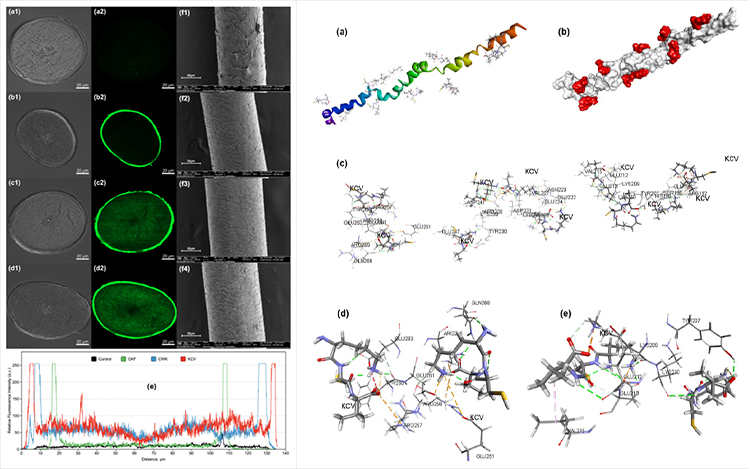
Unilever’s acquisition of K18 and its simultaneous 14.5% stake in Solfarcos, a Portuguese biotech that supplies K18’s peptide platform, tells the strategic story directly. The category acquirers are not buying bond-builders. They are buying recombinant keratin platforms.
The R&D implication is plain: incremental investment in disulfide bond chemistry is increasingly indefensible capital. Formulation differentiation that survives the next five years requires clean-beauty-compatible peptide stabilization in glucoside and amino-acid surfactant systems, with phenoxyethanol-free preservation.
That is a capability gap, not an ingredient problem. Brands that are still sourcing generic maleate actives while holding back on peptide platform licensing are betting that the commoditization cycle will slow.
2. Scalp Microbiome Claims Are Bifurcating Into Evidence-Backed Assets and Future Liabilities
The scalp microbiome segment is a USD 1.14 billion market in 2025 and is projected to reach USD 2.21 billion by 2030 at an 11.3% CAGR. It is also one of the most claims-exposed categories in personal care, and the gap between defensible and indefensible is already visible in the published data.
Few suppliers have published studies confirming that their products change the scalp’s microbial community. One study tested a heat-killed probiotic strain on 22 people over five months and used DNA sequencing to show real shifts in the scalp’s fungi and bacteria — harmful species decreased while others increased — with visible skin improvement to match.
Another 28-day study of a yeast-and-bacteria ferment showed statistically significant changes in bacteria and measurable shifts in fungal diversity. Both are solid enough to support clinical claims.
BASF’s SCALPOSINE™, a commercially prominent active, reduced 5α-reductase-1 gene expression by up to 77% in vitro and reported 36% increased microbiota diversity by taxa count in vivo—but the supporting press release identifies six beneficial strains without naming them, and no published 16S or ITS data exists.
Without sequencing confirmation, the claim rests on inference from sebum reduction. That is not a problem today. It will be a substantial liability when regulators tighten the standard, and there is every reason to expect they will.
The regulatory backdrop sharpens the urgency. China’s NMPA conducted a nationwide expose in January 2026 of fraudulent special cosmetics approvals used to market “follicle activation” and “dense hairline” claims.
The Court of Justice of the European Union’s ruling in C-616/20 established that products with “appreciable, design-specific pharmacological effects” are subject to medicinal classification even when marketed as cosmetics. Claims that a product “restores scalp dysbiosis” or “treats seborrheic dermatitis” now occupy a legally dangerous position.
No measurement platform has achieved formal diagnostic regulatory recognition, including FDA 510(k) and CE-IVD clearance.
Any brand investing in scalp microbiome personalization without that recognition is assuming unquantified liability.
The strategic move is to demand full 16S/ITS or shotgun metagenomic datasets before committing to exclusivity with any microbiome active. Suppliers without sequencing-verified in vivo data are selling claims that will become liabilities.
3. EU Green Claims Deadline Is a Legal Cliff
Most haircare brands are treating the EU Empowering Consumers for the Green Transition Directive as a labeling exercise. It is not. The directive will enter full enforcement on September 27, 2026, and its penalties include up to 4% of annual turnover in the affected member state, as well as revenue confiscation and product bans.
The prohibited terms include “natural,” “clean,” “biodegradable,” “recyclable,” “eco-friendly,” “green,” “plant-based,” and “climate-friendly”; unless accompanied by specific, verifiable, same-page substantiation.
“Natural” requires third-party certification from COSMOS Natural, NATRUE, or ECOCERT, with the certificate reference on the same page as the claim. “Biodegradable” requires specification of conditions and a recognized standard such as OECD 301B. Carbon offset-based “carbon neutral” product-level claims are prohibited outright. Self-made sustainability labels are banned.
The cost of non-compliance is not theoretical. France’s bonus-malus EPR modulation, which took effect January 1, 2026, already applies differential bonuses of €450–€1,000 per tonne depending on recyclability.
The EU Packaging and Packaging Waste Regulation mandates eco-modulated fees from 2028, with recyclability performance classes (A–E) determining relative fees. Early adopters are already observing 20–60% fee spreads.
There is a counterintuitive opportunity inside this constraint.
Sodium Olivoyl Glutamate, derived from upcycled lampante olive oil, outperforms sodium laureth sulfate on stratum corneum hydration by 49.21% and improves hair cuticle adhesion by 25.8% on contact angle measurement.
It can carry COSMOS certification, turning a sustainability label from a liability into a defended claim. The performance story and the compliance story are the same story. Brands that have not yet unified them under third-party certification are quietly building balance sheet risk that will crystallize in September.
The compliance audit is not optional. Every current “natural,” “clean,” or “biodegradable” claim needs to be mapped against the ECGT blacklist before Q3 2026.
The question for each SKU is not whether the claim is broadly accurate. It is whether the specific certification, with the specific reference, appears on the same page as the specific claim. That standard is much harder to meet than most marketing teams currently appreciate.
4. Anti-Hair Loss Is the Category With the Highest Binary Risk
The anti-hair loss market in China alone was valued at RMB 18.05 billion in 2023 and is projected to exceed RMB 30 billion by 2030. It is also the category where a single regulatory ruling can remove a product from the market without warning, and that is the risk most portfolio planners are underweighting.
China’s NMPA released Technical Guidelines for Anti-Hair Loss Cosmetics in December 2025, introducing a two-tier ingredient classification: anti-hair loss agents (single ingredients with demonstrated efficacy that can independently support claims) versus anti-hair loss adjuvants (multi-component auxiliary ingredients that cannot do so).
Any brand with SKUs relying on adjuvants to anchor efficacy claims faces reclassification exposure.
In the EU, Italy’s Advertising Self-Discipline Jury issued rulings in 2025 against cosmetics claims to “act on the hair root” without demonstrated scientific evidence.
In the US, the FDA has issued zero approvals for exosome products while actively sending warning letters. Documented cases include Supreme Rejuvenation (May 2025), Exocel Bio, and Platinum Biologics, which the agency classifies as unapproved new drugs.
The clinical reality is equally stark and points directly to where the defensible opportunity lies.
Female pattern hair loss affects up to 50% of women over their lifetime. Only topical minoxidil is FDA-approved for women. Of 1,063 participants with race data across an analysis of 20 hair loss RCTs, 81.1% were White.
Post-menopausal women, who represent up to two-thirds of those experiencing thinning or bald spots, have no commercial serum specifically formulated or clinically tested for their hormonal-pattern hair loss.
This is not a regulatory gap. It is a commercial opportunity with a high clinical entry cost that most brands are not willing to pay.
The Olistic© Women’s nutraceuticals placebo-controlled trial showed 27.31 hairs/cm² at day 180 versus 18.23 for placebo in premenopausal telogen effluvium—the kind of substantiation that survives regulatory scrutiny in both China and the EU and commands durable premium positioning.

The brands that build comparable data infrastructure for post-menopausal and textured-hair populations will own the category’s next cycle. Brands that continue to market adjuvants to anchor efficacy claims will face binary regulatory outcomes.
5. Type 3–4 Curl-Pattern Consumers Outspend the Market by 58%, but…
Textured hair accounts for an estimated 60–70% of the global population. The segment, valued at approximately USD 15.66 billion and expanding at 4.7% annually, has one central engineering problem: it is routinely formulated for the wrong hair structure.
Type 3–4 hair fibers have elliptical cross-sections with pronounced ortho/para-cortical segregation, creating asymmetric stress distributions during dehydration that straight-hair testing protocols cannot detect or replicate.
The follicle exit angle in tightly curled hair is acute, creating a bent sebum pathway that physically obstructs capillary migration—leaving mid-shaft and ends chronically under-lubricated regardless of how much product is applied.
African virgin hair exhibits the highest total lipid content among tested ethnic groups, yet those lipids concentrate disproportionately in the medulla and present as highly disordered in the cuticle. Standard occlusive formulations designed for low-porosity straight hair often aggravate buildup on Type 4 hair without resolving trans-epidermal water loss. The product fails structurally. The consumer blames the brand.
The commercial signal is unambiguous. Textured-hair consumers outspend straight-hair counterparts by approximately 58% annually, i.e., USD 205 versus USD 130. The U.S. Black hair care market alone is projected to grow from USD 1.2 billion in 2025 to USD 1.7 billion by 2034.
Approximately 60% of Type 4 consumers report four or more concurrent hair concerns, and 37% of Black textured-hair shoppers have abandoned products due to inconsistent long-term results. Yet supplier-side documentation identifies only approximately six core substantiated claims for Type 3–4 products—anti-breakage, detangling, frizz control, curl definition, moisturization, and softness—versus roughly twenty validated claim dimensions for straight-hair formulations.
The competitive entry condition in this space is not marketing spend. Cécred reportedly achieved USD 200 million in first-year revenue and 2 million paying customers in 6 months, with a 100,000-person waitlist for a single SKU. The Doux reached USD 38 million in sales and USD 7.3 million EBITDA in 2025.
Both are driven by founder credibility and genuine product engineering for textured hair, not mass-market channel investment. TikTok Shop is emerging as the primary discovery channel; 64% of Black consumers shop at mass retailers, but loyalty is driven by specialty beauty retailers and salon networks.
The capability gap is not distribution access. It is the lipid engineering and mechanical testing standards that currently do not exist at the supplier level for curly hair. No hair loss cosmetic or device has been clinically tested exclusively in Type 3–4 curl-pattern populations. The segment’s spending data is already visible. Brands investing in formulation science to match it will have a structural moat that marketing spend cannot replicate.
Next Steps
Audit every green claim against the EU ECGT blacklist before Q3 2026. The September 27, 2026, enforcement date is not negotiable, and penalties (up to 4% of affected-market turnover, plus product bans) apply to brands without third-party certification backing standalone terms such as “natural,” “biodegradable,” or “clean.”
The audit should produce a specific list of claims requiring either certification procurement or label removal. Each claim needs to be evaluated not on whether it is broadly accurate, but on whether the required certification reference appears on the same page. Most brands will find they are not compliant.
Shift microbiome-active procurement to suppliers with published sequencing data and incorporate this into the procurement standard. The distinction between 16S/ITS-verified modulation and proxy endpoints will determine which actives survive escalating regulatory scrutiny.
Any exclusivity commitment to a microbiome supplier without published in vivo sequencing data is a liability acquired at the cost of an asset. The demand signal from procurement teams is one of the few levers that accelerate supplier substantiation timelines.
Secure clinical CRO relationships for underserved demographics before the competitive window closes. Post-menopausal hormonal-pattern hair loss and Type 3–4 curl-pattern formulation science are commercially large and clinically underserved, and building internal trial infrastructure requires USD 15–30 million and three to five years.
Specialist CROs with validated phototrichogram protocols and diverse phototype panels already exist. Securing exclusive study relationships or acquisition options now, while valuations remain tractable, determines who owns the data dossiers that define these categories by 2028.
The brands still treating these five trends as marketing positioning opportunities rather than capability decisions are operating on the wrong timeline. The regulatory window is closing. The data moats are being built. The demographic spending is concentrating on the brands that bothered to engineer for the actual hair biology.