


On June 9, 2026, the FDA issued Final Administrative Order OTC000039, adding Bemotrizinol to OTC Sunscreen Monograph M020 as a GRASE ingredient. Giving US formulators the green light to use this ingredient in sunscreen products.
This approval is exciting for both consumers and formulators, but there are important details companies need to know before they start working on these formulations.
For global cosmetic R&D teams, the instinct will be to move an existing formula across. That won’t work directly, and it helps to be precise about why. The U.S. ceiling is 6% w/w; the EU and China both permit up to 10%.
More fundamentally, the leading European and Asian formulations built around Bemotrizinol typically pair it with bisoctrizole or drometrizole trisiloxane, neither of which is FDA-approved yet. As DSM-Firmenich’s senior regulatory manager Carl D’Ruiz stated to C&EN in June 2026, companies “can’t simply import sunscreens they already make for other regions.” The reformulation work is real.
The timeline is well-defined. DSM-Firmenich holds 18 months of U.S. market exclusivity for PARSOL® Shield, beginning from the date of first commercial shipment, expected around September 2026. No competing product will reach U.S. shelves before early 2028. Internal formulation development, stability studies, and IP clearance can all begin immediately.
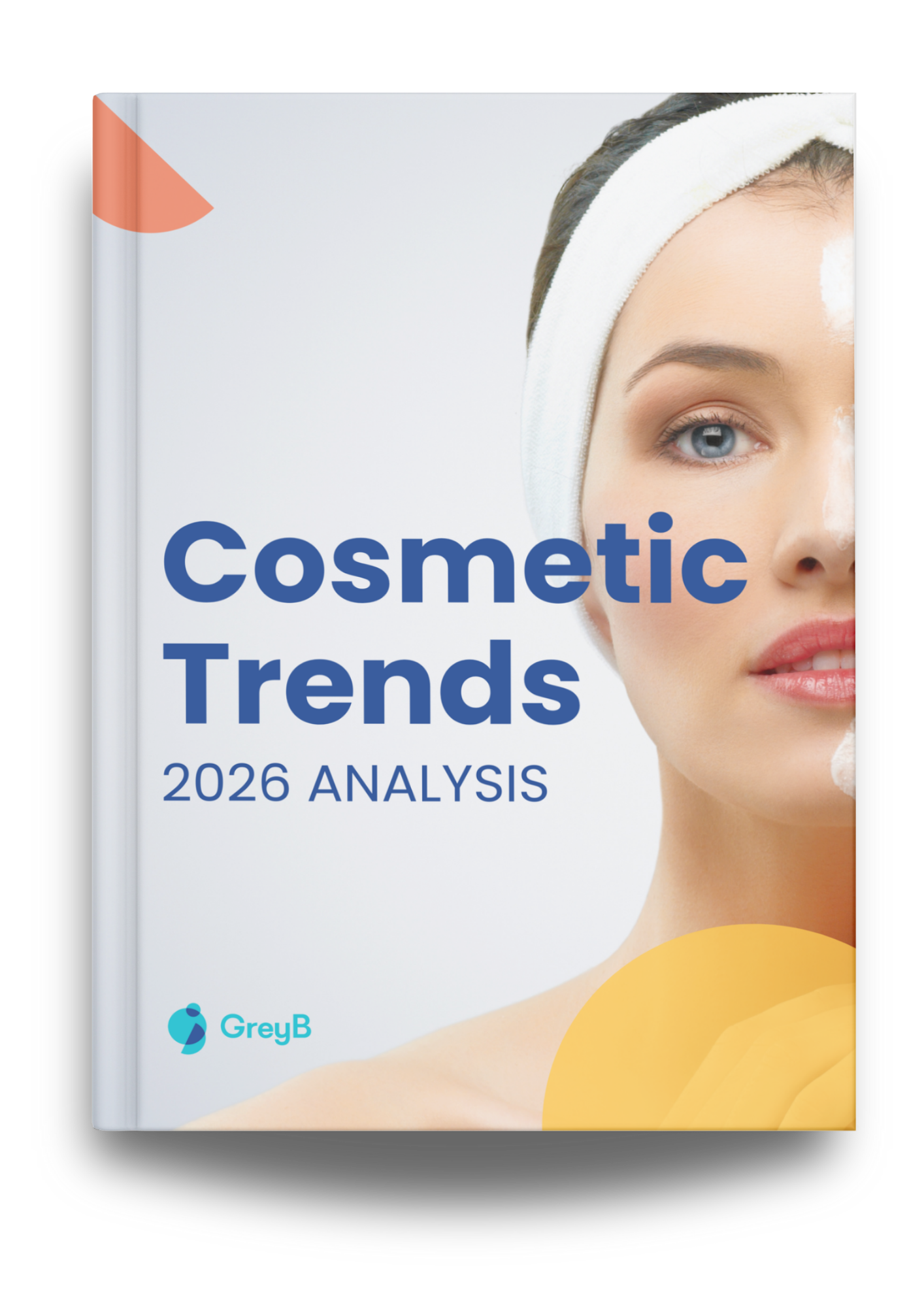
What Does the Monograph Permit About Bemotrizinol Usage?
The parameters from Final Order OTC000039 that bear directly on formulation planning:
- Maximum concentration: 6% w/w
- Permitted dosage forms: oils, lotions, creams, gels, butters, pastes, ointments, sticks, and sprays
- Combinations: permitted with all other monograph actives, except PABA and trolamine salicylate, which are excluded
- Effective date: August 9, 2026
Bemotrizinol was approved through the OTC Monograph Order Request (OMOR) Tier 1 process under Section 505G of the CARES Act, the first new sunscreen active to clear this pathway.
Several other globally used filters remain non-GRASE pending additional safety data, including bisoctrizole, drometrizole trisiloxane, iscotrizinol, and octyl triazone. Whether the pace of the Bemotrizinol review extends to any of these is an open question.
Keeping track of regulatory and patent activity across the cosmetics industry as it happens is how cosmetic and personal care companies can stay at the lead.
Keep monitoring filters moving through the OMOR process, new alternative and safe ingredients for existing formulations, and keep an eye on competitor activity using our AI platform – Slate.
Be first to get notified of new filings on Bemotrizinol or OMOR decisions
How Formulators Are Already Using Bemotrizinol?
Bemotrizinol’s composition-of-matter protection is no longer in force. Ciba Specialty Chemicals developed the molecule in the late 1990s, and BASF acquired Ciba in 2008. The molecule is now available from multiple suppliers, including BASF (Tinosorb S), DSM-Firmenich (Parsol Shield), and Aako (AakoSun BEMT). The active IP competition now centers on formulation methods and delivery systems.
Patent filings from L’Oreal, DSM IP Assets BV, BASF, and Symrise document four distinct formulation applications, each addressing a different problem.
Anchoring a Broad-Spectrum System
The most common use is as the main UV-absorbing molecule in a complete sunscreen system. L’Oreal has filed patents across emulsion, gel, stick, and spray formats (FR3160565B3, FR3160582B3), each built around Bemotrizinol as the central UV absorber. The formulation targets are a critical wavelength of at least 370 nm and a UVA protection factor to SPF ratio of at least 1:3.
One constraint U.S. teams need to hold alongside this is that Bemotrizinol’s absorption maxima sit at approximately 310 nm (UVB) and 340-345 nm (UVA II/UVA I). This leaves the ultra-long UVA range of 380 to 400 nm uncovered. In markets with access to proprietary filters, a co-filter fills that gap. L’Oreal’s Mexoryl 400 has an absorption peak around 385 nm, but it isn’t approved for use in the U.S. Building around Bemotrizinol as a sole anchor in the U.S. means designing around that gap.
What else is changing in US cosmetics regulation


Stabilizing Avobenzone and Octinoxate
Approximately 98.4% of Bemotrizinol remains intact after 50 minimal erythemal doses of irradiation. Avobenzone, by contrast, loses roughly 36% of its absorbance after one hour and can lose up to 90% in poorly stabilized products, depending on the formula.
Bemotrizinol’s ability to stabilize avobenzone is well documented and cited in the FDA’s scientific review supporting OTC000039. A 2025 toxicology review in Critical Reviews in Toxicology reports that Bemotrizinol preserves 100% of the avobenzone in some studied combinations.
On the formulation IP side, FR3160585B3 and FR3160563A3 document specific concentrations at which Bemotrizinol keeps both avobenzone (butyl methoxydibenzoylmethane) and octinoxate (ethylhexyl methoxycinnamate) active across sustained UV exposure.
For brands not yet ready to rebuild a UV system from scratch, this is the most immediately actionable application. Bemotrizinol can enter an existing avobenzone-based formula as a stabilizing co-filter before any larger reformulation is planned.
Reducing ROS in Mineral-Hybrid Systems
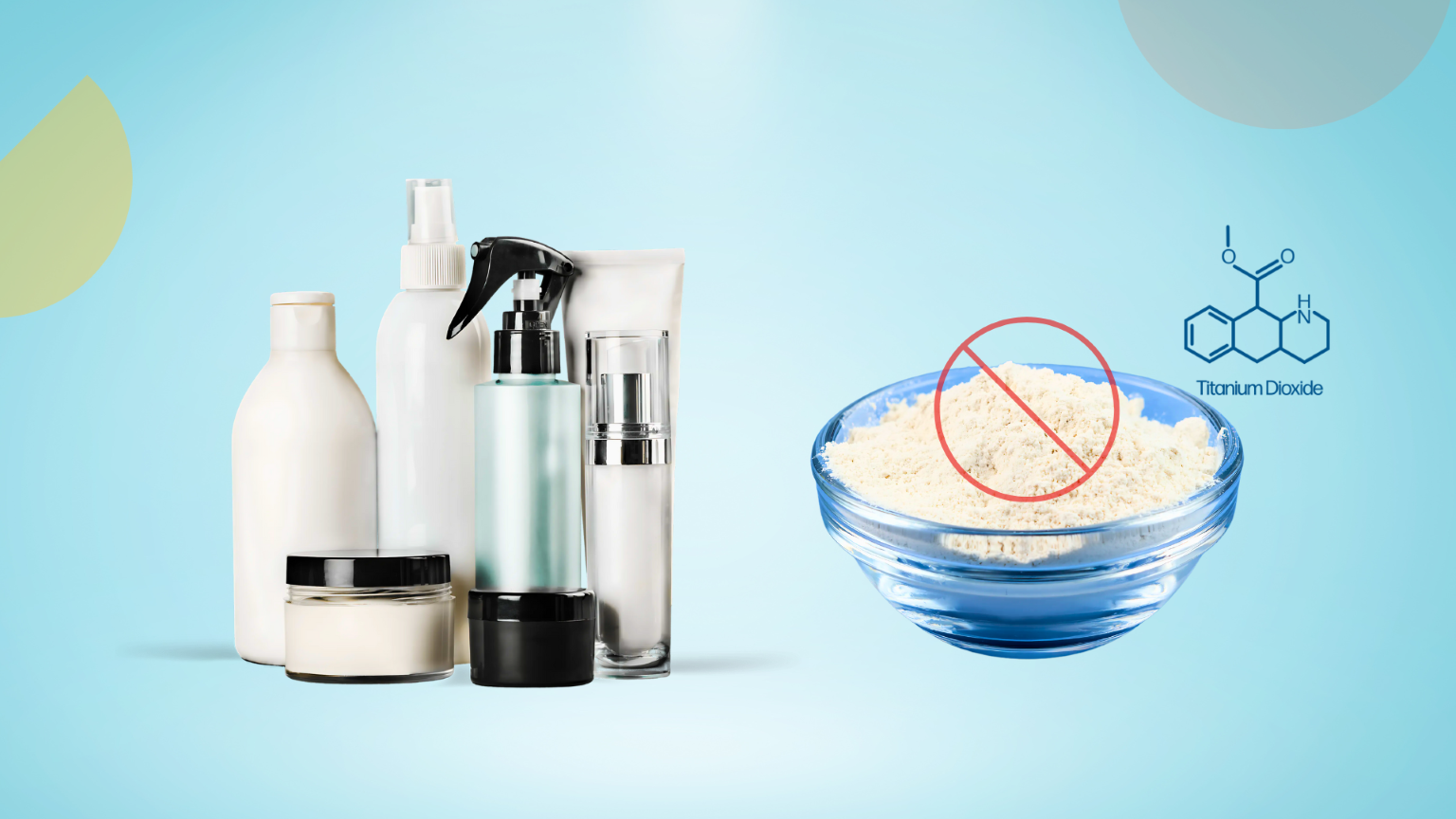
A less visible but increasingly documented application is in mineral-chemical hybrid formulations. Titanium dioxide generates reactive oxygen species (ROS) when it absorbs UV radiation, which can degrade co-formulated actives and create stability issues.
Patents FR3160571B3 and WO2025137075A1 show Bemotrizinol co-formulated with TiO2, reducing ROS generation and improving the stability of the hybrid system. According to BASF’s June 12, 2026, press release, Bemotrizinol combined with Z-COTE zinc oxide can deliver broad-spectrum protection with less white cast than mineral-only systems. For teams working on mineral-based products and trying to close the texture gap, this is a viable formulation path.
Also Read:
Solving the Solubility Problem
Bemotrizinol is an oil-soluble solid that must be dispersed in the oil phase. Its solubility in most cosmetic solvents is limited, which creates a recrystallization risk over time, reducing both stability and efficacy. The patent record reflects two distinct engineering approaches to this.
DSM IP Assets BV’s approach, documented in US12629325B2, involves dissolving Bemotrizinol in fatty acid dextrin esters combined with branched alkanes. This keeps the molecule in solution at concentrations sufficient for meaningful SPF contribution, solving the recrystallization issue that usually limits how high you can load the active.
3V Sigma takes a different approach, documented in WO2026064796A1, formulating Bemotrizinol into concentrated liquid filter blends designed to remain stable across a range of finished-product environments. Their UVASORB systems are built specifically to prevent precipitation.
BASF offers a third route through Tinosorb S Aqua, which incorporates Bemotrizinol into a PMMA matrix dispersed in water, enabling formulation from the water phase and supporting lighter sensory profiles in oil-reduced systems.
The delivery system is not a secondary consideration. U.S. teams starting formulation work from scratch will save meaningful development time by mapping how these approaches differ before running their own solubility studies.
Slate maps the full patent landscape and regulatory requirements for Bemotrizinol, as well as the filters or cosmetic ingredients still awaiting approval, including bisoctrizole and drometrizole trisiloxane. Access the formulation patents by company, ingredient, or application. See who’s filing where, and plan your formulation roadmap around what’s actually moving through the pipeline, not what might move someday.
Access Bemotrizinol patent landscape, OMOR submission, and move by L’Oreal, BASF, and DSM-Firmenich as it happens.