

Value Delivered
The research identified prior art expressly disclosing a camera installed through an opening in a vehicle light, with its lens cover secured from the outside—the precise arrangement required by the asserted claim.
This provided the client with stronger evidence for challenging the patent in litigation. The explicit textual disclosure also reduced reliance on interpreting technical drawings, making the prior-art position clearer and more defensible.
Problem Solved
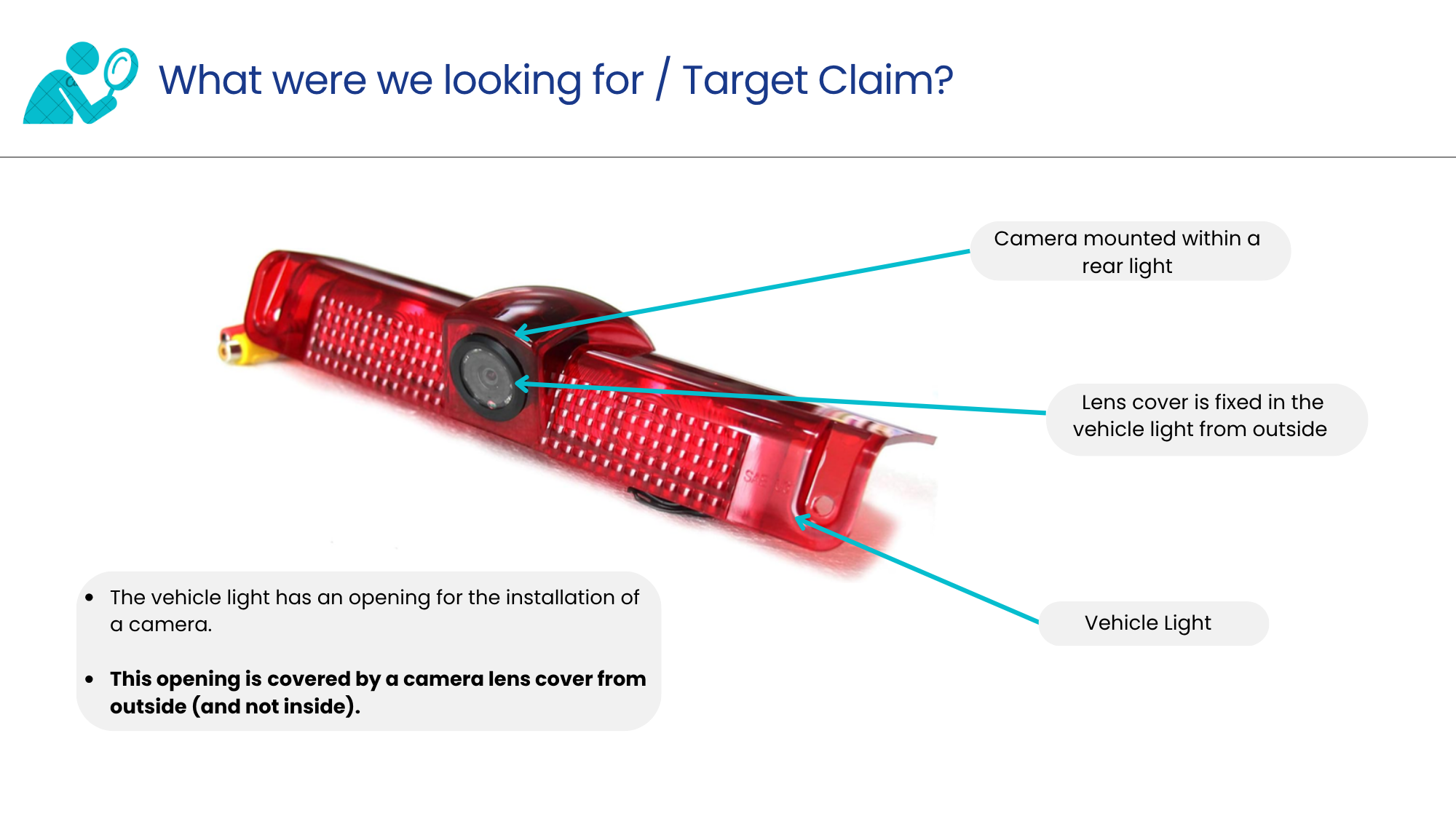
The target claim covered a vehicle rear-view camera integrated into a vehicle light. Specifically:
- The vehicle light contained an opening for installing the camera; and
- A camera lens cover was fixed over that opening from the outside.
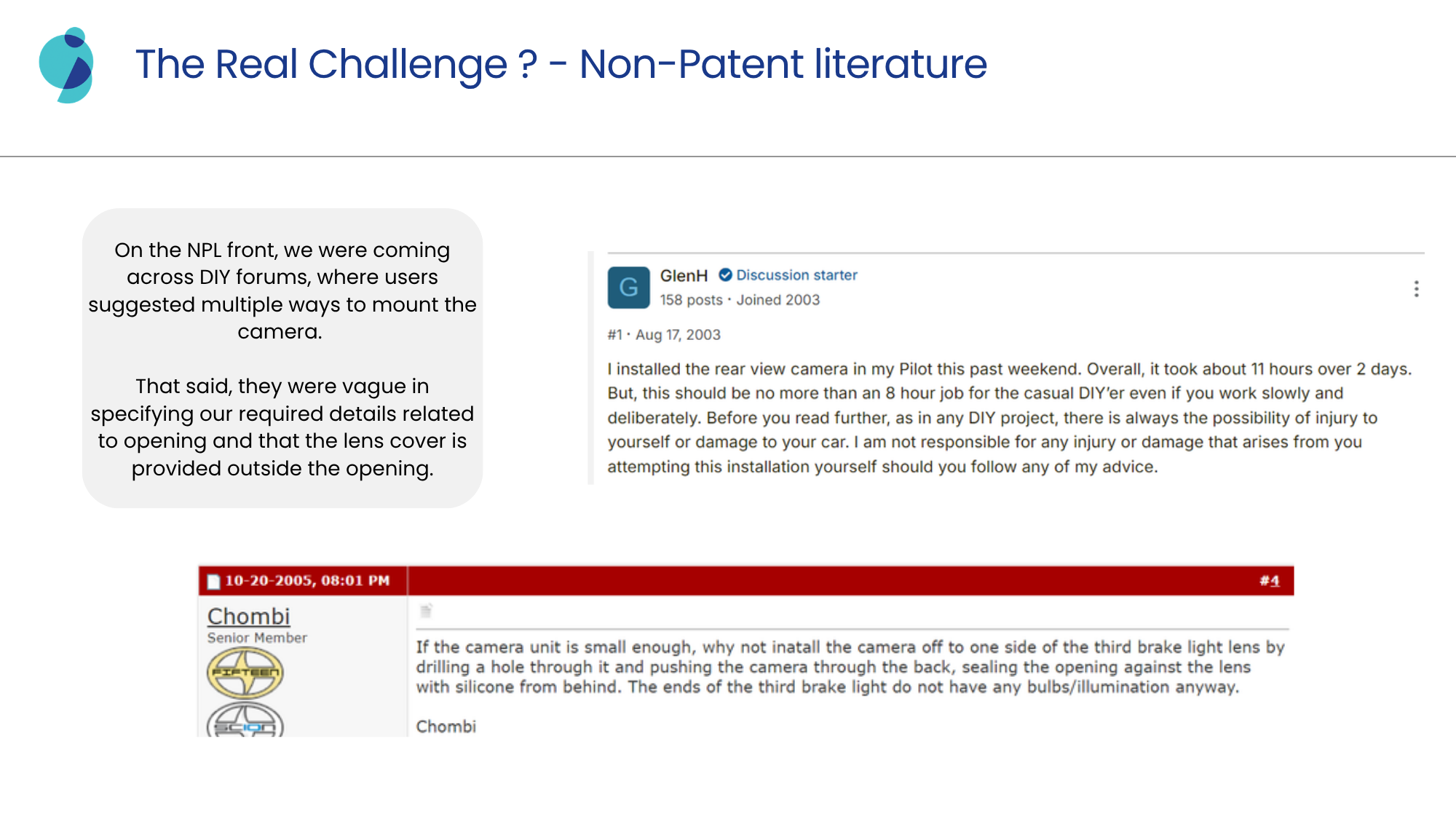
Non-patent searches located DIY discussions describing different ways to mount cameras near vehicle lights. However, these sources were vague about whether the camera passed through an opening and whether the lens cover was externally mounted.
Initial patent results disclosed cameras housed within vehicle lights but did not clearly describe an installation opening or a lens cover secured over that opening from the outside. The challenge was therefore finding all three components—and their required spatial relationship—in one reference.

Solution Offered
The search scope was first expanded beyond conventional passenger vehicles. This led to an armored-vehicle reference showing:
- A camera installed within a tail light;
- An opening accommodating the camera; and
- A lens cover apparently secured from outside the light.
Although the required arrangement was visible in the drawing, the external placement of the lens cover was not expressly described in the text, leaving room for interpretation.
The repeated appearance of Japanese automotive references then led to a second strategy: searching through Japanese F-term classifications, which provide detailed technical categorization beyond conventional keyword and patent-class searches.
Using vehicle-light and camera-related F-terms, the research identified a Japanese reference that expressly disclosed the required configuration—a camera installed through an opening in the vehicle light and a lens cover positioned over the opening from the outside. This reference directly addressed the evidentiary gap and strengthened the client’s invalidity position in the lawsuit.
Get the full case study to discover how expanding the search beyond conventional sources uncovered critical prior art for a vehicular rear-view camera patent lawsuit.