

Value Delivered
We uncovered a Tier-1 non-patent literature (NPL) reference from 2012 that directly mapped to the asserted autonomous vehicle claims, providing the client with strong invalidating evidence against the 2015 CIP patents. The findings strengthened the client’s litigation strategy by demonstrating that the claimed “pluggable robotics OS” concepts were already publicly disclosed years earlier.
Problem Solved
The client initially struggled to find strong prior art because the claims were narrowly framed around OS-level functionality in autonomous vehicle systems. Conventional patent searches produced only weak references, as real-world AV implementations rarely operate purely at the kernel or driver level. Additionally, a critical 170-page dissertation identified during the search was inaccessible through standard databases and locked behind university paywalls.


Solutions Offered
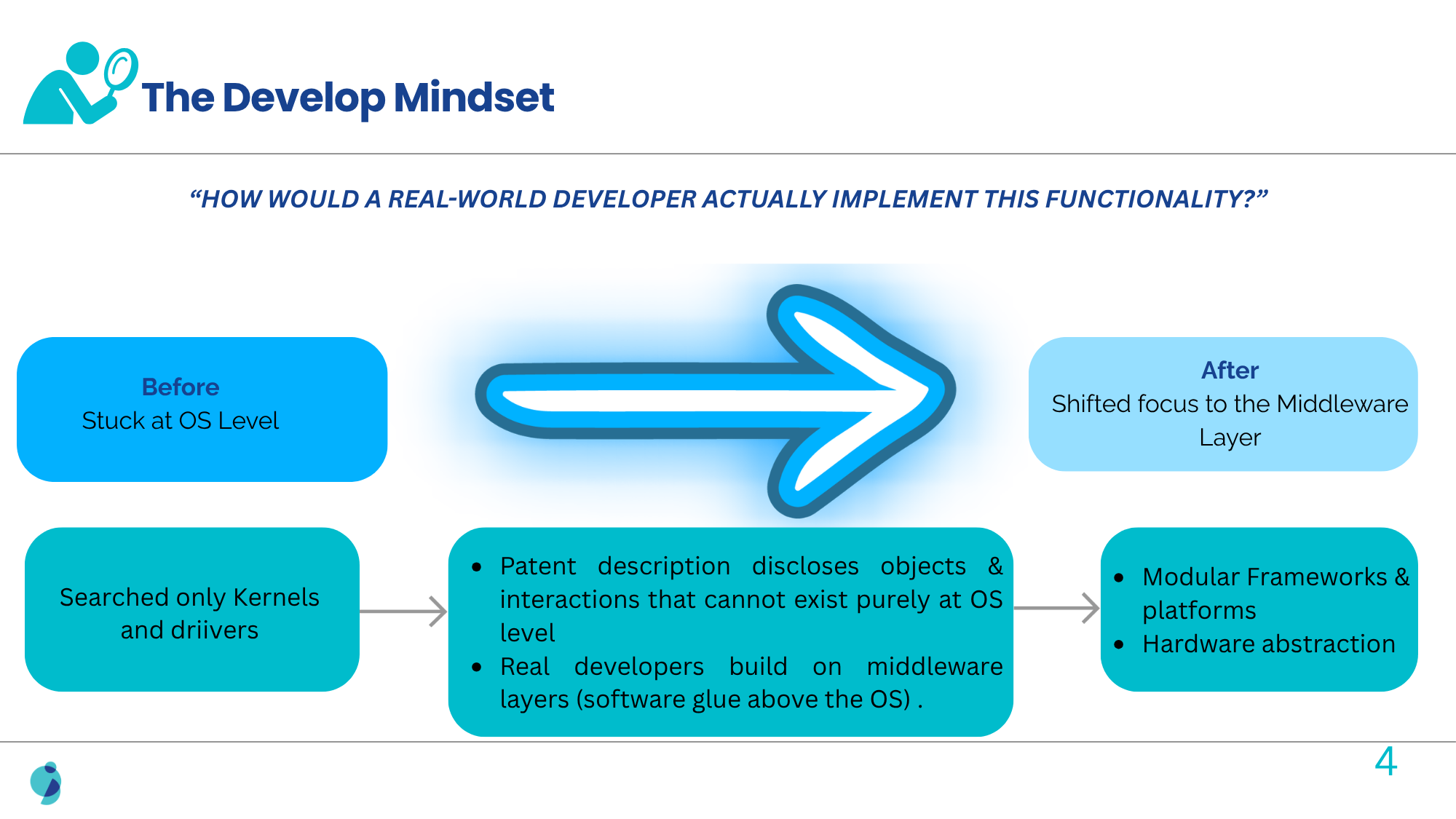
Instead of limiting the search to traditional OS architectures, we shifted focus toward robotics middleware frameworks and real-world implementation layers such as ROS, Open-RMF, and modular robotics platforms. This approach led us to a foundational paper on RISCWare (General-Purpose Robotics OS), from which we traced citations to a highly relevant 170-page Ph.D. dissertation published in 2012. By reframing the search strategy from OS infrastructure to robotics middleware, we uncovered prior art that conventional searches had missed and delivered a strong invalidation package for the client.
Get the full case study to discover how we identified tier-1 prior art for autonomous vehicle robotics claims.