

Value Delivered
The client secured a legally defensible invalidity argument by leveraging an archived 2013 gaming blog. This discovery bridged a technical gap between refresh rate and real-time FPS that opposing counsel could have exploited. Validating the blog through the Wayback Machine closed any public availability loopholes.
Problem Solved
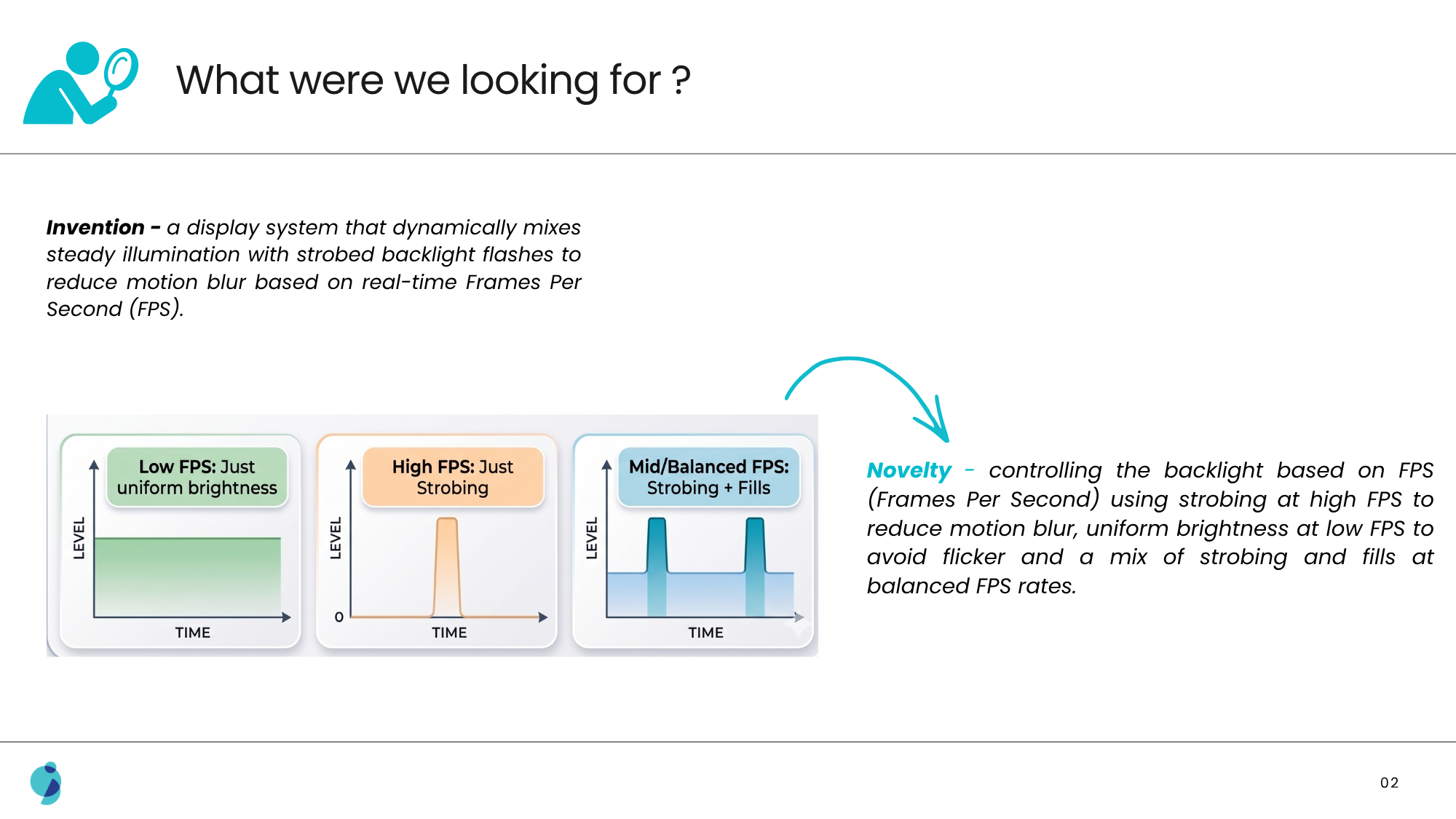
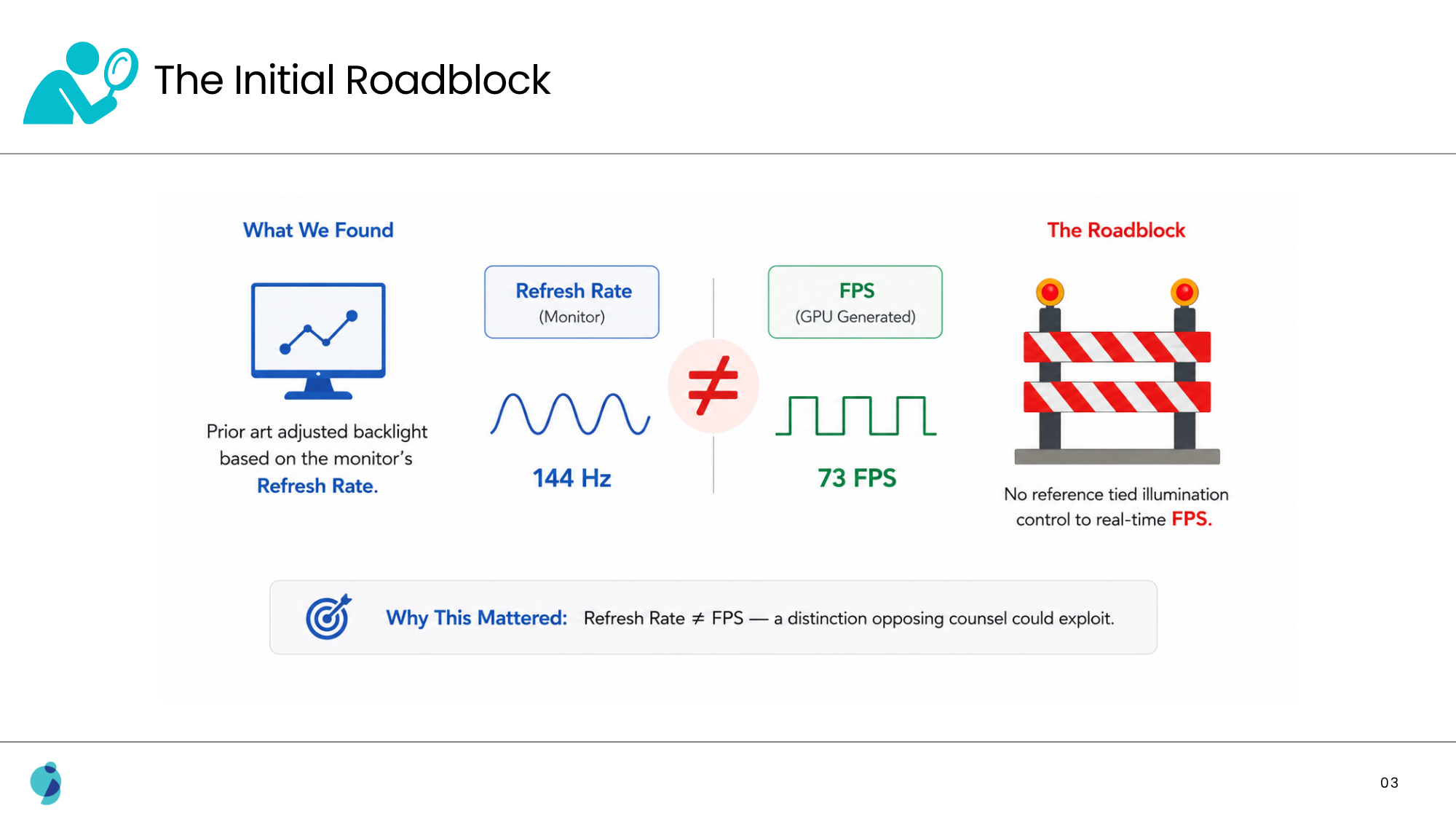
The target patent claimed a display system that dynamically mixed steady illumination with strobed backlight flashes to reduce motion blur, based strictly on real-time Frames Per Second (FPS). Traditional patent databases hit a wall because existing prior art only adjusted backlights based on a monitor’s Refresh Rate. Since a monitor’s Refresh Rate and a GPU’s real-time FPS are technically distinct, this created a massive roadblock for the research team, as keyword searches failed to surface references that directly tied illumination to FPS.
Solutions Offered
Recognizing the limits of standard patent databases, the search pivoted to enthusiast communities obsessed with display quality and motion blur. Tracing a Reddit thread about choppy 240Hz monitors led to a YouTube benchmarking video , which in turn pointed to a browser-based utility called TestUFO and the Blur Busters homepage . Digging into the founder’s 2013 articles surfaced a hand-drawn diagram detailing the exact three-mode backlight logic claimed by the patent, effectively breaking the case open.
Get the full case study to discover how a gaming blog invalidated a FPS display patent.