

Value Delivered
The client received product-based evidence supporting its defense in a high-profile litigation matter involving a multi-coil antenna system.
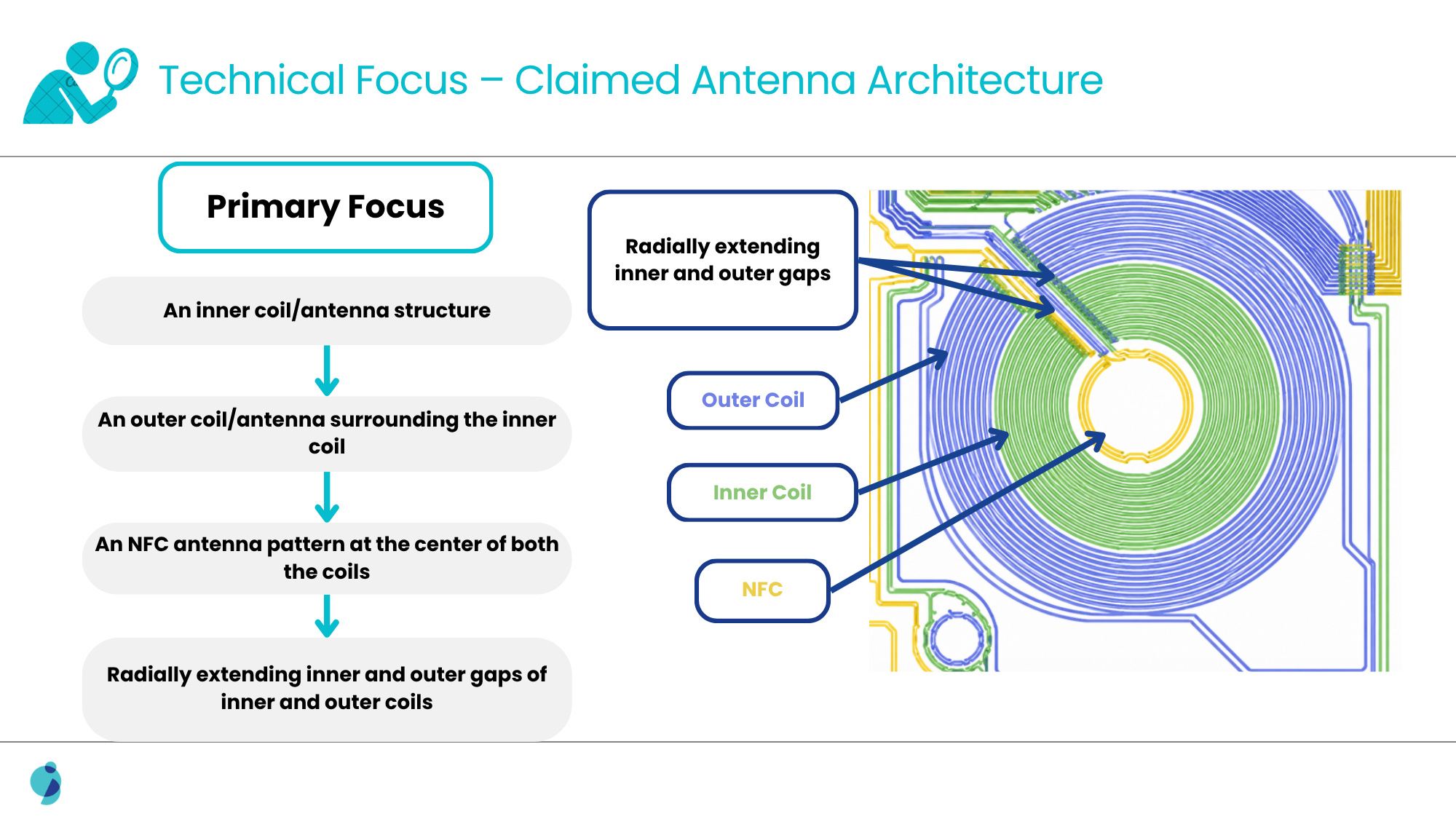
The claimed architecture required a specific arrangement of antenna elements:
- An inner coil or antenna structure;
- An outer coil surrounding the inner coil;
- A separate NFC antenna pattern positioned at the center of the coils; and
- Radially extending gaps associated with the inner and outer coils.
Conventional patent and product searches disclosed individual parts of this arrangement but did not clearly show the complete configuration. The teardown evidence exposed the internal antenna module of a commercially available device and revealed a structure closely resembling the claimed arrangement.
The findings enabled the client to:
- Address the missing structural limitations: Identify separate inner and outer coils together with a central antenna element.
- Reveal features hidden inside the product: Use teardown and internal imaging evidence that was unavailable through ordinary product pages and technical specifications.
- Strengthen the litigation defense: Provide a physical-product lead that could be evaluated against the asserted antenna claims.
- Expand the prior-art record: Supplement patent references with dated product teardowns and internal component evidence.
- Use the opposing party’s materials strategically: Trace sources appearing in the litigation record to additional technical evidence relevant to the claimed architecture.
Problem Solved
The litigation concerned an antenna architecture incorporating multiple concentrically arranged coil structures. The principal claim features included an inner coil, a surrounding outer coil, a central NFC antenna pattern, and radially extending gaps in the coil arrangement.
The initial search considered patents and commercial devices associated with printed circuit boards, wireless charging modules, NFC antennas, and related coil arrangements.
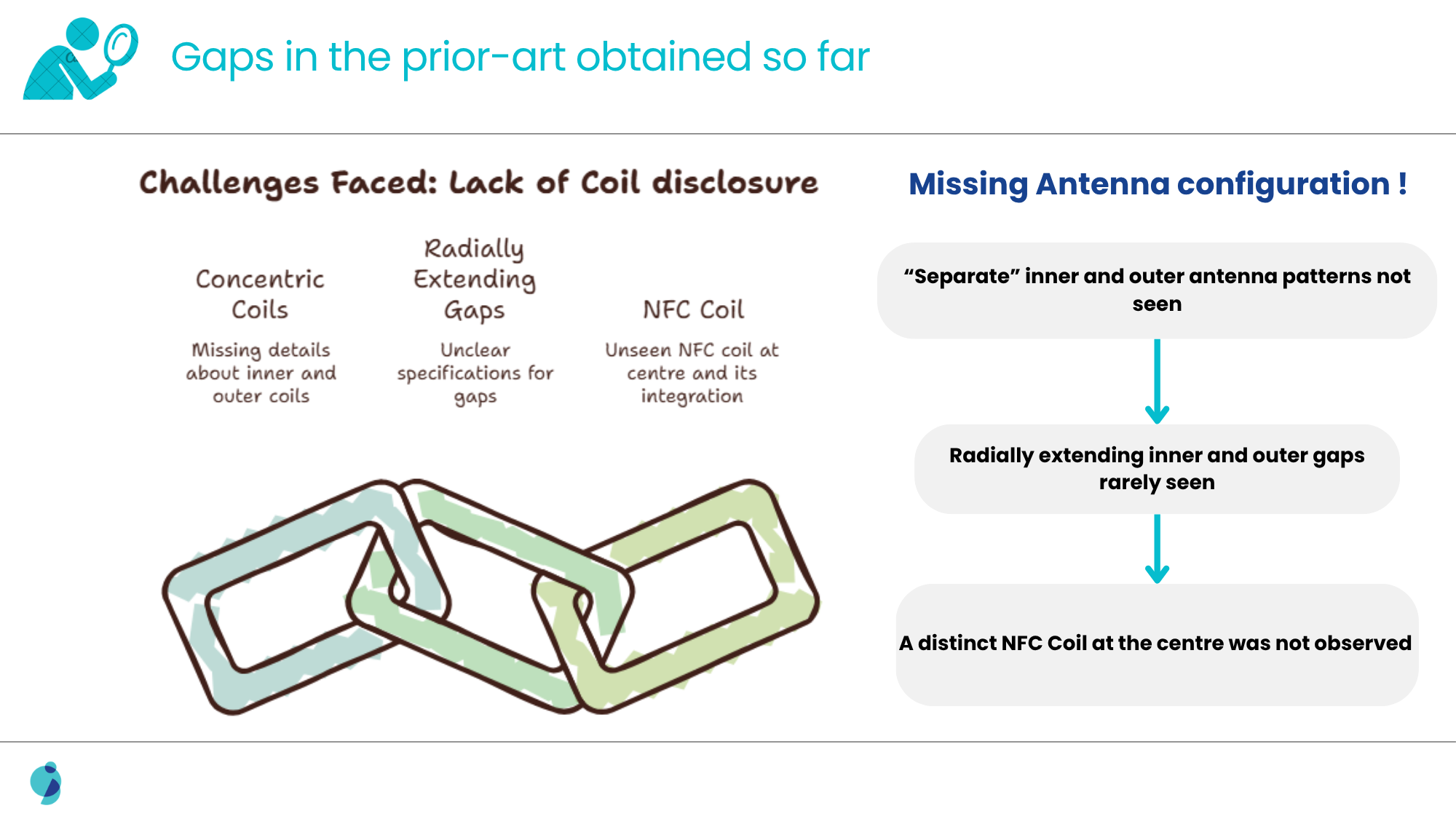
Several relevant patents and products were identified, but they disclosed only partial configurations. The recurring gaps included:
- No clearly separate inner and outer antenna patterns;
- No distinct antenna coil positioned at the center of both surrounding coils;
- Limited disclosure of radially extending gaps; and
- No single reference clearly showing the complete claimed arrangement.
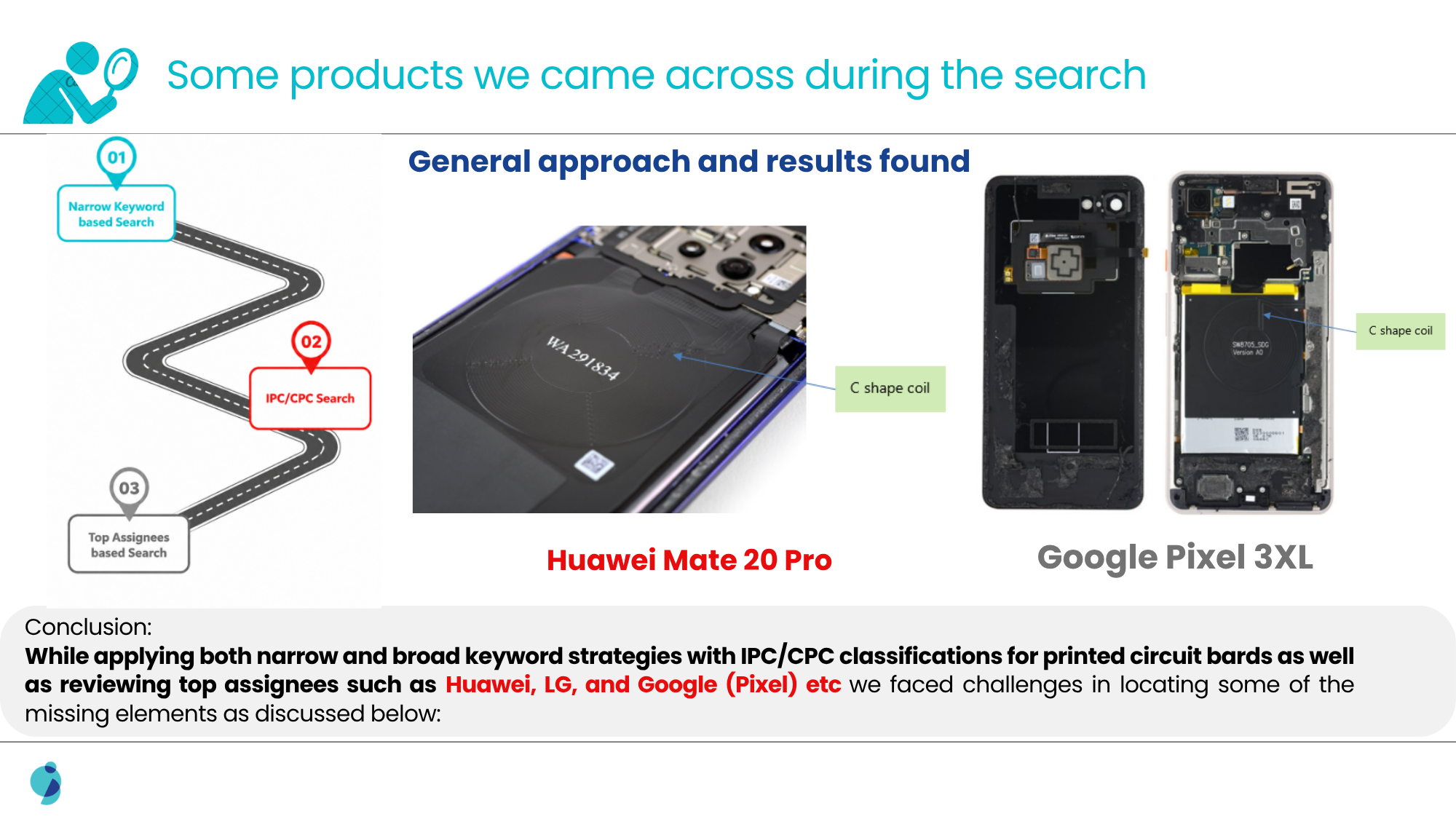
A product-level search presented an additional difficulty because the relevant antenna components were installed inside mobile devices. External photographs, marketing materials, and standard product specifications did not reveal the internal coil structure.
The strongest evidence therefore depended on finding reliable internal views of a product that was available before the relevant cut-off date.
Solution Offered
The research expanded beyond conventional patent searching to include litigation materials, technical teardown sources, disassembly records, and internal product imagery.
Materials cited in the opposing party’s litigation documents provided leads to teardown sources containing detailed internal views of electronic devices. Those sources were examined to identify products released before the relevant cut-off date with antenna modules resembling the claimed structure.
A promising device teardown revealed:
- A larger outer coil;
- A separate inner coil positioned within the outer coil;
- A smaller central coil resembling an NFC antenna; and
- Extension or gap structures running radially through portions of the coil arrangement.
The internal images allowed the antenna module to be assessed at a level of detail unavailable from the product’s external appearance or public specifications. The identified coil arrangement was then compared with the claimed antenna configuration.
The client ultimately received:
- A product-based prior-art lead containing a closely comparable antenna module;
- Teardown evidence showing the internal coil arrangement;
- Identification of separate inner, outer, and central antenna structures;
- Visual evidence relevant to the radially extending gaps;
- A feature-by-feature comparison with the asserted antenna architecture; and
- Additional technical support for the client’s litigation defense.
The result demonstrated that prior art for internal electronic structures may not be discoverable through patents or product specifications alone. Teardown reports, disassembly images, and litigation exhibits can reveal commercially implemented features that remain hidden inside the final product.
Get the full case study to discover how teardown evidence uncovered a hidden multi-coil antenna architecture for a litigation defense.