

Value Delivered
The research identified a pre-cutoff 3rd Generation Partnership Project (3GPP) email trail and an attached change-request document that disclosed the key features of the target 5G private-network patent before its priority date. The evidence connected subscriber-data reconfiguration, an Standalone Non-Public Network (SNPN)-specific attempt counter, and removal of the corresponding SNPN identity from a forbidden list.
The client could use the findings to:
- Build a stronger invalidity position using dated standards-development evidence.
- Show that the claimed concept was publicly discussed before the patent’s priority date.
- Support the technical mapping with an official 3GPP change-request attachment.
- Establish public availability through the archived email trail rather than relying only on a later server-upload date.
- Strengthen litigation, negotiation, or settlement discussions with evidence tied to the relevant standardization process.
Problem Solved
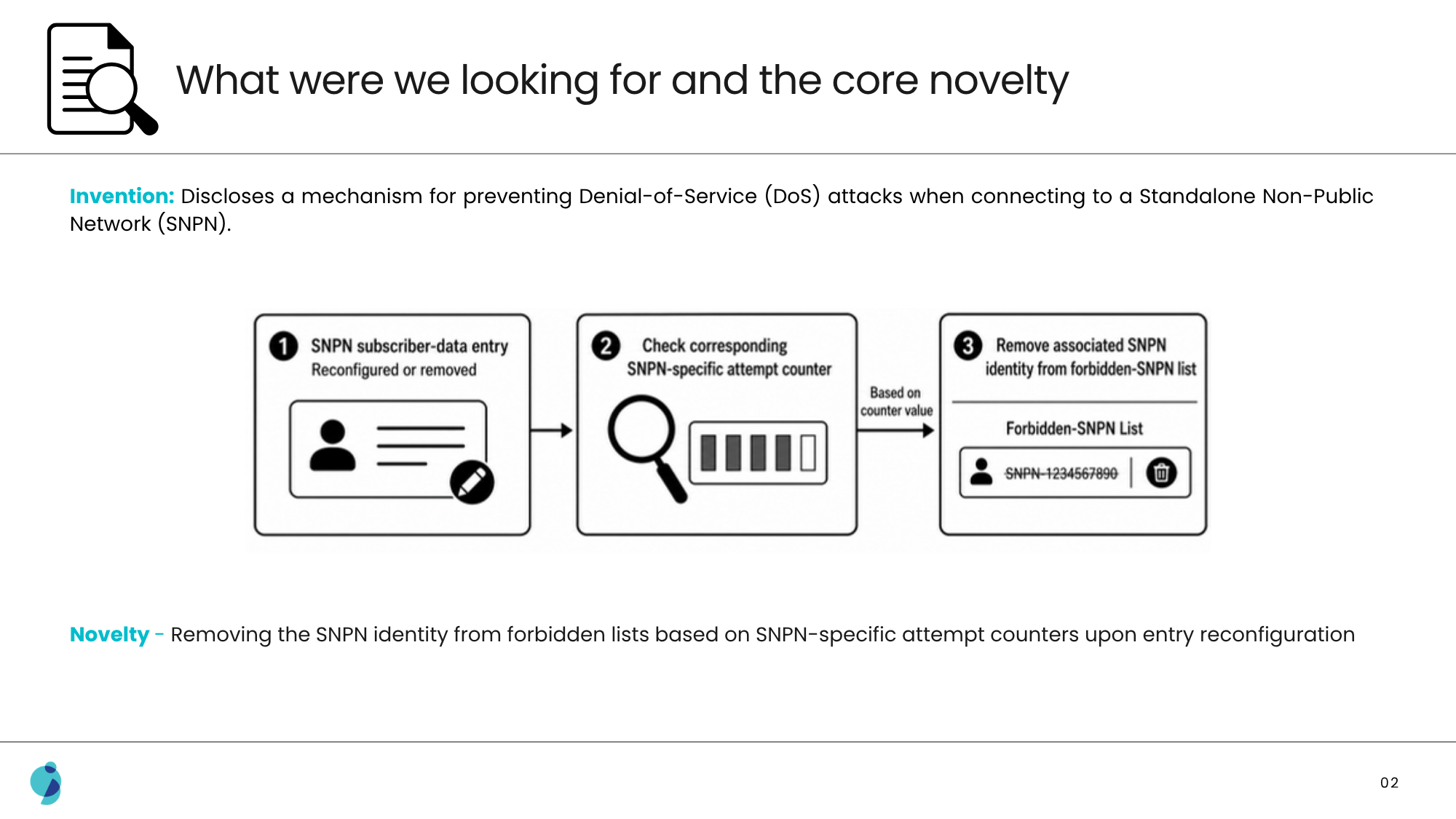
The target patent addressed prevention of Denial-of-Service attacks when a device connects to an SNPN. Its key feature involved removing an SNPN identity from a forbidden list when subscriber data was reconfigured, based on an SNPN-specific attempt counter.
The initial search found references covering separate parts of the concept, including forbidden-SNPN lists, attempt counters, reject-message handling, and Universal Subscriber Identity Module (USIM)-based removal. However, none of the early references clearly disclosed the full claimed link between:
- a change to the subscriber-data entry,
- the corresponding SNPN-specific attempt counter, and
- removal of that SNPN identity from the forbidden list.
The main challenge was that conventional claim-keyword and specification searches surfaced the building blocks, but not the exact sequence. The research team therefore had to determine where this combination first appeared within the 3GPP development trail.
Solution Offered
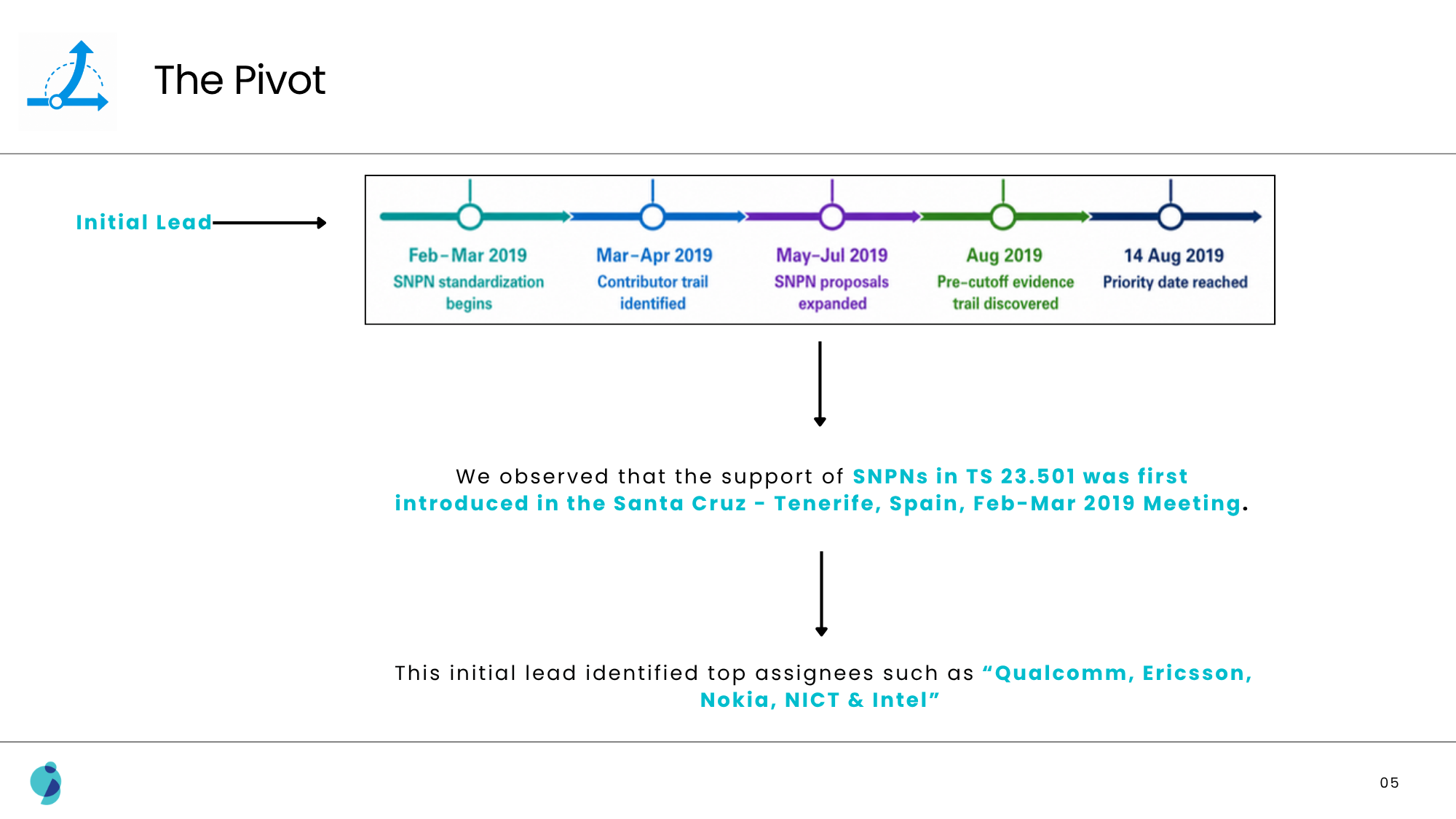
The research moved from a claim-keyword search to a contributor-led standards investigation. The team traced the introduction of SNPN support through 3GPP meeting records, technical specifications, change requests, document versions, and contributor activity.
This review showed that SNPN support in Technical Specification (TS) 23.501 had been introduced during a February-March 2019 meeting. It also identified the organizations that were active in the relevant standardization work. The team then followed their change requests, meeting documents, and communication records to locate earlier discussions of the missing feature combination.
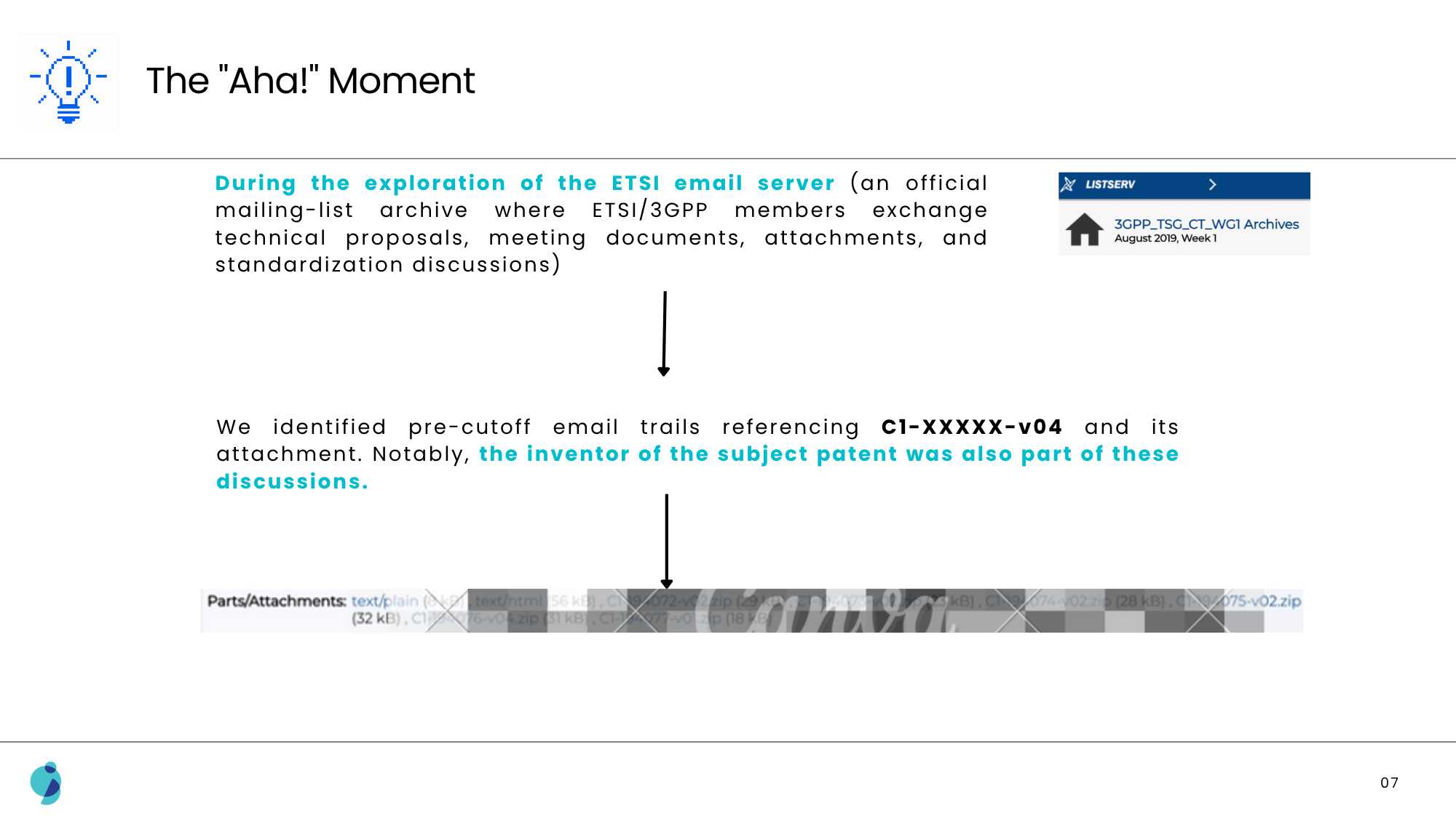
The key breakthrough came from the European Telecommunications Standards Institute (ETSI) mailing-list archive. A pre-cutoff email trail referenced a specific change-request version and its attachment. The inventor of the subject patent was also part of those discussions. The attached document expressly disclosed the required relationship between subscriber-data reconfiguration, the SNPN-specific counter, and removal from the forbidden-SNPN list.
The result gave the client both the technical disclosure and the evidence needed to support public availability before the priority date. It also showed why archived email attachments can be more valuable than the later date on which the same document appears on a standards server.
Get the full case study to discover how contributor mapping and a pre-cutoff 3GPP email trail uncovered strong prior art for a 5G private-network patent.