
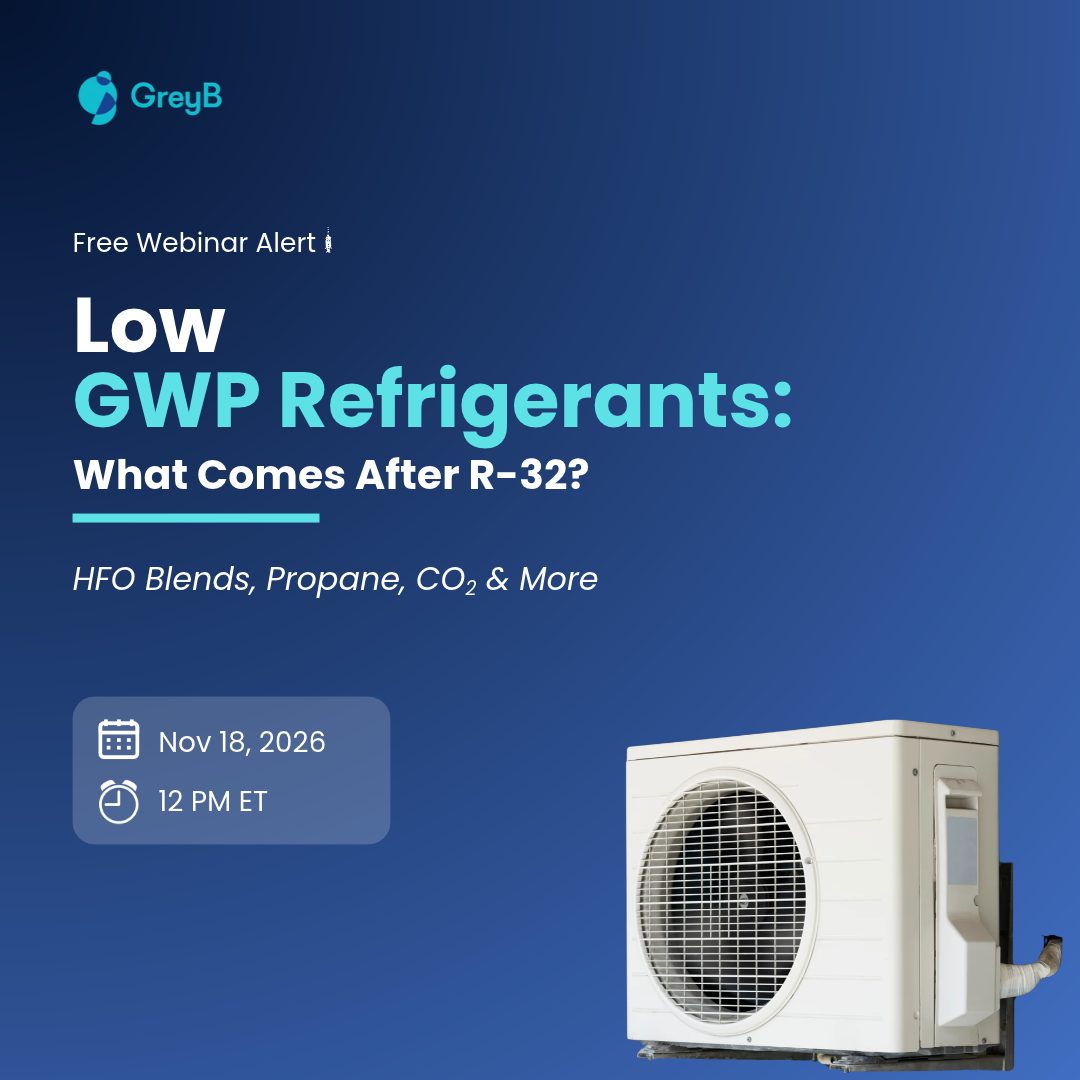
Tighter GWP limits are pushing refrigerant makers to rethink their blends, forcing HVAC makers to rethink the systems those blends go into.
Companies are already taking different routes. Daikin is moving its European home heat pumps to propane, a natural refrigerant. Lennox is switching its US commercial units to a new lower-GWP blend. Weis Markets, working with Danfoss, has replaced its high-GWP supermarket refrigerant with CO2, another natural option. Recent patent filings show new three-part blends built on HFOs, a family of very low-GWP synthetic refrigerants, that bring GWP below the EU’s 150 limit while still improving efficiency.
On the safety side, new control systems can pinpoint which circuit is leaking by tracking pressure and temperature as the compressor switches on and off. This stops flammable refrigerant from building up in occupied rooms and cuts false alarms
But low GWP is no longer the only requirement. Many of the HFOs with the low GWP fall under the category of banned PFAS in the EU. Some HFOs like R-1234yf, break down into trifluoroacetic acid (TFA). In June 2026, ECHA’s risk assessment committee recommended classifying TFA as a reproductive toxicant and as a persistent, mobile and toxic substance. Natural refrigerants avoid both questions, but they bring charge limits, high pressure, and new component needs.
The result is a split technical race with no single low-GWP refrigerant emerging as the answer. R&D teams need to understand which refrigerants can meet GWP limits in target markets without creating new trade-offs in flammability, PFAS and TFA exposure, system cost, or installer skills.
This webinar will cover the problems each low-GWP approach solves, the trade-offs that remain, and the gaps competitors have not yet closed.
38%
of heat pump and air conditioner launches in 2024 and 2025 use low-GWP refrigerants
3 to 7 years
for US local building codes to adopt a new safety standard
~200
low-GWP system patents filed since 2023
You’ll get answers to
- Which of today’s refrigerants pass the US 700 limit but fail the EU’s 150 limit from 2027?
- Which low-GWP refrigerant technologies are ready to use today, and which are still in patents and early research: HFO blends, natural refrigerants like CO2, propane, and ammonia, or leak detection controls?
- How much could the EU PFAS restriction and the proposed TFA classification limit the use of HFOs and HFO blends?
- What still makes a low-GWP refrigerant hard to adopt, even after it meets the rules?
- Where are competitors focusing their low-GWP R&D, and where is there still room to innovate?
Find out how HVAC and refrigerant R&D teams are choosing low-GWP refrigerants that meet the limits, hold up to PFAS and TFA scrutiny, and stay safe to install.
Register to get access to this webinar.