

Value Delivered
The research uncovered a single product-video reference that disclosed the full combination of features required for the invalidity analysis. The reference showed a repositionable magnetic laminate mount together with a frame having the claimed rear-magnet arrangement. This gave the client a stronger basis to challenge the patent using one concrete disclosure rather than combining incomplete references.
The client could use the result to:
- Build a stronger invalidity position against the magnetic photo frame patent.
- Support the claim mapping with a product demonstration showing the complete claimed arrangement.
- Reduce dependence on references that disclosed only the laminate structure or only the frame geometry.
- Use dated product evidence from before the relevant cutoff date.
- Strengthen litigation, negotiation, or settlement discussions with a clear non-patent literature reference.
Problem Solved
The target invention covered a repositionable magnetic laminate mount paired with a photo frame having a spaced rear magnet. The key combination included a magnetic-receptive rubber layer, a foam layer, repositionable adhesive, and a frame with the claimed magnet placement.
The initial search covered patent literature, commercial products, product manuals, YouTube demonstrations, and do-it-yourself blogs. However, the closest references disclosed only part of the invention. Some showed the laminate structure but lacked the required magnet geometry. Others showed a magnetic frame but did not disclose the claimed laminate stack.
The main challenge was that no single English-language source brought all the claimed features together. Conventional search channels had been exhausted, and each result still missed at least one important claim requirement.

Solution Offered
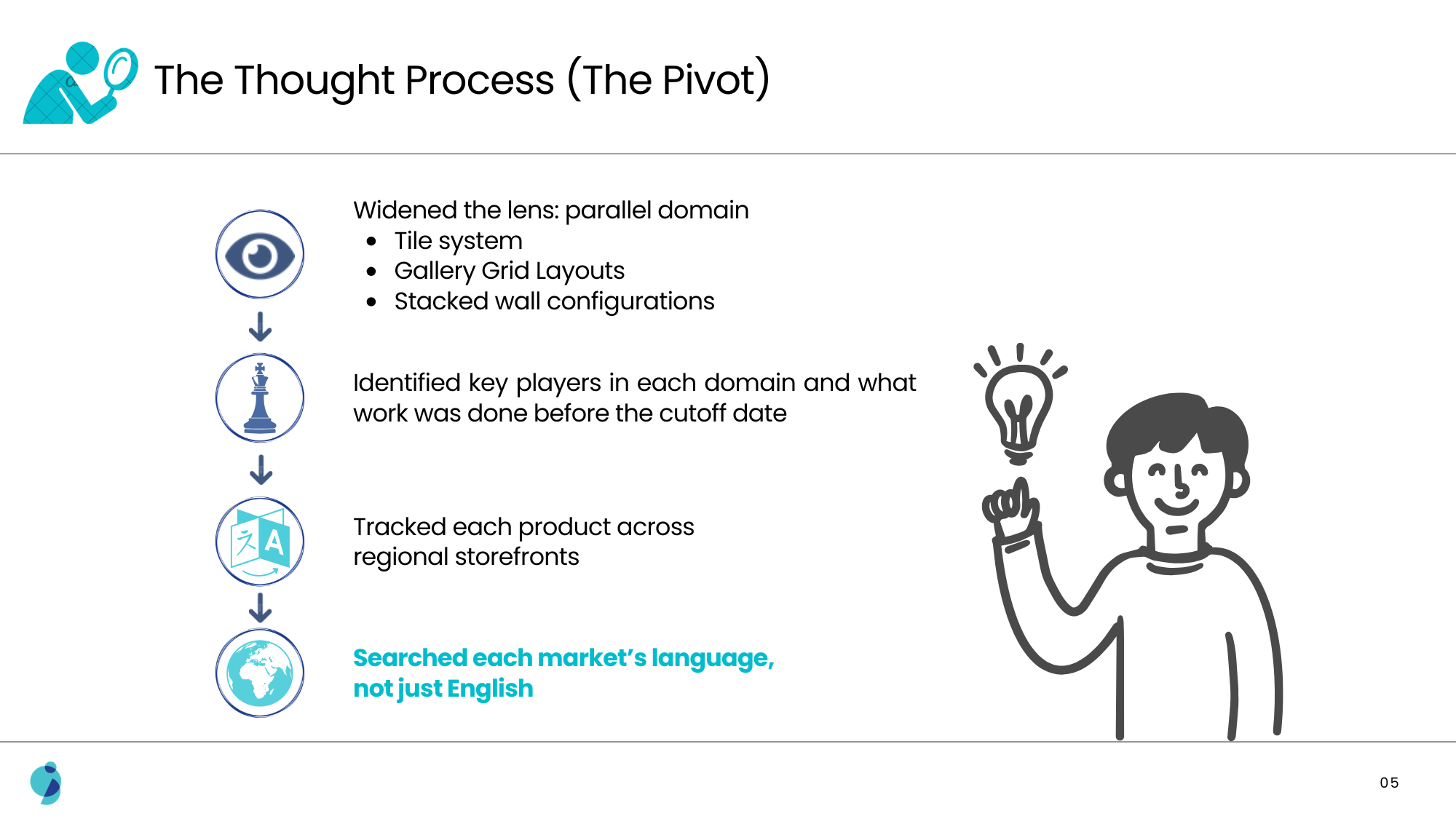
The research team expanded the search beyond direct product and patent terminology. It reviewed parallel product areas such as tile systems, gallery-grid layouts, and stacked wall configurations. This helped identify key products and market participants active before the cutoff date.
The team then tracked promising products across different regional websites, local accounts, manuals, and video uploads. Instead of treating a company’s main website or official English-language channel as the complete evidence source, the search examined the company’s wider regional content footprint.
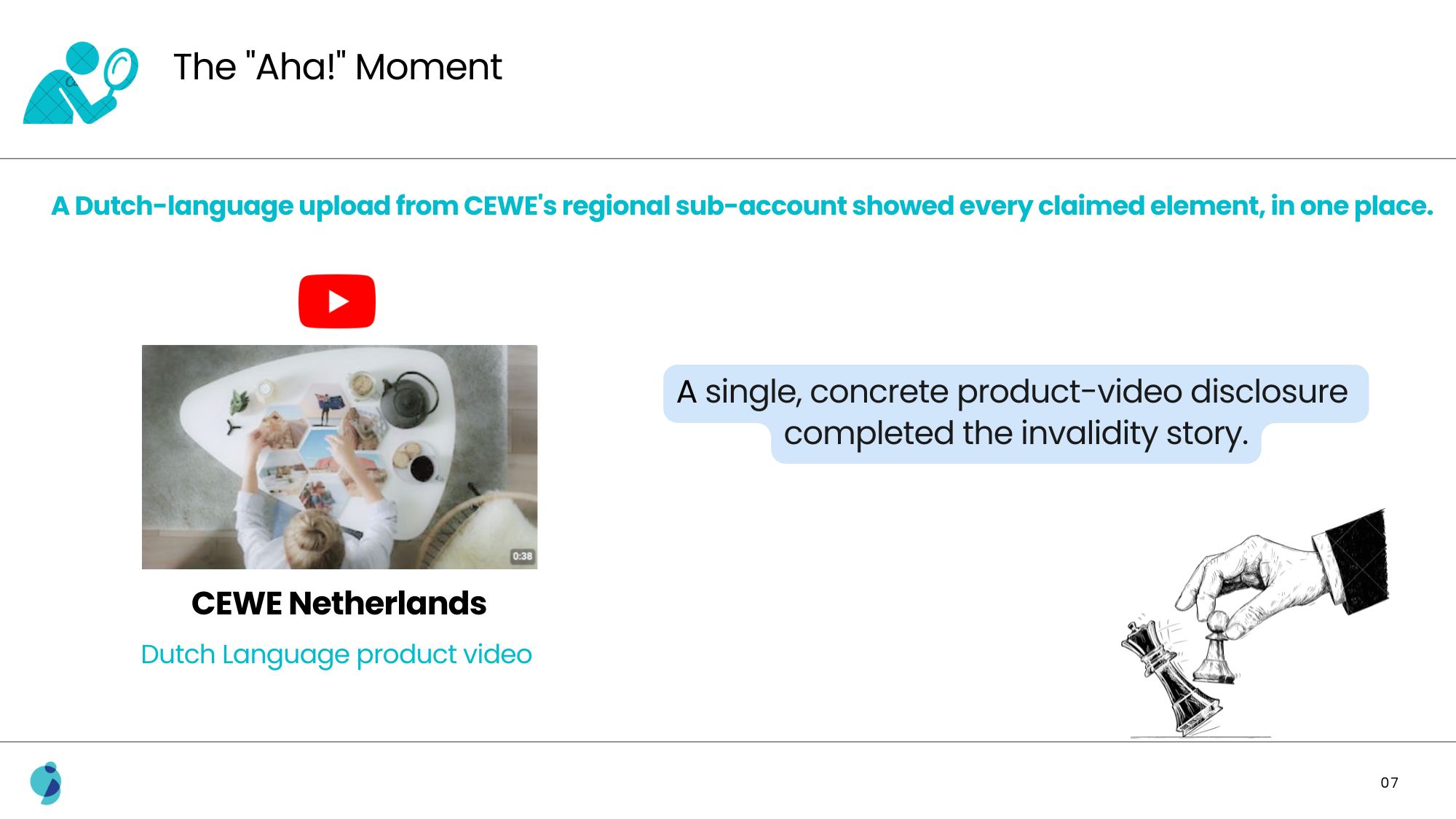
This shift led to a regional, local-language product video. The video demonstrated the claimed magnetic laminate structure and frame arrangement together in one place. It provided the missing combination that had not appeared in the earlier patent, product, or English-language results.
The final result showed that strong prior art may exist outside official product pages and English-language databases. By tracing a product across regional and linguistic variations, the research converted an incomplete search record into a stronger invalidity position.
Get the full case study to discover how a local-language product search uncovered a strong invalidity result for a magnetic photo frame patent.