Value Delivered
The client received a substantially more complete prior-art lead for a claim directed to electronic billing across multiple modes of public transportation.
The identified real-world system brought together the central elements of the claimed billing workflow:
- A traveller initiating the journey through a mobile check-in;
- Entry of a unique identifier associated with a particular station;
- Collection of location information during the journey;
- Use across multiple modes of transportation; and
- Calculation of the fare based on the journey travelled.
The findings enabled the client to:
- Strengthen the litigation defense: Provide evidence that a substantially similar electronic billing workflow had been implemented in a real-world transportation system.
- Move beyond scattered patent disclosures: Identify a single operational system connecting features that appeared only separately in the patent literature.
- Establish technological context: Show how mobile ticketing evolved into GPS-enabled and multimodal fare-calculation systems.
- Support the pre-cutoff analysis: Place the relevant system within the broader development timeline for mobile and location-based transit billing.
- Focus further evidence collection: Give counsel a specific system, implementation period, and body of supporting materials for deeper review.
Problem Solved
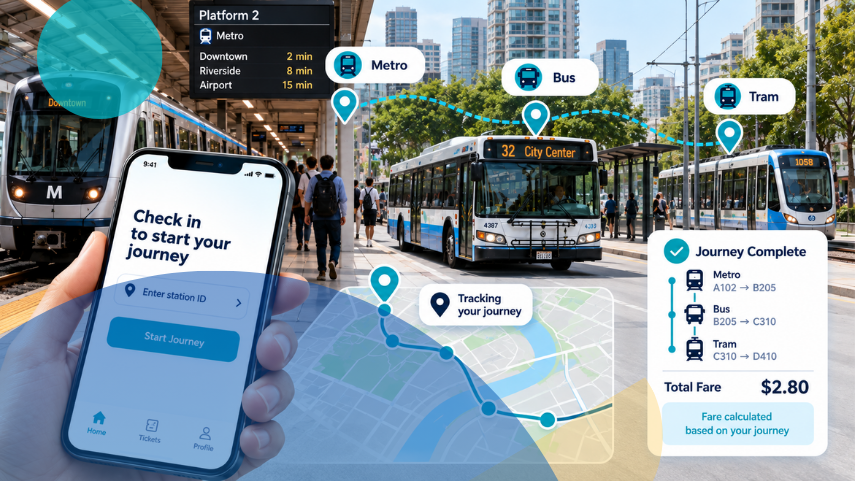
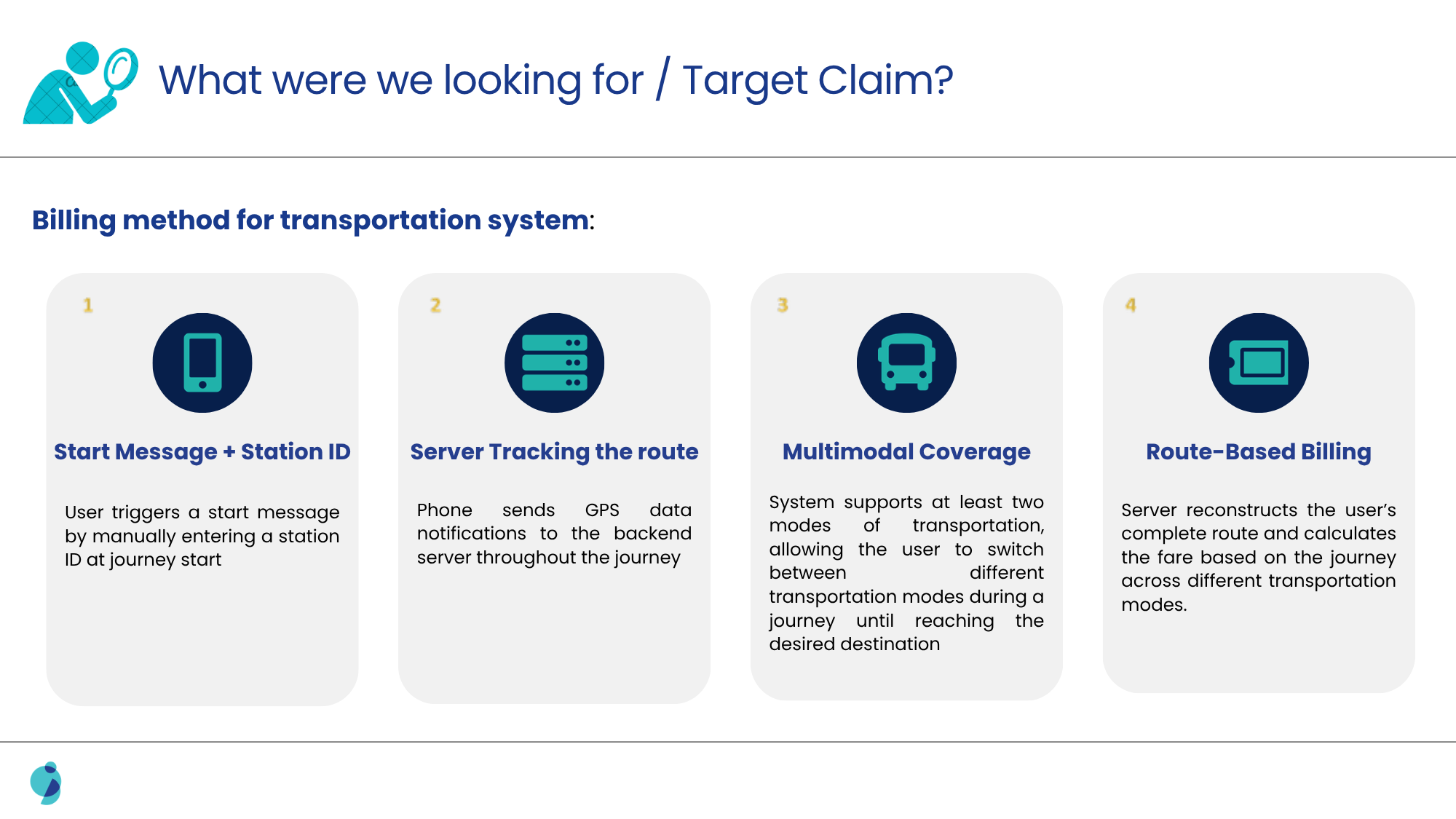
The target claim covered an electronic billing method for a multimodal transportation journey. The claimed workflow required several connected operations:
- The user initiated the journey by sending a start message and manually entering a station identifier;
- A mobile device transmitted location information to a backend server during the journey;
- The system supported at least two modes of transportation and allowed the user to switch between them; and
- The server tracked or reconstructed the journey and calculated the fare based on the route travelled across the different transport modes.
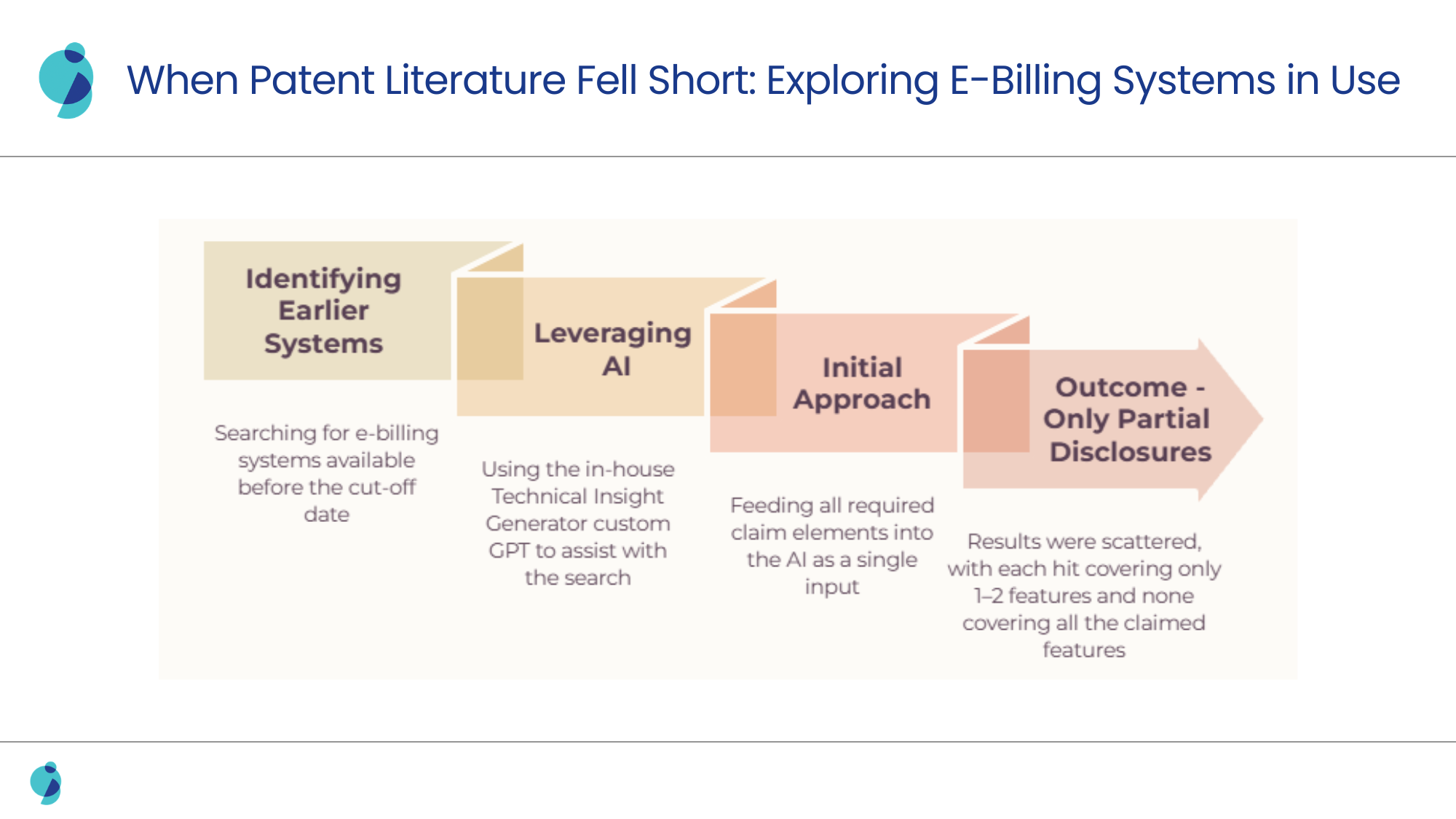
The patent literature disclosed these features only in fragments. Some references described mobile ticketing or station-based identification. Others disclosed GPS tracking, backend fare calculation, or multimodal transportation. However, the available references did not clearly establish the complete billing method in a single system.
This created an important evidentiary gap. Scattered references could show that individual components were known, but they did not demonstrate that the claimed combination was implemented or publicly available before the relevant cut-off date.
The search therefore needed to answer a broader question: whether a transportation provider had actually deployed an electronic billing system that integrated station identification, mobile journey initiation, route tracking, multimodal travel, and journey-based fare calculation.

Solution Offered
The research expanded beyond patent literature to examine electronic ticketing systems used by public-transport operators.
Instead of treating the claimed method as a single dense concept, the development of its principal functions was examined across the historical evolution of transit technology. This revealed three broad stages:
- Early mobile ticketing systems that allowed passengers to initiate or purchase journeys through mobile devices;
- The integration of GPS and mobile applications for location-aware travel and fare collection; and
- More advanced systems capable of calculating fares across multimodal journeys.
The analysis of this timeline focused attention on the period in which GPS-enabled mobile ticketing and multimodal fare collection began to converge.
This led to a real-world mobile check-in ticketing system operated by a major transportation provider. The system disclosed:
- Mobile check-in: The traveller used a mobile device to initiate the journey;
- Station identification: The traveller entered a unique contact-point number associated with a specific station;
- In-journey location collection: Location information gathered during travel contributed to fare calculation; and
- Multimodal operation: The system could be used across multiple modes of transportation.
Together, these features provided evidence relevant to the claimed sequence of initiating a journey at a station, tracking travel through location data, supporting changes between transport modes, and calculating a journey-based fare.
The client ultimately received:
- A real-world electronic billing system aligning with the principal claim features;
- Evidence of mobile check-in linked to a station-specific identifier;
- Disclosure of location-based journey and fare processing;
- Support for multimodal transportation use;
- A technology timeline explaining when the relevant functions converged; and
- A focused prior-art lead for use in the broader litigation strategy.
The result demonstrated that where patent references disclose a claimed workflow only in fragments, tracing the historical development of commercial systems can reveal when those functions were first integrated into an operational product or service.
Get the full case study to discover how tracing the evolution of mobile ticketing uncovered a real-world transit billing system for a high-stakes litigation matter.