

Value Delivered
The client received a new prior-art direction by identifying that the claimed vehicle control system was not limited to a turn signal function but relied on a multi-function physical interface.
The research uncovered the broader concept behind the invention: a dual-ended lever that activates different vehicle operations when switched on. By changing the search perspective from the specific vehicle function to the lever as an interface, the team opened new prior-art pathways that conventional searches missed.
This approach helped identify potential prior art by focusing on the physical control mechanism rather than the terminology used in the patent.
Problem Solved
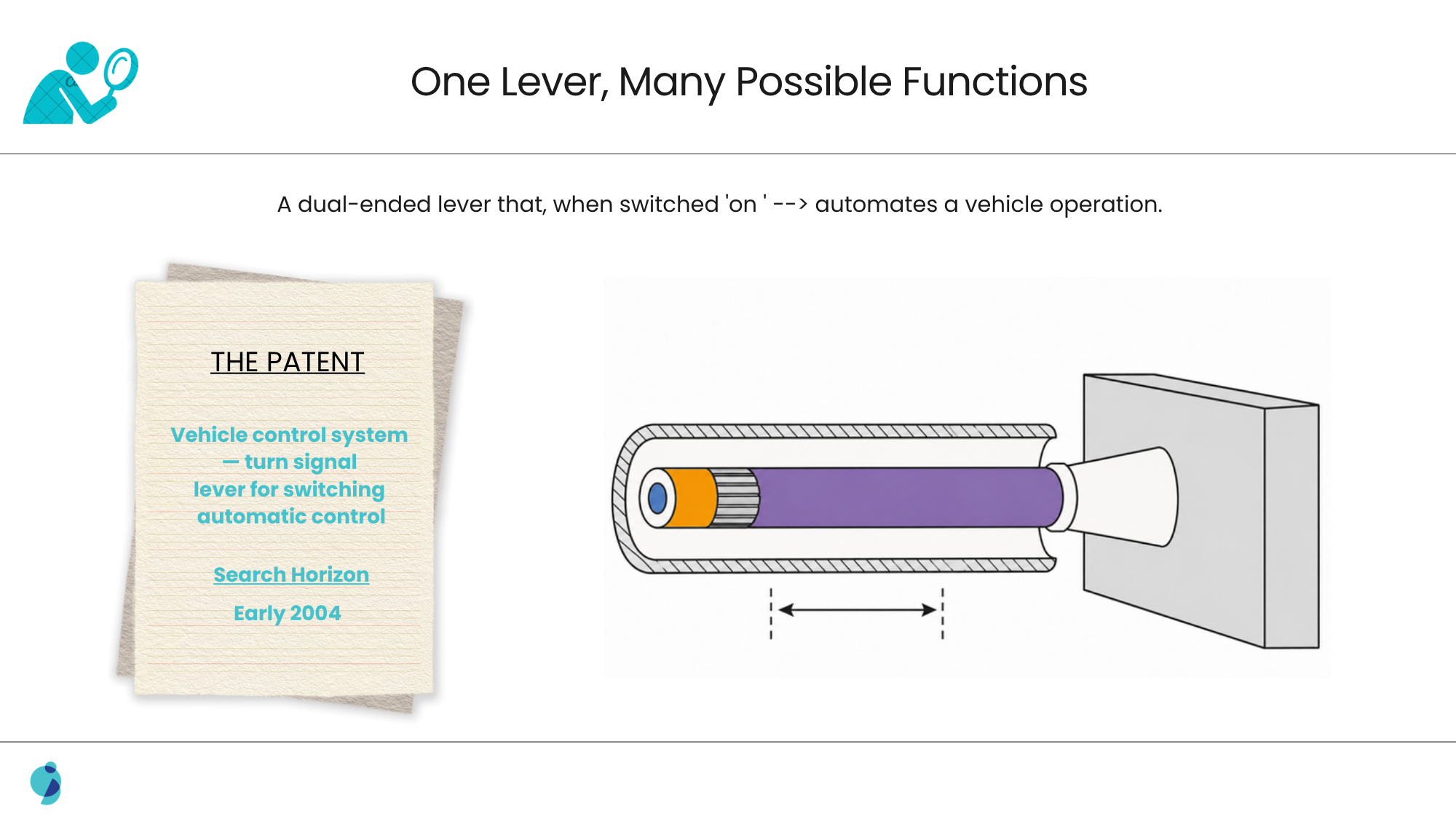
The challenge was finding prior art for a vehicle control system involving a turn signal lever used for switching automatic vehicle control.
The invention focused on a dual-ended lever that, when switched on, automates a vehicle operation. The search horizon was early 2004.
The initial search approach focused too heavily on the term “turn signal lever.” This led both human researchers and AI-assisted searches toward the same narrow interpretation and caused the results to exclude the lever mechanism itself.
The main challenge was understanding that the lever was not the function itself. The lever was an interface that could control multiple vehicle operations, and searching only for one application limited the prior-art discovery.

Solution Offered
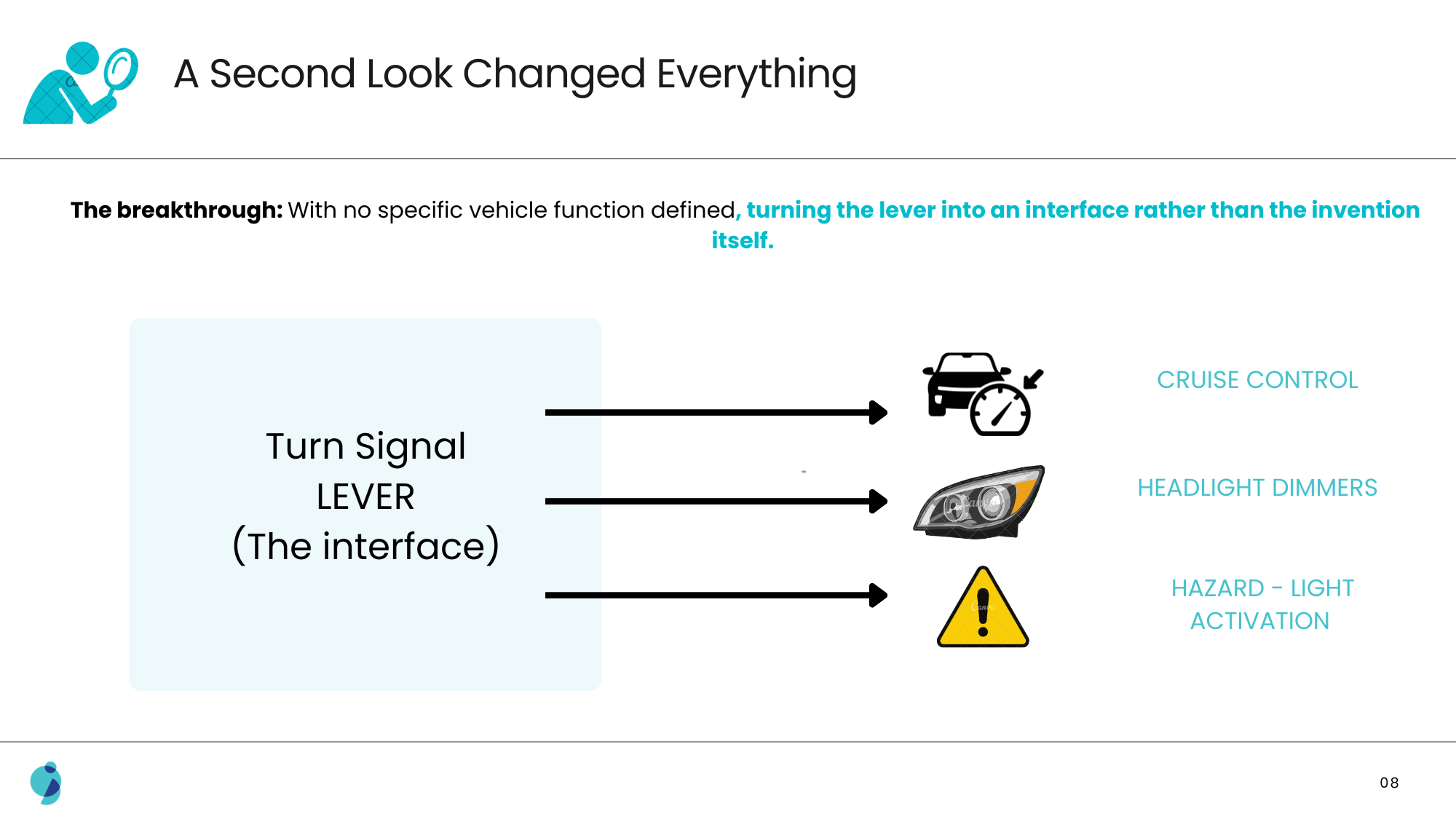
The research team changed the search strategy by treating the turn signal lever as a general vehicle interface rather than the claimed invention itself.
The team explored the question:
What other vehicle functions could be controlled through the same type of lever interface?
This shift allowed the search to expand beyond turn signals and consider other applications, including:
- Cruise control activation.
- Headlight dimmer control.
- Hazard-light activation.
By reframing the invention around the underlying interface and its possible functions, the team created a broader search path that avoided the limitations of terminology-based searching. The case demonstrated that prior-art discovery can improve when the researcher identifies the actual role of a component within a system instead of relying only on how the patent describes it.
Get the full case study to discover how looking beyond a turn signal revealed new prior-art paths