



A leading confectionery company wanted to leverage aroma packaging to boost consumer engagement.
The company partnered with GreyB to explore packaging technologies that could enhance product experience through controlled fragrance release, improved freshness perception, and interactive consumer touchpoints. The goal was to identify commercially viable and scalable packaging solutions that do not require changes to the product formulation.
GreyB evaluated nearly 100+ aroma delivery and aroma management packaging technologies across controlled-release systems, scented labels, sensory coatings, inserts, desiccant-based aroma systems, multilayer formats, and consumer-triggered activation mechanisms.
Scented Canisters, Multi-Layer Packaging, and Other Interesting Concepts That Stood Out
Several concepts stood out during the screening process. Scented multilayer packaging was relevant because it allows different layers within the packaging material to release fragrance at different rates. One layer can create an immediate burst of aroma when the pack is opened. Another layer then releases the fragrance gradually, using techniques such as microencapsulation or layered films to maintain a controlled aroma experience over time. In confectionery packaging, this could improve shelf appeal and create a longer-lasting sensory experience for consumers.
Scented canisters offered a different route. Instead of releasing aroma through the packaging film, these formats slowly release fragrance inside the pack or surrounding space. This technology was commonly used in products such as trash bags, diapers, and pet care items.
Each of these solutions was evaluated on the following parameters:
- Trigger mechanisms
- Packaging compatibility
- Ease of implementation
- Scalability and commercialization potential
- Sustainability considerations
- Consumer experience enhancement
- Adaptability across packaging formats
Also Read:

In-House Product Testing Helped Separate Usable Formats from Non-Relevant Concepts
Secondary research helped identify the available technologies and their claimed benefits. However, key performance parameters, including aroma release duration, fragrance delivery consistency, activation behavior, and sensitivity to environmental conditions, remained unclear.
To bridge this gap, teh team bought sample packaging solutions and tested them in-house. The testing focused on evaluating aroma-release efficiency, performance consistency, user-triggered activation mechanisms, and overall sensory impact.
One tested solution was a fragrant card integrated into the packaging experience. The format allowed aroma release without direct contact with the product and created a clear sensory cue when the consumer interacted with the pack.
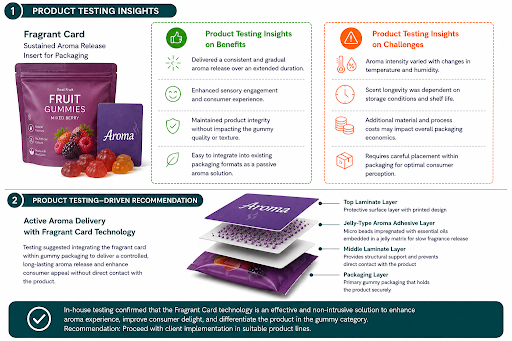
Hands-on assessments enabled the team to validate manufacturers’ claims and identify performance nuances not evident in publicly available information, and develop a more realistic understanding of the consumer experience.
This helped filter the landscape down to 10 commercially relevant aroma packaging technologies suited to the client’s portfolio.
Mapping of Shortlisted Technologies to Client’s Specific Product Formats
Finally, the viable solutions were mapped against the client’s existing product formats and packaging infrastructure, reducing the time from insight to pilot.
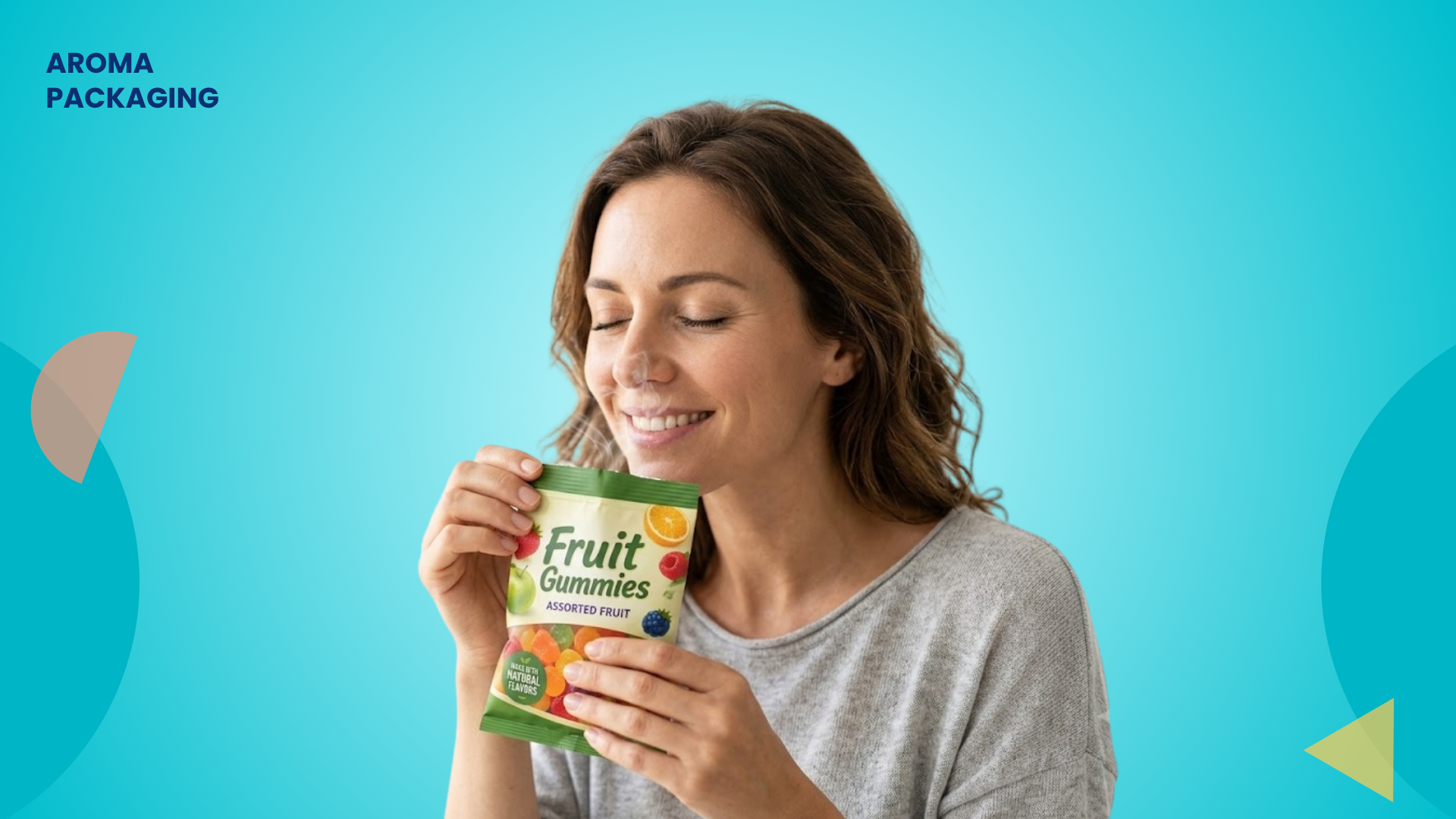
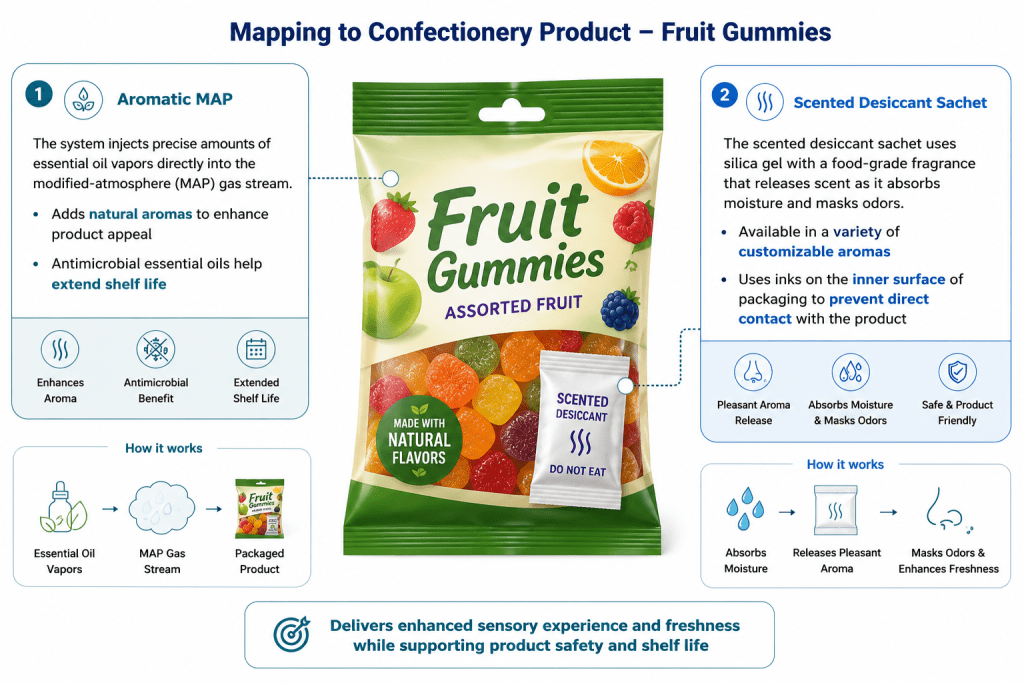
For example, for fruit gummies, the team assessed two packaging-led approaches to aroma and freshness. The first involved aromatic MAP, in which essential oil vapors are introduced into the modified-atmosphere gas stream to enhance product appeal and extend shelf life. The second used a scented desiccant sachet that absorbs moisture while releasing a pleasant aroma inside the pack.
Which aroma packaging solution works best for F&B products?
Confectionery, snack, and beverage brands are increasingly competing to deliver an immersive product experience. Research on aroma packaging technologies shows that polymer-bound zeolites, multilayer films with different barrier properties, and controlled-release systems are currently the most effective solutions for the F&B industry.
Whether you’re exploring desiccant innovations, barrier technologies, or integrated multi-function packaging formats, GreyB can help you move from promising concepts to commercially viable solutions. Our packaging innovation consulting team can help you cut through patent noise and supplier claims to validate what actually works in the market. Fill out the form below and connect with our expert today.