




Cocoa has become a growing problem for food manufacturers, both in sourcing and formulation.
A report by The International Cocoa Organization estimates that the global cocoa production recovered in 2024–25 to 4.73 million tonnes. But actual cocoa processing dropped 4.2% to 4.61 million tonnes, meaning manufacturers are using less of it. This comes after a brutal 2023/24 season, where the supply of cocoa fell short of demand by 492,000 tonnes. The report also mentions that cocoa futures are still being pulled in different directions by weak demand, unclear regulations, and unpredictable supply. These factors are keeping manufacturers exposed to volatility even when prices soften.
A Brazilian biotech startup, Cellva Ingredients, is addressing this uncertainty in cocoa supply and usage by turning coffee fruit by-products into CoffeeCoa, a cocoa-like ingredient.
To better understand how they are doing it, we spoke to Sérgio Pinto, Founder and CEO of Cellva. This article contains notable highlights from our entire conversation.
This interview is part of our exclusive Scouted By GreyB series. Here, we speak with the founders of innovative startups to understand how their solutions address critical industry challenges and help ensure compliance with industry and government regulations. (Know more about startups scouted by GreyB!)
“By paying for discarded coffee fruit, we create extra income for farmers, helping them pay salaries, support their children’s education, and invest back into their farms.”
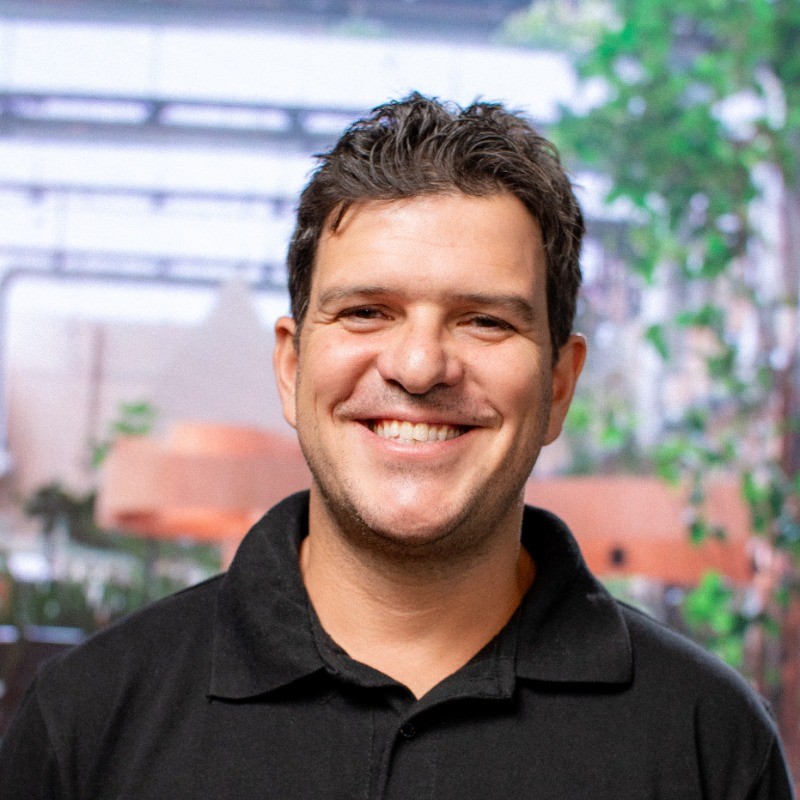
Sérgio Pinto is the Co-Founder and CEO of Cellva Ingredients. Before founding Cellva, Pinto spent over two decades in the food industry, including roles at PepsiCo and BRF, where he most recently served as Global Director of Innovation and New Business.
Over years of visiting his wife’s family in the Brazilian Cerrado, Pinto watched native vegetation give way to vast soy plantations. This firsthand experience of agriculture’s environmental costs inspired him to launch Cellva.
Bringing skills in design thinking, consumer behavior, marketing research, and strategy, he has since built Cellva to develop and produce cultivated animal ingredients. Under his leadership, the company has raised $2.81M across two funding rounds.
Cellva Ingredients turns coffee fruit into a cocoa alternative
Coffee fruits are discarded after the beans are removed. Cellva is using these discarded fruits and other coffee by-products to develop its main product called CoffeeCoa. It’s a 1:1 cocoa powder replacement made from arabica coffee fruit material.
The startup uses water-based extraction, concentration, and spray-drying microencapsulation to turn the coffee fruit extract into CoffeeCoa. It claims that CoffeeCoa offers cocoa-like flavor, color, body, and mouthfeel while also carrying natural coffee bioactives such as antioxidants, polyphenols, fiber, and caffeine.
The ingredient is designed for baked goods, bars, truffles, dairy-free desserts, snack bars, beverages, fillings, and toppings.
You started with microencapsulation technologies. How did that become a cocoa alternative made from coffee husks?
We began as a biotech company working with different microencapsulation techniques. We looked at ionotropic gelification, omega-3 and omega-9 encapsulation, spray-drying, and even scaffold systems for growing fat cells. The technology was strong, but we realized that technology alone was not enough. We wanted a product that could also create consumer impact and supply-chain impact.
That pushed us to ask what Brazil could uniquely offer. Brazil is known globally for coffee, and coffee is a fruit. But unlike most fruits, people consume the seed and throw away the fruit. That felt like a huge opportunity. Once we combined that discarded coffee fruit with our extraction, concentration, and microencapsulation process, we found that the final powder looked like cocoa, tasted like cocoa, and delivered bitterness, color, and mouthfeel in a way food companies could actually use.
How exactly do you turn the coffee fruit into CoffeeCoa?
We start with the coffee fruit after the bean is removed. The bean continues through the traditional coffee supply chain, and we take the remaining fruit material. Because natural fermentation starts quickly, we stop it within about 36 hours using a heating process that also begins reducing moisture.
After that, we extract the bioactives using only water. There is no solvent and no alcohol. Then we concentrate the extract to remove the water, because we do not want to incur unnecessary water costs. Finally, we combine the extract with fibers and polysaccharides and transform it into a powder through spray drying. That powder delivers the color, bitterness, and cocoa-like sensory profile manufacturers expect, with the added benefit of natural coffee compounds.
Where do you source the raw material, and how do you keep the supply chain reliable?
We focus on arabica coffee, especially from São Paulo and Minas Gerais, where arabica production is concentrated in Brazil. We work through the same routes that coffee producers already use, so we are not asking farmers to build a new logistics system. If they already send green beans to a specific warehouse, we position ourselves within that route.
The most important part is our relationship with farmers. We now work with a network of around 10,000 small and mid-sized coffee farmers. We pay them for material that was previously treated as waste, but we also ask them to reduce the humidity of the husk. That creates engagement, improves handling, and gives farmers an extra income stream from something they used to throw away.
How cost-effective is CoffeeCoa compared with cocoa or other cocoa alternatives?
It depends on what kind of cocoa we are being compared with. If someone is buying the cheapest cocoa from poor-quality or low-traceability sources, that is not the market we want to compete in. But when we compare ourselves with mainstream and high-end cocoa powders, we can be very competitive.
Our advantage is not only cost. We offer traceability, naturality, and a cleaner process. Traditional alkalized cocoa can involve a lot of chemical processing, while our extraction uses water. We also offer functionality. Our darker CoffeeCoa can carry a higher percentage of natural caffeine than the coffee bean itself, so we are not only selling a cocoa-like ingredient; we are offering a functional ingredient.
From a technology point of view, does CoffeeCoa let manufacturers use less sugar or improve sensory performance?
Yes. Cocoa comes from an almond-like seed, so it has almost no natural sugar. We come from a fruit that is rich in polysaccharides, which create a natural sweetness perception after extraction and concentration. That means a manufacturer may be able to reduce added sugar depending on the formulation.
The sensory part is also important. Traditional cocoa can leave a powdery feeling in the throat because it comes from a seed. Our powder is microencapsulated into very small particles, so it disperses differently. That makes it useful not only in chocolate bars, but also in beverages, bakery, and functional products where smoothness and solubility matter.
How do you keep batches consistent when coffee fruit naturally varies by region and harvest?
We accept that natural ingredients vary. Coffee, like cocoa, has terroir. Caffeine, sugars, fibers, and other compounds can shift depending on the farm, altitude, and harvest. That is normal when you work with a 100% natural ingredient.
Our job is to reduce that variation through extraction, concentration, microencapsulation, and blending. The same thing already happens in cocoa and coffee, where producers combine different profiles to reach a consistent target. We use our formulation and process controls to bring each batch closer to the profile our customers need.
You mention customization for R&D teams. How does that work for a food company?
We can adjust the ingredient depending on the customer’s formulation goal. A company may ask for more sugar perception, less caffeine, different Brix, a specific mouthfeel, or a different delivery format. We can do that, but it needs to be linked to volume, because customization must make sense industrially.
We also see customization as a service gap in the ingredient industry. Many big suppliers do not visit customers often, do not customize enough, and do not always provide the traceability or quality support that R&D teams need. We want to work more closely with customers, understand their matrix, and support them from prototype to scale.
When large FMCG companies ask whether you can supply real industrial volumes, what expansion challenge did you have to solve?
That was a major challenge. Once we had the product and technology, big companies wanted assurance that if they changed an ingredient in a launch or SKU, we could serve the required volume. That forced us to go deeper into the supply chain.
We built direct relationships with farmers and added warehouse capacity in the Arabica regions where we operate. We also use existing coffee logistics because Brazil already exports coffee to many countries. That gives us a strong foundation for scaling without creating a completely new supply network from scratch.
What gives Cellva the strongest edge for food companies looking for cocoa alternatives?
I would say it is the combination of a validated supply chain, taste, affordability, and naturalness. We can trace production back to the farmer, and we can create extra income for producers from material that was previously discarded. That matters for companies that care about sourcing and transparency.
But the biggest point is that it’s natural. If someone asks where our ingredients start, I can invite them to visit the farm. We are not building the cocoa-like profile with artificial aromas, flavors, or colors. We are starting from coffee fruit and using a clean process to make it useful for food applications.
What certifications or regulatory points make it easier for companies to partner with Cellva?
We are already regulated in Brazil and Europe, and we have traceability in place. We also work with farms and warehouses that have been validated by large companies in the coffee industry, and CoffeeCoa is positioned as a natural ingredient with no added sugar.
For consumers, I think the strongest claims are clean label, natural caffeine, antioxidants from coffee, and “get to know your farmer.” The exact communication depends on the country and category, but those are the claims that make the product easier for brands to explain and easier for consumers to understand.
Meet our Interviewer – Raveena Singh, Senior Research Analyst at GreyB

Raveena Singh, Senior Research Anlayst
Want to find other scalable startups working on sustainable cocoa alternative solutions? Please fill out the form below to contact our experts.