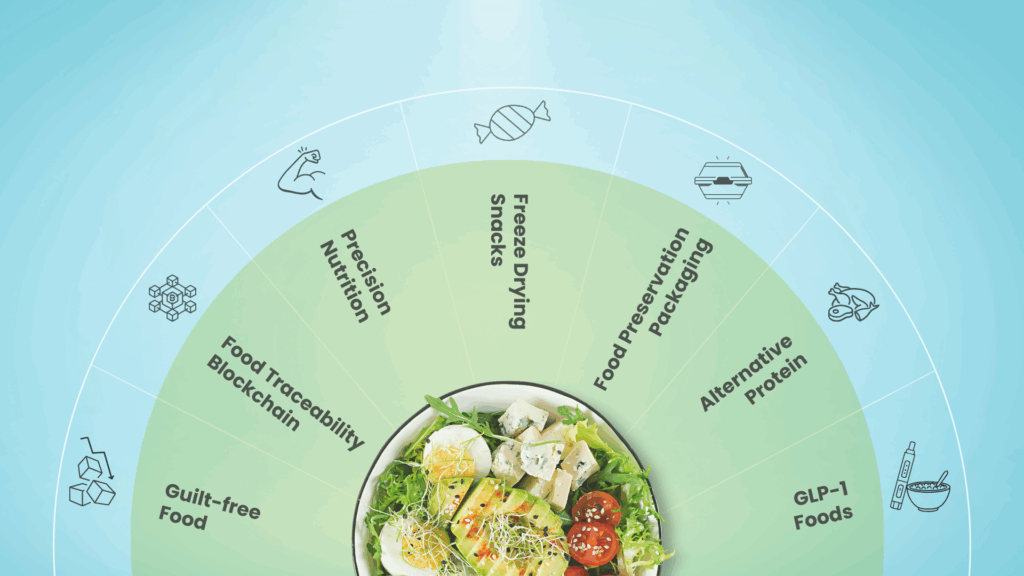





Cargill’s CTO, Florian Schattenmann, recently highlighted that food tech trends like AI, next-generation fermentation, and precision nutrition will define food R&D through 2030. The company itself has invested over $2 billion in fermentation over the past three decades. Yet most teams are still struggling to turn similar innovations into predictable outcomes.
The gap is not in technology. It’s in execution.
Each new technology introduces new failure points, making product pipelines and processes complex. Ingredients that work in controlled trials fail at scale. Fermentation platforms solve functionality but break cost targets. “Sustainable” solutions meet regulatory or shelf-life constraints too late in the cycle.
Instead of reducing iteration, innovation often shifts the bottleneck further downstream.
This creates a structural issue: more innovation does not automatically translate to better outcomes. In fact, without the right selection and integration, it increases reformulation cycles, delays launches, and raises development costs.
The real challenge is not keeping up with food-tech innovation, but filtering the signal from the noise. Which technologies will reduce development risk, improve first-time-right success, and scale within existing constraints, and which will quietly add complexity without delivering returns?
This article focuses on food tech innovations that are already showing measurable impact on development speed, cost, and scalability, with a clear view of where they fit in the pipeline and what it takes to make them work in real product environments.
Hidden trends from pharmaceutical markets to social media are creating massive opportunities in food innovation.
Fill out the form now to gain exclusive access to our comprehensive report on the food trends reshaping tomorrow’s marketplace!
AI & Digital Food Technologies
AI adoption in the food industry is accelerating, but its impact remains uneven. While only 15–20% of food companies have fully integrated AI into operations, early adopters are already seeing measurable gains. They are seeing an 18–25% reduction in inventory costs and a 25–30% reduction in food loss through AI-driven supply chain tools.
At the same time, most R&D teams still struggle to translate AI into product outcomes. The challenge is no longer access to AI, but execution, linking fragmented food supply chain data across discovery, formulation, and supply chain.
Companies that are seeing real returns are those applying AI across the full food pipeline, where it directly improves development speed, cost efficiency, and product success rates.
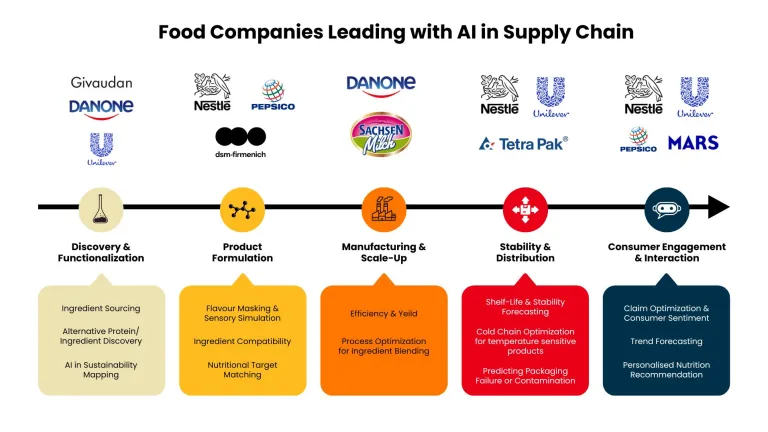
What It Takes to Make AI Work Across the Entire Food Pipeline
Unilever is using AI directly in its food innovation and supply chain pipeline, using it from ingredient discovery to product delivery. In the early stages of R&D, AI is used to screen and design ingredients with specific functional properties, such as mimicking the texture and behavior of meat or dairy alternatives. Instead of relying on trial and error in the lab, AI models analyze compounds and predict their functionality, allowing teams to focus only on high-potential ingredients.
This system is powered through partnerships with companies like Microsoft, where AI combined with high-performance computing allows simulations that run up to 20× faster than traditional methods.
This reduces the time required for early-stage product development and ingredient screening, particularly in complex categories like plant-based foods.
Source: LinkedIn
What makes Unilever’s approach different is both scale and integration across the food value chain. The company is running 500+ AI projects globally, with AI applied across R&D, manufacturing, and supply chain operations.
In its ice cream business, AI-driven forecasting using variables like weather has improved accuracy by ~10%, for better production planning and reducing waste.
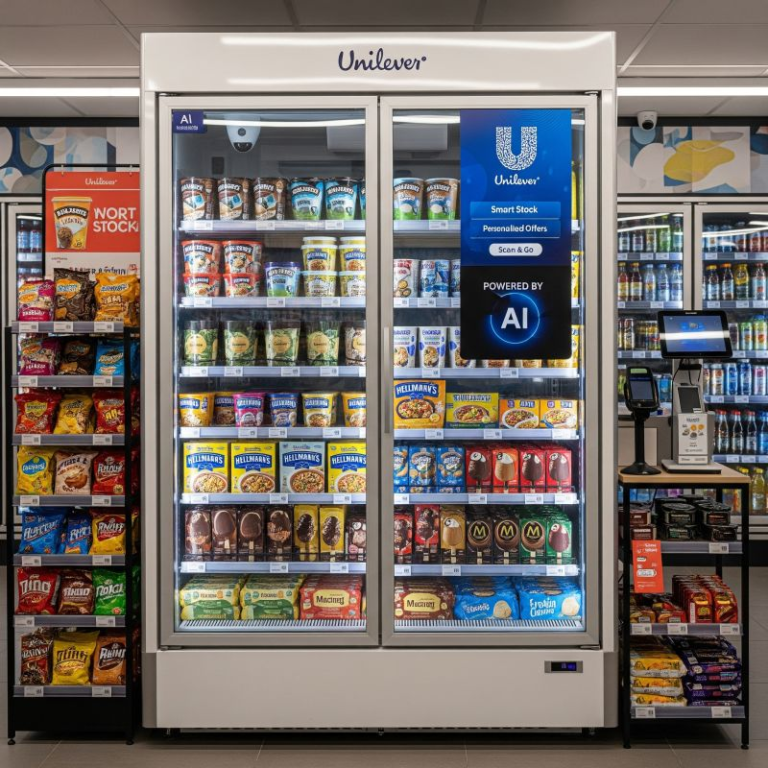
The AI integration is most visible in physical food distribution systems. Unilever operates around 3 million freezer cabinets across 60 countries, many of which use AI to track inventory and optimize replenishment. This has led to up to 30% increases in sales in some markets, while maintaining ~98% on-shelf availability.
On the manufacturing side, AI-driven simulations and digital models are used to test operational changes, contributing to $2.8 million in cost savings through digital twin implementations. Across factories, these systems also help reduce raw material waste by up to 10%, particularly for high-value inputs.
The advantage here is not a single tool, but the ability to connect decisions across stages. However, this is also where replication becomes difficult. Achieving this level of integration requires aligned data infrastructure, cross-functional coordination, and long-term investment, which many organizations still lack.
AI-Led Ingredient Discovery: Expanding What’s Possible, Not Just What’s Known
Most ingredient pipelines are built on a limited set of known compounds. The constraint is not the formulations. But the narrow starting point. Teams repeatedly work with the same ingredients because discovering new ones is slow, expensive, and uncertain.
Brightseed’s Forager AI changes where that process begins.
Instead of starting in the lab, it maps how plant compounds interact with human biology using AI. It helps answer which new ingredients to build products around. It uses a digital model of human biology to directly link plant compounds to human health outcomes.
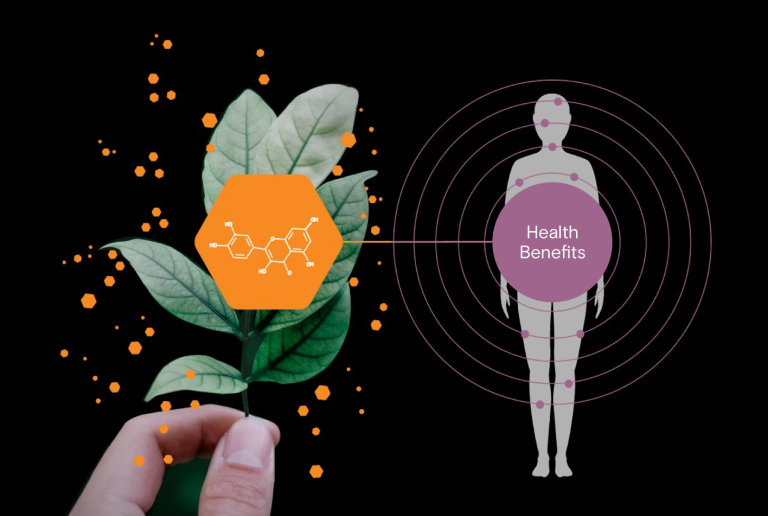
The platform has already screened over 7 million compounds and identified around 40,000 potential bioactives, effectively expanding the searchable ingredient space far beyond what traditional methods can cover. The value is not just speed, but access to compounds that would otherwise remain unexplored.
This shifts early-stage R&D from trial-based discovery to hypothesis-driven selection. Rather than testing hundreds of candidates, teams can start with a smaller, higher-probability set.
In areas like functional foods, gut health, or metabolic function, where differentiation depends on novel claims, this creates a clear advantage.
The platform is already being used through partnerships with companies like Danone, Ocean Spray, and Haleon, indicating that it is integrated into real innovation pipelines. The platform is at a TRL range of ~6–8, depending on the compound.
At this stage, the discovery layer is well established, but what happens next becomes the deciding factor.
Because identifying a compound is only the first step.
Each candidate still needs to move through safety validation, formulation compatibility, scale-up, and regulatory approval. This is where timelines expand again, often negating the gains made in discovery. In some cases, compounds identified quickly may take years to reach a usable ingredient format, or may never get there.
This makes the platform most valuable in programs where the goal is to build a long-term ingredient portfolio rather than solve immediate formulation challenges. The advantage lies in creating optionality early, even if only a fraction of discoveries convert into commercial ingredients.
So while Forager accelerates the front end of R&D, it does not remove downstream complexity.
The real trade-off is between breadth and conversion. The platform can generate a wide set of opportunities, but value depends on how effectively those opportunities are translated into scalable, regulatory-ready ingredients.
Trends in F&B Industry



Alternative Proteins and Fermentation
Alternative proteins have seen over $14 billion in global investment over the past decade, yet adoption remains uneven due to persistent gaps in taste, texture, and cost.
Products often fail not on nutrition, but on functionality, particularly in applications requiring emulsification, foaming, and binding. At the same time, price parity with animal proteins is still out of reach in most categories.
What is changing now is the shift from lab-scale innovation to function-first, cost-aware solutions. The companies making real progress are those that address both performance and scalability, rather than optimizing one at the expense of the other.
Yeastup Turning Waste Streams into Functional Protein at Scale
Egg- or egg-derived protein replacement remains one of the most difficult formulation challenges. Not because of nutrition, but because very few alternatives can match the functionality, flavor neutrality, and consistency of a single ingredient. This becomes even more complex in applications like bakery and protein products, where performance directly affects product success.
Yeastup approaches this problem using spent brewer’s yeast, a by-product generated at nearly 10,000 metric tons per day globally, as its raw material to produce food-grade protein ingredients.
Its core product is a taste-neutral protein with a PDCAAS score of 1.0, equivalent to egg white in nutritional quality. Unlike most yeast-derived proteins that carry strong off-flavors and require masking, Yeastup’s process removes bitterness and off-notes. This reduces the need for additional formulation adjustment.
The technology has already moved beyond early-stage validation. Yeastup operates a facility in Lyss, Switzerland, capable of processing around 4,000 liters of spent yeast per hour, with feedstock secured through partnerships with regional breweries. This indicates a TRL level of ~7–8, where production is established but large-scale global supply is still expanding.
This creates a structural advantage. Because the raw material is a waste stream, the model reduces dependence on agricultural inputs, which are often exposed to price volatility and supply fluctuations.
We interviewed Urs Briner, co-founder of Yeastup, to analyze the feasibility and scalability of their innovation. In this exclusive discussion, he shares how Yeastup’s solutions address the scalability of egg protein alternatives and pave the way for sustainable and efficient protein production.
From an application standpoint, the protein is used in bakery (as an egg replacer), sports nutrition, and alternative meat and seafood products, where both nutritional quality and flavor neutrality are critical.
A life cycle assessment conducted by FHNW found that, in a burger application, Yeastup’s protein showed up to 81% lower environmental impact compared to pea protein. It also has ~74% lower greenhouse gas emissions and ~80% lower energy use.
However, there are still practical considerations. While the process is proven from pilot to industrial scale, adoption depends on consistent supply across geographies, validation in finished products, and long-term price competitiveness at scale.
Yeast-based ingredients have historically faced challenges with flavor and color in different applications, so performance needs to be validated on a case-by-case basis.

Replicating Egg Protein with Precision Fermentation
EVERY Co approaches this problem differently. Instead of replacing eggs with plant-derived substitutes, it produces the same egg proteins (such as ovalbumin) through fermentation. In simple terms, microorganisms are programmed to generate egg proteins, which are then purified and used as ingredients. The result is not an approximation, but a functionally equivalent input.
This shifts the problem from formulation to production.
The technology has already crossed key regulatory and market milestones. Its proteins have received GRAS status in the US, and products using these ingredients are entering commercial channels.
With over $290 million in funding, the company is now focused on expanding manufacturing capacity rather than proving functionality. Beverages, baked goods, and alternative protein products using Every CO’s proteins are already entering the market, with retail rollouts in markets like the US (e.g., Walmart). This places it in a TRL 8–9, where the science is validated, but economics and scale are still being optimized.
Where this starts to matter is in supply stability.
Egg supply chains are inherently volatile, affected by disease outbreaks, feed costs, and regional production constraints. Fermentation removes these dependencies, offering a controlled, predictable production system.
The added advantage is in logistics: the protein is delivered as a powder with a long shelf life (~18 months), which simplifies storage and reduces reliance on cold-chain infrastructure.
But the constraint becomes clear at scale.
Fermentation-based proteins require significant capital investment, bioreactor capacity, and downstream processing, all of which directly impact cost. While functionality is no longer the barrier, price parity with conventional eggs is still a moving target. This is where most adoption decisions will be made, not in the lab, but in procurement and margin calculations.
This makes the technology most relevant in applications where functionality cannot be compromised, and supply volatility is a risk. The opportunity is not just replacing eggs, but doing so in a way that stabilizes input quality and reduces exposure to supply shocks, provided the cost equation holds.
Healthier Formulations Without Reformulation Trade-offs
The biggest constraint in sugar and salt reduction is not removal. It is what breaks when you remove them. Even small reductions can affect flavor release, mouthfeel, and product stability, often leading to multiple reformulation cycles before a product meets acceptance thresholds.
This is why, despite strong consumer demand, progress has been uneven. Companies like Hershey and PepsiCo are already moving toward better-for-you portfolios, with ~50% of consumers actively seeking such products and certain SKUs showing up to 50% fat reduction. But these gains are often achieved through iterative reformulation rather than structural change.
What is emerging now is a shift in how the problem is approached. Instead of modifying the recipe, some technologies target how taste is perceived or how nutrients are absorbed, allowing products to retain their original formulation while reducing their health impact.
Kirin’s Electric Salt Spoon Enhances Saltiness Without Changing the Recipe
Kirin’s approach starts at the point of consumption. The Electric Salt Spoon uses a weak electric current to enhance the perception of salt, making low-sodium foods taste more intense without increasing the actual sodium content.
This creates an unusual advantage: sodium reduction without the risk of formulation. The product, developed with Meiji University, is already commercialized in Japan at around ¥19,800 (~$100+), with reported ability to increase perceived saltiness by up to 1.5×.

Unlike ingredient-based solutions, this technology bypasses the entire R&D pipeline. No changes are required to recipes, processing, or shelf-life validation. The constraint instead appears later in user behavior. Early feedback suggests the effect is noticeable, but usability challenges such as handling and activation may limit repeat use.
This makes the technology less of a formulation solution and more of a consumption-layer intervention, with its success tied to adoption rather than technical performance.
MIT and Harvard’s Sugar-Blocking Enzyme Targets Absorption Instead of Taste
While Kirin focuses on perception, the MIT/Harvard approach shifts the problem into the body itself. Instead of reducing sugar in the product, it reduces how much sugar the body absorbs.
The technology uses enzyme-polymer-conjugated particles that remain inactive during processing and become active in the gastrointestinal tract. Once triggered, the enzyme converts sugar into polymers that are difficult to absorb, allowing products to retain their original sweetness, structure, and processing characteristics.
This creates a different kind of flexibility. The system can be added to existing product formats, such as juices, snacks, and bakery items, without altering formulation parameters, including the sweetness profile or texture.
However, unlike perception-based solutions, the uncertainty here is not about usability but about validation and approval. The technology is still in early-stage development (TRL ~3–5), and its path to commercialization depends on clinical validation, regulatory clearance, and consistent performance across food matrices.
The trade-off is clear: it preserves the product experience at the formulation level but introduces longer timelines and greater regulatory complexity before deployment at scale.
Salt and sugar reduction in F&B



Strategic Implications for Food R&D and Innovation
The advantage in food innovation is shifting from discovery to execution. Technologies like AI, precision fermentation, and upstream ag-tech are already proving their value, but only when applied in the right context. The real differentiation comes from knowing where to deploy them within the pipeline to reduce iteration, avoid scale-up failures, and protect margins.
But when teams try to act on these innovations, the same questions keep coming up:
- Which of these food technologies are truly ready for commercial adoption, and which are still dependent on pilot-level assumptions?
- Where are competitors investing across AI, alternative proteins, and upstream sourcing, and what does that signal about future product pipelines?
- Which food ingredients or processing approaches offer real differentiation, and which are already becoming crowded with similar solutions?
- How do you evaluate whether a new food technology will reduce reformulation cycles or introduce additional complexity at scale?
- Can your current pipeline be benchmarked against emerging food technologies to identify where you are losing time, incurring costs, or compromising product performance?
These are not questions that can be answered through surface-level research. They require deep technology scouting, competitive intelligence, and the ability to connect innovation signals with real product outcomes.
That’s exactly where we come in.
Whether you are evaluating new ingredients or food technologies, benchmarking competitors’ innovation pipelines, or identifying scalable solutions for your next product launch, our team helps you filter the signal from the noise and focus on what actually works.