

Value Delivered
The research converted technically relevant source code into usable prior-art evidence by establishing that it was publicly accessible before the patent’s January 6, 2004 cutoff date.
This strengthened the client’s litigation position by supporting both sides of the prior-art argument: the source code disclosed the claimed Wi-Fi scanning logic, and the surrounding CVS, web-archive, and mailing-list evidence helped demonstrate when and how the public could access it.
Problem Solved
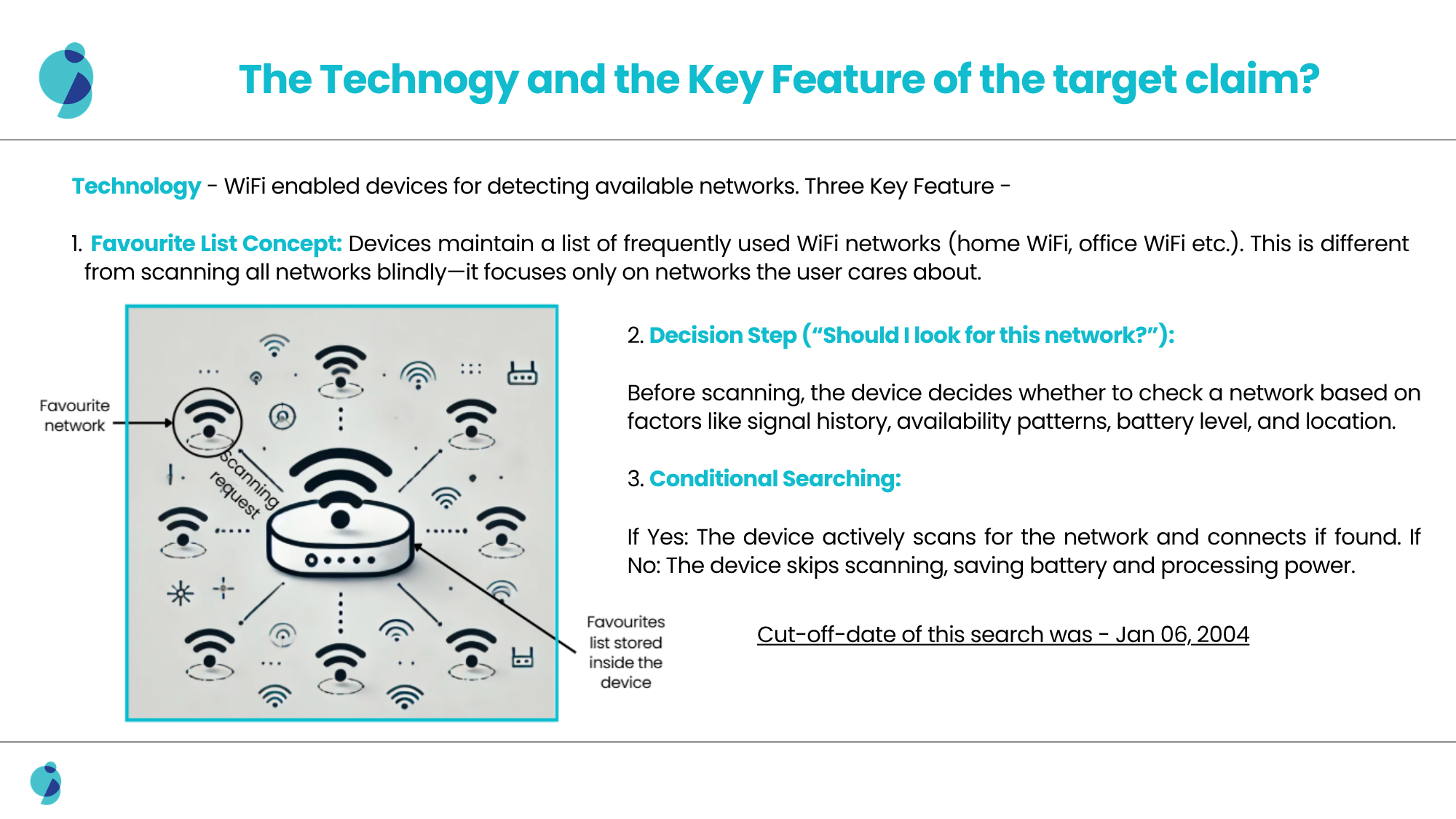
The target claim covered a Wi-Fi-enabled device that:
- Maintains a preferred list of frequently used networks;
- Decides whether a particular network should be searched based on relevant conditions; and
- Either scans for that network or skips the scan, conserving battery and processing resources.
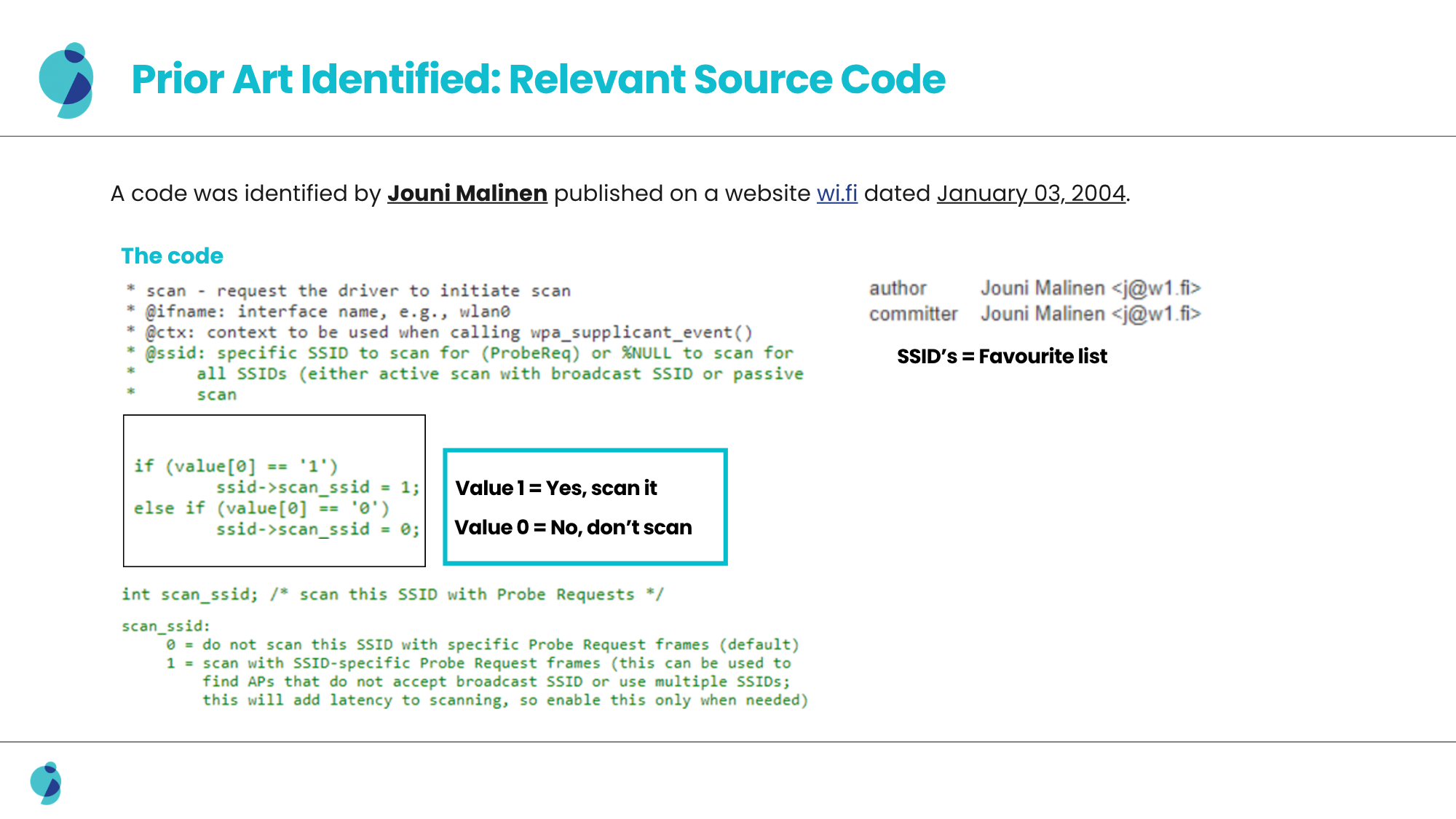
Relevant source code authored by Jouni Malinen was identified with a date of January 3, 2004, only three days before the cutoff. The code maintained SSIDs and used a value to determine whether a network should be actively scanned.
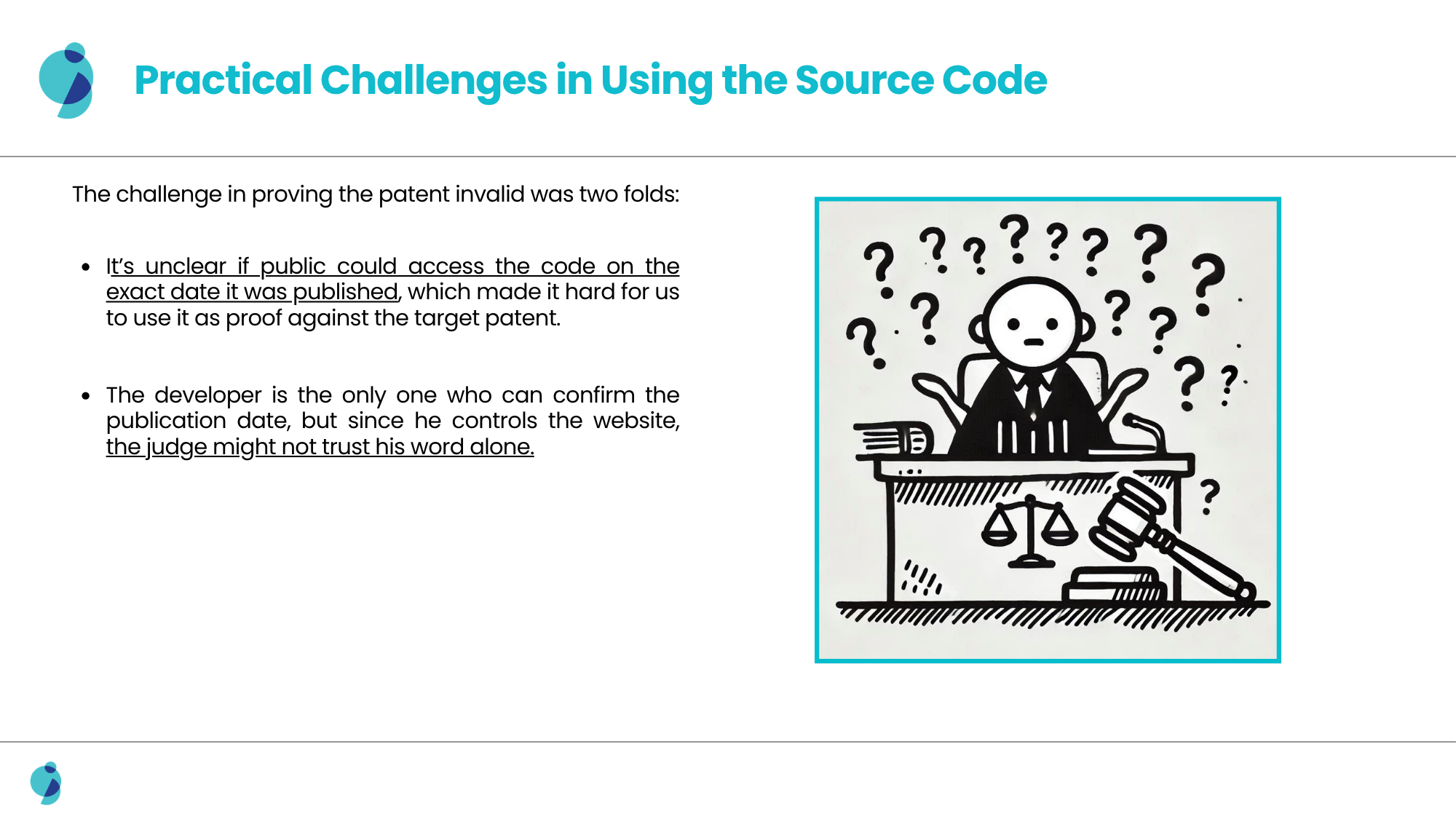
However, technical relevance alone was insufficient. It was unclear whether the public could access the code on the stated date or whether the displayed date could have been modified. Relying only on confirmation from the developer would also have left the evidence vulnerable because he controlled the original website.
Solution Offered
The investigation pursued two independent routes: examining the source-code website and reconstructing the developer’s publication practices.
The original Wi.fi website was found to use a repository-browsing interface, but the earliest available Wayback Machine record dated from 2008—four years after the cutoff. This meant the website alone could not establish timely public accessibility.
The search was therefore expanded to the developer’s history. Public Host AP mailing-list records showed that Jouni Malinen actively shared updates and patches for wireless LAN drivers and used an email address associated with the epitest.fi domain. This connection led to the earlier hostap.epitest.fi website.
Archived snapshots of that site from around the relevant period disclosed anonymous CVS pserver access. The repository could be accessed without credentials, allowing members of the public to retrieve the code directly.
By connecting the dated code, public mailing-list activity, archived Host AP website, and unrestricted CVS access, the research provided evidence that the source code had been publicly available before the cutoff date and could therefore be relied upon as prior art.
Get the full case study to discover how source code date validation strengthened the client’s position in high-stakes patent litigation.