

Value Delivered
The research connected a commercial plasma-cutting product manual with a patent expressly identified in that manual, creating a strong basis for combining the two references.
The product manual disclosed the claim’s principal distinguishing features, while the linked patent supplied the remaining structural details. Because the manual itself established the relationship between the product and the patent, the client received a clear motivation-to-combine argument for challenging the patent on obviousness grounds.
Problem Solved
The target claim covered a plasma torch tip designed to improve the cooling of consumable components such as the electrode and nozzle. The required configuration included:
- Supplementary cooling orifices;
- A torch-tip length greater than three inches;
- A swirl ring; and
- A textured heat-exchanging surface.
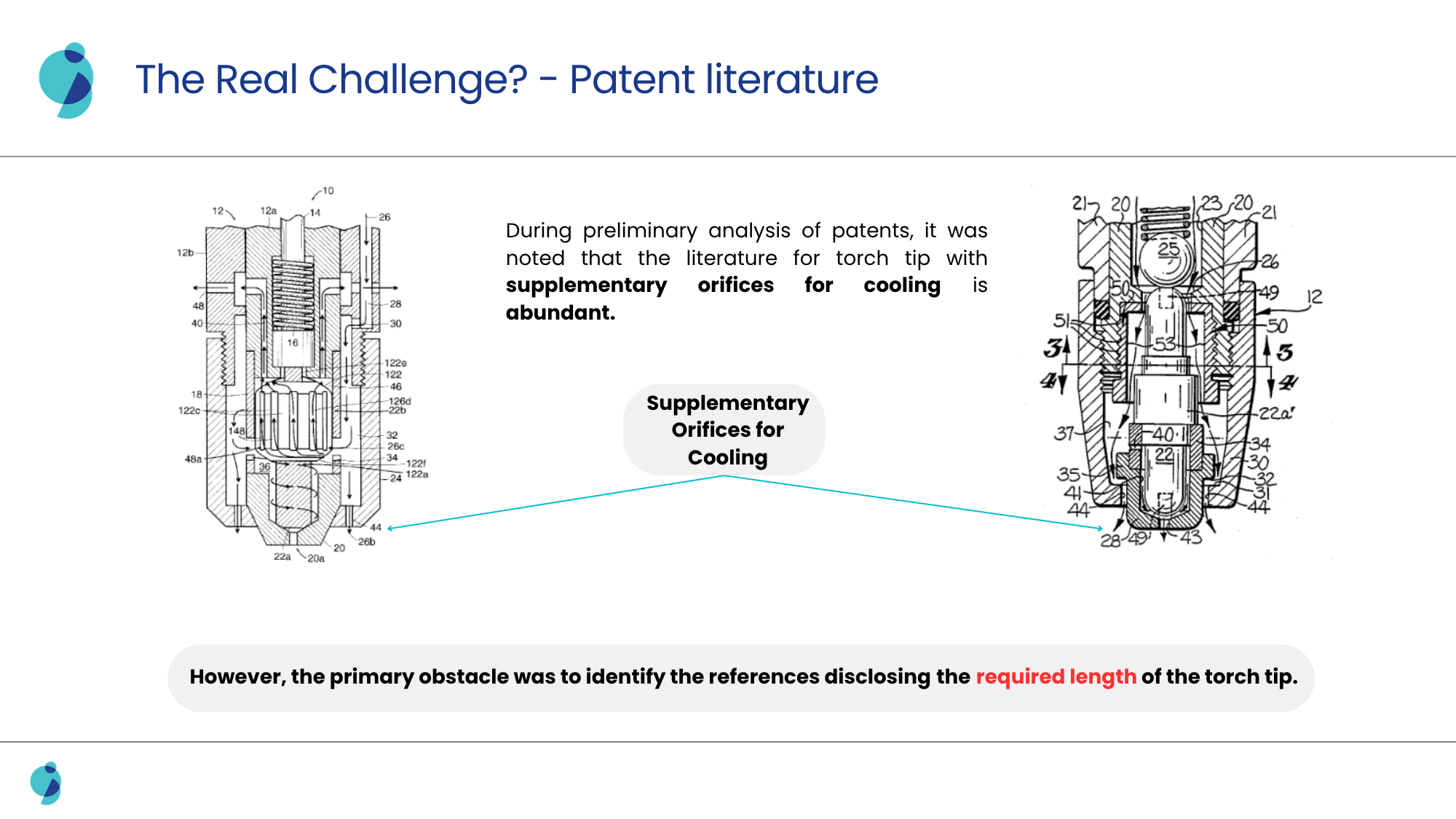
Patent literature discussing supplementary cooling orifices was abundant. However, these references generally did not disclose the required torch-tip length.
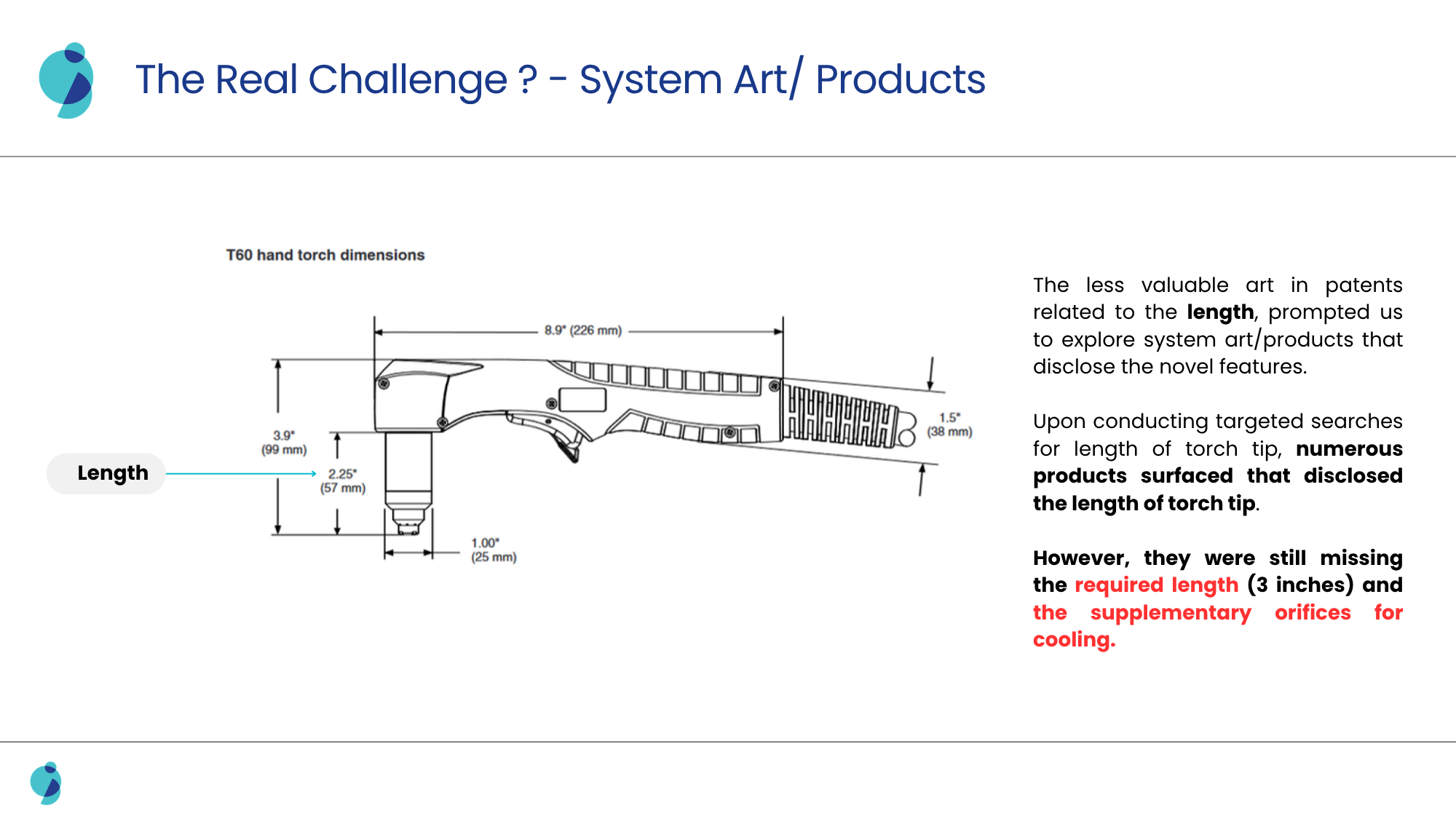
Product searches identified several torch tips with dimensional information, but they either fell short of the required three-inch length or lacked supplementary cooling orifices. Therefore, neither the initial patent references nor the product references independently disclosed the complete claimed arrangement.

Solution Offered
The search was expanded to technical literature published by plasma-cutting equipment manufacturers. Detailed review of Thermal Dynamics materials led to the Cutmaster 52 product manual, which disclosed:
- A torch-tip length exceeding three inches; and
- Supplementary cooling orifices identified in the cooling zone.
Although the manual covered the claim’s principal distinguishing features, it did not expressly disclose the swirl ring or textured heat-exchanging surface.
During a closer review, patent numbers were found for components used in the product. Analysis of the identified patents, including US6987238B2, revealed:
- A gas distributor that was functionally equivalent to the claimed swirl ring; and
- An embodiment containing a textured surface that operated as a heat-exchanging element.
The manual therefore supplied the claimed dimensional and cooling features, while the directly referenced patent disclosed the remaining structural limitations. This express connection between the product and its patented components provided a strong rationale for combining the references and supported the client’s patent-invalidity argument.
Get the full case study to discover how a detailed analysis of a product manual uncovered critical evidence for invalidating a patent.