Webinar | Women’s Nutrition: Nourishing Womanhood From Pregnancy To Menopause
11 September | 12 PM ET: Register Now

Home / Case Studies / Challenging an Ephedrine Injection Patent When No Single Prior Art Reference Existed

Challenging an Ephedrine Injection Patent When No Single Prior Art Reference Existed

Challenging an Ephedrine Injection Patent When No Single Prior Art Reference Existed

Value Delivered

The analysis provided the client with a two-pronged strategy for challenging the patent despite the absence of a single novelty-destroying reference. The findings supported:

  • A §112 enablement argument, based on the disconnect between the broadly claimed packaged syringe and the specific vial-and-stopper system used to generate the patent’s stability data.
  • A §103 obviousness argument, showing that the claimed formulation and stability requirements could be derived from known products, regulatory standards, ICH guidelines, and established packaging technologies.

This gave the client multiple defensible grounds to question the patent’s validity instead of relying solely on anticipation.

Problem Solved

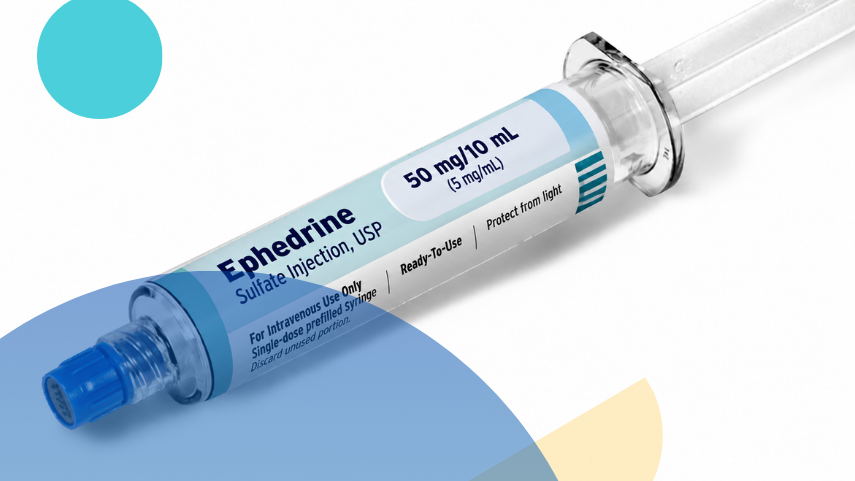
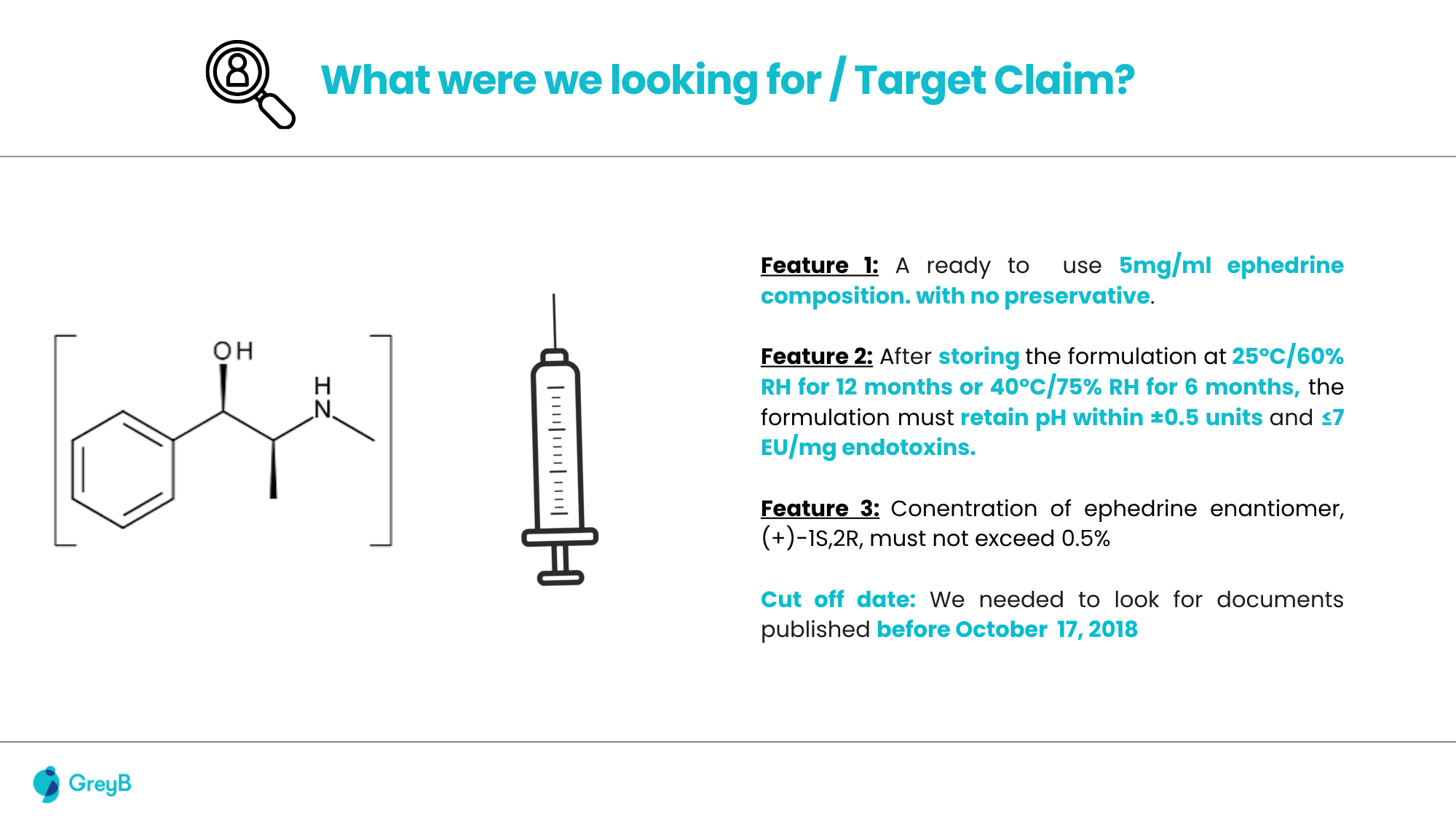
The target claims covered a preservative-free, ready-to-use 5 mg/mL ephedrine formulation having specified pH, endotoxin, enantiomeric-purity, and storage-stability characteristics.

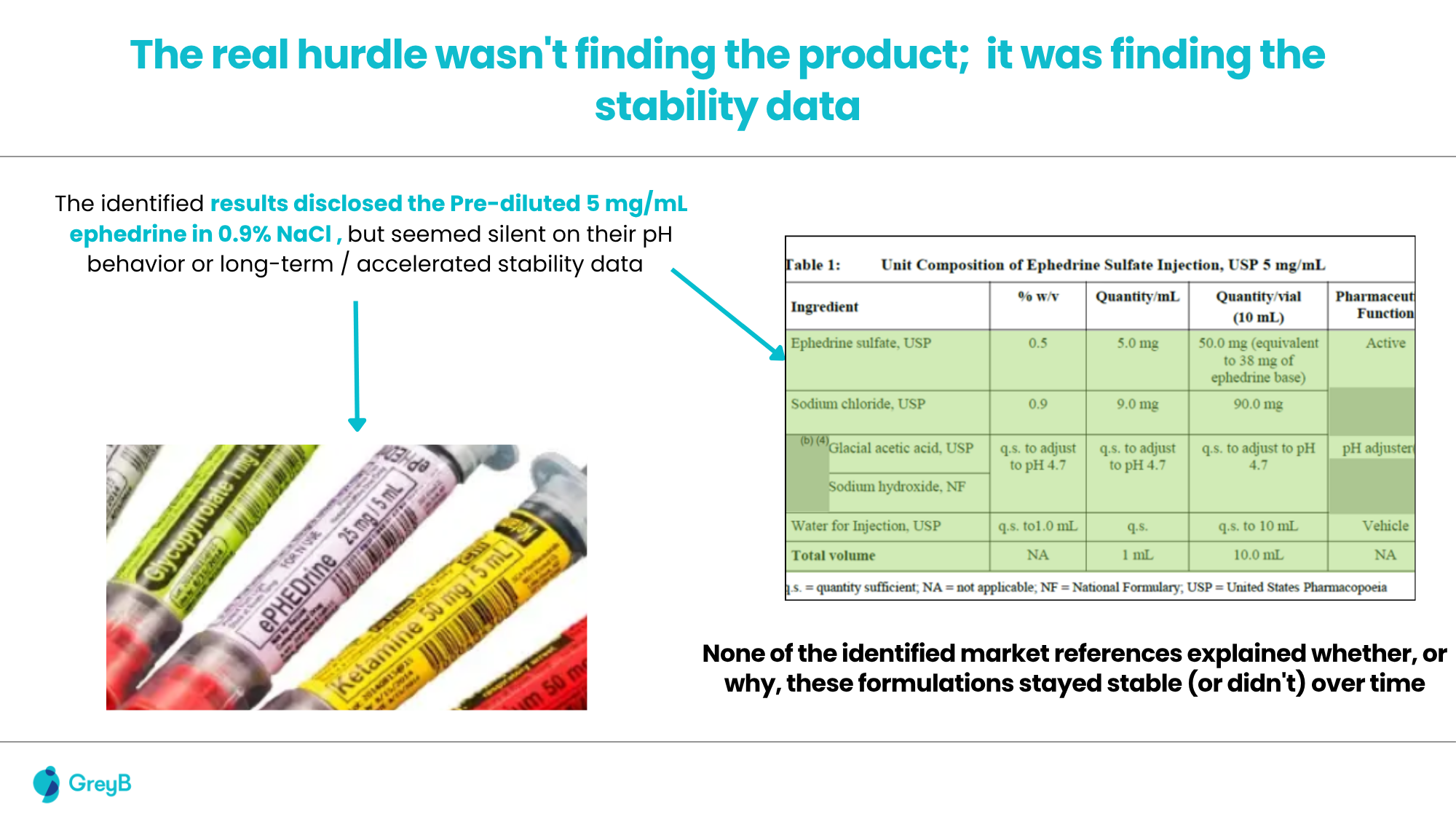
Although pre-diluted 5 mg/mL ephedrine products were commercially available before the cutoff date, the identified market references did not disclose their long-term or accelerated stability data. In particular, they did not explain whether the formulations maintained the claimed pH, endotoxin, and purity limits after storage. Consequently, an exact reference covering every claim limitation could not be identified.

The research challenge was therefore not finding the product itself, but establishing how the claimed stability profile could have been achieved or whether the patent adequately enabled that result across the full claim scope.
Solution Offered

The research strategy was shifted from searching for a single anticipating reference to investigating the mechanism responsible for the claimed stability.

For the §112 analysis, the patent’s examples were examined closely. Its stability results had been generated using a Type 1A glass vial and a specific FluroTec-coated chlorobutyl rubber stopper, even though the claims broadly recited a packaged syringe. The patent did not establish that the claimed stability results would extend to the claimed packaging or explain the role of the specific vial-and-stopper system, supporting a potential enablement challenge.

For the §103 analysis, additional references were identified in the following areas:

  • Commercially available, ready-to-use ephedrine formulations;
  • Pharmacopoeial requirements and ICH stability guidelines;
  • Type 1A glass and coated rubber stoppers having stability-supporting properties;
  • Prefilled-syringe technologies; and
  • Evidence of a recognized market need for ready-to-use ephedrine injections.

Together, these references showed that a skilled person could have combined known formulation, packaging, and regulatory teachings to arrive at the claimed product and stability profile without an inventive step.

Get the full case study to discover how a shift from searching for a single anticipating reference to investigating the claimed stability mechanism uncovered a stronger invalidity strategy.


Request Full Case Study

Request Full Case Study

Download in PDF Format and read anytime. Fill the form to get access to this article.​

The Researchers

Senior Research Analyst
Navigating IP landscapes in bioprocess engineering, medical devices, and cutting-edge nanotechnology.
Invalidation Searches (90+) Freedom to Operate Searches (65+) Strength Check (35+) Patentability Search (30+) State of the Art Search (9+) Landscape Analysis (5+) Infringement Searches (5+)
Senior Research Analyst
Charting IP strategies in oncology, medtech, and biopotential research, helping life sciences push boundaries.
Invalidation Searches (90+) Freedom to Operate Searches (65+) Strength Check (35+) Patentability Search (30+) State of the Art Search (9+) Landscape Analysis (5+) Infringement Searches (5+)

Related Case Studies

Strengthening Health Safety and Material Integrity with Innovative Sterilization Solutions

Addressing the Challenge of Polymer Degradation During Sterilization The R&D team of a leading healthcare company was tasked with identifying innovative solutions that would preserve the essential properties of various

Invalidating a patent on the dosage regimen of a multimillion-dollar drug to help in generic drug entry

Value Delivered The prior art enabled the client to file an opposition against a threatening patent, resulting in the client’s entry into the market with their generic drug. Problems Solved

In Licensing Opportunities for Global Pharma

The Challenge Business development and licensing teams frequently encounter a common issue: an abundance of late-stage assets in databases and presentations. The real gap lies in identifying assets that are

Revealing Hidden Antibody Formulation Risks via Composition of Matter Patent Linkage

Value Delivered The investigation enabled the client to uncover a hidden third-party patent that indirectly covered Denosumab formulations by referencing the COM patent. Identifying this risk early protected substantial investment

Developing Child-Resistant Packaging to Enhance Safety and Compliance

Urgent Need to Design Child-Resistant Packaging to Prevent Ingestion and Meet CPSC Standards The R&D team of a leading pharmaceutical company was tasked with developing innovative child-resistant packaging solutions to

How GreyB Strengthened Opposition Against a $500M Stem Cell Patent by Contacting a University Librarian

Value Delivered  GreyB helped the client establish compelling prior art by confirming the public availability of a key thesis with the head librarian of a university. This prior art targeted

Facing A Roadblock On Your Project?

Our Experts Are Here To Help.