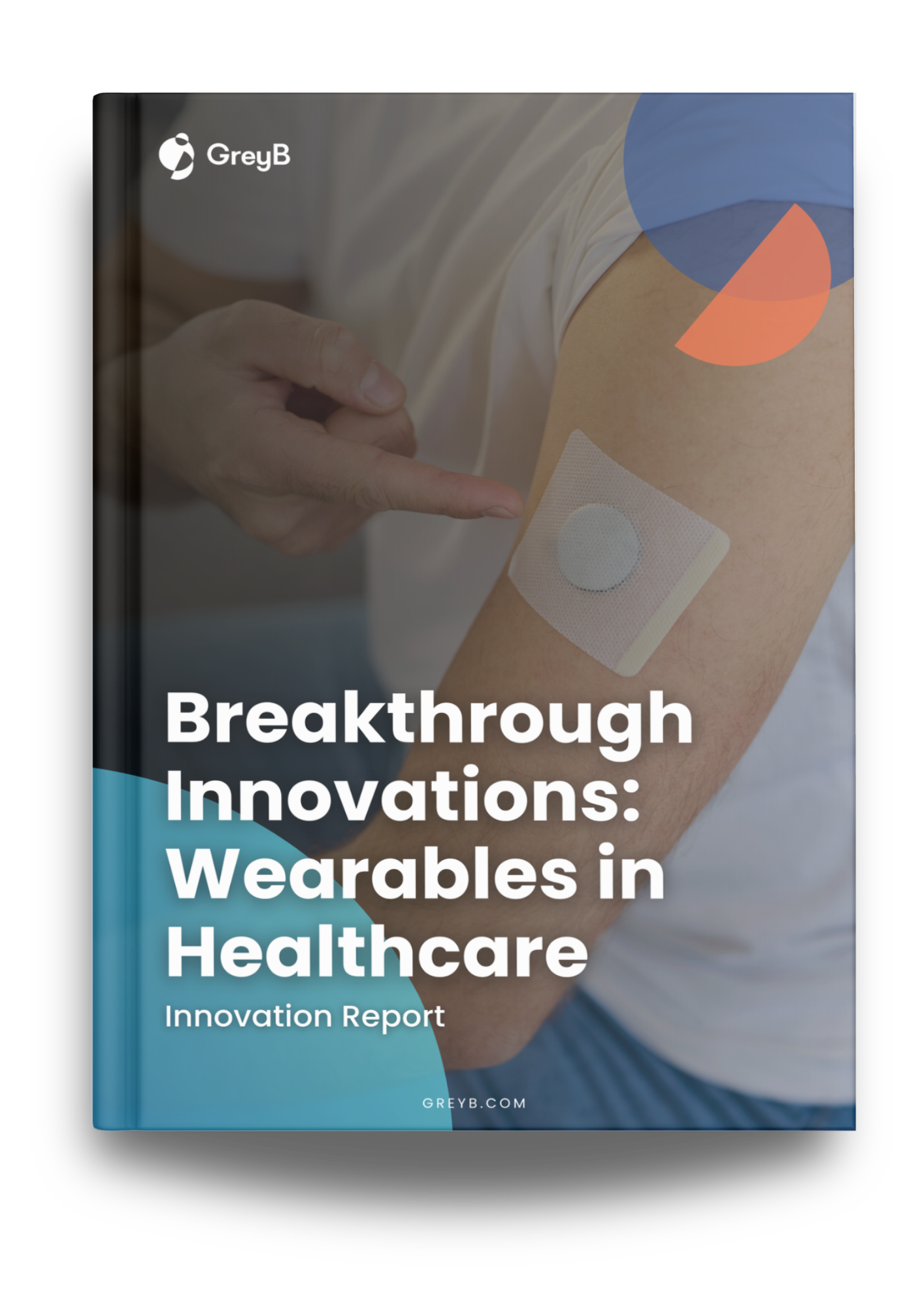
Wearables have moved past step-counting. A behind-the-ear sensor can now predict blood glucose from brain signals. Electronic skin can run lab-grade diagnostics from sweat. A wristband can catch a stroke before the patient recognizes the symptoms. And while remote patient monitoring is still scaling fast, the devices leading that growth in 2027 won’t be the ones leading it today.
We analyzed patent filings, FDA submissions, and research from startups and institutions including Stanford, Caltech, Yale, and the University of Cincinnati to map where wearable diagnostics are actually heading and where the white space still is.
What’s Inside the Report?
Breakthrough Innovation – Discover how startups and institutions like SynchNeuro, XYRA, Caltech, Kilele Health, and Alva Health are tackling the biggest gaps in wearable diagnostics through non-invasive sensing, biochemical monitoring, and closed-loop therapy.
Innovative Technologies – Identify the latest solutions, including EEG-based glucose prediction, 3D-printed electronic skin, skin-penetrating aptamer biosensors, and dual-wrist motion sensing for fall and stroke detection.
Real-World Results & Applications – See how innovations like SynchNeuro’s non-invasive glucose monitor, Caltech’s e³-skin, and Kilele Health’s lab-grade cardiac biosensors are moving from lab research toward FDA review and commercialization.
Regulatory & Patent Insights – Navigate patent family size, expedited examination status, and FDA approval stages shaping which of these innovations reach patients first.
These innovations are solving diagnostic delays, reducing invasive testing, and creating wearables that deliver lab-grade insight outside the clinic. Fill out the form to access our comprehensive report on breakthrough innovations in wearable healthcare!