
A leading petrochemical company wanted to improve the bio-content of its value chain. For this, they needed to identify small-scale, non-petrochemical EO routes that have a low carbon footprint, are commercially viable, have geographic presence, and can be integrated into their existing value chain.
While bio-ethylene has gained significant interest as a potential drop-in feedstock to reduce carbon footprints, it often faces high break-even prices due to its heavy dependence on bio-ethanol as a feedstock. For many players, the transition to sustainable EO is also a complex economic challenge.
Single-supplier dependence created a supply chain risk
EO was critical for the company’s product portfolio, but several structural hurdles made the transition to bio-based EO particularly difficult.
Supply Chain Vulnerability: The client relied on a single supplier for EO production, creating a significant single-point-of-failure risk.
The Scale Paradox: Traditional EO production requires world-scale plants to be economically viable. However, the client’s internal consumption was insufficient to justify such a massive capital investment.
Ethylene Scarcity: Conventional production relies on merchant ethylene, which was unavailable in the client’s region. This forced the team to look beyond traditional petrochemical precursors for a small-scale, cost-competitive process.
Direct bio-EO producers and bio-ethylene innovators were mapped
The assessment focused on non-petrochemical EO solutions, covering both direct bio-EO producers and bio-ethylene innovators. For each solution, insights were gathered on feedstock type, underlying technology, production capacity, cost-effectiveness, and environmental compliance.
The shortlisted routes were grouped into two main opportunity areas:
- Bio-Ethanol-to-EO routes, where renewable ethanol is converted into ethylene and EO.
- CO2-to-EO routes, where CO2 is converted into ethylene and then further advanced toward EO production.
The final output was an integration roadmap for the client, depicting short, mid, and long-term EO production collaboration opportunities from alternative sources.
Petron Scientech showed near-term bio-ethanol-to-EO potential
Petron Scientech (PSI) emerged as a relevant bio-ethanol-to-EO route.
PSI is a US-based company known for hybrid bio-refineries that convert renewable ethanol into ethylene and EO. They are a leading player in bio-based ethylene and EO production with extensive expertise and a global network of 25+ plants.
Their ETE dehydration technology for making precursor ethylene has been highlighted as a preferred choice based on third-party evaluations and is patented as well. This technology is being licensed by multiple chemical companies for making EO in a sustainable manner.
University of Toronto and CERT Systems indicated a long-term CO2-to-EO pathway
A standout long-term solution involved transforming CO2 into EO.
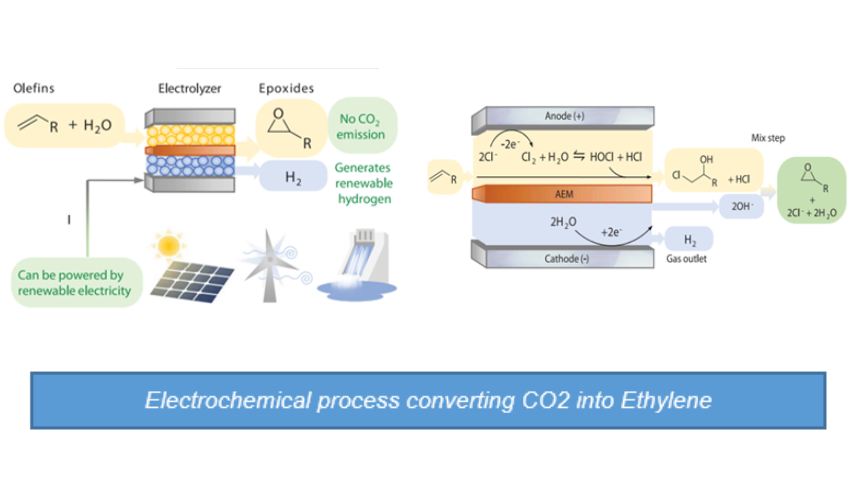
In 2018, CERT Systems, spun out of the University of Toronto, specialized in transforming CO2 into ethylene. Around two years later, the university advanced its research further to also start working on making ethylene oxide from CO2-derived ethylene.
Edward H. Sargent’s team, one of the co-founders of CERT, developed a method that employs chloride ions as a “redox mediator” to selectively facilitate the partial oxidation of ethylene to ethylene oxide.
This new technology had the potential to be integrated with already present CO2-to-ethylene conversion technologies developed by the institute. CERT Systems currently makes ethylene via CO2 at its pilot plant and has hinted towards future development of EO also at the same facility.
Strategic reach-out helped validate hidden supplier specifications
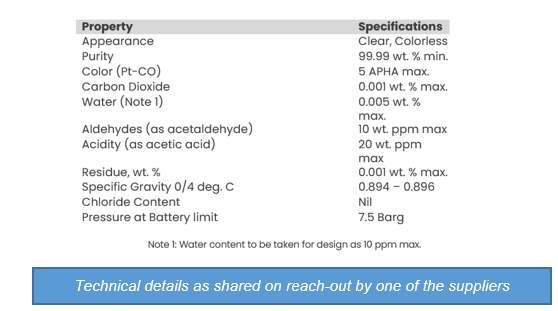
The client needed intricate data on the solutions, such as chemical purity, aldehyde content, and color stability, to ensure seamless integration. Since data on small-scale chemical purity is rarely public, GreyB initiated a strategic reach-out campaign with the identified suppliers.
The reach-out helped extract hidden specifications that confirmed the commercial feasibility of the non-petrochemical routes for the client’s specific quality standards.
The reach-out also helped identify secondary companies already collaborating with the client’s existing supplier.
This gave the client ready-to-move alternative suppliers who could act as immediate licensed partners to break the single-supplier monopoly.
Academic research was linked with start-up commercialization
To identify long-term disruptive technologies, the team performed a deep-dive analysis that converged academic breakthroughs with start-up commercialization efforts.
By linking high-level research papers from the University of Toronto with the operational milestones of CERT Systems, the analysis created a unique foresight for the client.
While the core technology was still in the research phase at the university level, the linkage with the start-up revealed that active, proprietary research was being conducted for commercial scaling.
This connection confirmed that the technology was not just a theoretical concept but a developing commercial asset. The client received detailed insights into pilot plant progress and future EO development plans, giving them early-mover access to a technology with verified commercialization potential.
Commercial viability was assessed across technical and integration parameters
The shortlisted EO routes were evaluated using parameters directly relevant to the client’s business and technical constraints:
- Feedstock type
- Underlying technology
- Production capacity
- Cost-effectiveness
- Environmental compliance
- Commercial viability
- Geographic presence
- Integration potential into the existing value chain
- Chemical purity
- Aldehyde content
- Color stability
- Pilot plant progress
- Future EO development plans
This helped the client compare near-term licensing options with longer-term CO2-based opportunities while avoiding reliance on public data alone.
Want to identify a commercially viable bio-ethylene suppliers?
The best route depends on whether the company needs a near-term licensed production option or a longer-term pathway with future commercialization potential. In this case, bio-ethanol-to-EO offered a more immediate collaboration route through established hybrid bio-refinery expertise, ETE dehydration technology, and a global network of 25+ plants. On the other hand, CO2-to-EO showed long-term potential by connecting University of Toronto research with CERT Systems’ pilot plant progress and future EO development plans.
For chemical R&D and strategy teams, the bigger challenge is not finding bio-ethylene or EO alternatives. It is separating supplier claims, early-stage research, and licensed technologies into options that match real quality, integration, and scale requirements.
A structured supplier scouting can help teams move from broad research to validated, commercially viable options. GreyB can help R&D teams verify technical specifications, benchmark supplier capabilities, and reduce pilot risk before committing to a production route. Fill out the form below and connect with our expert today.