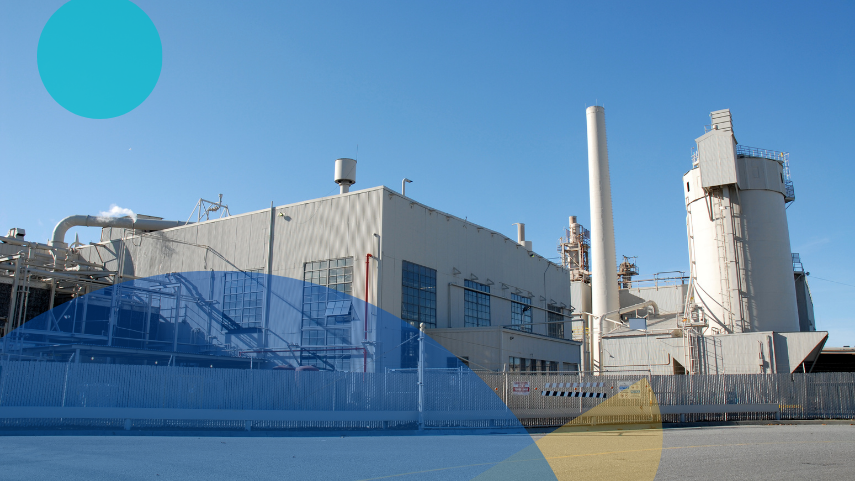
A chemical manufacturing facility used a centralized cooling tower system to remove heat across multiple batch reactors operating in parallel.
The system had been running for more than two decades. It included two cooling tower fans and eight circulation pumps supplying cooling water at different pressure levels, depending on reactor demand.
The cooling tower accounted for nearly 25–30% of the site’s total electricity consumption. This made it one of the most energy-intensive assets in the plant.
At the same time, high makeup water consumption had become a recurring operational concern. This was driven by evaporation losses, pressure fluctuations, and process variability.
Cooling water distribution was controlled manually and based on pressure. There was no direct flow measurement.
As reactor demand changed across batches, operators switched pumps on and off to maintain pressure. This led to unstable operation, energy overshoot, and inefficient water use.
The client also lacked original design drawings and hydraulic data for the cooling tower. This made it difficult to diagnose performance gaps through conventional engineering methods.
The client wanted to understand whether electricity and water consumption could be reduced. The goal was to improve control of the existing system or identify alternative technologies that could deliver higher efficiency under these constraints.
Looking at Technology and Service Options
GreyB started by examining the available ecosystem across two directions:
- Automation and control solutions that could optimize pump operation using the existing VFDs, PLC/DCS infrastructure, and soft starters
- Engineering and cooling tower specialists that could simulate, rebalance, or redesign the system to address thermal and hydraulic inefficiencies
The search was kept broad at the beginning. Automation software providers, cooling tower OEMs, and engineering consultancies were mapped in parallel.
As the system understanding improved, their capabilities were revisited.
At this stage, the work focused on identifying external providers who could potentially optimize or replace the existing cooling system.
No Single Solution Could Solve the Constraint
As GreyB validated vendor claims through technical discussions and follow-ups, a consistent pattern emerged.
Most automation vendors could deliver meaningful optimization only if flow data or baseline system models were available.
Engineering firms that could perform full thermal and hydraulic balance studies required extensive field measurements, instrumentation, or testing campaigns before making recommendations.
No commercially established solution could deliver immediate efficiency gains while also compensating fully for the absence of design data.
This showed that the challenge was not linked to search depth or vendor quality. The issue was structural.
The system could not be fully optimized through a single off-the-shelf solution because of how cooling systems are designed, controlled, and optimized.
Structuring the Problem around What Was Realistically Possible
Once this became clear, GreyB shifted the focus.
Instead of continuing the search for a single end-to-end fix, the team structured the problem around time horizons and control philosophy.
Short-term opportunities were separated from long-term corrective actions.
Solutions were evaluated based on what they could realistically deliver under the existing conditions.
GreyB defined two pathways:
- Near-term automation to stabilize pump operation and reduce energy volatility using existing infrastructure
- Long-term thermal and hydraulic correction through detailed engineering studies and system rebalancing
Capabilities were challenged directly. Options that could not operate without additional data or instrumentation were deprioritized.
This helped turn a loosely defined efficiency problem into a structured decision framework grounded in operational reality.
GreyB Helped Build a Phased Path Forward
The study confirmed that no Tier-1 solution currently exists that can fully optimize an aging, pressure-controlled cooling tower system without additional data collection or phased system intervention.
This conclusion was reached through validation and constraint mapping, not assumption.
GreyB helped the client replace uncertainty with clarity.
The client gained a realistic understanding of where efficiency gains were immediately achievable, where deeper system changes were required, and where further effort would not materially change the outcome.
Instead of ending with a list of vendors, the engagement resulted in a defensible, phased path forward aligned with how the cooling tower ecosystem actually works.
If you are evaluating viable path to cooling tower efficiency under data constraints, connect with our experts today.
Schedule a Consultation With Our Experts Today
Get in touch by filling out the form below