
Value Delivered
The research uncovered a patent from the surgical-robotics field that disclosed the critical threshold-angle-based camera adjustment missing from conventional gimbal references.
By showing that a camera mounted on a movable robotic arm was automatically repositioned when measured angles crossed predefined thresholds, the reference gave the client strong cross-industry prior art for challenging the asserted automatic gimbal-stabilizer claim and strengthening its defense in the lawsuit.
Problem Solved
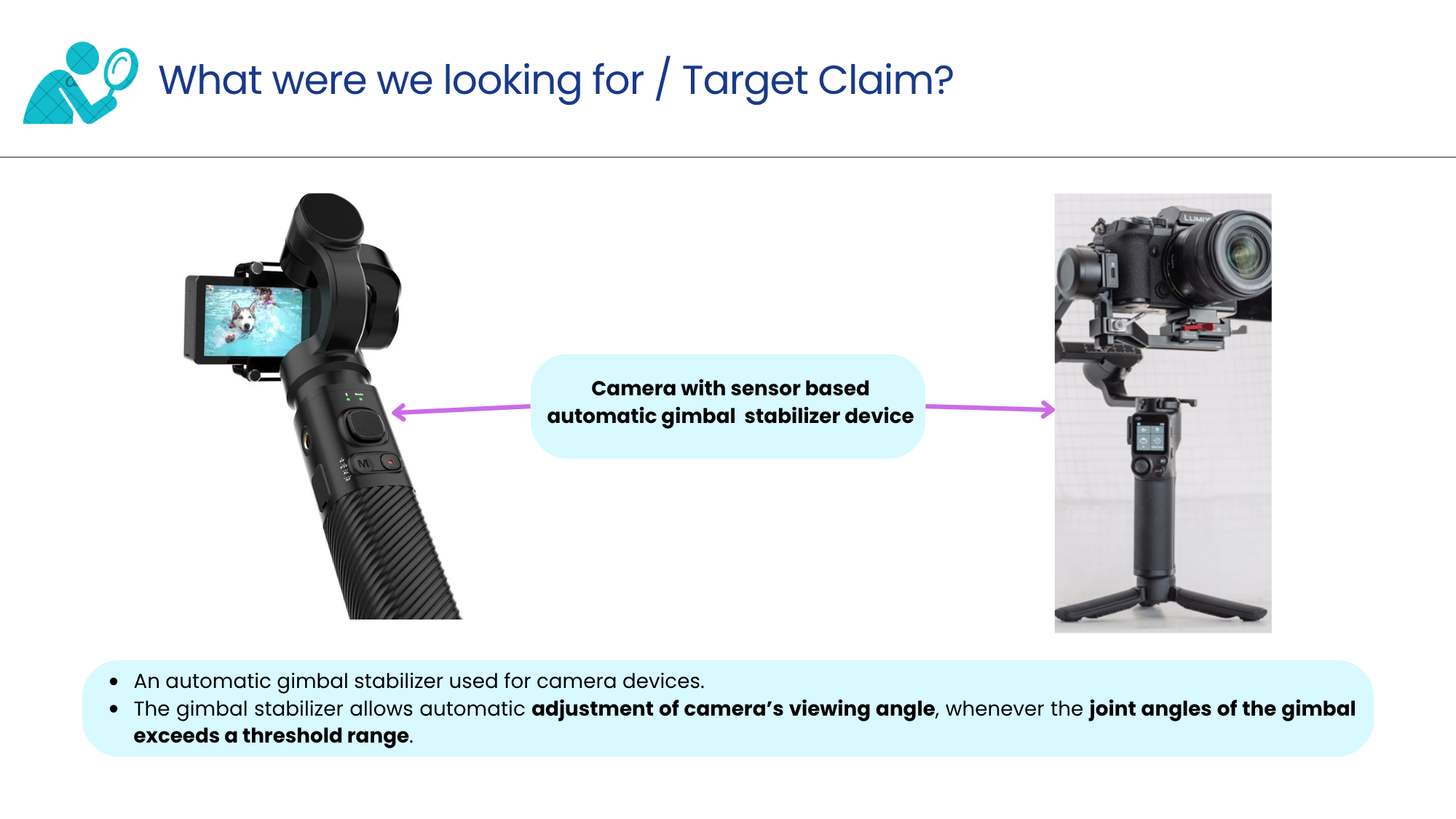
The target claim covered an automatic gimbal stabilizer that adjusts a camera’s viewing angle when the gimbal’s joint angles exceed a threshold range.
Initial searches identified several related technologies:
- Manually operated gimbals that adjusted the camera to a user-selected angle;
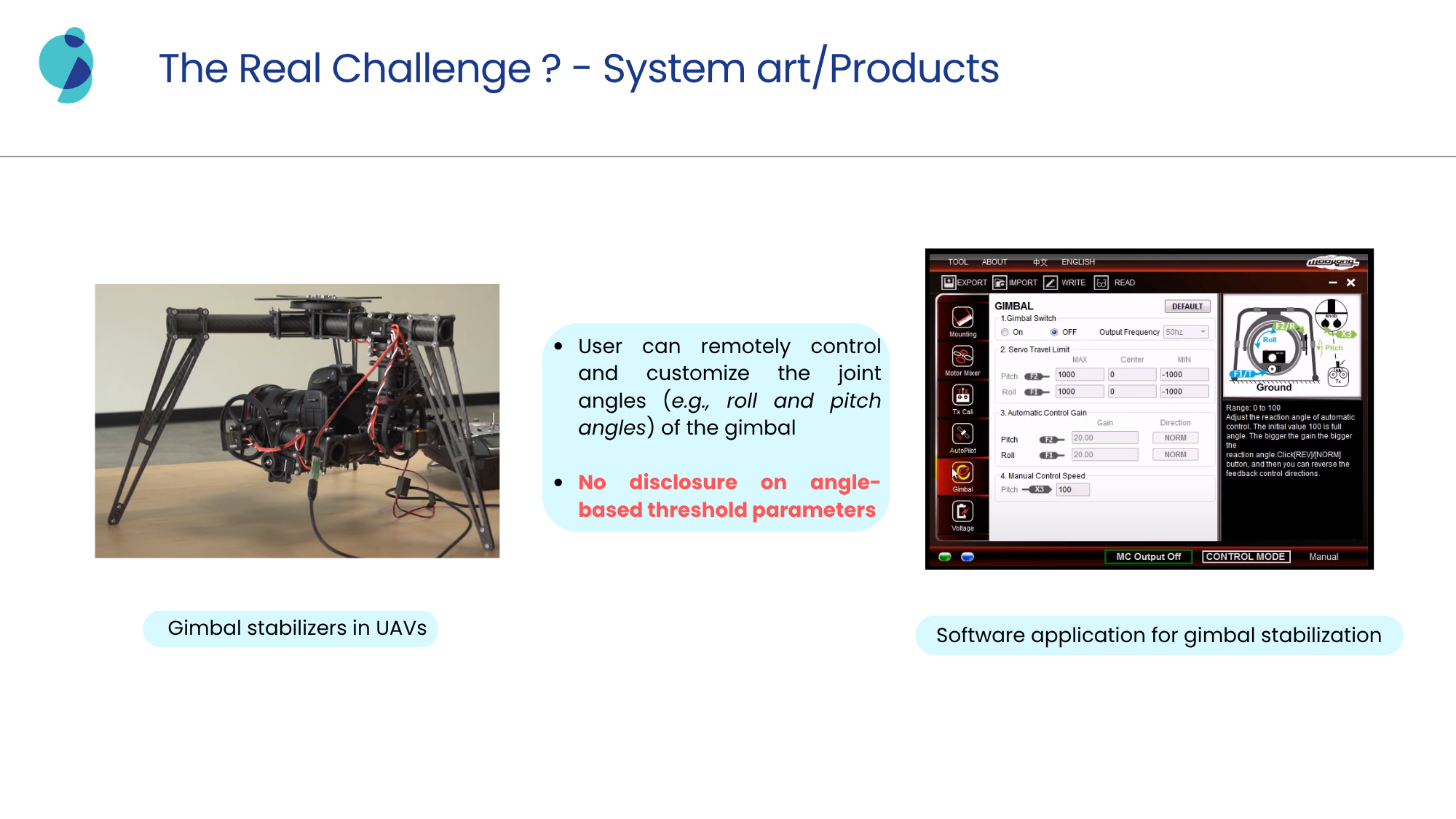
- Remotely controlled gimbals without angle-based threshold calculations;
- Sensor-monitored systems that adjusted zoom using distance-based thresholds; and
- UAV gimbals and stabilization software that allowed users to configure roll and pitch angles.
However, these references did not disclose the key feature: automatically changing the camera’s viewing angle when a monitored joint angle crossed a predetermined threshold.

Solution Offered
The search was expanded beyond conventional gimbals into vehicle-mounted cameras, cinematographic systems, microscopic and telescopic instruments, and precision surgical equipment. These areas contained relevant stabilization mechanisms but initially lacked the required threshold-angle calculation.
The strategy was then broadened further by searching for the concept of threshold-based camera movement without restricting the queries to gimbals, UAVs, cranes, or any specific application.
This led to US9439556B2, directed to autonomous camera control for robotic surgery. The patent disclosed:
- A camera supported by a movable robotic arm;
- Calculating an instrument angle relative to the camera’s viewing axis;
- Moving the camera upward when the angle exceeded a first threshold, such as 35°; and
- Moving the camera downward when the angle fell below a second threshold, such as 15°.
Although developed for surgical equipment, the reference disclosed the same functional principle underlying the asserted gimbal claim: automatically adjusting a camera through a movable support when monitored angles cross defined thresholds. This cross-domain prior art provided the client with a strong basis for contesting the claimed invention.
Get the full case study to discover how a surgical camera instrument uncovered critical prior art for defending an automatic gimbal stabilizer lawsuit.