


Do you also think companies like Microsoft and Coca-Cola are superior in their respective domains? Microsoft dominates the industry in computer operating systems, and Coca-Cola in beverages and snacks.
Even though these are 2 totally different companies with different business models and markets, both, however, have one strong thing in common. They are early adopters. They innovated where no one had worked before.
Bill Gates saw the need for an easy-to-use computer operating system, and Coca-Cola recognized the new addiction to soda. Both entered their respective industries early and are still leading today. Simply put, they spotted the white space and grabbed the opportunity.
The same goes for any other industry. Take Segway, which entered the self-balancing vehicle industry well before others. It’s still reaping the fruits of success even though the whole Hoverboard industry has turned into a mess.
Similarly, in many industries, there are many white spaces that, if identified and addressed, could make a company the next Coca-Cola in a new field.
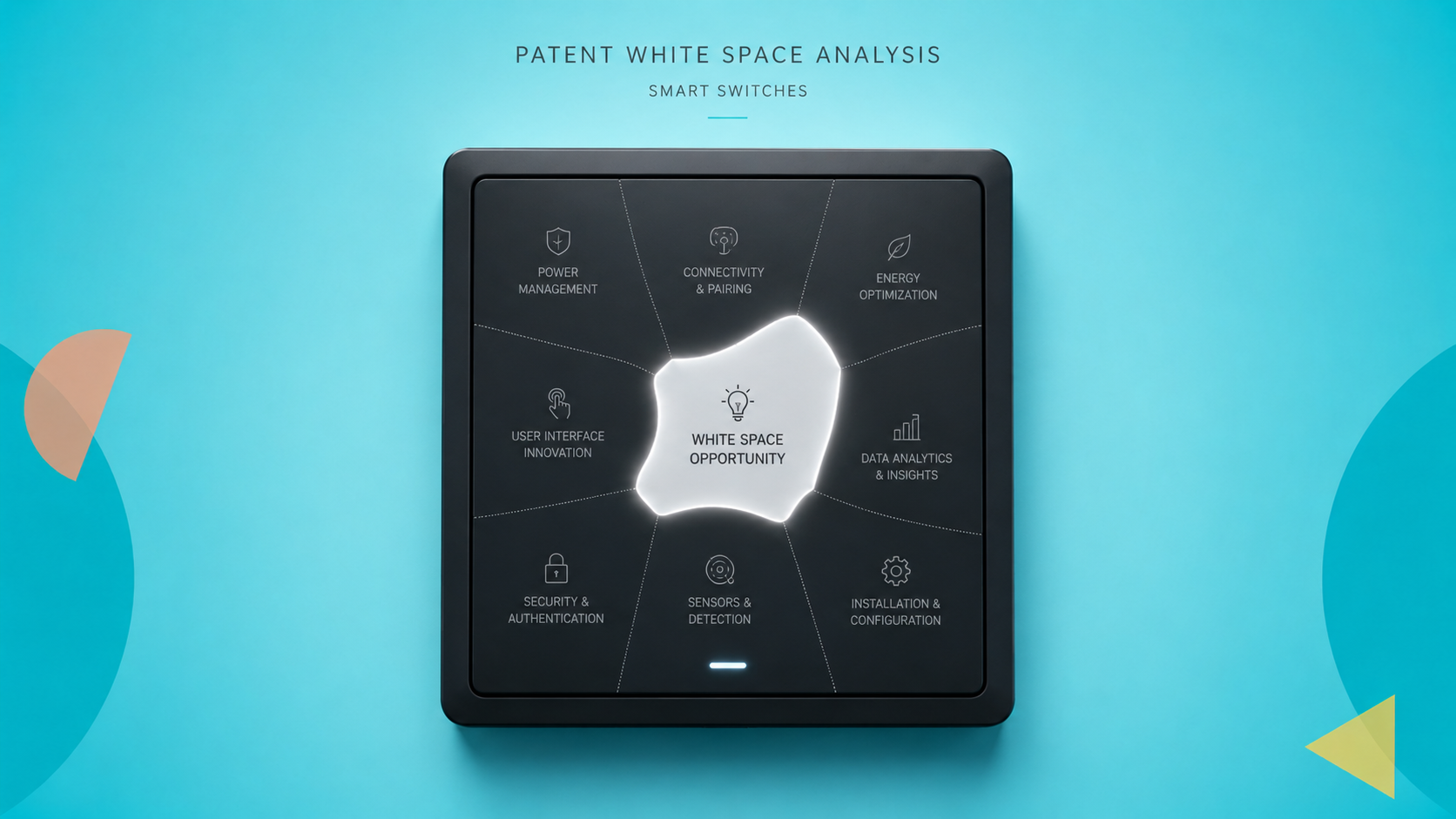
One such industry is smart switches – the backbone of the internet of things. There are a lot of white spaces in it.
But before disclosing them, first, I would like to give you a brief overview of what Smart Switches are. Then we will move on to the recent innovation, and finally we will discuss the white spaces in the industry.
What are Smart Switches?
A smart switch is a switch that various defined conditions, such as temperature changes, voice commands, network signals, or other sensors, can trigger. One great example of a smart switch device is a smoke detector. A smoke detector triggers an alarm once its sensors find smoke in its vicinity.
Now it’s quite obvious why the internet of things is driven by smart switches. Your fitness bands, your temperature-sensing AC, your motion-detecting TV, almost every other smart gadget is using a smart switch to function.
We all know that the future of IoT is bright, and this industry is in its early phase. There are tons of opportunities for companies to innovate in this domain and, quite possibly, build a strong presence.
To explore those opportunities, we studied patents filed for smart switches with applications in the smart home industry. Patent analytics is a robust way to figure out the current state of innovation in an industry. Not only this, but it’s also the best way to spot white space in a domain.
Recent innovations in Smart Switches
Smart switches have a wide range of applications. Hence, the patent filing in the domain is also wide. From power outlets to optical sensors, and from Wearables to Window shades, they have applications.
The graph below gives you a bird’s-eye view of the number of patents filed in different application areas in recent times.
![smart switch patent distribution [image1]](https://greyb.com/wp-content/uploads/2016/11/smart-switch-patent-distribution-image1.png)
The above chart also indicates the popular research areas and the areas where research is scarce. The highly popular research areas appear promising at first glance; however, it’s always good to turn the stone.
So, let’s dive deep to find which areas are great to channelize research spending and have high ROI.
White space in the smart switch industry
Let’s first explore how patent filing in smart switch technologies has evolved over the past few years. Technology areas that are high in demand but have fewer patent filings represent potential white space in the domain.
The chart below has the patent filing timeline of the most commonly used components and the most common application areas of smart switches –
![Smart Switch patent distribution timeline [image2]](https://greyb.com/wp-content/uploads/2016/11/Smart-Switch-patent-distribution-timeline-image2.png)
At present, there are fewer patents on the use of power line communication in smart switches. Patent filings in this area are growing, and the field has potential for future development.
Similarly, the use of smart switches for power outlets, smart kitchen appliances, and window shades is relatively underexplored. In the case of smart kitchens, patent filings have increased recently. This area undoubtedly has strong business potential, as we will soon see many smart kitchen devices on the market.
Below is the graph of patent filings in the core technologies of Smart switches:
![Smart Switch patent distribution timeline 2 [image3]](https://greyb.com/wp-content/uploads/2016/11/Smart-Switch-patent-distribution-timeline-2-image3.png)
From the graph, you can see that occupancy and image sensors have broad application areas but are among the least-researched technologies. The same is true for biometric and wearable smart switches. In the past, biometric security systems were used in establishments with sensitive information. Today, we have fingerprint sensors in our smartphones.
Technology intersection in the white space of the smart switch industry
Technology intersection is another useful metric for analyzing where two technologies meet. Thus, it narrows our search for white space within a domain. The intersection may also unravel a hidden business opportunity.
![Smart switch technology intersection [image4]](https://greyb.com/wp-content/uploads/2016/11/Smart-switch-technology-intersection-image4.png)
The chart above, for example, indicates opportunities for research ahead.
Occupancy sensors, for example, have significant applications in security systems, but only 8 patents have been filed in that area. The same applies to image sensors.
Wearables represent another potential area for smart switches to work on. At present, the wearable is only integrated with fitness trackers or smartphones. In the future, however, they will get integrated with almost every consumer electronics device in your home.
For example, a smartwatch can control your music system based on your heart rate, i.e., light and feeble for exercise and metal for workouts and gaming.
Or that can turn your AC on or off based on your body temperature. There are infinite ways through which smart wearables will become an essential part of the Internet of Things.
At present, there are few, if any, competitors in this area. There aren’t many products, either. However, non-traditional companies in smart switches, such as LG and Whirlpool, are gradually increasing their filings in this domain, indicating plans to expand their core business in smart switches.
Shikhar Sahni explained how nontraditional watchmakers took all the profit away from traditional watchmakers by first entering the smartwatch market. He also explained a way to identify these trends before others did. You must read his article for a better understanding of the concept, as similar things could happen with switch makers or with anyone from any tech domain. Click here to start spotting tech trends before anyone else.
If you are a traditional switch maker or someone who wants to identify potential white spaces in your domain of operations, getting a white space analysis done can be beneficial.
GreyB can help you identify research gaps in any industry using patent analytics.