



In February 2026, the EU introduced its first Carbon Removal Certification Framework (CRCF). It sets clear rules on how CO₂ removal must be measured, verified, and maintained over time. This means it is no longer enough just to capture CO₂. What matters now is how much is removed, how steady the output is, and whether the CO₂ stays stored.
Meeting these requirements depends on how these systems perform in real conditions. CO₂ removal can be tracked using monitoring systems, but if output keeps changing, it becomes harder to verify results over time. Storage depends on how well CO₂ is captured, handled, and tracked. Energy use also matters, since it affects whether the process is practical at scale.
In practice, this is where many setups fall short. Heat-based processes use a lot of energy. Some cannot run continuously, which reduces total output. Performance can change across locations. In some cases, captured CO₂ still needs extra steps before it can be stored or used. These issues make it difficult to keep results steady and scale operations.
This is where carbon capture innovations are now focused. The goal is not just to capture CO₂ but to make the entire system easier to run, more consistent, and better suited to real-world conditions. New approaches are reducing the need for heat, keeping systems running without stops, using CO₂ directly where it is captured, and improving how performance is tracked.
1. Energy-efficient CO₂ capture using electricity instead of heat
Capturing CO₂ from air or dilute industrial gases is difficult because their concentrations are low. Also, existing carbon capture systems need high heat or energy to release captured CO₂ and reuse the capture material. These limitations make the process energy-intensive and harder to run continuously.
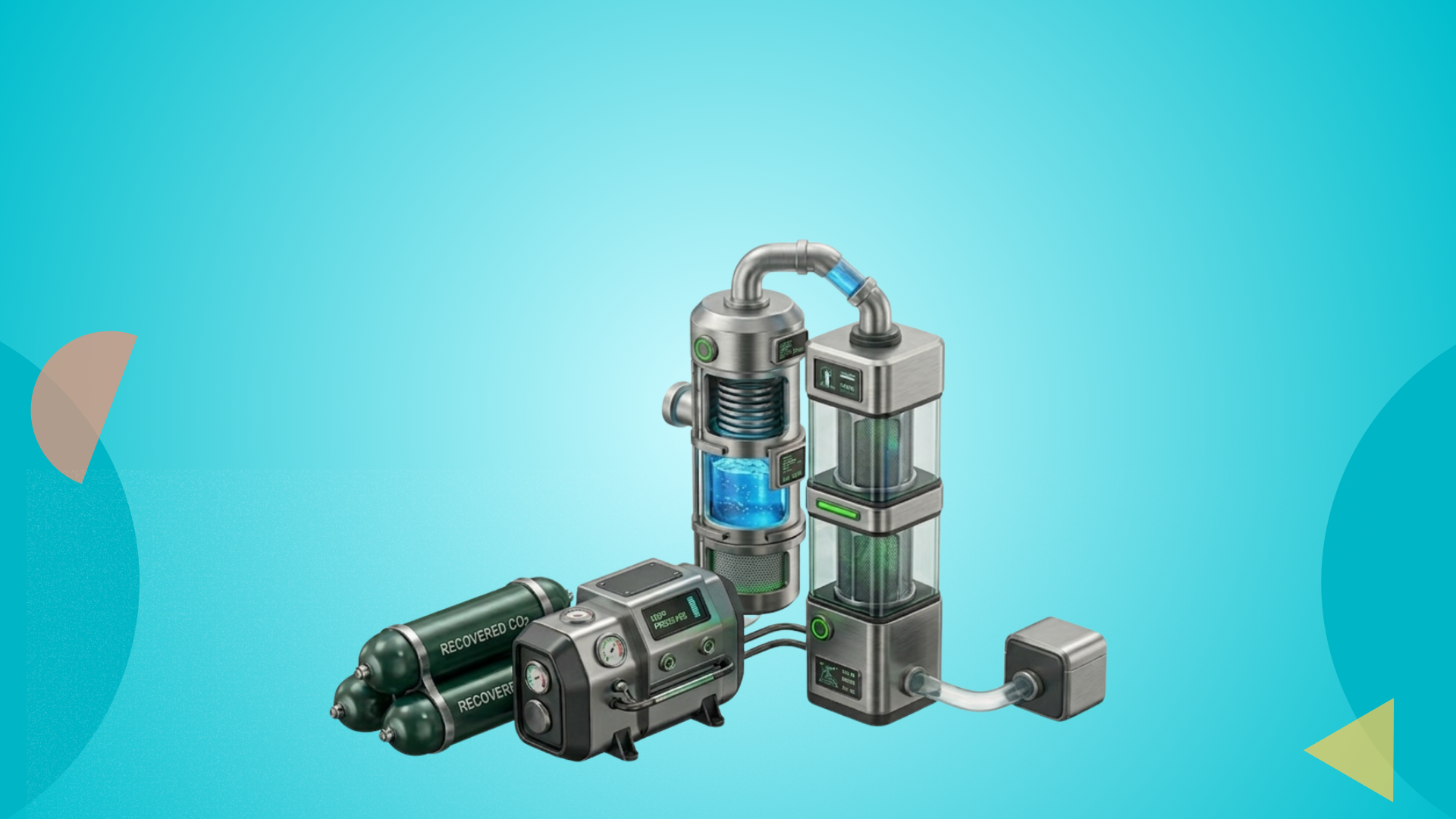
Eleryc’s system uses electricity to capture carbon instead of heat. It uses electricity to split a saltwater solution into two liquids: one acidic and one basic. The basic liquid absorbs CO₂ from air or exhaust gases and holds it in solution. In the next step, acidic liquid is used to release the CO₂ as a concentrated gas.
This system separates the electrochemical unit from the dedicated CO₂ capture and release units. This separation allows the system to run continuously and handle low CO₂ concentrations more effectively. The liquids are recirculated, so the system can keep running without frequent replacement.
Unlike conventional systems that rely on repeated heating and cooling, this design runs on electricity rather than heat, thereby avoiding the energy losses associated with thermal cycles.
This approach shifts CO₂ capture from heat-dependent systems to electricity-driven systems. As more industries move toward electrification and renewable power, this innovation will make it easier to connect carbon capture with low-carbon energy sources without relying on large heat-based infrastructure.
Related Read
2. Releasing CO₂ using moisture instead of heat
Instead of using heat to release captured CO₂, A new carbon capture system by Avnos relies on a simpler trigger: removing moisture. This avoids the need for high-temperature steps that typically drive energy use in direct air capture systems.
The system draws air through a material that simultaneously captures CO₂ and water. When moisture is later removed, either using dry air or liquid water, the same material releases CO₂ in a concentrated form. This removes the need for heating cycles to regenerate the material.

The setup includes three main parts: an air-contact section, a moisture-control section, and a water loop. In the air-contact section, fans draw in outside air through a material that absorbs both CO₂ and water vapor. This is where CO₂ is captured.
Once the material is loaded with CO₂, it is exposed to a different environment where moisture is removed. This can be done by passing dry air over it or by using a liquid to draw out water. As the material dries, it releases the captured CO₂ in a more concentrated form.
The removed water is collected, stored, and returned to the system for reuse. Valves and airflow paths control when air is directed for capture and when dry conditions are created for release. This allows the system to switch between capture and release without using high temperatures.
This new design reduces the need for energy-intensive heating equipment. It means carbon capture systems can be designed with fewer thermal constraints and can be operated more easily under varying outdoor conditions. The expansion is simpler to implement across different locations without relying on a steady heat supply.
Startups that can help in Carbon Capturing

3. A continuous and more efficient carbon capture and release system
Most Direct Air Capture (DAC) systems slow down because they use the same unit for two very different steps: capturing CO₂ and then releasing it. One step needs constant airflow, while the other needs a closed, heated environment. Switching between these steps creates downtime and limits the amount of air the system can handle. This also increases system complexity and cost. As a result, the overall process becomes slower, less efficient, and harder to scale.
Carbon Capture Inc is solving this bottleneck by separating these steps and keeping the system running continuously. Its design physically moves the CO₂-capturing material in a loop between capturing and releasing areas. The material is packed into tray-like units that are connected to a conveyor or track system.
As the units move through the first open area, fans blow air over them, allowing them to capture CO₂. The same modules are then carried into a closed chamber, where CO₂ is released using heat, steam, and low pressure. After that, the modules are moved back again to repeat the cycle.
Because different units are at different stages simultaneously, the system never has to pause. Some are capturing CO₂ while others are releasing it. This also allows more air to flow through easily, since the capture area is no longer constrained by heating or sealing requirements. Heat from one cycle is also reused in the next, reducing energy waste.
This setup improves the system’s performance in several ways. It can process about three times more air, run capture and release at the same pace (1:1 instead of 3:1), and produce twice as much CO₂ using the same amount of material. It also reduces costs by 50–80% and cuts steam use by around 50% through heat reuse.
By keeping the material in motion rather than switching the entire unit between steps, the system uses its equipment more effectively and is easier to scale. It offers a more practical way to grow operations while keeping performance steady and costs under control.
4. Utilizing captured CO₂ on-site directly into useful chemicals
Captured CO₂ needs to be heated, purified, compressed, and transported before it can be used. This adds extra equipment, energy use, and cost.
A system developed by AGC Carbon Inc. combines CO₂ capture and conversion into a single process, so CO₂ is used directly where it is captured.
The process is arranged as a connected flow of steps. Exhaust gas first passes through a cleaning unit to remove impurities like sulfates and nitrates. The cleaned gas then enters a reaction tower, where it reacts with a liquid solution, such as saltwater (brine), ammonia, or a weak base (like an amine), to capture CO₂. Here, CO₂ reacts to form solid products like sodium bicarbonate (baking soda) or sodium carbonate (soda ash). These solids are then separated using filters or crystallizers.

The remaining liquid is processed to recover ammonia, which is then sent back into the system, keeping the cycle running. In parallel, part of the captured CO₂ can be further converted into methanol or formaldehyde using hydrogen. The company reports product purity of over 95–99% for products like soda ash.
This system can be used at power plants, cement plants, and other industrial sites. It changes the role of carbon capture from a cost-heavy step to part of a production process. It turns CO₂ emissions into valuable products on-site, reducing waste, lowering energy use and cost, and improving the overall economics of carbon capture.
Carbon Capture Challenges And Solutions

5. Automating carbon capture systems with AI to become carbon‑negative
The efficiency of CCS systems largely depends on operator decisions about when to adjust settings, how long to run each step, and how to judge progress. This leads to differences in performance across sites and makes it difficult to clearly measure how much CO₂ is actually reduced. It also makes it hard to connect carbon capture results with carbon credits or trading.
National Cheng Kung University is replacing this manual control with a data-driven setup that continuously monitors, adjusts, and evaluates the CO₂ capture process. Their system includes three main parts: a carbon capture unit, a central control system (a cloud-based platform), and multiple sensor units (CPAs) distributed throughout the system.
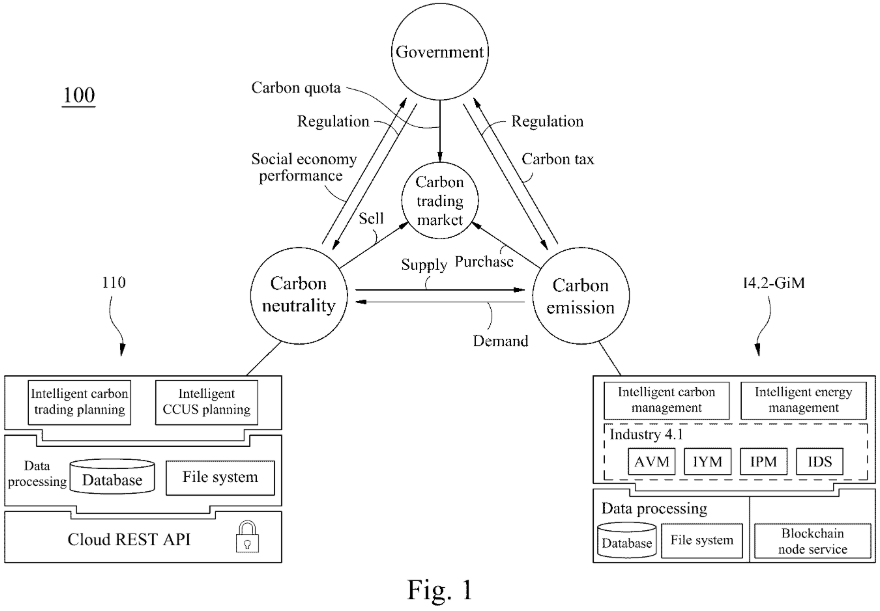
Sensors track data such as energy use, operating conditions, and CO₂ capture rates, and send it to the control system. The control system uses this data to set a CO₂ reduction target, run the capture process, and check progress in real time.
The system works in a loop. First, it sets a target for the amount of CO₂ to be reduced based on factory requirements. It then runs the capture process and tracks performance in real time. If the target is not met, the system automatically adjusts how the equipment runs to improve results while balancing energy use and carbon reduction.
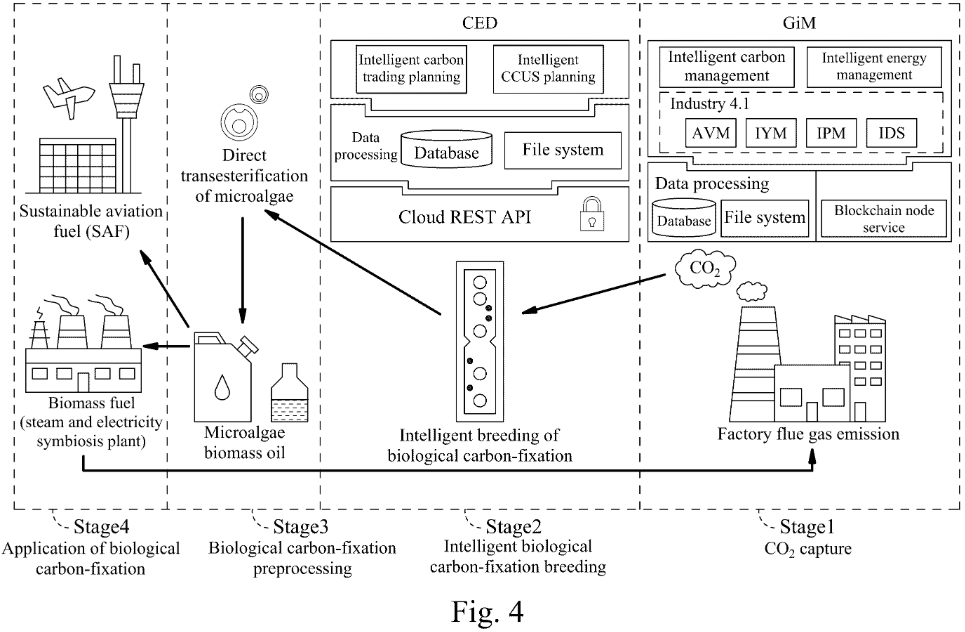
Once the target is reached, it calculates the total CO₂ reduced and uses this information to support carbon credit calculations or trading decisions.
Instead of relying on fixed settings or operator judgment, the system continuously updates its operation based on actual performance data. It also standardizes how results are measured, making outputs more consistent across different runs or facilities.
This approach makes carbon capture operations more consistent and measurable. For companies, it reduces reliance on manual decision-making and provides clearer performance data. This data is important for tracking results and aligning them with reporting or carbon accounting requirements.
Related Read

6. Testing carbon storage monitoring strategies and tools with AI systems
Another use of AI in CCS is selecting monitoring tools, such as seismic or electromagnetic surveys, to track CO₂ underground.
Traditional approaches rely on separate studies and expert judgment. These steps require multiple simulations and can be time-consuming and costly. Even after this effort, there is no clear assurance that the selected method will work as expected or won’t need changes later.
To replace this, a new system suggested by Schlumberger uses AI-driven modeling to test and compare monitoring options in a shared digital environment before deployment.
The model uses inputs like rock properties, pressure, and injection conditions to run a simulation and predict how CO₂ will move underground. Each monitoring method is then evaluated against the same model to assess how well it would detect those changes. It can also create a risk map showing where CO₂ leakage is more likely.
All this information is then combined to give each monitoring method a score indicating its suitability for that site. Based on these scores, the system recommends the best monitoring approach.
Because all options are evaluated under the same conditions, it becomes easier to compare them directly. The system highlights which methods are likely to give clear signals and which may struggle due to weak response or background noise. This removes the need to rely on multiple disconnected analyses.
The evaluation can also be done faster using simplified models, making it easier to test different scenarios before making a final decision.
This solution can be used in carbon storage sites, oil and gas fields, and other underground projects. It allows teams to make monitoring decisions earlier and with more clarity.
Strategic Implications for Carbon Capture Innovation
Carbon capture and storage technologies are expanding fast, but the gap between growth and impact remains large. In 2025, 77 projects are operating globally, with 47 more under construction, yet total capture capacity remains only a small fraction of global emissions.
If projects are increasing, why isn’t the total impact scaling at the same pace? Where is capacity getting lost between design and actual operation?
When evaluating carbon capture systems at scale, a different set of questions starts to matter:
- Where is the gap between installed capacity and actual CO₂ captured over time? Is it capture efficiency, system uptime, or downstream handling?
- Which CCS designs reduce dependency on external infrastructure, and which require alignment with transport and storage networks?
- How do you compare CCS solutions that use different operating conditions (heat, electricity, moisture) but impact energy use in different ways?
- Which approaches simplify the number of steps between carbon capture and final storage or use?
- Where do system designs introduce new operational dependencies, even as they address existing bottlenecks in carbon capture systems?
- How do you assess whether a CCS system can adapt to changing site conditions without major redesign?
- Which technologies shift complexity from hardware to control systems, and how does that affect long-term operation?
Answering these questions requires tracking and understanding individual technologies. It needs a clear view of how different system designs perform under real conditions and where they create a measurable impact.
That’s where we come in.
Whether you are evaluating carbon capture approaches for a specific site, comparing how different system designs affect energy use and output, or identifying solutions that can scale without creating new bottlenecks, we help you focus on what is practical, deployable, and aligned with your operating constraints.