
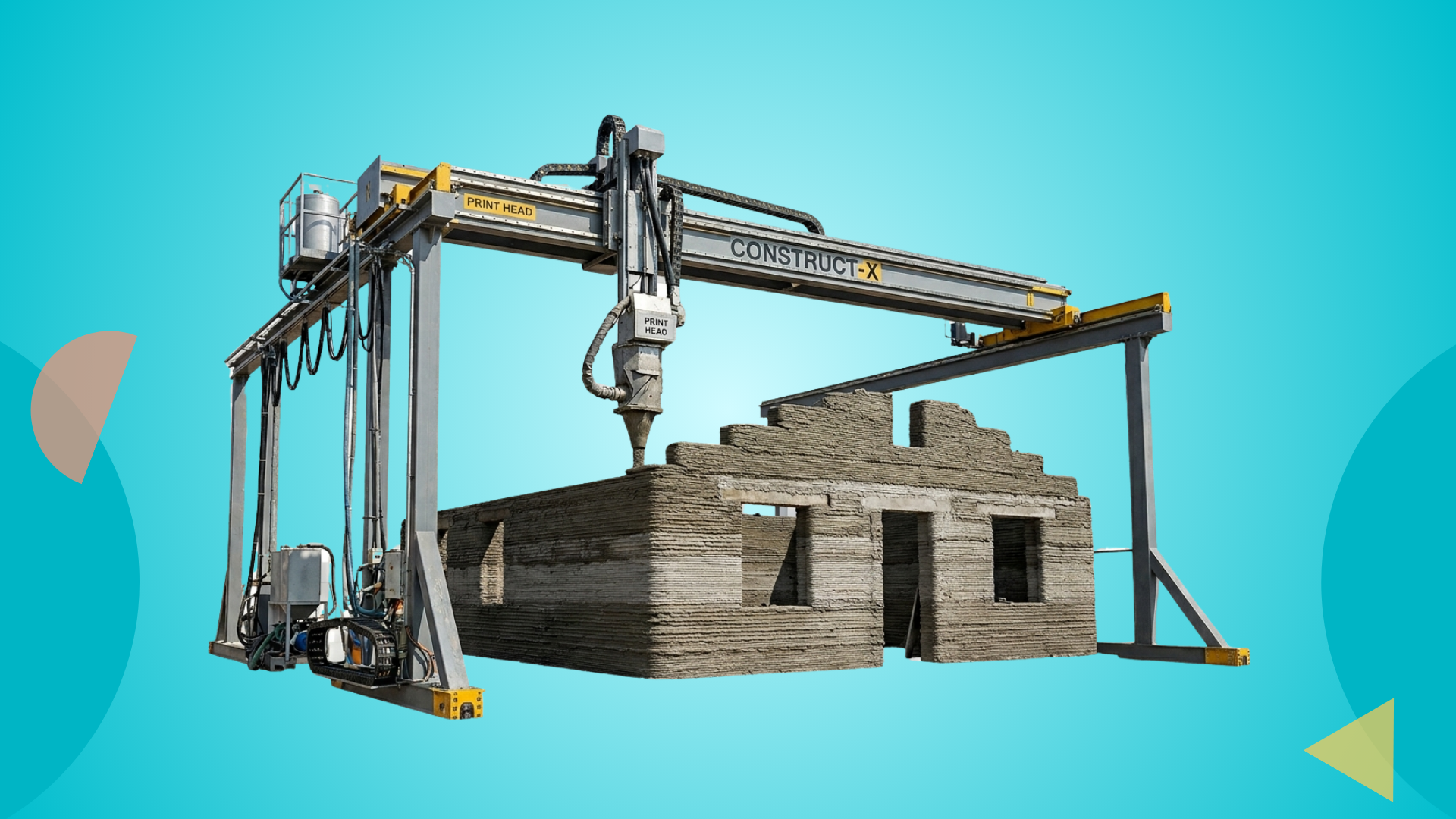




The construction industry is facing a shortage of ~0.5 million workers in 2025. Yet, 92% of firms report they cannot find qualified people to hire. Yet demand is not slowing down. Projects still need to be delivered faster, at scale, and with tighter margins.
At the same time, the construction sector now accounts for roughly 33% of global CO₂ emissions, up from 20% in 1995. Its cumulative footprint is on track to exceed the remaining global carbon budget for 1.5°C warming.
These pressures are not separate. Delivering more with fewer people is now tied to how materials are used and how work is executed on-site. When these factors are not controlled together, projects face delays, rework, and inconsistent results across sites.
This is where current construction innovations are focused. Developments such as automated multifunctional robots and 3D-printed construction are addressing breakdowns in coordination, material behavior, and execution that limit the reliability of construction systems at scale.
The construction innovations discussed in this article show how these challenges are being addressed at various stages and with different technologies.
1. Construction robots are shifting from task automation to real-time coordination
Robots used on construction sites today operate as independent units, following pre-defined tasks. When something changes on-site, human intervention is needed to adjust plans.
A new setup addresses this limitation, in which multiple robots work together as a coordinated system and adjust in real time as construction progresses.
This system, designed by Zhongyan Digital Technology Zhejiang Co Ltd, works in three interconnected parts that handle planning, execution, and adjustment.
First, a rule generation layer takes the BIM model and turns it into clear construction tasks like defining wall details, breaking them into steps, and preparing instructions. These tasks are then carried out by an execution layer, in which different robots handle activities like measurement, positioning, material handling, and installation.
Alongside this, an optimization layer continuously tracks progress and site conditions, updating task assignments, schedules, and robot movements to maintain an efficient workflow.
The difference comes from how these layers interact during construction. Instead of following a fixed plan, decisions are updated as work progresses. If a robot slows down, sequencing changes, or site conditions shift, the optimization layer recalculates paths and priorities to keep the overall workflow efficient. This removes the need to stop and manually replan operations.
Quality control is also built directly into execution. Using point cloud data and laser scanning, construction accuracy is monitored in real time. When deviations exceed defined thresholds, corrective actions are triggered, and tasks are reassigned to robots. This creates a continuous feedback loop in which planning, execution, and validation occur together rather than as separate steps.
In practice, this approach is particularly relevant to prefabricated and assembly-type construction environments, where multiple robots must operate simultaneously in constrained, interdependent workflows.
Related Read:
2. Automation is moving beyond flat surfaces to vertical and complex structures
Automation in construction still struggles when work moves beyond flat ground. Building vertically, especially on curved or irregular surfaces, requires constant repositioning of equipment and heavy manual support.
Smarcrete Technology Hangzhou Co Ltd is overcoming this limitation with a robot that moves along the structure, builds it layer by layer, and places reinforcement within the same workflow, without relying on external support systems.
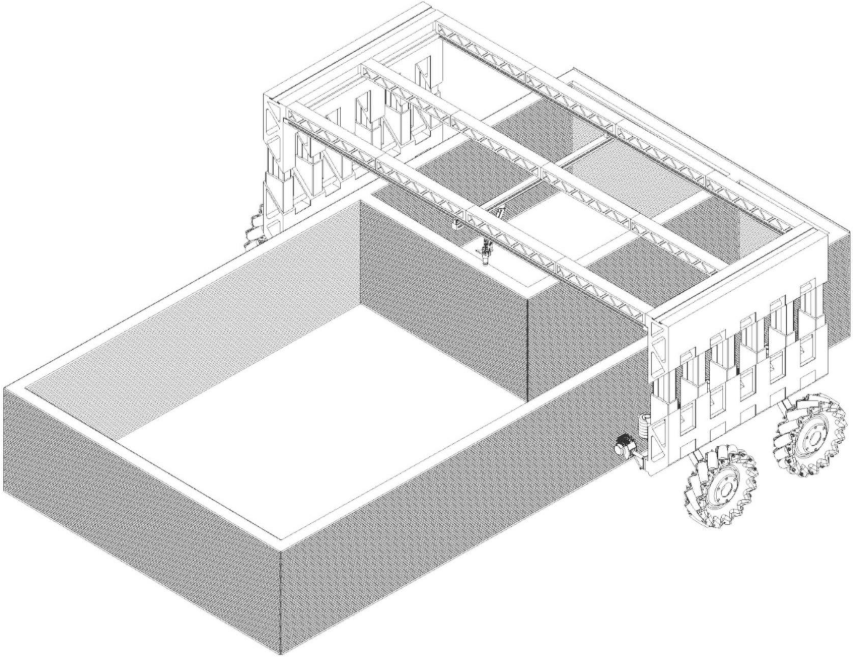
This robot combines movement and construction into a single platform. It can travel across surfaces, climb vertically, and shift sideways to reach different areas of the structure.
Alongside movement, it carries a construction setup that feeds material, deposits concrete through a robotic arm, and places reinforcement using a gripping mechanism. This enables the same system to handle both material placement and structural strengthening as construction progresses, rather than splitting these tasks across multiple machines.

A key enabler is its adaptive climbing mechanism. Instead of rigid wheels or tracks, the robot uses a deformable wheel design with an iris-like structure that can change its diameter and adjust contact pressure. This design change keeps the robot stable while moving across uneven or curved surfaces, which are difficult for conventional climbing systems to handle.
The system follows a digital building model that is broken down into layers. As each layer is built, the robot climbs to the next position and continues construction.
Throughout this process, a control system tracks position and uses sensors and image recognition to keep the robot aligned with the design, adjusting movement and material flow when needed. This reduces the need for manual corrections between stages and keeps construction consistent as the structure grows.
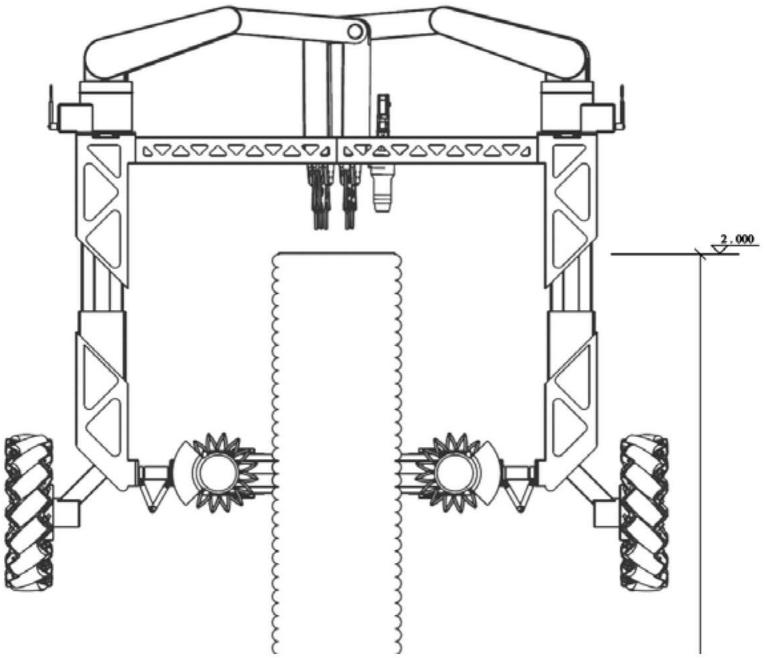
By combining movement, printing, and reinforcement into a single continuous process, the system eliminates the repeated setup and repositioning steps that slow construction today. It is especially beneficial for high-rise buildings and complex architectural forms, where access, geometry, and stability have traditionally limited the use of robotics.
3. Controlling how concrete sets is unlocking reliable 3D construction
One of the biggest challenges in 3D concrete printing is timing. Concrete needs to remain fluid during pumping and placement, but it also needs to harden quickly once placed to support the next layers. Managing both at once has been a major barrier in scaling 3D printing for construction.
A method developed by Harcourt Technologies Ireland Ltd and Roadstone Ltd tackles this by controlling the concrete properties during transportation and setting. The setup follows a typical 3D concrete printing system with a reservoir, pump, piping, mixing unit, and nozzle for layer-by-layer deposition. It uses a concrete mix with a retarding admixture, which keeps the material workable during storage, transport, and pumping.
Just before or during deposition, an accelerating admixture is introduced into the flow, either through mixing in a vessel or directly at the nozzle. This keeps the concrete fluid as it moves through the system and ensures it begins to set only after placement. As a result, the concrete does not harden inside the pipes, and each printed layer quickly gains strength, supporting additional layers without collapsing.
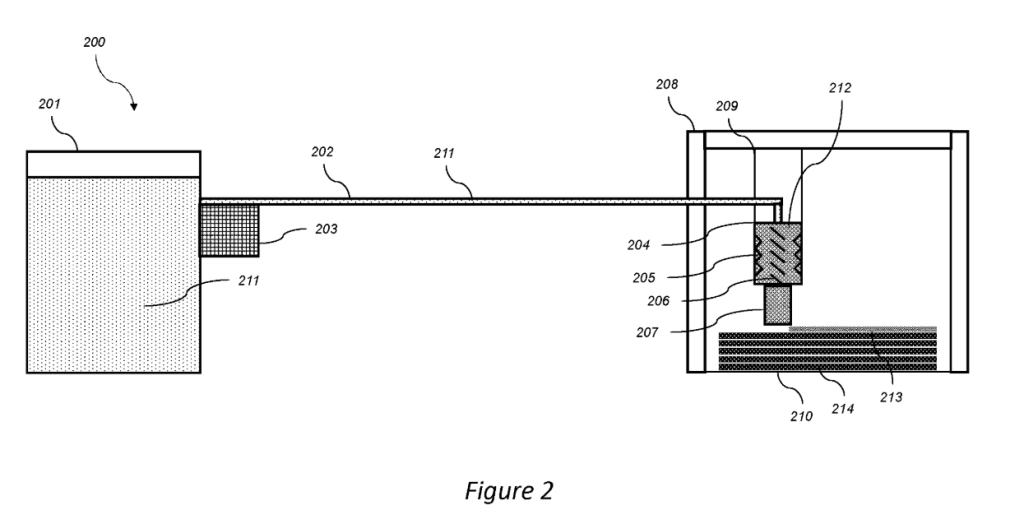
Laboratory and trials show that the workable time of the concrete can be extended to about 3–14 hours before acceleration. The setting time after acceleration drops to about 2–30 minutes. Printed structures also achieve compressive strengths ranging from 10 MPa to 65 MPa, with preferred values of 35–60 MPa after 28 days.
This approach changes how concrete is handled in additive construction. Instead of working within a narrow time window, the material behavior is controlled in stages, making it more reliable for continuous printing. It is relevant in printing walls, structural elements, and building components where consistency, strength, and uninterrupted operation are critical.
4. Permanent formwork removes an entire step from concrete construction
Formwork in concrete construction is usually temporary. It needs to be set up, supported, and then removed after pouring. This adds time, labor, and extra steps such as waterproofing. A wall construction approach from O B Bersano Group Ltd removes that cycle by keeping the formwork in place as part of the finished wall.
The approach uses interlocking polymer panels that remain in position after concrete is poured. They shape the wall and also become its outer and inner layers.
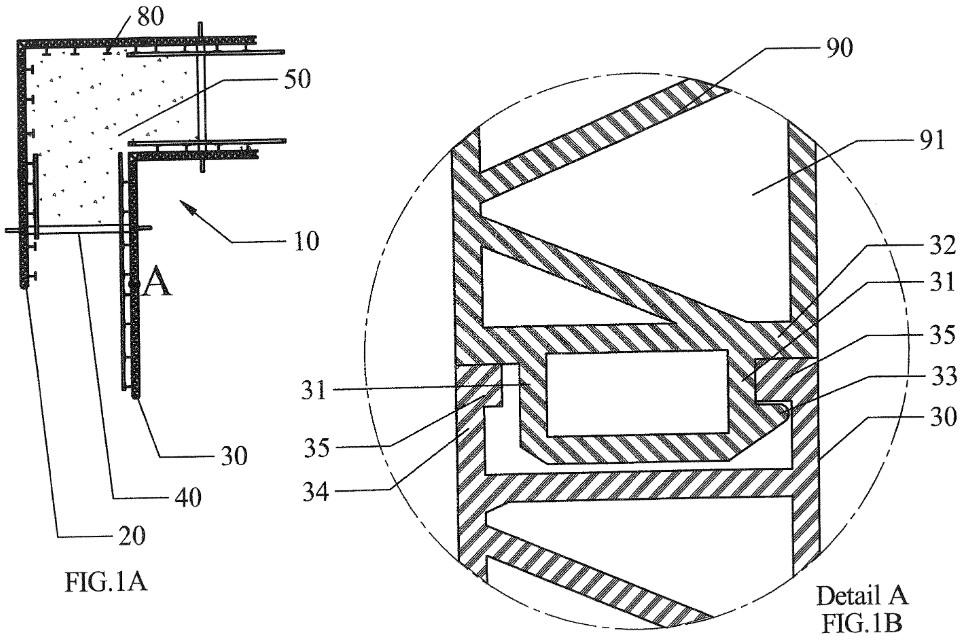
During assembly, metal pipes are placed between the panels to maintain consistent spacing and stability while the concrete is poured. Built-in locking features allow the panels to connect quickly without additional fixtures or support.
Each panel is designed with internal ribs that create cavities. These cavities improve strength and also help with insulation.
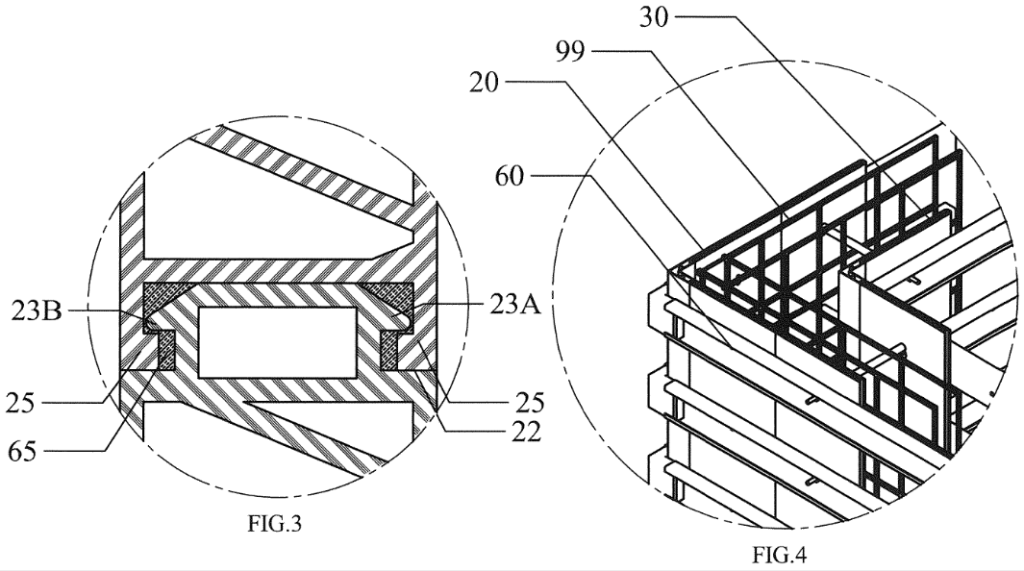
Panels also include sealing elements that prevent leakage during pouring and improve waterproofing once the wall is complete. Some versions include transparent sections, allowing workers to observe the concrete as it is poured without disturbing the structure.
Once the panels are assembled, concrete is poured between them and left in place. There is no need to remove any formwork after the concrete sets. This reduces the number of construction steps and avoids the material waste associated with temporary molds.
This change results in about 30% reduction in construction time and 20% reduction in labor costs. The panels also improve thermal performance, with a conductivity of 0.1–0.22 W/m·K. The design can be used in residential and commercial buildings, prefabricated construction, and underground structures where faster assembly and built-in insulation are important.
5. Replacing cement with bio-based binders is changing how paving materials perform
Concrete paving stones are widely used but come with trade-offs. Cement production emits significant carbon. The material can also crack under stress, retain heat, and impede water drainage in urban areas. These issues can be addressed by a paving stone design that replaces cement with a bio-based binder while improving durability and functionality. It combines bio-bitumen, natural asphalt, and stone aggregates into a single structure.
Bio bitumen, made from biological sources such as cashew nut shells, acts as the main binding material. It holds the structure together while also locking carbon into the stone. Natural asphalt adds mechanical strength, while the stone fractions provide compressive resistance.
Additional materials such as organic fibers, biochar, expanded clay, or glass particles can be included depending on whether strength, weight reduction, or carbon capture is prioritized.
Unlike conventional concrete, this paving stone does not rely on cement or added water to harden. Instead, the material forms a dense, viscoelastic structure that gains stiffness without a traditional curing process.
The result is a solid unit that is less brittle and more resistant to cracking. The composition can also be adjusted to control hardness, weight, and flexibility based on the intended use.
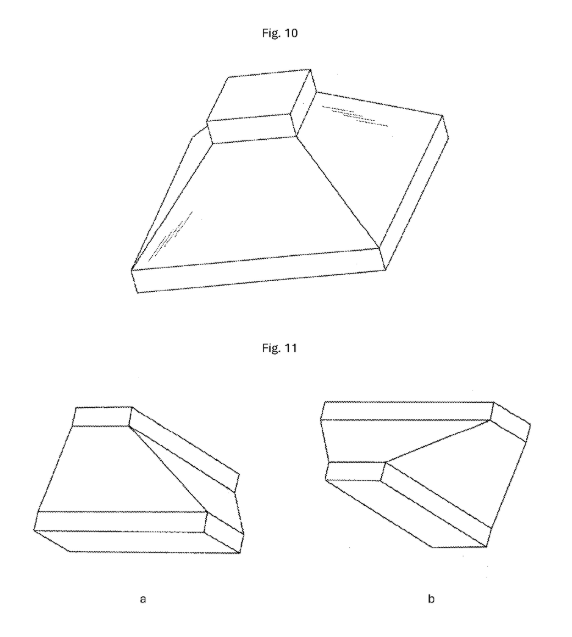
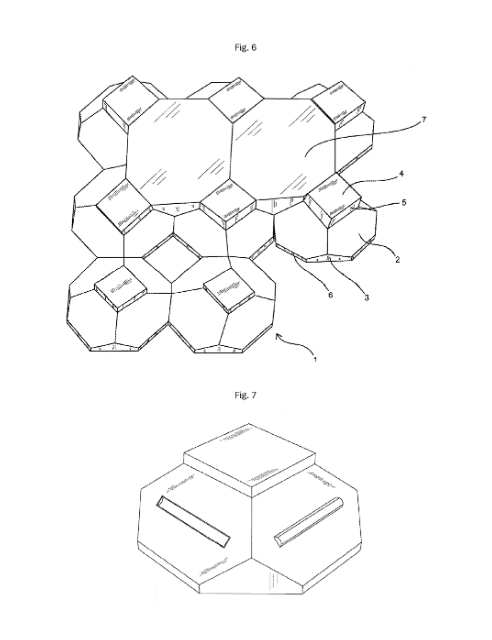
The shape of the stone supports its performance once installed. Each unit has top and bottom surfaces connected by inclined sides, allowing adjacent stones to fit tightly together. Features such as shoulders and grooves help lock neighboring stones in place, improving load distribution across the surface.
Openings can be included for drainage, cables, or pipes, and in some cases, embedded elements such as heating cables or induction coils can be added for additional functionality.
Performance tests show that the material can reach tensile strength of about 20 MPa, compared to around 8 MPa for conventional concrete paving, with reduced cracking and no freeze-thaw issues due to its hydrophobic nature. It can also meet compressive strength requirements of 54 MPa to 80 MPa, depending on the application.
In load testing, paving made from this design remained intact under vehicle stress, while traditional paving showed visible damage.
By combining a bio-based binder with structural features that enhance strength and stability, this approach reduces the carbon footprint while extending service life. It is suitable for applications such as roads, parking areas, airfields, footpaths, and other paved surfaces where durability, drainage, and environmental performance are important.
Related Read:


Strategic Implications for Construction Innovation
Construction innovation is increasing, but the gap between deployment and consistent performance remains. Technologies are being tested and adopted across projects, yet outcomes still vary depending on material behavior, system coordination, and on-site execution conditions.
If deployments are increasing, why does performance remain difficult to standardize? Where does variability enter between planning, material preparation, and on-site execution?
When evaluating construction innovations at scale, a different set of questions becomes critical:
- How does a 3D construction concrete mix behave during pumping, deposition, and curing? How does that affect print quality and structural stability across projects?
- Which robotic systems can maintain coordination when multiple construction tasks run in parallel, and how does that impact cycle time and error rates on-site?
- Where do construction methods reduce steps in theory but introduce additional alignment, sealing, or handling challenges during execution?
- How do alternative materials, such as bio-based binders, perform under load, weather exposure, and long-term use compared to conventional construction materials?
- Which construction innovations reduce dependency on skilled labor without increasing variability or rework?
- How do these solutions perform when deployed across different construction sites, teams, and environmental conditions without recalibration?
- What level of process control is required to maintain consistent output, and how does that affect construction cost, speed, and scalability?
Answering these questions requires understanding how construction innovations perform during execution, not just how they are designed or tested. It requires a clear view of how these innovative construction materials, machines, and processes behave under real conditions and how that behavior affects performance across projects.
That’s where we come in.
Whether you are evaluating construction innovations for deployment, comparing how different approaches affect execution performance, or identifying solutions that can scale without introducing new constraints, we help you focus on what works under real project conditions.