
GLP-1 therapies started as treatment for diabetes and obesity. Now they are changing care in cardiology, hepatology, nephrology, neurology, and oncology.
From reducing fibrosis in MASH to penetrating the blood-brain barrier for Alzheimer’s, the landscape is expanding rapidly, and new research data continues to emerge.
Recent approvals reflect this shift. Zepbound now treats sleep apnea. Wegovy is approved for MASH with fibrosis. Ozempic reduces the risk of kidney disease progression.
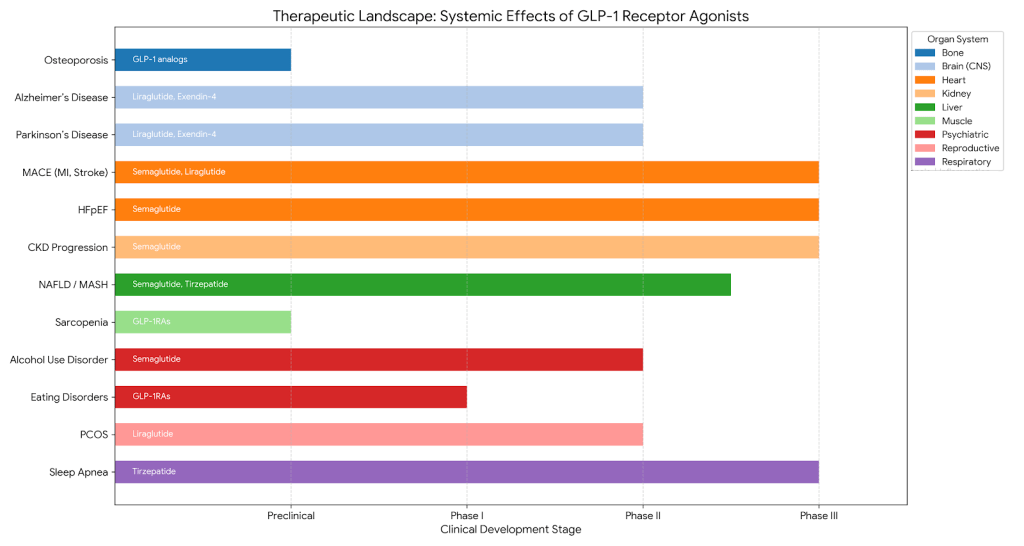
Clinical data shows that GLP-1 receptors are active in the heart, liver, kidneys, and brain. These drugs act on pathways that control inflammation, metabolism, and cell survival.
A UC San Diego study found that colon cancer patients on semaglutide or tirzepatide had <50% the five-year death rate of those who did not.
One Drug Class, Whole-Body Benefits
GLP-1 receptors are found throughout the body, including the heart, liver, kidneys, fat tissue, and brain, which enables systemic therapeutic effects.
Who’s Leading the GLP-1 Revolution
Major pharmaceutical companies are racing to expand GLP-1 applications with next-generation formulations. Our latest analysis, driven by Slate, uncovers the pivotal moves by the “Big Three” and emerging biotechs.
1. Eli Lilly: Triple-Agonist Aggressor
Eli Lilly is moving aggressively beyond metabolic health into neurological and sleep disorders.
- Strategy: Mixing GLP-1, GIP, and glucagon.
- Pipeline:
- Retatrutide (Phase 2): A triple agonist targeting fat metabolism, lipid profiles, and blood pressure.
- Orforglipron (Phase 3): An oral GLP-1 with potential applications in sleep apnea and neurodegenerative conditions.
- Future: With proven success of Tirzepatide and Orforglipron, the next move will likely focus on expanding GLP-1 therapies into cardiovascular and neurodegenerative diseases.
2. Novo Nordisk: Amylin Combination Leader
While Lilly adds agonists, Novo is doubling down on combinations and inflammatory markers.
- Breakthrough: CagriSema (Semaglutide + Cagrilintide).
- Results:
- CagriSema shows a 70% drop in major inflammatory markers and significant improvements in vascular health.
- Nearly 40% of patients taking CagriSema reduced or discontinued their blood pressure medications.
- Neuro Potential: Semaglutide has shown a 56% boost in retinal tissue survival, signaling strong potential for Alzheimer’s and Parkinson’s.
3. Merck: Liver-First Approach
Merck is carving a niche in NAFLD and NASH through dual GLP-1/glucagon co-agonists.
- The Drug: Efinopegdutide (MK-6024).
- Head-to-Head:
- In Phase II trials, Efinopegdutide achieved a 72.7% reduction in liver fat vs. 42.3% for Semaglutide.
- Efinopegdutide at 8.5% and semaglutide at 7.1% led to weight loss. This suggests direct improvement in liver function beyond simple weight loss.
- Approval: Their focus on liver-targeted therapies could make it easier to get regulatory approval.
What’s Next in GLP-1 Innovation? Ask Slate.
GLP-1 shows promise in neuroprotection, yet gaps remain in CNS penetration and treatments for neurodegenerative diseases.
This report was built using Slate, our AI-powered research tool for GLP-1 that connects the dots between clinical trial data, competitive pipelines, formulation technologies, regulatory signals, and safety insights.
Slate analyzes millions of patents, research papers, and market data to help you identify white spaces, emerging trends, competitive intelligence, and technology scouting simply by asking questions.
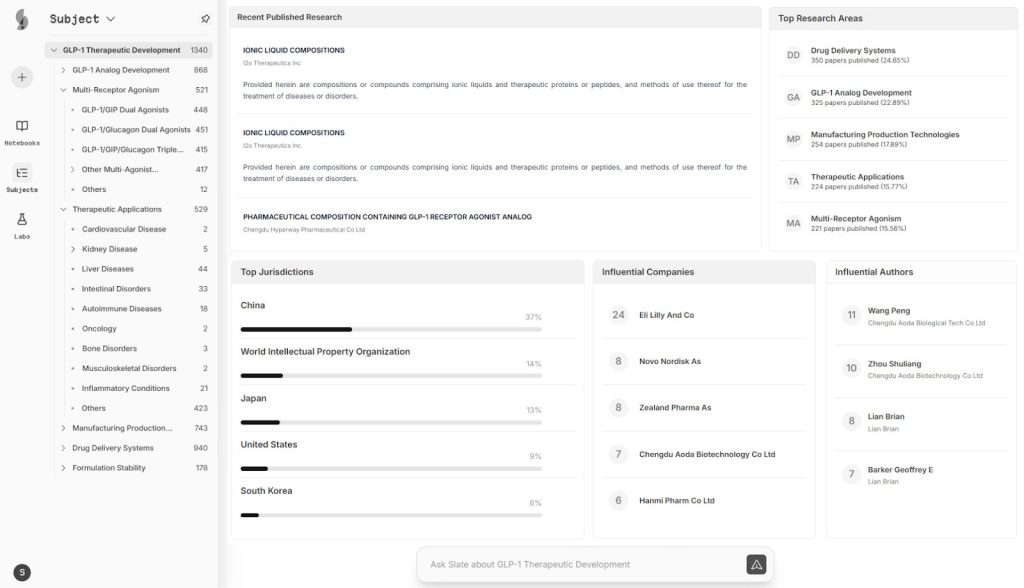
Slate continuously analyzes:
- Global clinical trial pipelines and phase transitions
- Patent filings and molecular strategies
- Competitive positioning across pharma and biotech
- Hidden links between metabolic, CNS, and cardiovascular data
If you’re evaluating what’s next for GLP-1, Slate helps you see it earlier and with evidence.
Access the full GLP-1 landscape and research dashboard.