

Did you know Honda’s working on a system that can detect alcohol level and mood through headsets, steering wheel and even violins ?
Their system uses MEMS/NEMS biosensor arrays placed within 30 cm of the user. This could be near the steering wheel, headrest, or in many contact-based points.
It’s designed to detect gases like nitric oxide, methanol, acetone, isoprene, ammonia, CO₂, and more to estimate mood, alcohol levels, and other health signals.
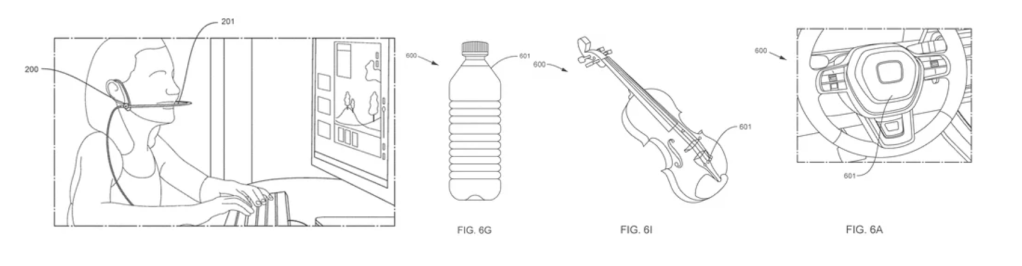
This can trigger actions like preventing vehicle ignition, limiting speed, or adjusting cabin environment (music, lighting, massage) based on detected state.
It’s essentially turning your car into a breathalyzer with opinions. 🙂
An important part of the innovation is the sensor positioning strategy. At ppb-level concentrations, proximity matters. Honda specifies placement down to centimeters, including direct contact, to ensure signals don’t get lost in HVAC mixing or cabin off-gassing.
Because at these concentrations, ‘somewhere in the cabin’ is about as useful as ‘somewhere in the city.’
The system also includes flow sensors and optional pumps throughout the design. Flow sensors normalize readings by tracking breath rate and flow rate. Pumps actively pull gases toward sensor arrays with controlled flow, tackling the core repeatability challenge in breath sensing.
While the use cases are for automotive, the design could apply to any environment where passive human-state sensing is needed.
This kind of passive sensing system is just one example of how vehicles are becoming complex, data-rich environments and why clarity around what’s actually deployed (versus just declared) matters more than ever.
This builds on Honda’s broader IP in passive wellness sensing, including earlier patents on anxiety estimation through breathing patterns and body movements without cameras.
My team recently analyzed Honda’s strategic patent activity in automotive tech. We looked at where they’re investing in R&D globally, which patents are highly influential (most cited) and which technologies they pushed through faster than usual to bring to market quickly.
You can find the entire analysis here: https://greyb.com/blog/case-study-on-honda/
