



As familiar as we are with traditional cosmetic ingredients such as water, emulsifiers, preservatives, fragrances, colorants, surfactants, and antioxidants, there is a notable shift in ingredient profiles. This shift signals a growing demand for sustainable, natural, and eco-friendly cosmetics in the foreseeable future.
Statistical insights project that the global cosmetic ingredients market will grow substantially from USD 33.6 billion in 2022 to USD 58.8 billion in 2031, driven by increasing awareness of sustainability and the benefits of bio-based cosmetic ingredients.
While using food in cosmetic products isn’t new, there’s a newfound appreciation for its benefits to the skin and the environment, sparking a kind of food revolution in the cosmetics industry. Since food ingredients are considered safe, there’s enormous potential for their use in cosmetics.
Get a comprehensive analysis of cosmetic industry trends that will transform the industry. Fill out the form below and get our exhaustive cosmetic trend report directly in your inbox.
This report explores emerging materials that are transforming the cosmetics industry as we know it.
1. Mushroom Extract
In response to consumer demand for natural and sustainable products, the cosmetic industry is exploring mushrooms for their unique bioactive compounds, such as polysaccharides, polyphenols, and vitamins. These compounds offer potential skincare benefits, align with consumer preferences, and appeal to scientists for their innovation and effectiveness.
One researcher tried to develop a prototype by working on extracting pigments from fungi, including mushrooms, that could be used as a renewable replacement for industrially produced dyes. In collaboration with a cosmetic formulation chemist, the derived pigments could be used as colorants in lipsticks, eyeshadows, and tinted skin creams.
According to Personal Care Insights, fungi-based ingredients are a rising trend in the cosmetics industry, offering an economical source of natural compounds due to their ease of cultivation and richness in fatty acids, enzymes, peptides, vitamins, lipopolysaccharides, and pigments. This emergence introduces a new industry category – “mycocosmetics.” (myco means relating to fungi).
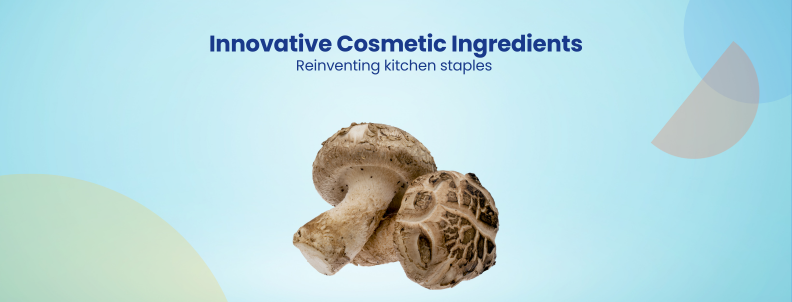
Among the many fungi-based ingredients, mushroom extract seems to be trending. Mushrooms (i.e., carpophore fungi) are rich in antioxidants, vitamins, and minerals that promote healthy skin and hair, making them attractive to consumers seeking natural and holistic skincare/haircare solutions.
The mushroom extracts and their bioactive metabolites exhibit excellent antioxidant, anti-wrinkle, anti-aging, moisturizing, and skin-whitening effects, making them ideal, multifunctional cosmetic components.
Which mushroom species are researchers using in skin formulations?
Out of the 150,000 mushroom species, seven strains are currently most commonly used in skincare formulations: reishi, tremella, shiitake, cordyceps, coprinus, chaga, and trametes versicolor. Some types of mushrooms, such as reishi, shiitake, and tremella, are classified as adaptogens. Adaptogens have antioxidant properties that can neutralize free radicals generated by environmental stressors such as UV radiation and pollution, as well as anti-inflammatory properties that help calm and repair the skin.
In skincare, the most popular of the thousands of varieties of mushrooms is tremella or the snow mushroom, also known as the ‘beauty mushroom’ because it can hold 500 times its weight in water, making it an alternative to hyaluronic acid in terms of plumping the skin, locking in water, and softening texture.
Recent Product Launches by Beauty Companies
Several beauty companies have begun using fungi extracts in their formulations, and mushroom extract has been an ingredient in a few recent launches.
1. Shroom Skincare (a 2023 beauty brand)
The company debuted its first product, Mycelium Glow Brightening Serum. This oil serum combines the benefits of mushrooms and vitamin C to rejuvenate, even out skin tone, and moisturize. The brand combines trending mushroom extracts – maitake, chaga, reishi, and cordyceps – with vitamin C to create an antioxidant serum that offers numerous skin benefits.
2. Integrity Ingredients
In June 2023, the leading raw material provider unveiled the IntegriMoist Silver Ear Mushroom Powder Extract for skin care. Derived from the Tremella Fuciformis Sporocarp, this extract effectively addresses fine lines and wrinkles, improves skin elasticity, and imparts a smooth and supple texture to the skin.
3. UpCircle
In 2023, the beauty brand launched a hair conditioner consisting of turkey tail mushroom extract. Interestingly, the product also consists of upcycled orange peel wax.
Recent Research and Innovation
A decent amount of research and innovation can also be seen in this direction. Recent research suggests that scientists are exploring various mushroom extracts for cosmetic applications. For instance –
- A recent patent, KR102550653B1, published in July 2023 by Hansel Biotech (a Korean company specializing in cosmetic R&D), focuses on a soothing skin composition comprising a mushroom complex.
- Another Korean brand, Charmzone, received a patent, KR102488079B1, in January 2023 for its skincare formulation containing shiitake and matsutake mushrooms as active ingredients, with skin wrinkle & elasticity improvement, antioxidant, and skin moisturizing effects.
Matsutake mushrooms are a type of mycorrhizal fungus found in Asia, Europe, and North America. In Japan, there is a high demand for this mushroom, a highly prized delicacy. Shiitake is revered in Asia for its culinary and reputed medicinal qualities. It’s the second most cultivated mushroom in the world.
Recommended Read
2. Upcycled Waste for Cosmetic Applications
According to recent market research, the upcycled cosmetic ingredients market is projected to reach $433.5 million by 2031.
Upcycled cosmetics are a novel trend featuring cosmetic ingredients derived from plant-based waste that is deemed too valuable to discard. While food ingredients have long been part of skincare and hair care formulations, using food waste in cosmetics is a newer, eco-friendly development.
The upcycling phenomenon is gaining momentum as consumers become increasingly conscious of the origins and environmental impact of cosmetic products.
Cosmetic companies, including industry giants like L’Oreal and Unilever, are investing in research and development to integrate various repurposed food waste as fundamental ingredients.
Primary Categories of Repurposed Food Waste –
1. Coffee Derived By-Products
According to a report by In-Cosmetics, new materials obtained from coffee by-products and their upcycling have been especially popular in 2023.
Coffee by-products contain various bioactive compounds, such as chlorogenic acids and caffeine, as well as other chemical constituents that can serve as active ingredients in cosmetic formulations. Coffee silverskin and spent coffee grounds are high-volume by-products of the coffee industry formulations. Converting by-products into products of higher quality or value, an upcycling approach, represents the closing of the circle of a design aimed at increasing the product’s overall sustainability in a circular economy model.
Recent patent applications also hint towards coffee by-products being actively used as functional ingredients in cosmetic products.
Givaudan, a global fragrance and beauty leader renowned for utilizing upcycled cosmetic ingredients, recently patented WO2022194912A1. The patent discloses a sun-protection composition (UV filter) incorporating coffee bean extract derived from recycled coffee grounds.
On the market side, many recent developments point to the active use of coffee by-products in cosmetics. For instance, the European trending coffee startup Kaffee Bueno (a Danish biotechnology company) recently, in October 2023, opened the world’s first coffee biorefinery. The biorefinery provides a source for naturally derived, upcycled active and functional coffee by-products ingredients for skin care, beauty, and personal care. The biorefinery, which has 2.5 million euros in backing from the European Innovation Council, can upcycle 500 tons of coffee grounds yearly.
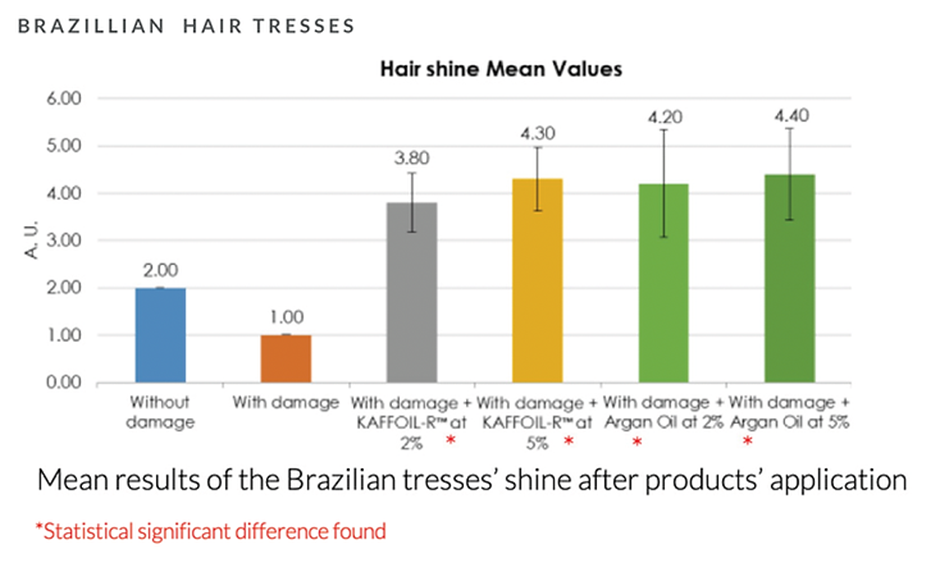
Many of these coffee-based ingredients are efficient alternatives to the traditionally used cosmetic ingredients. For example, its flagship product, KAFFOIL-R®, has been scientifically proven to enhance hair shine by 330% while significantly minimizing hair breakage and split ends by -94% in Caucasian and Brazilian hair types. These findings establish it as a sustainable alternative to commonly used Argan oil.
2. Bio-based ingredients-
- In November 2022, P2 Science, a chemical manufacturing company, launched its CitroSperse product range, focusing on color cosmetics. This innovative line comprises ten bio-based ingredients, including upcycled forestry byproducts, marking a significant step forward in sustainable cosmetic manufacturing.
- In February 2023, a Malaysia-based beauty brand, R+B, was launched, using spent coffee grounds, fruit waste, seeds, and shells as core cosmetic ingredients. R+B presents a collection of five products featuring the Anti-Cellulite Body Cream, Anti-Cellulite Body Scrub, Deep Cleansing Face Gel, Exfoliating Face Scrub, and Revitalizing Face Moisturizer. Infused with coffee, renowned for its potent antioxidant properties, these products offer a sustainable and rejuvenating skincare experience.
- Next, in March 2023, the UK-based natural skincare brand My Skin Feels launched its two products – a moisturizer and a facial cleanser, which use mandarin fruit juice to replace normal water. The brand claims to produce 8 kilos of waste per 1 liter of ingredients and specifies that it does not add any water to its products.
- In May 2023, Givaudan published a patent, WO2023052491A1, on a topical cosmetic composition containing cranberry extract. After partially extracting polyphenols from cranberry juice, the extract becomes an upcycled product.
- In Sept 2023, the skincare brand Loli Beauty collaborated with Sumo Citrus (a brand of oversized mandarin oranges) to use leftover fruit peels to make powder and oil for its cleanser.
3. Opting for Guarana Extract as a Coffee Substitute in Cosmetics
Guarana berries, renowned in nutrition supplements, are now making waves in the cosmetic market. The climbing plant Paullinia cupana, native to the Amazon, yields guarana, valued for its antioxidant-rich and highly caffeinated properties.
With the highest natural caffeine content globally (2%-8%), guarana is a genuine alternative to coffee, especially in the cosmetic industry. Caffeine, a key component, helps shield the skin from UV radiation, slow photoaging, and enhance circulation.

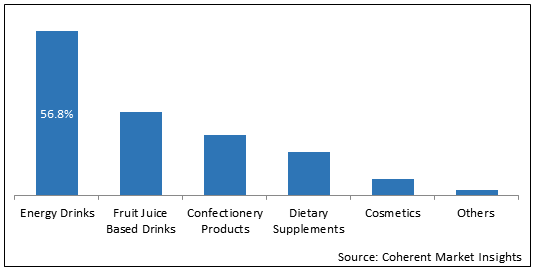
According to a recent report, the Guarana Extract market has shown consistent growth, driven by rising demand for natural and health-focused ingredients across sectors such as beverages, dietary supplements, and functional foods. This trend aligns with the growing demand for such ingredients in the cosmetics industry.
Significant innovations and research –
- Potential to brighten skin and soothe scalp
In February 2021, Givaudan launched a collection of six natural, traceable extracts, including Guarana. Their recent patent, filed in March 2023, CH719024A2, revealed that guarana extract has the potential to be a skin-whitening ingredient and aids in alleviating dry dandruff on the scalp.
- Liposomal Innovation for Enhanced Topical Application
In a recent study, researchers explored the potential of using guarana-loaded liposomes for topical applications.
The study pinpointed five key active compounds in guarana: theobromine, theophylline, caffeine, catechin, and epicatechin.
However, these active ingredients faced oxidation challenges due to their chemical nature. To counter this, researchers introduced nanoparticles, specifically liposomes, to improve the bioavailability of the natural product.
This breakthrough not only enhances the release of active compounds but also holds promise for minimizing ingredient oxidation in future formulations. (Source)
Future Outlook
Over the next 20-30 years, the cosmetic ingredients industry will undergo a significant transformation, with a greater emphasis on upcycled, bioprospected, and sustainably sourced ingredients. Upcycled waste materials, such as coffee by-products and fruit peels, will replace traditional ingredients due to their efficacy, cost-effectiveness, and eco-friendliness. Indie brands are already leading this trend, paving the way for significant industry players.
This “waste-to-beauty” movement is poised to become the norm, driven by advances in analytical techniques and biotechnologies. Large and niche manufacturers will explore novel sources for cosmetic actives, including bacteria, fungi, algae, and agricultural by-products. Simultaneously, the industry will move away from environmentally and health-concerning ingredients, propelled by consumer activism and regulatory changes.
Looking for a deeper understanding of the developments in sustainable cosmetic ingredients and the companies and startups leading the trend? Get a customized landscape study that provides comprehensive insights.