


Electric vehicle adoption is accelerating globally, but battery safety remains a critical bottleneck. Lithium-ion battery fires are rare but extremely dangerous, reaching temperatures above 2000°C and causing thermal runaway that spreads rapidly across vehicles and surrounding environments. This risk becomes even more severe during battery storage, transportation, and end-of-life handling, where damaged batteries significantly increase fire probability. As EV volumes scale, incidents involving battery fires in logistics, like trucks catching fire and shutting down highways, highlight a growing infrastructure and safety gap that current solutions fail to fully address.
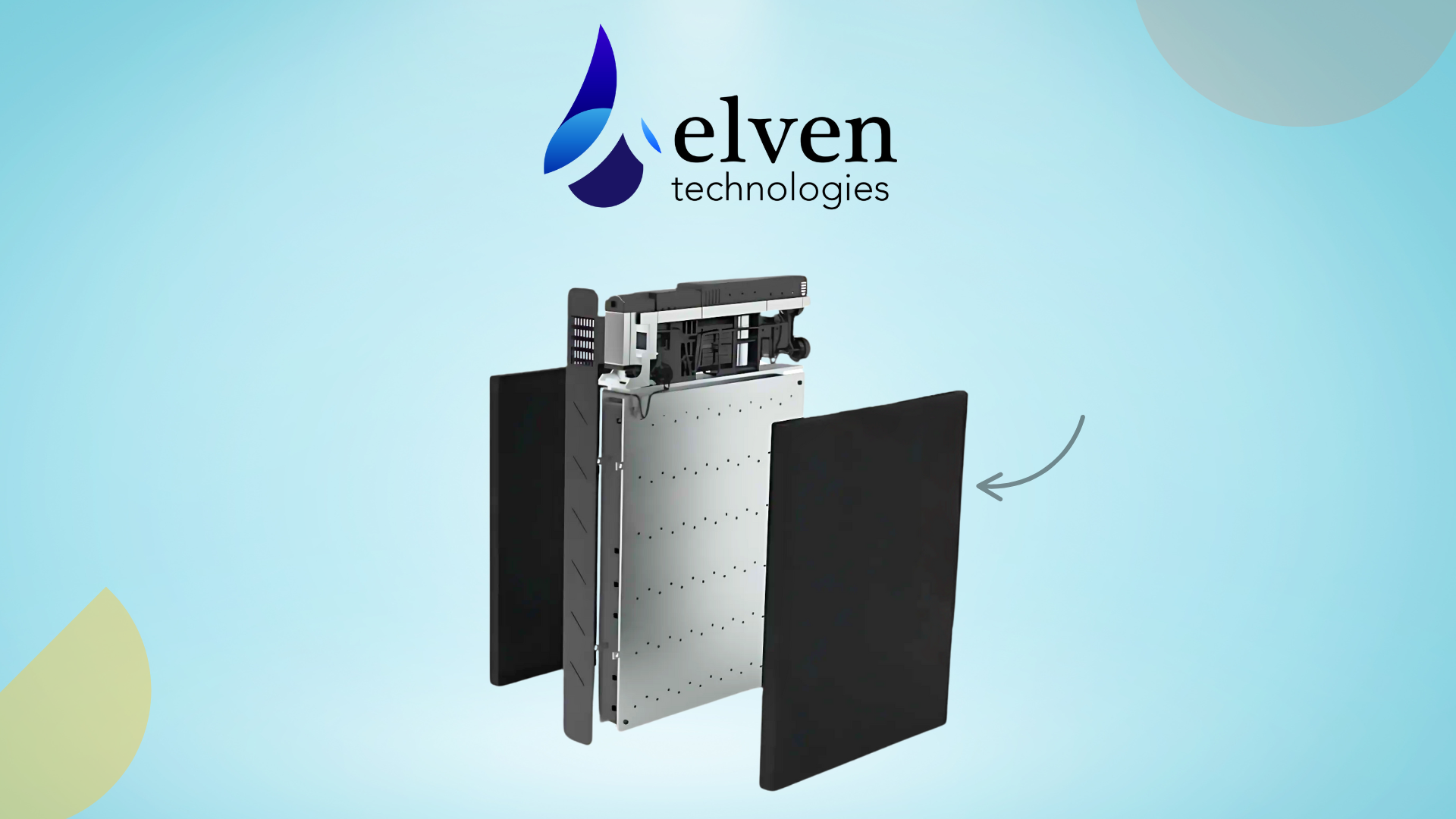
Elven Technologies addresses this issue with a special enclosure made from advanced composite materials that can fully contain battery fires. It uses a heat-resistant barrier along with a built-in system that controls flames and cools the gases released, lowering their temperature so they don’t ignite surrounding materials.
We spoke to Vamekh Kherkheulidze, CEO of Elven Technologies, to better understand their technology. This article summarizes our conversation.
This interview is part of our exclusive Scouted By GreyB series. Here, we talk to the founder of innovative startups to understand how their solutions address critical industry challenges and help ensure compliance with industry and government regulations. (Know more about startups scouted by GreyB!)
More EV Battery Related Reads

“Our material can contain battery fires completely. Using this, people can just replace the battery after an accident instead of losing the whole EV.”
– Vamekh Kherkheulidze

Vamekh Kherkheulidze is the CEO of Elven Technologies. He has a diverse professional background, transitioning from medical doctor and lecturer to high-tech engineer and entrepreneur. His innovation journey began with his interest in solving practical problems, such as designing advanced cooling systems. Under his leadership, Elven Technologies creates cutting-edge solutions like fire-resistant, high-tech materials for EV batteries.
From Space Suits to EV Safety: A Material That Defies Fire!
Elven Technologies is a deep-tech materials startup developing advanced composite solutions for extreme heat and fire protection. Founded by Vamekh Kherkheulidze, the company evolved from early work on firefighter gear and spacesuit technology to address a critical challenge in the electric mobility ecosystem—battery fire safety.
Its proprietary, lightweight material can withstand temperatures exceeding 2000°C, acting as a high-performance thermal barrier that enables complete containment of EV battery fires. Building on this, Elven has commercialized fireproof storage and transportation containers for lithium-ion batteries. The company is now expanding into sectors such as electric aviation, construction, and aerospace, adapting its materials to meet stringent industry requirements.
What problem are you solving in the EV industry today?
Vamekh: The biggest issue we’re addressing is that when an EV battery catches fire, it doesn’t just burn. It spreads. The fire escapes, high-temperature fumes ignite nearby materials, and the entire vehicle is usually lost. In many cases, it also creates risk for people and the surrounding infrastructure.
What makes it worse is that the risk is even higher outside the vehicle. Damaged or end-of-life batteries during storage and transportation are far more likely to catch fire. Companies are struggling to safely store and ship these batteries, especially over long distances, and incidents like trucks catching fire on highways show how serious this problem has become.
How does your technology work to contain battery fires?
Vamekh: Our system is essentially an enclosure combined with a proprietary muffler. The enclosure ensures that the fire stays contained within the battery pack, but that alone isn’t enough because pressure builds up and gases need to escape.
That’s where the muffler comes in. It removes visible flames and reduces the temperature of the exhaust gases to below 300°C. This is critical because even without flames, high-temperature fumes can ignite nearby materials. By eliminating both flame and heat transfer, we ensure that nothing outside the battery catches fire.
You mentioned a major breakthrough test. What did that prove?
Vamekh: We conducted a full-scale EV battery explosion test where we completely enclosed the battery. What we demonstrated was full containment, no flame escape, and no external ignition.
This was the first time such containment was achieved at the EV scale. It proved that it’s not just theoretically possible but practically achievable. That gave us confidence to move forward commercially and engage with major automotive and energy companies.
Why did you initially focus on storage and transportation instead of in-vehicle integration?
Vamekh: When we spoke with EV manufacturers, they told us integration into vehicles is a long-term process. Even if they decide to adopt our solution today, it takes two to three years to redesign manufacturing and bring it to market.
At the same time, they had an immediate problem. Safe storage and shipping of batteries. So we built fireproof containers that solve this issue right away. These are already being used by major companies, and they allow both storage and transport in a single solution, which reduces cost and complexity.
What makes your material different from existing fire protection solutions?
Vamekh: The key is that our material doesn’t just resist fire, it actively prevents heat transfer to surrounding structures. For example, aluminum melts at around 600–700°C, while battery fires exceed 2000°C. Without protection, it’s impossible to use lightweight materials.
With our composite, we can keep temperatures below 300°C, which allows the use of lighter materials like aluminum instead of steel. This reduces weight significantly while maintaining safety, which is especially important for applications like aviation.
Are you customizing your material for different industries?
Vamekh: Yes, that’s actually one of our biggest developments over the past year. Instead of offering a single material, we now create tailored composites based on specific requirements.
Some applications need maximum fire resistance, while others prioritize pressure resistance or weight reduction. We’ve developed around 20 variations of our composite to match different industry needs, which makes our solution much more adaptable and cost-effective.
What challenges have you faced in scaling this technology?
Vamekh: One major challenge is meeting the extremely high expectations of large companies. They often ask for specifications that feel almost like science fiction: thinner materials, higher resistance, lower weight, all at once.
Another challenge is testing. Some of the tests required by companies are so extreme that standardized third-party tests don’t even exist yet. We’ve had to replicate these testing environments in-house to speed up development and validation.
What are your expansion plans across industries?
Vamekh: In the short term, we’re focused on scaling our storage and transportation solutions because they’re already generating revenue. At the same time, we’re working on thinner materials to enable integration into EVs.
Beyond that, we’re exploring applications in electric aviation, construction, and even aerospace. For example, we’re working with a rocket company on protecting engine components. But for now, our priority is to become self-sustainable before expanding aggressively into new markets.
Where do you see the biggest opportunity going forward?
Vamekh: The immediate opportunity is in battery logistics: storage and transportation. That’s where the demand is strongest today.
Long term, integrating our technology directly into vehicles will be transformative. If we reach that point, battery fires will no longer mean total loss of the vehicle. That changes the safety equation for the entire EV industry.
Meet our Interviewer – Shabaz Khan, Marketing Manager at GreyB

Shabaz Khan, Marketing Manager
Want to find other scalable pharma startups innovating in EV battery and safety tech? Get in touch with our experts by filling out the form below: