
Nokia, Sisvel, InterDigital, Huawei, and other SEP owners have intensified lawsuits against automakers and suppliers. However, as C-V2X deployment accelerates globally, a new wave of SEP licensing risk is emerging, one that goes beyond traditional 4G/5G connectivity disputes.
As C-V2X rolls out across markets, licensing risk is quietly shifting.
Not because automakers are doing something wrong.
But because licensing models haven’t caught up with how V2X is actually deployed.
This webinar changes the conversation.
Not about what could be used.
But about what is actually used.
And why that difference matters more than most companies realize.
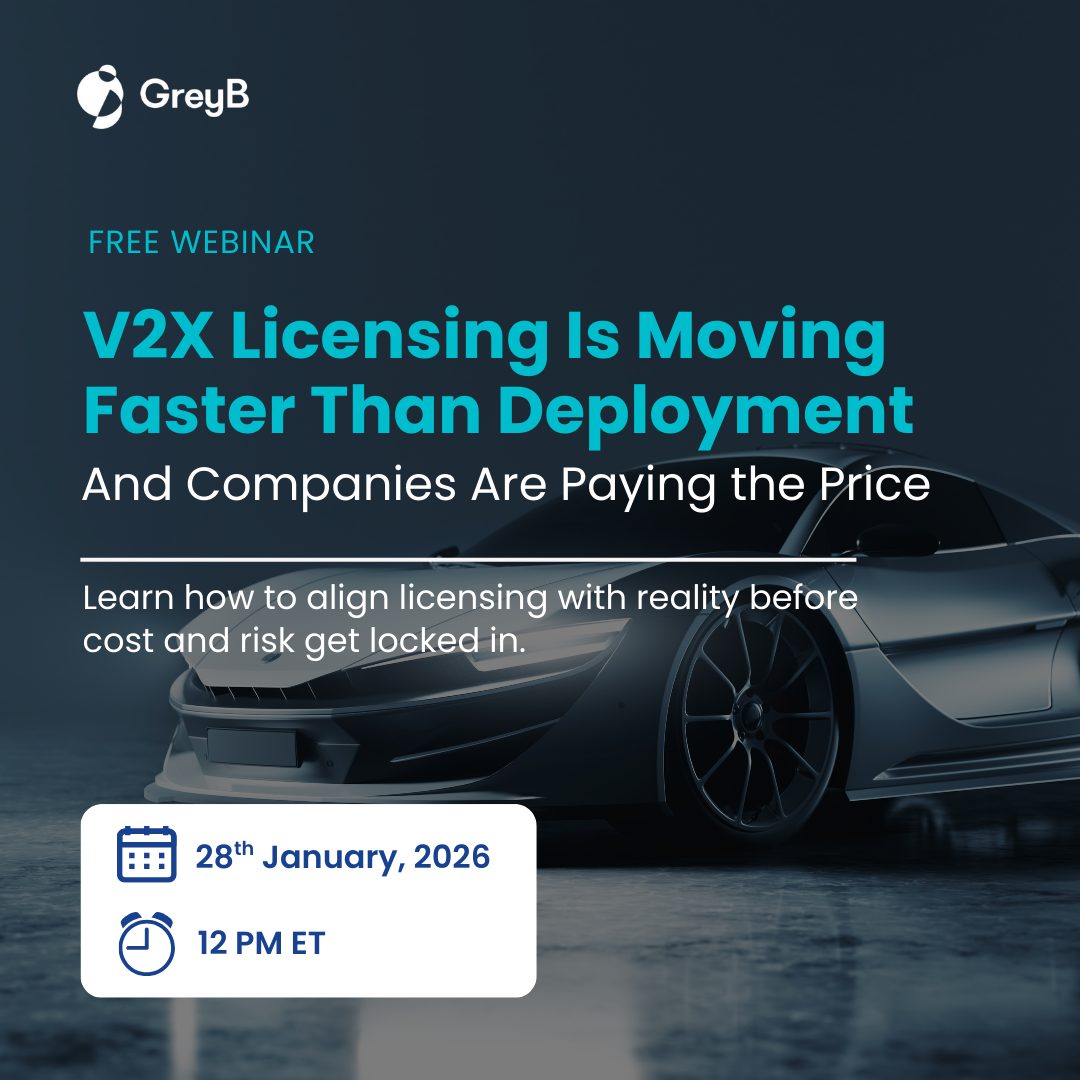
Why This Webinar Matters Now
The automotive industry has seen this pattern before.
First wave:
Automakers paid for 4G/5G connectivity far more than they needed because licensing was unclear.
Tesla faced InterDigital and Nokia across the US, UK, and Germany…
Geely defended against 5G SEP lawsuits in the Unified Patent Court…
Ford confronted Sisvel in the US ITC…
Daimler got cornered in Germany over LTE telematics…
One thing is becoming unmistakably clear:
Automotive companies are not prepared for telecom-grade licensing and litigation.
Next wave:
C-V2X–specific SEPs, owned mainly by telecom patent holders, tied to sidelink, scheduling, and future safety use cases
What has not evolved is the licensing model.
Today, automakers often license entire C-V2X portfolios with limited visibility into:
- Which patents map to features actually implemented in vehicles
- Which V2X features are live versus pilot or future-facing
- Which SEPs relate primarily to China-led deployments, where C-V2X adoption is most concentrated
The result is over-licensing risk, weak negotiation leverage, and rising litigation exposure, particularly as Chinese OEMs expand exports.
China’s Role in the Next V2X SEP Disputes
China is expected to manufacture ~31 million vehicles in 2025, with domestic OEMs accounting for roughly 68–70% of passenger vehicle shipments.
A growing share of these vehicles are equipped with ICV and C-V2X capabilities, making Chinese automakers significantly more exposed to cellular SEPs than in the past.
What This Webinar Will Cover
- How telecom players dominate C-V2X SEP ownership
- Declared SEPs vs. implemented SEPs
- Why portfolio size ≠ product relevance
- The disconnect between 3GPP standards and real-world vehicle deployments
A 2-Step C-V2X SEP Verification Framework
Step 1: Feature-Level Application Tagging: Mapping SEPs to specific C-V2X features and use cases.
Step 2: Deployment Reality Check: Validating patents against current vehicle deployments
For the Teams Building the Next Generation of Connected and Autonomous Vehicles
Register now to
- Identify C-V2X features not deployed in production vehicles
- Quantify what percentage of declared SEP portfolios map to those features
- Build a defensible, evidence-based basis to challenge valuation and reduce exposure